
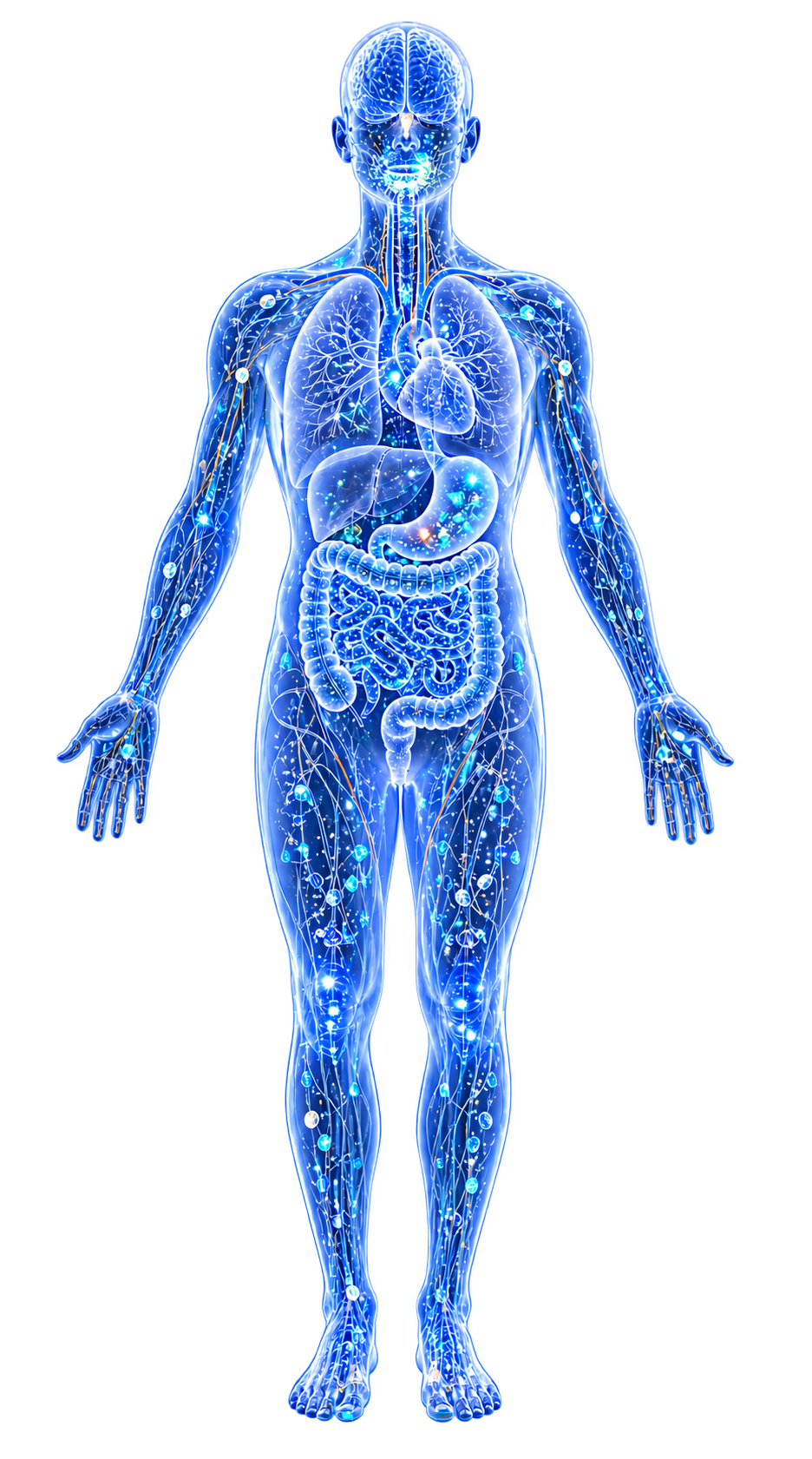

Defensin-family orientation. These generic models do not identify a defensin subclass, sequence, validated fold, exact disulfide geometry, binding or membrane-disruption mechanism, susceptibility result, biomarker, or treatment effect.
Scientific media record2 verified identifiers
- Subject
- Defensinsbiological-process
- Identifiers
- WikiBiome:defensinsMeSH:D023082
- Review
- Editorial review completeIdentifiers authority-verified · Accessibility validated · · defensins|defensins-mechanism-v1.webp
- Digital source
- Trained-algorithmic mediaCreated with a trained generative algorithm and reviewed by WikiBiome for subject identity, scientific framing, identifiers, provenance, and accessibility.
- Scientific basis
- Defensins — Medical Subject HeadingsHuman antimicrobial peptides: defensins, cathelicidins and histatinsDefensins
- License
- CC BY-SA 4.0Created
Defensins are small (29–45 amino acid) cationic antimicrobial peptides that form the first line of chemical defense at mucosal surfaces. Alpha-defensins (HD5, HD6) are produced by Paneth cells in the small intestinal crypts; beta-defensins (hBD1-4) are produced by epithelial cells throughout the gut.
Defensins kill bacteria by membrane disruption and are regulated by microbial signals—making them a key interface between Innate Immunity and the microbiome.
Evidence map1 cited passagesInspect provenance +
Reduced Paneth cell alpha-defensin expression (particularly HD5) is a hallmark of ileal Crohn's disease, enabling pathobiont invasion of the crypt epithelium. NOD2 mutations (the strongest CD genetic risk factor) impair defensin induction.
Key Functions#
Antimicrobial: Electrostatic attraction to negatively charged bacterial membranes → pore formation → cell lysis. Effective against Gram-positive and Gram-negative bacteria, fungi, and enveloped viruses.
Microbiome shaping: Defensins selectively kill sensitive organisms while sparing resistant commensals—actively shaping community composition. HD6 net formation: Alpha-defensin HD6 forms nanotrap structures that physically entangle bacteria, preventing mucosal penetration.
Crohn's Disease#
Reduced Paneth cell alpha-defensin expression (particularly HD5) is a hallmark of ileal Crohn's disease, enabling pathobiont invasion of the crypt epithelium.[1]Intestinal Microbiota and the Innate Immune System - a Crosstalk in Crohn's Disease PathogenesisHaag LM, Siegmund B · 2015Open reference 1 ↓ NOD2 mutations (the strongest CD genetic risk factor) impair defensin induction.
Cross-References#
- Innate Immunity—defensins as chemical barrier defense
- Crohn's Disease—reduced defensin expression in ileal CD
- Vitamin D—calcitriol induces cathelicidin (related antimicrobial peptide)
- Calprotectin (S100A8/A9)—complementary antimicrobial protein
References 3
Numbered by first appearance in the article, then reconciled with its declared source list.
- 1
Haag LM, Siegmund B (2015). Intestinal Microbiota and the Innate Immune System - a Crosstalk in Crohn's Disease Pathogenesis. Frontiers in Immunology.
- 2
★Honghong Bao, Yi Wang, Hanlin Xiong et al. (2024). Mechanism of Iron Ion Homeostasis in Intestinal Immunity and Gut Microbiota Remodeling. International Journal of Molecular Sciences.
- 3
Haijing Wang, Yuanjun Wang, Libin Yang et al. (2024). Wang 2024 — Integrated 16S rRNA sequencing and metagenomics insights into microbial dysbiosis and distinct virulence factors in inflammatory bowel disease. Frontiers in Microbiology.
Article network
Mentioned here 4
Connect the evidence
Publicly readable discussion by ORCID-authenticated researchers. Questions, interpretation, methods, corrections, and new evidence stay attached to this record.
No discussion yet. Start with a precise question or a source-backed observation.
Activity and accepted changes
Accepted researcher context, editorial status, public discussion, and upstream Git revisions are shown together. Pending, declined, and withdrawn proposals remain private.
- published revision
massive wiki expansion: 149 stubs fixed, 100+ new pages, Rule 15 scan, keystone papers
WikiBiome Deploy Bot · +39 −0
Inspect exact Git diff ↗