
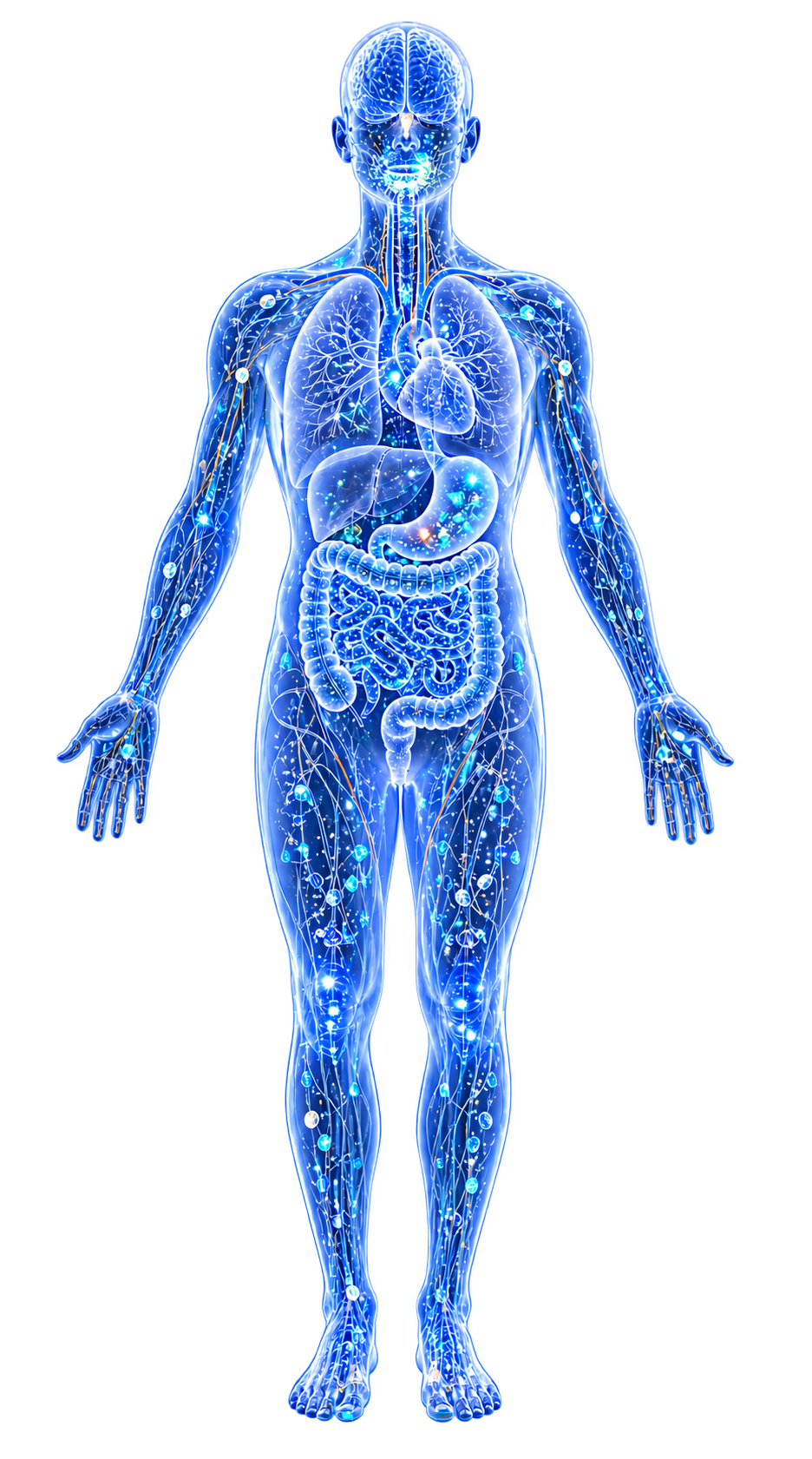
Vitamin D (calciferol; active form: calcitriol/1,25(OH)₂D₃) is a secosteroid hormone with profound immunomodulatory effects. The vitamin D receptor (VDR) is expressed on virtually all immune cells, and vitamin D deficiency is epidemiologically linked to autoimmune disease (MS, T1D, Hashimoto's, IBD), infection susceptibility, and depression.
In the WikiBiome framework, vitamin D connects to the microbiome through antimicrobial peptide induction, Treg support, and direct modulation of gut barrier integrity.
Evidence map5 cited passagesInspect provenance +
Vitamin D + probiotic: Combined supplementation (vitamin D + Lactobacillus/Bifidobacterium) improved metabolic parameters in schizophrenia RCT.
MS: Low vitamin D is the strongest environmental risk factor; supplementation reduces relapse rate.
T1D: Vitamin D deficiency associated with beta-cell autoimmunity.
Hashimoto's: Part of nutritional prevention strategy.
Schizophrenia: Vitamin D + probiotic RCT evidence.
Immune Effects#
Antimicrobial peptides: Vitamin D induces cathelicidin (LL-37) and defensin production—direct antimicrobial effectors at mucosal surfaces. Treg support: Vitamin D promotes Treg differentiation and IL-10 production, counterbalancing Th17 responses. Th17 suppression: Calcitriol directly inhibits IL-17 production by Th17 cells.
Microbiome Interactions#
Vitamin D supplementation alters Gut Microbiome composition—increases Bacteroidetes, modulates Firmicutes:Bacteroidetes ratio. VDR expression in the gut epithelium regulates barrier integrity and antimicrobial peptide production.
Vitamin D + probiotic: Combined supplementation (vitamin D + Lactobacillus/Bifidobacterium) improved metabolic parameters in schizophrenia RCT.[1]Clinical and Metabolic Response to Vitamin D Plus Probiotic in Schizophrenia PatientsGhaderi A, Banafshe HR, Mirhosseini N et al. · 2019Open reference 1 ↓
Disease Relevance#
MS: Low vitamin D is the strongest environmental risk factor; supplementation reduces relapse rate.[2]The immunology of multiple sclerosisKathrine E. Attfield, Lise Torp Jensen, Max Kaufmann et al. · 2022Open reference 2 ↓[3]Gut Microbiome-Modulated Dietary Strategies in EAE and Multiple SclerosisHoffman K, Doyle WJ, Schumacher SM et al. · 2023Open reference 3 ↓
T1D: Vitamin D deficiency associated with beta-cell autoimmunity.[4]Bi 2017 — Omega-3 Polyunsaturated Fatty Acids Ameliorate Type 1 Diabetes and AutoimmunityXinyun Bi, Fanghong Li, Shanshan Liu et al. · 2017Open reference 4 ↓ Hashimoto's: Part of nutritional prevention strategy.[5]Role of Food and Nutrition in Pathogenesis and Prevention of Hashimoto's ThyroiditisPuszkarz I, Guty E, Stefaniak I et al. · 2018Open reference 5 ↓ Schizophrenia: Vitamin D + probiotic RCT evidence.[1]Clinical and Metabolic Response to Vitamin D Plus Probiotic in Schizophrenia PatientsGhaderi A, Banafshe HR, Mirhosseini N et al. · 2019Open reference 1 ↓
Cross-References#
- Innate Immunity—cathelicidin induction as antimicrobial defense
- Th17/Treg Balance—vitamin D promotes Treg, suppresses Th17
- IL-10 (Interleukin-10)—vitamin D drives IL-10 production
- Multiple Sclerosis—strongest environmental risk factor
- Calcium—vitamin D regulates calcium absorption
References 5
Numbered by first appearance in the article, then reconciled with its declared source list.
- 1
Ghaderi A, Banafshe HR, Mirhosseini N et al. (2019). Clinical and Metabolic Response to Vitamin D Plus Probiotic in Schizophrenia Patients. BMC Psychiatry.
- 2
Kathrine E. Attfield, Lise Torp Jensen, Max Kaufmann et al. (2022). The immunology of multiple sclerosis. Nature Reviews Immunology.
- 3
Hoffman K, Doyle WJ, Schumacher SM et al. (2023). Gut Microbiome-Modulated Dietary Strategies in EAE and Multiple Sclerosis. Frontiers in Nutrition.
- 4
Xinyun Bi, Fanghong Li, Shanshan Liu et al. (2017). Bi 2017 — Omega-3 Polyunsaturated Fatty Acids Ameliorate Type 1 Diabetes and Autoimmunity. Journal of Clinical Investigation.
- 5
Puszkarz I, Guty E, Stefaniak I et al. (2018). Role of Food and Nutrition in Pathogenesis and Prevention of Hashimoto's Thyroiditis. Journal of Education, Health and Sport.
Article network
Mentioned here 6
Pages linking here 1
Connect the evidence
Publicly readable discussion by ORCID-authenticated researchers. Questions, interpretation, methods, corrections, and new evidence stay attached to this record.
No discussion yet. Start with a precise question or a source-backed observation.
Activity and accepted changes
Accepted researcher context, editorial status, public discussion, and upstream Git revisions are shown together. Pending, declined, and withdrawn proposals remain private.
- published revision
Backfill gut microbiome concept links
Karen Pendergrass · +1 −1
Inspect exact Git diff ↗ - published revision
massive wiki expansion: 149 stubs fixed, 100+ new pages, Rule 15 scan, keystone papers
WikiBiome Deploy Bot · +51 −0
Inspect exact Git diff ↗