
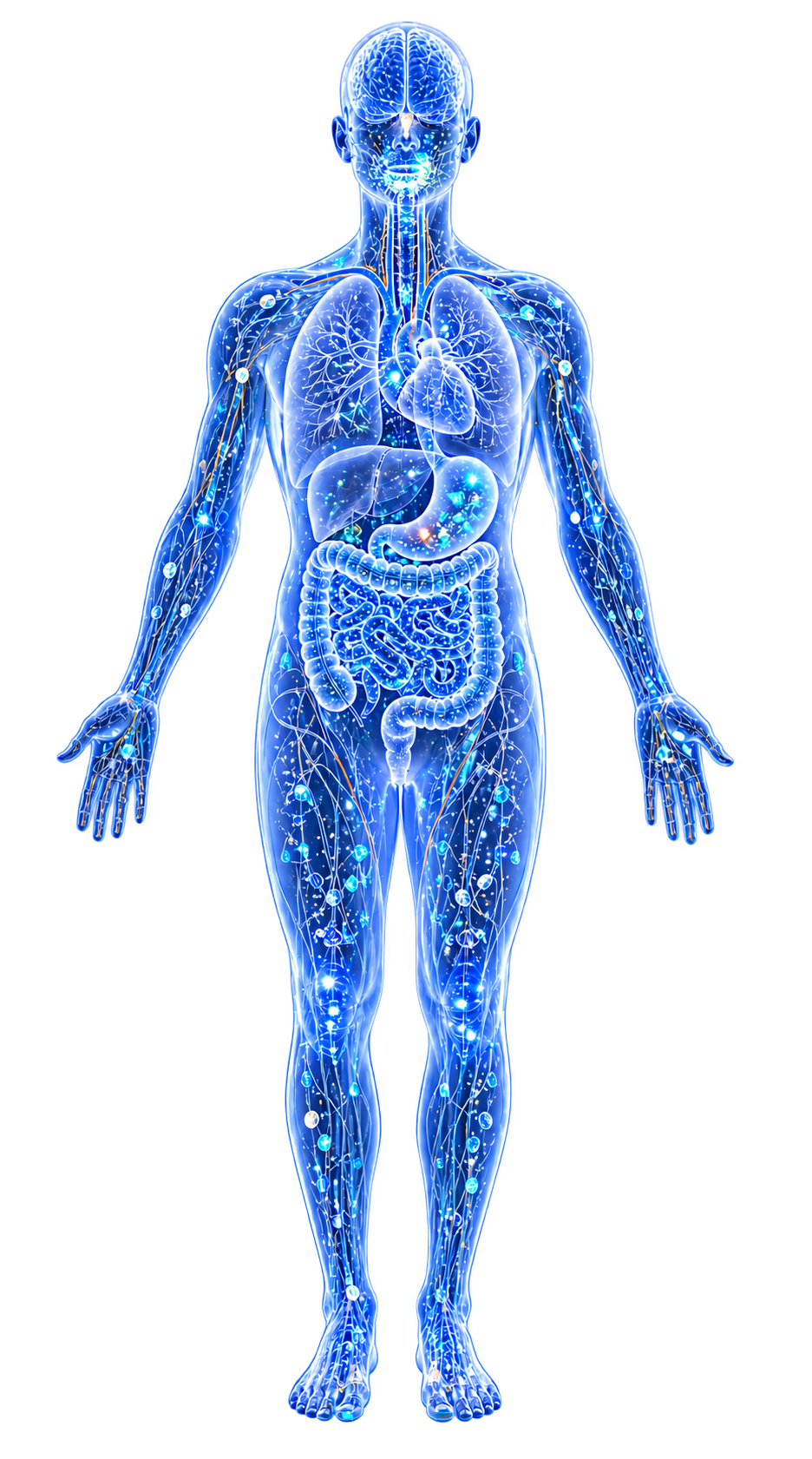
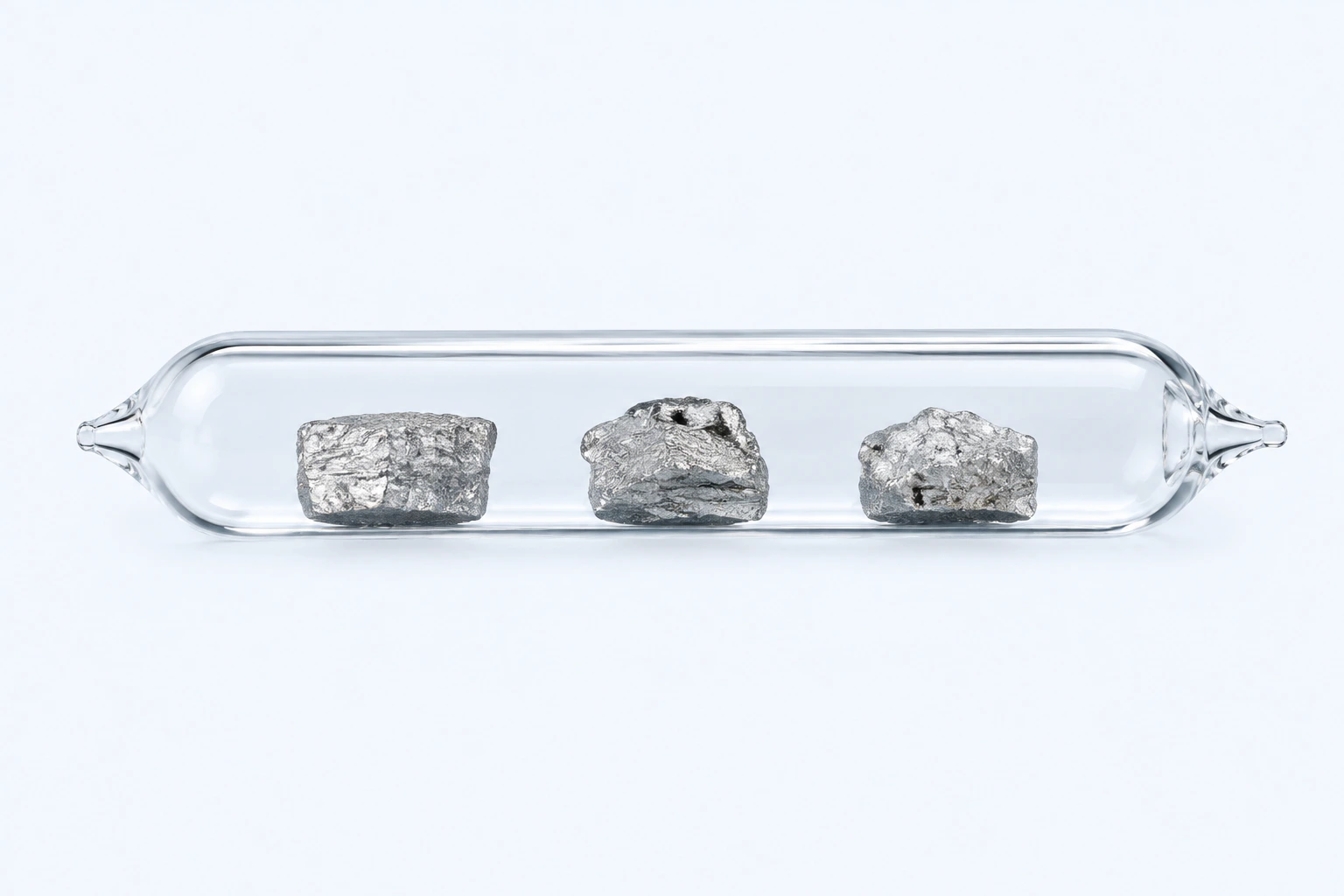
Elemental calcium (Ca), represented as three silvery pieces in a sealed oxygen-excluding ampoule because the reactive metal tarnishes readily. Containment does not certify purity; this is not analytical reference material or a photograph.
Scientific media record2 verified identifiers
- Subject
- Calciumelement
- Identifiers
- Atomic number 20PubChem CID:5460341
- Review
- Editorial review completeIdentifiers authority-verified · Accessibility validated · · calcium|calcium-technical-specimen-v1.webp
- Digital source
- Trained-algorithmic mediaCreated with a trained generative algorithm and reviewed by WikiBiome for subject identity, scientific framing, identifiers, provenance, and accessibility.
- Scientific basis
- Calcium — PubChem ElementCalcium, PubChem CID 5460341
- License
- CC BY-SA 4.0Created
The most abundant mineral in the human body, with ~99% stored in bones and teeth. Calcium's biological significance extends far beyond structural support—it is the universal second messenger in cell signaling, controlling neurotransmitter release, muscle contraction, hormone secretion, and apoptosis.
In the context of metal toxicology and the microbiome, calcium occupies a uniquely vulnerable position: the ion channels and binding sites evolved for calcium are the primary entry routes and targets for lead and cadmium, making calcium biology the gateway through which these toxic metals cause harm.
Evidence map13 cited passagesInspect provenance +
Lead substitutes for calcium in hydroxyapatite, creating a skeletal reservoir with a bone half-life of 100-200 years.
Pb2+ has a similar ionic radius to Ca2+ and exploits calcium transport and signaling systems throughout the body,:
Neurotransmitter release: Lead interferes with calcium-dependent vesicle fusion and exocytosis, directly impairing synaptic transmission.
Blood lead 10 ug/dL affects IQ in children, reflecting the sensitivity of developing neural calcium signaling to lead interference.
Cd2+ enters neurons and other cells through voltage-gated calcium channels and DMT1 (divalent metal transporter 1),:
Cd interferes with calcium metabolism and bone mineralization—the extreme case being itai-itai disease (cadmium-induced osteomalacia).
Cd disrupts calcium signaling cascades in neurodegeneration.
Al competes with Ca in second messenger systems and for ATP binding. This is particularly relevant in infant nutrition, where aluminum exposure from formulas intersects with rapid calcium-dependent neurodevelopment.
S. pneumoniae requires Ca2+ as an obligatory micronutrient (minimum 150 uM for viability). Ca2+ rescues pneumococci from manganese toxicity without reducing intracellular Mn accumulation—suggesting functional compensation rather than competitive exclusion.
The yybP-ykoY riboswitch senses both Mn2+ and Ca2+, revealing a shared metal-sensing mechanism.
The bacterial cell wall (peptidoglycan, wall teichoic acids) serves as a divalent cation repository, including Ca2+. This wall-associated cation pool may buffer bacteria against host-imposed metal restriction.
Calcium-containing bioceramics have demonstrated antibacterial properties, partly through localized pH changes and ion release that disrupts bacterial membrane integrity.
| Condition | Calcium Relevance | |-----------|------------------| | alzheimers disease | Pb disrupts Ca signaling; Cd enters via Ca channels; Ca dyshomeostasis in neurodegeneration | | autism spectrum disorder | Pb mimics Ca in synaptic signaling; Zn-Ca co-regulated developmental pathways | | hashimotos thyroiditis | Ca in thyroid mineral balance; copper as
Contents
1. Biological Roles2. The Hijacked Gateway: Calcium Channels and Toxic Metal Entry3. Microbiome Interactions4. Drug-Nutrient Interactions5. Conditions Associated6. Cross-ReferencesBiological Roles#
Structural#
Hydroxyapatite (Ca10(PO4)6(OH)2) forms the mineral matrix of bone and tooth enamel. Lead substitutes for calcium in hydroxyapatite, creating a skeletal reservoir with a bone half-life of 100-200 years.[1]Toxicity, Mechanism and Health Effects of Some Heavy MetalsMonisha Jaishankar, Tenzin Tseten, Naresh Anbalagan et al. · 2014Open reference 1 ↓
Signaling#
Second messenger: Cytosolic calcium(II) (Ca2+) concentration is maintained at ~100 nM (10,000-fold lower than extracellular), enabling rapid signaling through controlled release from ER stores or influx through voltage-gated and ligand-gated channels.
Calmodulin—the primary calcium(II) sensor protein, regulating kinases, phosphatases, and transcription factors. Protein kinase C (PKC)—calcium-dependent kinase family controlling cell proliferation and differentiation. Synaptic vesicle fusion—calcium(II) influx through voltage-gated channels triggers neurotransmitter exocytosis.
Immune Defense#
Calprotectin (S100A8/A9) (S100A8/A9) is a calcium-binding heterodimer constituting ~60% of neutrophil cytosolic protein. It sequesters zinc and manganese from pathogens as part of Nutritional Immunity (Metal Sequestration)—the calcium-binding domains are structural, enabling the metal-chelating function that starves invaders.
CSF calprotectin elevation has been explored as a diagnostic marker distinguishing bacterial from viral meningitis.
The Hijacked Gateway: Calcium Channels and Toxic Metal Entry#
Calcium's ion channels and binding proteins are the primary entry routes for two of the most harmful Heavy Metals. This is not incidental—it is a consequence of ionic mimicry driven by size and charge similarity.
Lead (Pb2+) Mimics Ca2+#
lead(II) (Pb2+) has a similar ionic radius to calcium(II) (Ca2+) and exploits calcium transport and signaling systems throughout the body.[1]Toxicity, Mechanism and Health Effects of Some Heavy MetalsMonisha Jaishankar, Tenzin Tseten, Naresh Anbalagan et al. · 2014Open reference 1 ↓[2]Heavy Metals Exposure and Alzheimer's Disease and Related DementiasBakulski KM, Seo YA, Hickman RC et al. · 2020Open reference 2 ↓
PKC activation: Lead inappropriately activates protein kinase C at picomolar concentrations. Calmodulin binding: lead(II) binds calmodulin with higher affinity than calcium(II), disrupting downstream signaling. Neurotransmitter release: Lead interferes with calcium-dependent vesicle fusion and exocytosis, directly impairing synaptic transmission.[3]Interaction of Heavy Metal Lead with Gut Microbiota: Implications for Autism Spectrum DisorderTizabi Y, Bennani S, El Kouhen N et al. · 2023Open reference 3 ↓
Bone incorporation: lead substitutes for calcium in hydroxyapatite crystals, creating a decades-long slow-release reservoir.
Blood lead >10 ug/dL affects IQ in children, reflecting the sensitivity of developing neural calcium signaling to lead interference.[1]Toxicity, Mechanism and Health Effects of Some Heavy MetalsMonisha Jaishankar, Tenzin Tseten, Naresh Anbalagan et al. · 2014Open reference 1 ↓
Cadmium (Cd2+) Enters via Ca2+ Channels#
cadmium(II) (Cd2+) enters neurons and other cells through voltage-gated calcium channels and DMT1 (divalent metal transporter 1).[4]Exposure to Cadmium and Its Impacts on Human Health: A Short ReviewPuthiyavalappil Rasin, Ashwathi A V, Sabeel M Basheer et al. · 2025Open reference 4 ↓[5]Associations of Environmental Exposure to Arsenic, Manganese, Lead, and Cadmium with Alzheimer's Disease: A Review of Recent Evidence from Mechanistic StudiesGiasuddin Ahmed, Md. Shiblur Rahaman, Enrique Perez et al. · 2025Open reference 5 ↓
cadmium interferes with calcium metabolism and bone mineralization—the extreme case being itai-itai disease (cadmium-induced osteomalacia).[4]Exposure to Cadmium and Its Impacts on Human Health: A Short ReviewPuthiyavalappil Rasin, Ashwathi A V, Sabeel M Basheer et al. · 2025Open reference 4 ↓ cadmium disrupts calcium signaling cascades in neurodegeneration.[5]Associations of Environmental Exposure to Arsenic, Manganese, Lead, and Cadmium with Alzheimer's Disease: A Review of Recent Evidence from Mechanistic StudiesGiasuddin Ahmed, Md. Shiblur Rahaman, Enrique Perez et al. · 2025Open reference 5 ↓ cadmium competes with calcium (Ca) for intestinal absorption, meaning calcium-replete diets may reduce cadmium uptake.
Aluminum (Al3+) Competes with Ca2+#
aluminum (Al) competes with calcium (Ca) in second messenger systems and for ATP binding.[6]Corkins 2019 — Aluminum Effects on Infants and ChildrenCorkins MR, AAP Committee on Nutrition · 2019Open reference 6 ↓ This is particularly relevant in infant nutrition, where aluminum exposure from formulas intersects with rapid calcium-dependent neurodevelopment.
Microbiome Interactions#
Streptococcus pneumoniae: Calcium as Obligatory Micronutrient#
S. pneumoniae requires calcium(II) (Ca2+) as an obligatory micronutrient (minimum 150 uM for viability). calcium(II) rescues pneumococci from manganese toxicity without reducing intracellular manganese (Mn) accumulation—suggesting functional compensation rather than competitive exclusion.[7]Opoku 2024 — Calcium Rescues Streptococcus pneumoniae D39 delta-mntE Manganese-Sensitive Growth PhenotypeReuben Opoku, Edgar Carrasco, Nicholas R De Lay et al. · 2024Open reference 7 ↓
calcium(II) promotes cell division and reduces chain lengths in S. pneumoniae. The yybP-ykoY riboswitch senses both manganese(II) and calcium(II), revealing a shared metal-sensing mechanism.[7]Opoku 2024 — Calcium Rescues Streptococcus pneumoniae D39 delta-mntE Manganese-Sensitive Growth PhenotypeReuben Opoku, Edgar Carrasco, Nicholas R De Lay et al. · 2024Open reference 7 ↓
This dual sensing has implications for host defense: calprotectin-mediated manganese restriction might be partially compensated by calcium(II) availability at infection sites.
Bacterial Cell Wall as Calcium Repository#
The bacterial cell wall (peptidoglycan, wall teichoic acids) serves as a divalent cation repository, including calcium(II) (Ca2+).[8]Paterson 2025 — Enhanced Resistance of Metal Sequestering Agents by Reconfiguration of the Staphylococcus aureus Cell WallJoy R Paterson, Joshua M Wadsworth, Rebecca J Lee et al. · 2025Open reference 8 ↓ This wall-associated cation pool may buffer bacteria against host-imposed metal restriction.
Oxalobacter formigenes and Calcium Bioavailability#
Oxalobacter degrades oxalate, freeing calcium from calcium-oxalate complexes and improving calcium (Ca) bioavailability. Loss of O. formigenes (from antibiotic exposure or dietary factors) increases calcium oxalate kidney stone risk—the most common stone type (80% of nephrolithiasis). This represents a direct microbiome-mineral metabolism axis with clinical consequences.
Calcium-Based Antimicrobials#
Calcium-containing bioceramics have demonstrated antibacterial properties, partly through localized pH changes and ion release that disrupts bacterial membrane integrity.[9]Nguyen 2024 — Engineering Antibacterial Bioceramics: Design Principles and Mechanisms of ActionNgoc Huu Nguyen, Zufu Lu, Aaron Elbourne et al. · 2024Open reference 9 ↓
Drug-Nutrient Interactions#
Proton pump inhibitors (PPIs) reduce calcium absorption by raising gastric pH, alongside reduced absorption of magnesium (Mg), iron (Fe), and zinc (Zn). Long-term PPI use is associated with increased fracture risk Gastroesophageal Reflux Disease (GERD).
Calcium supplementation can reduce cadmium and lead absorption by competing for shared transport pathways—a protective effect relevant to contaminated food exposure.
Conditions Associated#
| Condition | Calcium Relevance |
|---|---|
| Alzheimer's Disease | lead (Pb) disrupts calcium (Ca) signaling; cadmium (Cd) enters via calcium channels; calcium dyshomeostasis in neurodegeneration[5]Associations of Environmental Exposure to Arsenic, Manganese, Lead, and Cadmium with Alzheimer's Disease: A Review of Recent Evidence from Mechanistic StudiesGiasuddin Ahmed, Md. Shiblur Rahaman, Enrique Perez et al. · 2025Open reference 5 ↓ |
| Autism Spectrum Disorder | lead mimics calcium in synaptic signaling; zinc (Zn)-calcium co-regulated developmental pathways[3]Interaction of Heavy Metal Lead with Gut Microbiota: Implications for Autism Spectrum DisorderTizabi Y, Bennani S, El Kouhen N et al. · 2023Open reference 3 ↓ |
| Hashimoto's Thyroiditis | calcium in thyroid mineral balance; copper as SOD cofactor links to calcium-dependent processes[10]Kravchenko 2023 — Thyroid hormones and minerals in immunocorrection of disorders in autoimmune thyroid diseasesKravchenko V, Zakharchenko T · 2023Open reference 10 ↓ |
| Kidney stones | Oxalobacter loss → calcium-oxalate accumulation |
| Osteoporosis | lead substitution in hydroxyapatite; cadmium-induced bone demineralization |
Cross-References#
- Mis-Metallation—calcium(II) (Ca2+) displaced by lead(II) (Pb2+) is the canonical signaling mis-metallation example
- Calprotectin (S100A8/A9)—Calcium-binding immune protein that sequesters zinc (Zn)/manganese (Mn)
- Lead—Primary calcium mimic
- Cadmium—Enters via calcium channels
- Aluminum—Competes with calcium in second messenger systems
- Irving-Williams Series—Explains why lead(II) binds more tightly than calcium(II) at calcium binding sites
- Dyshomeostasis—cadmium (Cd) and lead compete with calcium for DMT1 absorption
- Oxalobacter—Calcium-oxalate metabolism axis
- Streptococcus pneumoniae—Obligate calcium requirement
- Developmental Metal Vulnerability: Critical Windows of Susceptibility—calcium channel hijacking during neurodevelopment
References 14
Numbered by first appearance in the article, then reconciled with its declared source list.
- 1
★Monisha Jaishankar, Tenzin Tseten, Naresh Anbalagan et al. (2014). Toxicity, Mechanism and Health Effects of Some Heavy Metals. Interdisciplinary Toxicology.
- 2
★Bakulski KM, Seo YA, Hickman RC et al. (2020). Heavy Metals Exposure and Alzheimer's Disease and Related Dementias. Journal of Alzheimer's Disease.
- 3
★Tizabi Y, Bennani S, El Kouhen N et al. (2023). Interaction of Heavy Metal Lead with Gut Microbiota: Implications for Autism Spectrum Disorder. Biomolecules.
- 4
★Puthiyavalappil Rasin, Ashwathi A V, Sabeel M Basheer et al. (2025). Exposure to Cadmium and Its Impacts on Human Health: A Short Review. Journal of Hazardous Materials Advances.
- 5
★Giasuddin Ahmed, Md. Shiblur Rahaman, Enrique Perez et al. (2025). Associations of Environmental Exposure to Arsenic, Manganese, Lead, and Cadmium with Alzheimer's Disease: A Review of Recent Evidence from Mechanistic Studies. Journal of Xenobiotics.
- 6
Corkins MR, AAP Committee on Nutrition (2019). Corkins 2019 — Aluminum Effects on Infants and Children. Pediatrics.
- 7
Reuben Opoku, Edgar Carrasco, Nicholas R De Lay et al. (2024). Opoku 2024 — Calcium Rescues Streptococcus pneumoniae D39 delta-mntE Manganese-Sensitive Growth Phenotype. Microorganisms.
- 8
Joy R Paterson, Joshua M Wadsworth, Rebecca J Lee et al. (2025). Paterson 2025 — Enhanced Resistance of Metal Sequestering Agents by Reconfiguration of the Staphylococcus aureus Cell Wall. npj Antimicrobials and Resistance.
- 9
Ngoc Huu Nguyen, Zufu Lu, Aaron Elbourne et al. (2024). Nguyen 2024 — Engineering Antibacterial Bioceramics: Design Principles and Mechanisms of Action. Materials Today Bio.
- 10
★Kravchenko V, Zakharchenko T (2023). Kravchenko 2023 — Thyroid hormones and minerals in immunocorrection of disorders in autoimmune thyroid diseases. Frontiers in Endocrinology.
- 11
★Brylinski L, Kostelecka K, Wolinski F et al. (2025). Effects of Trace Elements on Endocrine Function and Pathogenesis of Thyroid Diseases — A Literature Review. Nutrients.
- 12
Briffa J, Sinagra E, Blundell R (2020). Heavy Metal Pollution in the Environment and Their Toxicological Effects on Humans. Heliyon.
- 13
Yu-Xue Feng, Ming-Zhi Tan, Hui-Han Qiu et al. (2025). Feng 2025 — Heavy Metal Exposure and Bacterial Vaginosis. PLOS ONE.
- 14
★Melissa Scholefield, Stephanie J. Church, Jingshu Xu et al. (2024). Scholefield et al. 2024 — Brain Metallomic Signatures Distinguish DLB from AD and PDD. Frontiers in Neuroscience.
Article network
Mentioned here 16
Pages linking here 10
Connect the evidence
Publicly readable discussion by ORCID-authenticated researchers. Questions, interpretation, methods, corrections, and new evidence stay attached to this record.
No discussion yet. Start with a precise question or a source-backed observation.
Activity and accepted changes
Accepted researcher context, editorial status, public discussion, and upstream Git revisions are shown together. Pending, declined, and withdrawn proposals remain private.
- published revision
Backfill heavy metals concept links
Karen Pendergrass · +1 −1
Inspect exact Git diff ↗ - published revision
massive wiki expansion: 149 stubs fixed, 100+ new pages, Rule 15 scan, keystone papers
WikiBiome Deploy Bot · +22 −22
Inspect exact Git diff ↗ - published revision
pre-overnight checkpoint 2026-04-18
WikiBiome Deploy Bot · +116 −0
Inspect exact Git diff ↗