
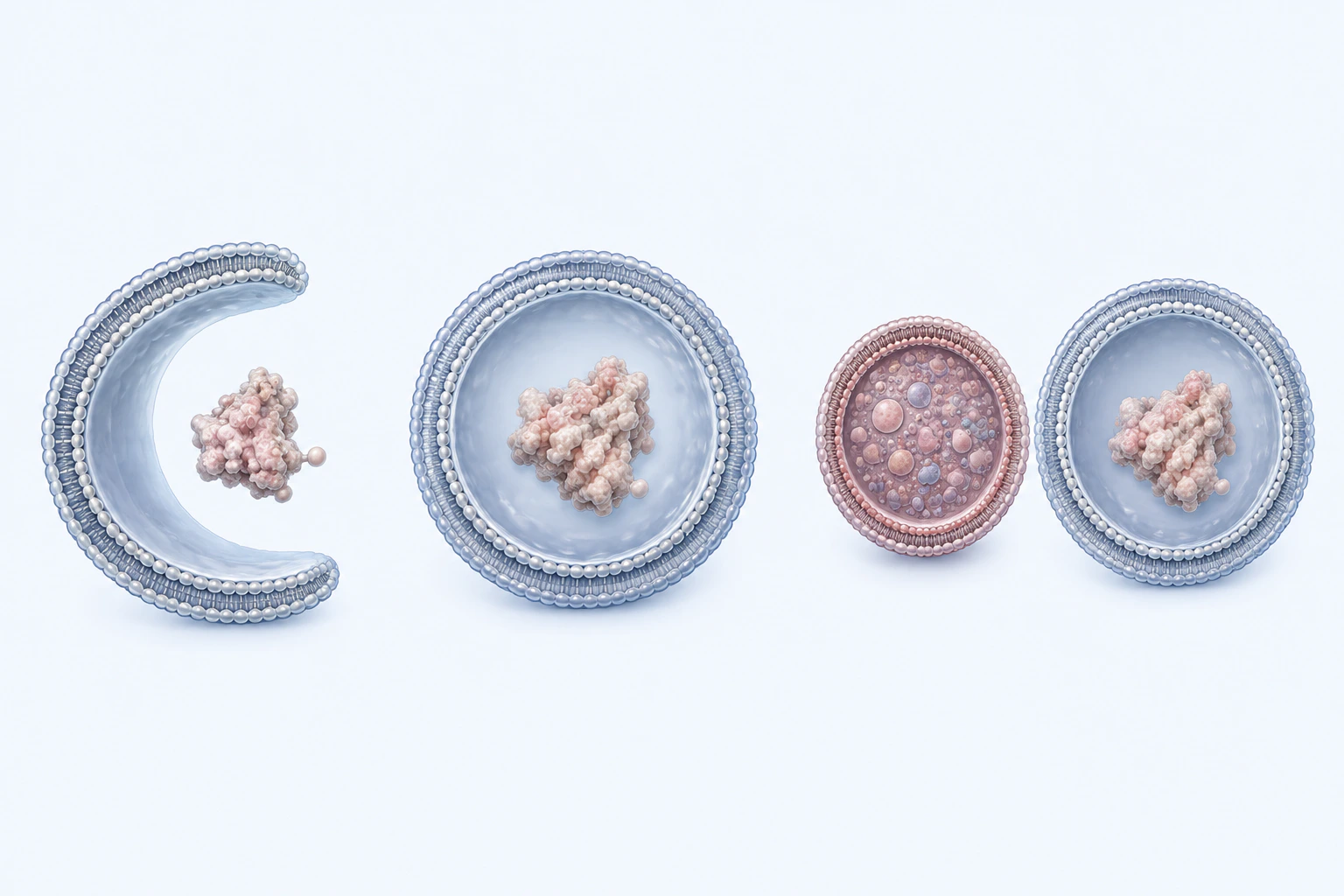
Qualitative macroautophagy morphology. Separated forms do not establish time, flux, fusion, degradation, molecular mechanism, treatment effect, biomarker status, prognosis, or diagnosis.
Scientific media record2 verified identifiers
- Subject
- Autophagybiological-process
- Identifiers
- WikiBiome:autophagyGO:0006914
- Review
- Editorial review completeIdentifiers authority-verified · Accessibility validated · · autophagy|autophagy-mechanism-v1.webp
- Digital source
- Trained-algorithmic mediaCreated with a trained generative algorithm and reviewed by WikiBiome for subject identity, scientific framing, identifiers, provenance, and accessibility.
- Scientific basis
- Autophagy — GO:0006914Macroautophagy in Mammalian Cells
- License
- CC BY-SA 4.0Created
Autophagy (from Greek, "self-eating") is the cellular process of degrading and recycling damaged organelles, misfolded proteins, and intracellular pathogens through lysosomal digestion.
It is the cell's primary quality control mechanism—a housekeeping system that becomes critically important under stress. Heavy Metals disrupt autophagy at multiple levels, and the Gut Microbiome both regulates and is regulated by autophagic activity, making autophagy a convergent node where metal toxicity meets microbial ecology.
Evidence map7 cited passagesInspect provenance +
Cadmium induces autophagy at low concentrations (potentially protective, attempting to clear damaged mitochondria) but overwhelms autophagic capacity at higher concentrations, leading to autophagic cell death. Cd disrupts lysosomal function by inhibiting lysosomal enzymes, preventing autophagosome-lysosome fusion and creating a backlog of unprocessed cargo.
Lead impairs autophagosome formation and maturation in neuronal cells. Early-life lead exposure disrupts mTOR signaling, altering the developmental regulation of autophagy and potentially priming the brain for later protein aggregation diseases.
Aluminum accumulation in lysosomes directly impairs autophagic flux by raising lysosomal pH, reducing hydrolase activity, and preventing cargo degradation. This is particularly relevant to alzheimers disease, where aluminum-mediated lysosomal dysfunction contributes to amyloid-beta accumulation.
Xenophagy in intestinal defense: Autophagy in Paneth cells and intestinal epithelial cells clears intracellular bacteria, maintaining the mucosal barrier. Defective xenophagy—as in ATG16L1 and IRGM variants associated with crohns disease—permits intracellular bacterial survival and drives chronic inflammation.
Autophagy gene variants (ATG16L1 T300A, IRGM) are among the strongest genetic risk factors for Crohn's disease. These variants impair xenophagy of adherent-invasive E. coli, allowing intracellular persistence and chronic inflammation. The metal connection: iron supplementation in Crohn's patients may further stress already-impaired autophagic machinery.
Defective autophagy underlies the accumulation of misfolded proteins in alzheimers disease (amyloid-beta, tau), parkinsons disease (alpha-synuclein), and ALS (TDP-43). Microglia rely on autophagy to clear extracellular protein aggregates; metal-induced impairment of microglial autophagy accelerates pathology.
Autophagy plays a dual role in CRC: tumor-suppressive in early stages (clearing damaged cells) but tumor-promoting in established cancers (sustaining tumor cell survival under nutrient stress). The microbiome's influence on autophagic flux may partly explain the association between dysbiosis and CRC risk.
Contents
1. Types of Autophagy2. Metal Effects on Autophagy3. Microbiome-Autophagy Crosstalk4. Disease Relevance5. Cross-ReferencesTypes of Autophagy#
Macroautophagy#
The best-characterized form, involving the formation of double-membrane autophagosomes that engulf cytoplasmic cargo and deliver it to lysosomes for degradation. Regulated by the mTOR (mechanistic target of rapamycin) and AMPK (AMP-activated protein kinase) signaling axes.
Selective Autophagy#
Targeted degradation of specific substrates. Mitophagy: Selective removal of damaged mitochondria. Critical for preventing the accumulation of ROS-generating, dysfunctional mitochondria.
Defective mitophagy is a hallmark of Parkinson's Disease (PINK1/Parkin pathway) and contributes to neurodegeneration.
Xenophagy: Selective degradation of intracellular bacteria and viruses. A key innate immune defense in intestinal epithelial cells against invasive pathogens like adherent-invasive E. coli (AIEC) in Crohn's disease.
Ferritinophagy: Autophagic degradation of ferritin, releasing stored iron. When excessive, ferritinophagy contributes to iron overload and Ferroptosis. Aggrephagy: Clearance of protein aggregates including Amyloid-Beta and Alpha-Synuclein.
Chaperone-Mediated Autophagy (CMA)#
Direct translocation of substrate proteins across the lysosomal membrane via LAMP2A receptor. Important for alpha-synuclein degradation; impaired in Parkinson's disease.
Metal Effects on Autophagy#
Heavy metals disrupt autophagy through distinct mechanisms:
Cadmium#
Cadmium induces autophagy at low concentrations (potentially protective, attempting to clear damaged mitochondria) but overwhelms autophagic capacity at higher concentrations, leading to autophagic cell death. cadmium (Cd) disrupts lysosomal function by inhibiting lysosomal enzymes, preventing autophagosome-lysosome fusion and creating a backlog of unprocessed cargo.[1]Molecular Mechanisms of Cellular Injury and Role of Toxic Heavy Metals in Chronic Kidney DiseaseManish Mishra, Larry Nichols, Aditi A. Dave et al. · 2022Open reference 1 ↓
Lead#
Lead impairs autophagosome formation and maturation in neuronal cells. Early-life lead exposure disrupts mTOR signaling, altering the developmental regulation of autophagy and potentially priming the brain for later protein aggregation diseases.[2]Environmental pollutants as risk factors for neurodegenerative disorders: Alzheimer and Parkinson diseasesChin-Chan M, Navarro-Yepes J, Quintanilla-Vega B · 2015Open reference 2 ↓
Arsenic#
Arsenic induces autophagy through ROS-dependent AMPK activation. At moderate concentrations, arsenic-induced autophagy may be cytoprotective; at high concentrations, it transitions to autophagic cell death.
Iron#
Excess Iron can paradoxically suppress autophagy through mTOR activation while simultaneously increasing the need for mitophagy (due to ROS-damaged mitochondria). Iron-induced ferritinophagy releases stored iron, amplifying the oxidative burden. This creates a vicious cycle in iron-overloaded conditions.
Aluminum#
Aluminum accumulation in lysosomes directly impairs autophagic flux by raising lysosomal pH, reducing hydrolase activity, and preventing cargo degradation. This is particularly relevant to Alzheimer's Disease, where aluminum-mediated lysosomal dysfunction contributes to amyloid-beta accumulation.[3]Associations of Environmental Exposure to Arsenic, Manganese, Lead, and Cadmium with Alzheimer's Disease: A Review of Recent Evidence from Mechanistic StudiesGiasuddin Ahmed, Md. Shiblur Rahaman, Enrique Perez et al. · 2025Open reference 3 ↓
Microbiome-Autophagy Crosstalk#
Microbial Regulation of Autophagy#
SCFAs and autophagy: Butyrate activates autophagy in colonocytes through AMPK signaling, promoting mitochondrial quality control and barrier integrity. Loss of butyrate-producing bacteria impairs this autophagic housekeeping.
LPS and autophagy: Bacterial lipopolysaccharide induces autophagy via TLR4 signaling, which is initially protective (xenophagy of invading bacteria) but becomes pathological when chronic. Microbial metabolites: Indole derivatives and other microbiome-derived metabolites modulate autophagic flux through AhR and other signaling pathways.
Autophagy Regulation of the Microbiome#
Xenophagy in intestinal defense: Autophagy in Paneth cells and intestinal epithelial cells clears intracellular bacteria, maintaining the mucosal barrier. Defective xenophagy—as in ATG16L1 and IRGM variants associated with Crohn's Disease—permits intracellular bacterial survival and drives chronic Metal-Driven Inflammation.[4]Brusaferro 2018 — Gut dysbiosis and paediatric Crohn's diseaseAndrea Brusaferro, Elena Cavalli, Edoardo Farinelli et al. · 2018Open reference 4 ↓
Paneth cell autophagy: Paneth cells depend on autophagy for proper granule secretion of antimicrobial peptides (defensins, lysozyme). ATG16L1 deficiency produces abnormal Paneth cell granules, reducing antimicrobial defense and reshaping the gut microbiome.
Disease Relevance#
Crohn's Disease#
Autophagy gene variants (ATG16L1 T300A, IRGM) are among the strongest genetic risk factors for Crohn's disease. These variants impair xenophagy of adherent-invasive E. coli, allowing intracellular persistence and chronic inflammation. The metal connection: iron supplementation in Crohn's patients may further stress already-impaired autophagic machinery.[4]Brusaferro 2018 — Gut dysbiosis and paediatric Crohn's diseaseAndrea Brusaferro, Elena Cavalli, Edoardo Farinelli et al. · 2018Open reference 4 ↓
Neurodegenerative Diseases#
Defective autophagy underlies the accumulation of misfolded proteins in Alzheimer's Disease (amyloid-beta, tau), Parkinson's Disease (alpha-synuclein), and ALS (TDP-43). Microglia rely on autophagy to clear extracellular protein aggregates; metal-induced impairment of microglial autophagy accelerates pathology.[5]Microglia in neurodegenerative diseases: mechanism and potential therapeutic targetsGao C, Jiang J, Tan Y et al. · 2023Open reference 5 ↓
Colorectal Cancer#
Autophagy plays a dual role in CRC: tumor-suppressive in early stages (clearing damaged cells) but tumor-promoting in established cancers (sustaining tumor cell survival under nutrient stress).
The microbiome's influence on autophagic flux may partly explain the association between Dysbiosis and CRC risk.[6]Emerging Evidence on the Effects of Dietary Factors on the Gut Microbiome in Colorectal CancerAppunni S, Rubens M, Ramamoorthy V et al. · 2021Open reference 6 ↓[7]Immune System, Microbiota, and Microbial Metabolites: The Unresolved Triad in Colorectal Cancer MicroenvironmentHanus M, Parada-Venegas D, Landskron G et al. · 2021Open reference 7 ↓
Cross-References#
- Mitochondrial Dysfunction—mitophagy as the quality control response
- Ferroptosis—ferritinophagy releases iron that drives ferroptotic death
- Oxidative Stress—the primary trigger for stress-induced autophagy
- Alpha-Synuclein—autophagic substrate in Parkinson's disease
- Amyloid-Beta—autophagic substrate in Alzheimer's disease
- butyrate—SCFA that activates protective autophagy
- Microglia—CNS cells dependent on autophagy for protein clearance
- Intestinal Permeability—autophagy maintains barrier integrity
- inflammation—chronic inflammation dysregulates autophagic flux
References 8
Numbered by first appearance in the article, then reconciled with its declared source list.
- 1
★Manish Mishra, Larry Nichols, Aditi A. Dave et al. (2022). Molecular Mechanisms of Cellular Injury and Role of Toxic Heavy Metals in Chronic Kidney Disease. International Journal of Molecular Sciences.
- 2
★Chin-Chan M, Navarro-Yepes J, Quintanilla-Vega B (2015). Environmental pollutants as risk factors for neurodegenerative disorders: Alzheimer and Parkinson diseases. Frontiers in Cellular Neuroscience.
- 3
★Giasuddin Ahmed, Md. Shiblur Rahaman, Enrique Perez et al. (2025). Associations of Environmental Exposure to Arsenic, Manganese, Lead, and Cadmium with Alzheimer's Disease: A Review of Recent Evidence from Mechanistic Studies. Journal of Xenobiotics.
- 4
Andrea Brusaferro, Elena Cavalli, Edoardo Farinelli et al. (2018). Brusaferro 2018 — Gut dysbiosis and paediatric Crohn's disease. Journal of Infection.
- 5
Gao C, Jiang J, Tan Y et al. (2023). Microglia in neurodegenerative diseases: mechanism and potential therapeutic targets. Signal Transduction and Targeted Therapy.
- 6
Appunni S, Rubens M, Ramamoorthy V et al. (2021). Emerging Evidence on the Effects of Dietary Factors on the Gut Microbiome in Colorectal Cancer. Frontiers in Nutrition.
- 7
Hanus M, Parada-Venegas D, Landskron G et al. (2021). Immune System, Microbiota, and Microbial Metabolites: The Unresolved Triad in Colorectal Cancer Microenvironment. Frontiers in Immunology.
- 8
Ying Xia, Ming Sun, Hai Huang et al. (2024). Drug Repurposing for Cancer Therapy. Signal Transduction and Targeted Therapy.
Article network
Mentioned here 18
Pages linking here 2
Connect the evidence
Publicly readable discussion by ORCID-authenticated researchers. Questions, interpretation, methods, corrections, and new evidence stay attached to this record.
No discussion yet. Start with a precise question or a source-backed observation.
Published page changes
This record shows only material changes published on this page, including changes to its content, evidence, conclusions, or author context. Internal processes and discussion activity are excluded. Pending, declined, and withdrawn proposals remain private.
- published revision
Revised “Microbial Regulation of Autophagy”: now reads “Microbial metabolites: Indole derivatives and other microbiome-derived metabolites modulate autophagic flux through AhR”.
Revised “Microbial Regulation of Autophagy”: changed “Microbial metabolites: Indole derivatives and other microbiome derived metabolites modulate autophagic flux through AhR” to “Microbial metabolites: Indole derivatives and other microbiome-derived metabolites modulate autophagic flux through AhR”. · Karen Pendergrass · +1 −1
Inspect exact Git diff ↗ - published revision
Revised “Autophagy”: now reads “that becomes critically important under stress. heavy metals disrupt autophagy at multiple levels,”.
Revised “Autophagy”: changed “that becomes critically important under stress. Heavy metals disrupt autophagy at multiple levels,” to “that becomes critically important under stress. heavy metals disrupt autophagy at multiple levels,”. · Karen Pendergrass · +1 −1
Inspect exact Git diff ↗ - published revision
Created “Autophagy”: Autophagy (from Greek, "self-eating") is the cellular process of degrading and recycling damaged organelles, misfolded proteins, and intracellular pathogens through lysosomal digestion. It is the…
Created “Autophagy”: Autophagy (from Greek, "self-eating") is the cellular process of degrading and recycling damaged organelles, misfolded proteins, and intracellular pathogens through lysosomal digestion. It is the… Published sections: Autophagy; Macroautophagy; Selective Autophagy; Chaperone-Mediated Autophagy (CMA); Metal Effects on Autophagy; Cadmium; Lead; Arsenic; Iron; Aluminum; Microbial Regulation of Autophagy; Autophagy Regulation of the Microbiome; Crohn's Disease; Neurodegenerative Diseases; Colorectal Cancer; Cross-References. · WikiBiome Deploy Bot · +85 −0
Inspect exact Git diff ↗