
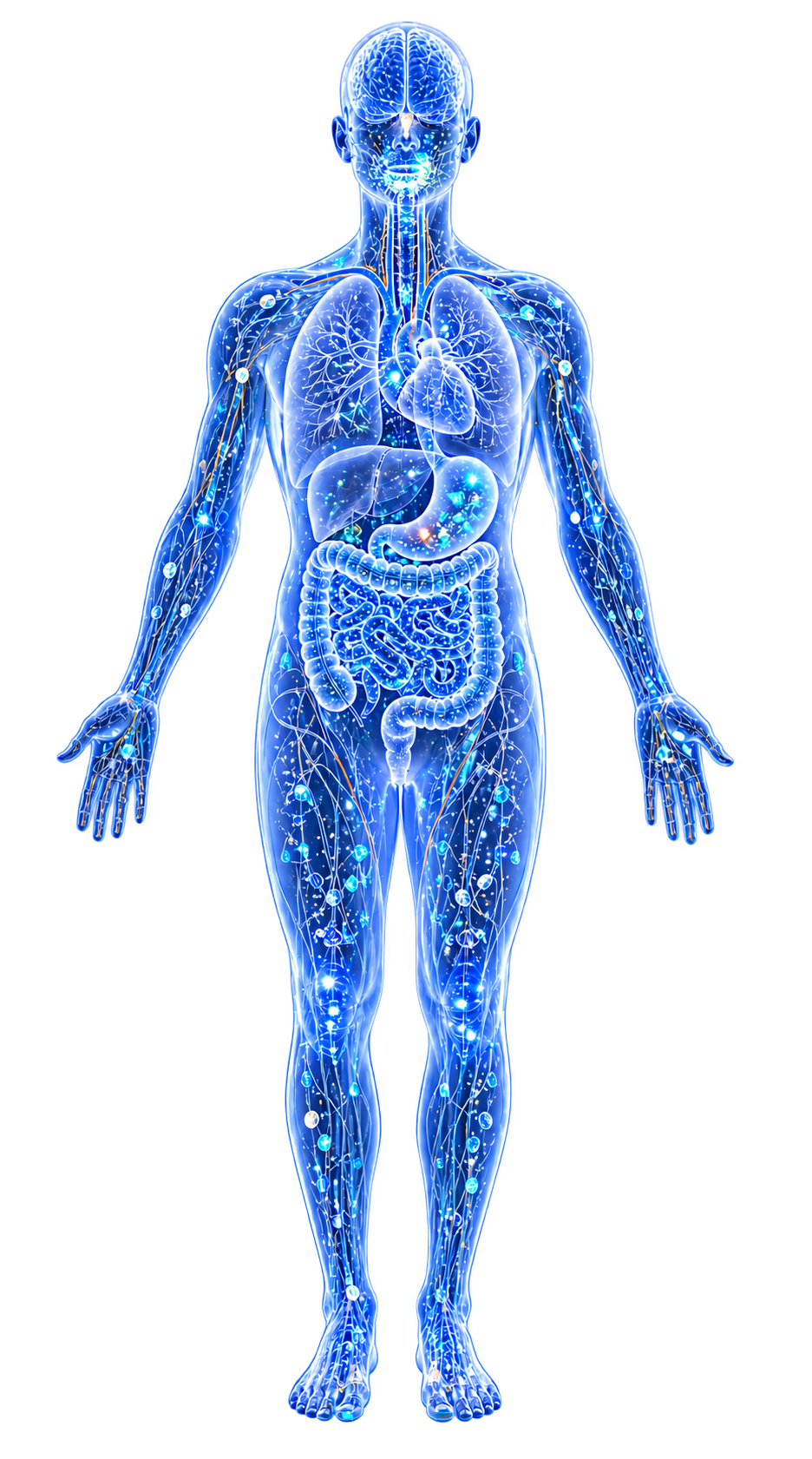
The oral microbiome is the second most complex microbial community in the human body after the gut, harboring ~700 species across distinct niches (tongue, buccal mucosa, gingival crevice, saliva, dental plaque).
While traditionally studied in the context of dental disease, the oral microbiome is increasingly recognized as a systemic health sentinel—oral Dysbiosis signatures predict cardiovascular disease, neurodegeneration, cancer, and autoimmunity, often years before clinical diagnosis.
The oral-gut axis provides a direct conduit: bacteria swallowed in saliva (~1 L/day) continuously seed the gastrointestinal tract. When gastric acid barriers are compromised (PPIs, achlorhydria), oral organisms colonize the gut in pathologically relevant numbers.
Evidence map1 cited passagesInspect provenance +
| Condition | Oral Microbiome Finding | Source | |-----------|------------------------|--------| | cardiovascular disease | Oral dysbiosis drives atherosclerosis; periodontal biomarkers predict CVD |, | | colorectal cancer | fusobacterium nucleatum originates from oral reservoir; oral-to-gut translocation | | | autism spectrum disorder | Oral microbiome disc
Contents
1. The Oral-Gut Axis2. Disease Associations3. Metal Interactions4. Key Oral Pathogens in WikiBiome5. Site-Specific Differences6. Cross-ReferencesThe Oral-Gut Axis#
PPI-Mediated Oral-Gut Migration#
Proton pump inhibitors raise gastric pH, enabling oral bacteria to survive transit and colonize the gut. This PPI-mediated oral-to-intestinal migration has been demonstrated for multiple periodontal pathogens including Porphyromonas gingivalis and Fusobacterium nucleatum.
Hematogenous Spread#
Periodontal disease creates bacteremia during chewing, brushing, and dental procedures. Oral pathogens enter the bloodstream through inflamed gingival tissue, reaching distant organs. P. gingivalis has been detected postmortem in Alzheimer's brains.
Disease Associations#
| Condition | Oral Microbiome Finding | Source |
|---|---|---|
| Cardiovascular Disease | Oral dysbiosis drives atherosclerosis; periodontal biomarkers predict CVD | [1]The oral microbiome in the pathophysiology of cardiovascular diseaseAndrea Tonelli, Evelyn N. Lumngwena, Ntobeko A. B. Ntusi · 2023Open reference 1 ↓[2]Periodontal Biomarkers in Cardiovascular Disease: Mechanisms, Diagnostics, and Clinical ImplicationsMax Foroughi, Keykavous Parang · 2026Open reference 2 ↓ |
| Colorectal Cancer | Fusobacterium nucleatum originates from oral reservoir; oral-to-gut translocation | [3]Insights into Oral Microbiome and Colorectal Cancer - On the Way of Searching New PerspectivesKudra A, Muszynski D, Sobocki BK et al. · 2023Open reference 3 ↓ |
| Autism Spectrum Disorder | Oral microbiome discriminates ASD from siblings (AUC=0.66); serotonin/GABA/Dopamine degradation pathways enriched | [4]Manghi 2024 — Large-Scale Metagenomic Analysis of Oral Microbiomes Reveals Markers for Autism Spectrum DisordersPaolo Manghi, Michele Filosi, Moreno Zolfo et al. · 2024Open reference 4 ↓ |
| Multiple Sclerosis | Oral metabolite signature discriminates MS with 92% specificity; hypotaurine pathway disrupted | [5]Investigating the metabolite signature of an altered oral microbiota as a discriminant factor for multiple sclerosis: a pilot studyLéo Boussamet, Emmanuel Montassier, Camille Mathé et al. · 2024Open reference 5 ↓[6]Multiple Sclerosis Patients Exhibit Oral Dysbiosis with Decreased Early Colonizers and Lower Hypotaurine LevelRachel L. Fitzjerrells, Leeann Aguilar Meza, Meeta Yadav et al. · 2025Open reference 6 ↓ |
| Parkinson's Disease | Oral dysbiosis correlates with PD severity | [7]Jo 2022 -- Association Between Oral Dysbiosis and Parkinson's Disease: A Systematic ReviewSungyang Jo, Wooyoung Jang, Eungseok Oh · 2022Open reference 7 ↓ |
| Endometriosis | Multi-site signatures (oral + vaginal + stool) distinguish endometriosis patients | [8]Hicks et al. 2025 — Oral, Vaginal, and Stool Microbial Signatures in Patients With Endometriosis as Potential Diagnostic Non-Invasive BiomarkersChloe Hicks, Mathew Leonardi, Xin-Yi Chua et al. · 2025Open reference 8 ↓ |
| Alzheimer's Disease | P. gingivalis and gingipains detected in AD brains | |
| Type 1 Diabetes | Subgingival plaque microbiota altered |
Metal Interactions#
The oral cavity is a unique environment for metal-microbiome interactions. Nickel from orthodontic appliances modifies oral S. aureus pathogenic potential—a direct metal-driven virulence shift. Mercury from dental amalgams affects oral microbial community composition.
Copper and zinc in dental materials exert antimicrobial effects on plaque biofilms.
Iron in gingival crevicular fluid provides substrate for siderophore competition among periodontal pathogens.
Key Oral Pathogens in WikiBiome#
| Organism | Oral Niche | Systemic Impact |
|---|---|---|
| Porphyromonas gingivalis | Subgingival plaque | AD (gingipains), CVD (atherosclerotic plaques), CRC |
| Fusobacterium nucleatum | Dental plaque, gingival crevice | CRC (primary driver), pancreatic cancer |
| Actinomyces | Dental plaque, tonsillar crypts | CRC, MS, endometriosis enrichment |
| Prevotella | Subgingival, saliva | Elevated in MS oral but depleted in MS gut |
| Streptococcus | Tooth surfaces, saliva | Dominant healthy oral genus; loss signals dysbiosis |
Site-Specific Differences#
A critical nuance: the same organism can show opposite abundance patterns in oral vs. gut samples. Prevotella is elevated in MS oral microbiota but decreased in the MS gut—demonstrating that phylum/genus-level findings are not transferable across body sites.
Cross-References#
- Gut Microbiome—Target of oral-gut axis translocation
- Porphyromonas gingivalis—Key periodontal pathogen with systemic effects
- Fusobacterium nucleatum—Oral origin of CRC-associated F. nucleatum
- Biofilm—Dental plaque as archetypal biofilm
- Gastroesophageal Reflux Disease (GERD)—PPIs enable oral-to-gut bacterial migration
- Nickel—Orthodontic nickel modifies oral microbial virulence
- Siderophores and Metallophores—Iron competition in periodontal disease
- Actinomyces—Oral pathobiont with systemic enrichment
References 8
Numbered by first appearance in the article, then reconciled with its declared source list.
- 1
Andrea Tonelli, Evelyn N. Lumngwena, Ntobeko A. B. Ntusi (2023). The oral microbiome in the pathophysiology of cardiovascular disease. Nature Reviews Cardiology.
- 2
Max Foroughi, Keykavous Parang (2026). Periodontal Biomarkers in Cardiovascular Disease: Mechanisms, Diagnostics, and Clinical Implications. Infection.
- 3
Kudra A, Muszynski D, Sobocki BK et al. (2023). Insights into Oral Microbiome and Colorectal Cancer - On the Way of Searching New Perspectives. Frontiers in Cellular and Infection Microbiology.
- 4
Paolo Manghi, Michele Filosi, Moreno Zolfo et al. (2024). Manghi 2024 — Large-Scale Metagenomic Analysis of Oral Microbiomes Reveals Markers for Autism Spectrum Disorders. Nature Communications.
- 5
Léo Boussamet, Emmanuel Montassier, Camille Mathé et al. (2024). Investigating the metabolite signature of an altered oral microbiota as a discriminant factor for multiple sclerosis: a pilot study. Scientific Reports.
- 6
Rachel L. Fitzjerrells, Leeann Aguilar Meza, Meeta Yadav et al. (2025). Multiple Sclerosis Patients Exhibit Oral Dysbiosis with Decreased Early Colonizers and Lower Hypotaurine Level. npj Biofilms and Microbiomes.
- 7
Sungyang Jo, Wooyoung Jang, Eungseok Oh (2022). Jo 2022 -- Association Between Oral Dysbiosis and Parkinson's Disease: A Systematic Review. Journal of Movement Disorders.
- 8
Chloe Hicks, Mathew Leonardi, Xin-Yi Chua et al. (2025). Hicks et al. 2025 — Oral, Vaginal, and Stool Microbial Signatures in Patients With Endometriosis as Potential Diagnostic Non-Invasive Biomarkers. BJOG: An International Journal of Obstetrics and Gynaecology.
Article network
Mentioned here 18
Pages linking here 5
Connect the evidence
Publicly readable discussion by ORCID-authenticated researchers. Questions, interpretation, methods, corrections, and new evidence stay attached to this record.
No discussion yet. Start with a precise question or a source-backed observation.
Activity and accepted changes
Accepted researcher context, editorial status, public discussion, and upstream Git revisions are shown together. Pending, declined, and withdrawn proposals remain private.
- published revision
Complete corpus-wide Dysbiosis linking
Karen Pendergrass · +1 −1
Inspect exact Git diff ↗ - published revision
massive wiki expansion: 149 stubs fixed, 100+ new pages, Rule 15 scan, keystone papers
WikiBiome Deploy Bot · +20 −20
Inspect exact Git diff ↗ - published revision
pre-overnight checkpoint 2026-04-18
WikiBiome Deploy Bot · +77 −0
Inspect exact Git diff ↗