

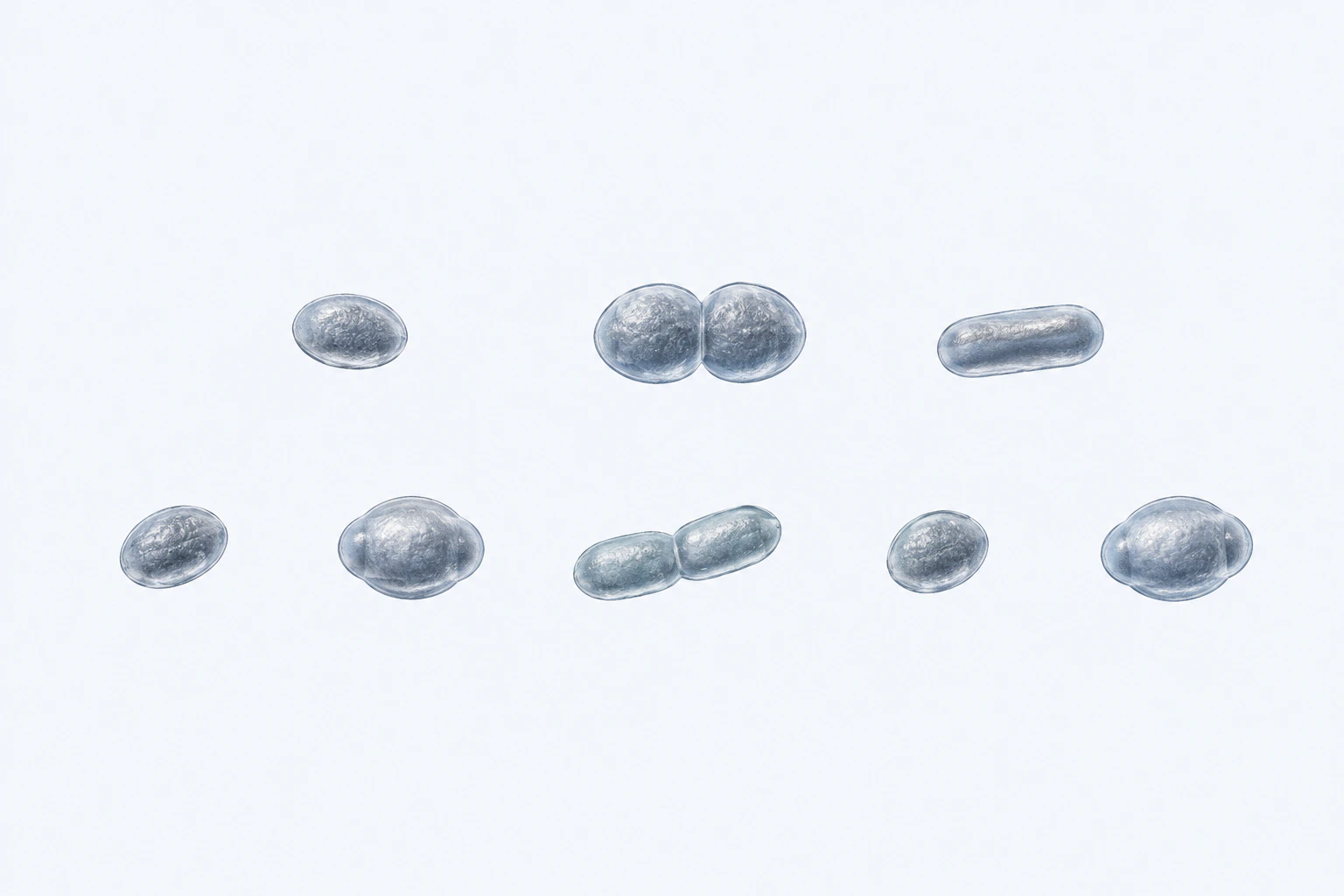
Type-strain-anchored pleomorphic coccobacillary, ovoid, and very-short-rod variation in Lancefieldella parvula, shown as ten bodies in six single and two paired groupings. Two lobed forms remain single continuous cells. This scientific reconstruction is representative, non-diagnostic, not a micrograph, and is keyed only to the current combination.
Scientific media record1 verified identifier
- Subject
- Lancefieldella parvulataxon · species
- Identifiers
- NCBITaxon:1382
- Review
- Editorial review completeIdentifiers authority-verified · Accessibility validated · · lancefieldella-parvula|lancefieldella-parvula-morphology-v1.webp
- Digital source
- Trained-algorithmic mediaCreated with a trained generative algorithm and reviewed by WikiBiome for subject identity, scientific framing, identifiers, provenance, and accessibility.
- Scientific basis
- Lancefieldella parvula — NCBI TaxonomyLancefieldella parvula — LPSNGenome-based taxonomic classification of the phylum ActinobacteriaComplete genome sequence of Atopobium parvulum type strain IPP 1246Lancefieldella parvula type strain
- License
- CC BY-SA 4.0Created
Lancefieldella parvula is the current name for NCBITaxon:1382. Atopobium parvulum is a validly published historical homotypic synonym rather than the current canonical name.[1]NCBI Taxonomy — Lancefieldella parvula (NCBITaxon:1382)Author information pendingOpen reference 1 ↓[2]LPSN — Lancefieldella parvulaAuthor information pendingOpen reference 2 ↓
Evidence map3 cited passagesInspect provenance +
Lancefieldella parvula is the current name for NCBITaxon:1382. Atopobium parvulum is a validly published historical homotypic synonym rather than the current canonical name.
Nouioui and colleagues transferred the species to the newly described genus Lancefieldella in a genome-based revision of Actinobacteria. Their description characterizes members of the genus as Gram-stain-positive, obligately anaerobic, non-motile, non-spore-forming small rods. LPSN lists L. parvula as the type species of the genus and records Atopobium parvu
The sequenced type strain, IPP 1246 (DSM 20469), was described under the then-current name Atopobium parvulum. That genome report notes frequent isolation from the human oral cavity and an association with oral malodor, while distinguishing association from demonstrated causation. The current evidence cited here does not support the former page's claims of a
Taxonomy and Characteristics#
Nouioui and colleagues transferred the species to the newly described genus Lancefieldella in a genome-based revision of Actinobacteria.[3]Genome-Based Taxonomic Classification of the Phylum ActinobacteriaImen Nouioui, Lorena Carro, Marina García-López et al. · 2018Open reference 3 ↓ Their description characterizes members of the genus as Gram-stain-positive, obligately anaerobic, non-motile, non-spore-forming small rods.
LPSN lists L. parvula as the type species of the genus and records Atopobium parvulum, Streptococcus parvulus, and Peptostreptococcus parvulus as homotypic synonyms.[2]LPSN — Lancefieldella parvulaAuthor information pendingOpen reference 2 ↓
Human Isolation Evidence#
The sequenced type strain, IPP 1246 (DSM 20469), was described under the then-current name Atopobium parvulum. That genome report notes frequent isolation from the human oral cavity and an association with oral malodor, while distinguishing association from demonstrated causation.[4]Complete genome sequence of Atopobium parvulum type strain (IPP 1246T)Alex Copeland, Johannes Sikorski, Alla Lapidus et al. · 2009Open reference 4 ↓
The current evidence cited here does not support the former page's claims of a specific iron requirement, cysteine-desulfhydrase-driven hydrogen-sulfide injury, oral-to-gut translocation, inflammatory bowel disease, or colorectal-cancer causation.
Literature Naming#
Studies published before or without adoption of the 2018 reclassification may accurately report Atopobium parvulum. WikiBiome preserves that historical display name when summarizing such studies, but the link resolves to this single current-name record.
References 4
Numbered by first appearance in the article, then reconciled with its declared source list.
- 1
Author information pending. NCBI Taxonomy — Lancefieldella parvula (NCBITaxon:1382). NCBI Taxonomy.
- 2
Author information pending. LPSN — Lancefieldella parvula. List of Prokaryotic names with Standing in Nomenclature.
- 3
Imen Nouioui, Lorena Carro, Marina García-López et al. (2018). Genome-Based Taxonomic Classification of the Phylum Actinobacteria. Frontiers in Microbiology.
- 4
Alex Copeland, Johannes Sikorski, Alla Lapidus et al. (2009). Complete genome sequence of Atopobium parvulum type strain (IPP 1246T). Standards in Genomic Sciences.
Article network
Pages linking here 2
Connect the evidence
Publicly readable discussion by ORCID-authenticated researchers. Questions, interpretation, methods, corrections, and new evidence stay attached to this record.
No discussion yet. Start with a precise question or a source-backed observation.
Published page changes
This record shows only material changes published on this page, including changes to its content, evidence, conclusions, or author context. Internal processes and discussion activity are excluded. Pending, declined, and withdrawn proposals remain private.
- published revision
Created “Lancefieldella parvula”: Lancefieldella parvula is the current name for NCBITaxon:1382. Atopobium parvulum is a validly published historical homotypic synonym rather than the current canonical name.
Created “Lancefieldella parvula”: Lancefieldella parvula is the current name for NCBITaxon:1382. Atopobium parvulum is a validly published historical homotypic synonym rather than the current canonical name. Published sections: Lancefieldella parvula; Taxonomy and Characteristics; Human Isolation Evidence; Literature Naming. · Karen Pendergrass · +43 −0
Inspect exact Git diff ↗