

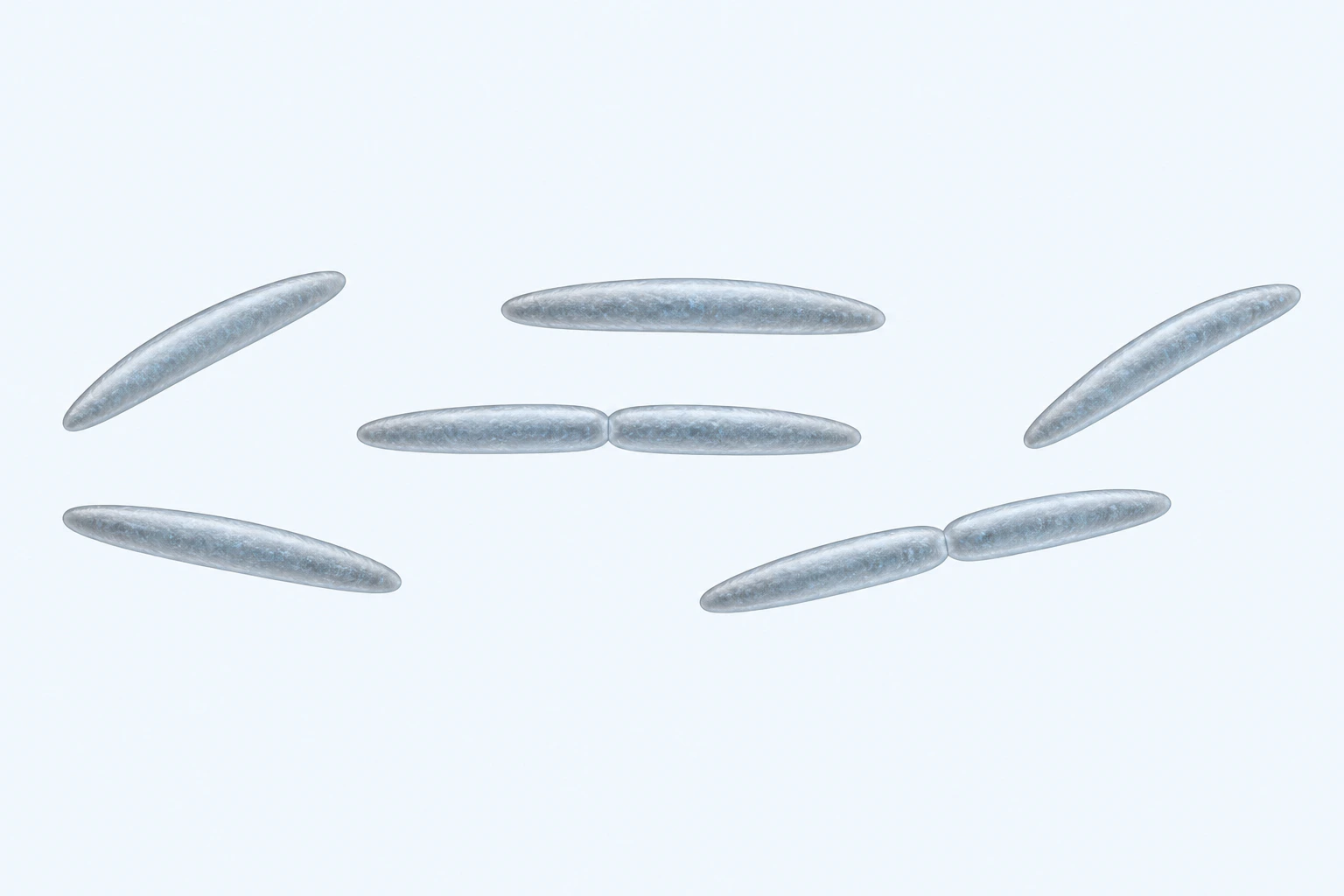
Type-species-anchored Leptotrichia fusiform rods, shown as eight bodies in four single and two paired groupings. This genus-level scientific reconstruction is representative, non-universal, non-diagnostic, and not a micrograph.
Scientific media record1 verified identifier
- Subject
- Leptotrichiataxon · genus
- Identifiers
- NCBITaxon:32067
- Review
- Editorial review completeIdentifiers authority-verified · Accessibility validated · · leptotrichia|leptotrichia-morphology-v1.webp
- Digital source
- Trained-algorithmic mediaCreated with a trained generative algorithm and reviewed by WikiBiome for subject identity, scientific framing, identifiers, provenance, and accessibility.
- Scientific basis
- Leptotrichia — NCBI TaxonomyLeptotrichia — LPSNLeptotrichia buccalis — LPSNComplete genome sequence of Leptotrichia buccalis type strain C-1013-b
- License
- CC BY-SA 4.0Created
A Gram-negative obligate anaerobe traditionally considered an oral commensal, but increasingly recognized as an opportunistic pathobiont with the ability to translocate from oral biofilms to the gastrointestinal tract and bloodstream.
Leptotrichia species are prominently enriched in oral biofilms associated with poor hygiene and periodontal disease, and show elevated abundance in Colorectal Cancer tissue and fecal microbiota, supporting a potential role in oncogenic pathways.
The genus is iron-dependent for virulence factor production and biofilm formation, making iron availability a key determinant of pathogenic activity.
Contents
1. Taxonomy and Habitat2. Iron Acquisition and Virulence3. Oral Biofilm Ecology4. Translocation and Gut Pathobiont Role5. Disease Associations6. Biofilm Architecture and Niche7. ConnectionsTaxonomy and Habitat#
Primary habitat: Oral biofilms (supragingival and subgingival plaque), gingival sulcus. Secondary habitat: Gut microbiota (often at low abundance in healthy controls, enriched in disease). Species of interest: Leptotrichia buccalis, L. wadei, L. trevisanii (oral); emerging oral-to-gut translocation events.
Classification: Bacteroidetes phylum (despite Gram-negative appearance, phylogenetically related to Bacteroides).
Iron Acquisition and Virulence#
Iron-Dependent Growth#
Leptotrichia relies on iron for core metabolic enzymes and biofilm synthesis, similar to Bacteroides fragilis and Fusobacterium varium. Produces siderophores and utilizes heme from blood degradation products in oral biofilms. Growth rate and virulence factor expression are tightly linked to iron bioavailability.
Virulence Factors#
Hemolysins—pore-forming toxins; mediate red blood cell lysis in bleeding periodontal sites and support nutrient scavenging. Proteases—degrade collagen, elastin, and other tissue components; facilitate biofilm invasion and barrier disruption. Lipopolysaccharide (LPS)—Gram-negative endotoxin; triggers TLR4 signaling and pro-inflammatory cytokine production (IL-6, TNF-α, IL-8).
Biofilm architecture: Polysaccharide-rich matrix; iron-dependent synthesis and maintenance.
Oral Biofilm Ecology#
Plaque Succession#
Primary colonizer (pioneer) or early-stage member in supragingival plaque biofilms. Establishes microenvironments (low pH, anaerobic pockets) enabling secondary colonizers. cobalt (Co)-aggregates with Actinomyces, Streptococcus, and anaerobic Gram-negatives (Prevotella, Fusobacterium).
Periodontal Disease Link#
Abundance increases sharply in gingivitis and periodontitis. Proteolytic activity degrades collagen in gingival connective tissue, facilitating pocket deepening. Bleeding at periodontal sites increases iron availability, driving Leptotrichia expansion.
Creates feedforward cycle: Metal-Driven Inflammation → iron release → Leptotrichia growth → more inflammation.
Translocation and Gut Pathobiont Role#
Oral-to-Gut Translocation Pathways#
Oropharyngeal aspiration: Biofilm fragments, saliva, and bacteria aspirated during swallowing; colonize esophagus and proximal gut. Increased intestinal permeability: In IBD or Dysbiosis, damaged epithelium allows bacterial translocation across mucosa. Impaired clearance: Reduced saliva flow or altered oral immunity enables Leptotrichia persistence and higher aspiration burden.
Gut Colonization Mechanisms#
Leptotrichia adheres to damaged epithelial areas and joins polymicrobial biofilms with bacteria Bacteroides fragilis, E. coli and fungi Candida albicans. Iron-rich dysbiotic environment (from inflammation, bleeding, hepcidin dysregulation) favors establishment. Proteases and hemolysins perpetuate epithelial damage and barrier dysfunction.
Disease Associations#
Oral and Periodontal Disease#
Gingivitis: Elevated Leptotrichia abundance; associated with bleeding and increased gingival crevicular fluid iron. Periodontitis: Significantly enriched in subgingival biofilms; tissue destruction correlates with Leptotrichia burden. Poor oral hygiene: Biofilm accumulation favors Leptotrichia dominance.
Colorectal Cancer#
Enrichment in CRC tissue and feces: Multiple studies report elevated Leptotrichia abundance in CRC patients vs. controls.
Translocation from oral biofilms: Oral disease as reservoir; microaspiration seeds colorectal biofilms. LPS-driven chronic inflammation: TLR4 signaling promotes NF-κB and IL-6 secretion, linking to CRC-associated inflammatory pathways. Protease activity: Tissue degradation and barrier disruption create pro-tumorigenic microenvironment.
Interkingdom cooperation: Leptotrichia in fungal-bacterial biofilms may suppress local immunity.
Other GI Conditions#
Inflammatory Bowel Disease: Variable enrichment; oral-derived microbes may exacerbate colonic inflammation in genetically predisposed individuals. Intra-abdominal abscess and bacteremia: Translocated Leptotrichia from dental procedures or oral infection; rarely cultured from blood but PCR-detectable.
Biofilm Architecture and Niche#
Structural Features#
Tight polysaccharide matrix protects cells from antimicrobials (antibiotics, antimicrobial peptides, lysozyme). Heterogeneous architecture: microaerobic/anaerobic zones support diverse metabolic states. Iron sequestration within biofilm matrix; local concentration exceeds planktonic environment.
Oxygen Gradient#
Obligate anaerobe but tolerates microaerobic conditions at biofilm-air interface. Oral biofilms develop oxygen gradients; Leptotrichia occupies deeper anaerobic zones. In gut (oxygen-limited), establishes readily alongside facultative anaerobes.
Connections#
- Iron—essential growth cofactor; iron availability drives virulence and translocation
- primary habitat; pathobiont in periodontal disease
- enriched in gingivitis/periodontitis; drives tissue destruction
- Colorectal Cancer—enriched in CRC tissue; oral-to-gut translocation pathway
- lipopolysaccharide—TLR4-mediated pro-inflammatory signaling
- Biofilm—protective polysaccharide matrix; iron-dependent architecture
- aspiration-mediated oral-to-gut pathway in dysbiosis and IBD
- fungal-bacterial biofilms in CRC and dysbiotic states
- nutritional immunity—proteases and hemolysins disrupt epithelial integrity
- Bacteroides fragilis—co-biofilm member; analogous iron-dependent pathobiont
References 8
Numbered by first appearance in the article, then reconciled with its declared source list.
- 1
Catala-Valentin AR, Mikhail S, Bernard JN et al. (2021). Corruption of Bacterial-Host Homeostasis as a Potential Risk Factor and Biomarker for Upper Gastrointestinal Carcinogenesis. Journal of Gastroenterology and Hepatobiliary Medicine.
- 2
Zhiguang Gao, Bomin Guo, Renyuan Gao et al. (2015). Microbiota disbiosis is associated with colorectal cancer. Frontiers in Microbiology.
- 3
Léo Boussamet, Emmanuel Montassier, Camille Mathé et al. (2024). Investigating the metabolite signature of an altered oral microbiota as a discriminant factor for multiple sclerosis: a pilot study. Scientific Reports.
- 4
Deshpande NP, Riordan SM, Castano-Rodriguez N et al. (2018). Deshpande 2018 — Esophageal Microbiome Signatures and Host Genetics. Microbiome.
- 5
Ying Qing, Lihua Xu, Ganqing Cui et al. (2021). Qing 2021 -- Salivary microbiome profiling reveals a dysbiotic schizophrenia-associated microbiota. npj Schizophrenia.
- 6
Ghazaleh Pourali, Danial Kazemi, Amir Shayan Chadeganipour et al. (2024). Microbiome as a biomarker and therapeutic target in pancreatic cancer. BMC Microbiology.
- 7
Kawar N, Park SG, Schwartz JL et al. (2021). Salivary microbiome with gastroesophageal reflux disease and treatment. Scientific Reports.
- 8
Liang T, Liu F, Liu L et al. (2021). Effects of Helicobacter pylori Infection on the Oral Microbiota of Reflux Esophagitis Patients. Frontiers in Cellular and Infection Microbiology.
Article network
Connect the evidence
Publicly readable discussion by ORCID-authenticated researchers. Questions, interpretation, methods, corrections, and new evidence stay attached to this record.
No discussion yet. Start with a precise question or a source-backed observation.
Activity and accepted changes
Accepted researcher context, editorial status, public discussion, and upstream Git revisions are shown together. Pending, declined, and withdrawn proposals remain private.
- published revision
Backfill inflammation concept links
Karen Pendergrass · +2 −2
Inspect exact Git diff ↗ - published revision
Complete corpus-wide Dysbiosis linking
Karen Pendergrass · +1 −1
Inspect exact Git diff ↗ - published revision
massive wiki expansion: 149 stubs fixed, 100+ new pages, Rule 15 scan, keystone papers
WikiBiome Deploy Bot · +33 −27
Inspect exact Git diff ↗ - published revision
nightly maintenance: 94 stub demotions, 181 source_count fixes, 22 auto-discovered stubs, 5 adversarial audits, 3 boundary fixes, 3 evidence-level corrections
WikiBiome Deploy Bot · +3 −0
Inspect exact Git diff ↗ - published revision
Citation integrity pass: 38 citations added, 24 parenthesized citations fixed
WikiBiome Deploy Bot · +1 −1
Inspect exact Git diff ↗ - published revision
WikiBiome update — 2026-04-15 17:23
WikiBiome Deploy Bot · +10 −10
Inspect exact Git diff ↗ - published revision
wiki: bulk entity upgrades, new article pages, and site regeneration
WikiBiome Deploy Bot · +6 −0
Inspect exact Git diff ↗ - published revision
WikiBiome update — integrity fixes, metallomic diet pages, cross-condition analyses
WikiBiome Deploy Bot · +4 −2
Inspect exact Git diff ↗ - published revision
WikiBiome update — 2026-04-10 17:16
WikiBiome Deploy Bot · +117 −0
Inspect exact Git diff ↗