
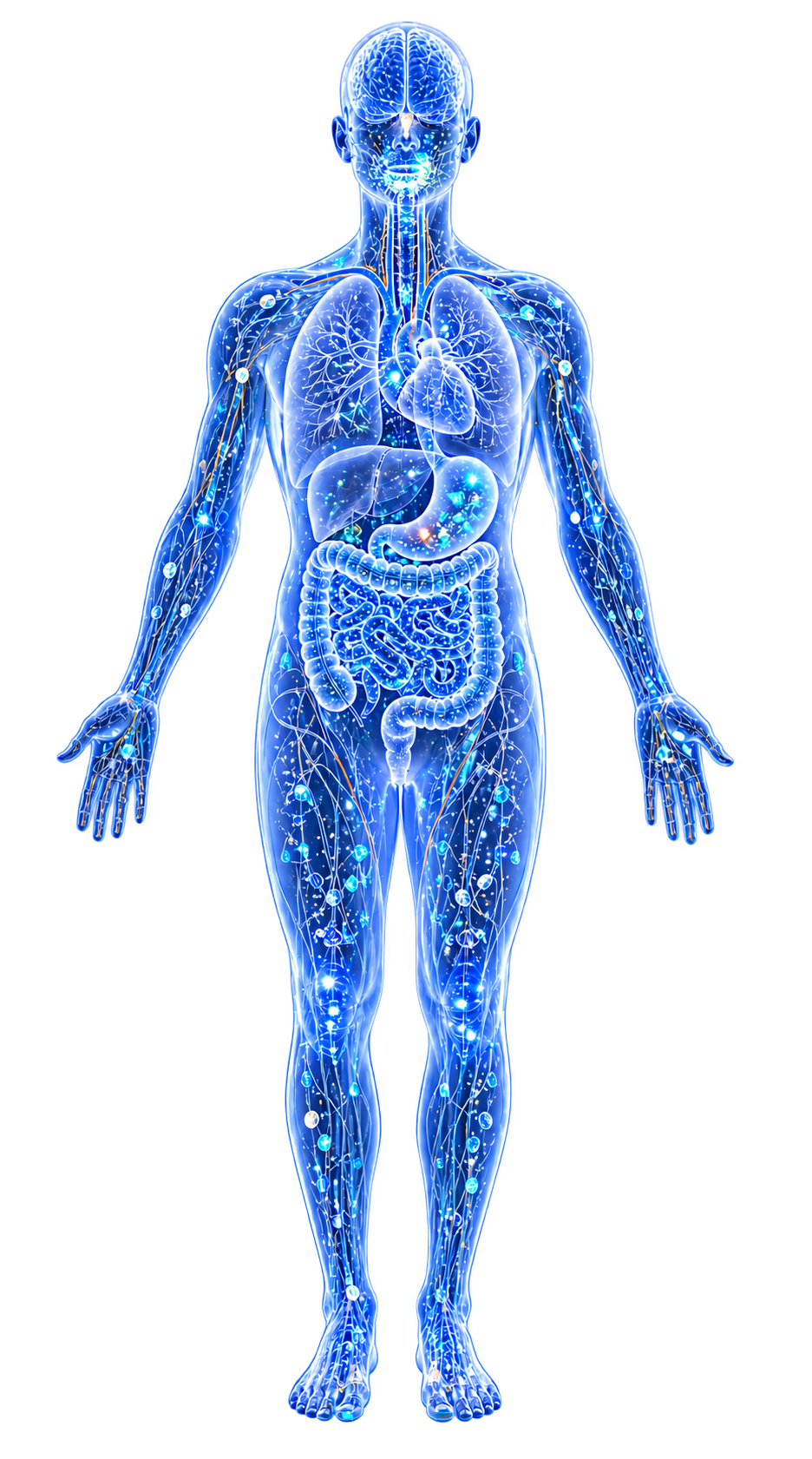
Autoimmunity occurs when the immune system attacks the body's own tissues. What has emerged over the past two decades is that the Gut Microbiome is not merely associated with autoimmune disease—it is a mechanistic driver of immune tolerance breakdown.
Metals add a second layer: they reshape microbial communities, disrupt barrier function, and directly modulate immune cell behavior, creating conditions that favor autoimmune activation.
Evidence map2 cited passagesInspect provenance +
Microbiome composition: The consistent autoimmune signature—depleted Faecalibacterium, Lachnospiraceae, and Bifidobacterium, enriched Proteobacteria—reflects loss of the anti-inflammatory SCFA-producing community.
A landmark meta-analysis revealed opposing microbiome signatures between autoimmune diseases and cancer: taxa enriched in autoimmunity tend to be depleted in cancer, and vice versa. This suggests that the immune system's relationship with the microbiome operates on a spectrum:
Contents
1. The Three Pillars of Autoimmune Initiation2. The Autoimmune-Cancer Axis3. Metal-Autoimmune Associations4. The Nutritional Immunity Paradox5. Conditions with Autoimmune Components6. Open Questions7. Cross-ReferencesThe Three Pillars of Autoimmune Initiation#
1. Molecular Mimicry#
Microbial proteins with structural similarity to host antigens can trigger cross-reactive immune responses.
Oral bacteria and atherosclerosis: Oral bacterial antigens activate autoimmune B cells targeting atherosclerotic plaques Cardiovascular Disease. Streptococcal M protein: Group A streptococcal M protein mimics cardiac myosin, driving rheumatic heart disease. Gut bacteria and thyroid: Bacterial proteins structurally similar to thyroid antigens (TPO, thyroglobulin) may trigger Thyroid Autoimmunity.
The metal connection: heavy metal-driven Dysbiosis selects for pathobionts whose surface proteins may share epitopes with host tissues. Metal-induced Metal-Driven Inflammation also lowers the activation threshold for cross-reactive T cells.
2. Barrier Dysfunction#
The gut barrier is the immune system's primary interface with the microbial world. When it fails, microbial antigens flood the lamina propria, overwhelming tolerance mechanisms.
Metal-driven barrier damage: Cadmium, Lead, and Mercury directly damage tight junction proteins (claudin, occludin, ZO-1), increasing intestinal permeability Mercury. SCFA depletion: Metal-driven loss of Butyrate-producing commensals reduces butyrate availability, the primary fuel for colonocyte tight junction maintenance.
LPS translocation: Increased permeability allows lipopolysaccharide to enter systemic circulation, driving chronic low-grade inflammation (endotoxemia).
3. Immune Dysregulation (Th17/Treg Imbalance)#
The balance between pro-inflammatory Th17 cells and regulatory T cells (Tregs) determines whether the immune system attacks self or maintains tolerance.
SCFA-dependent Treg induction: Butyrate and propionate promote FoxP3+ Treg differentiation. Dysbiosis-driven SCFA loss shifts the balance toward Th17 dominance. Metal effects on immune cells: Nickel directly activates dendritic cells via TLR-4 (unique to humans); cadmium impairs Treg function; lead activates Th1/Th17 polarization.
Microbiome composition: The consistent autoimmune signature—depleted Faecalibacterium, Lachnospiraceae, and Bifidobacterium, enriched Proteobacteria—reflects loss of the anti-inflammatory SCFA-producing community.[1]Reproducible and opposing gut microbiome signatures distinguish autoimmune diseases and cancers: a systematic review and meta-analysisMd Zohorul Islam, Melissa Tran, Tao Xu et al. · 2022Open reference 1 ↓
The Autoimmune-Cancer Axis#
A landmark meta-analysis revealed opposing microbiome signatures between autoimmune diseases and cancer: taxa enriched in autoimmunity tend to be depleted in cancer, and vice versa.[1]Reproducible and opposing gut microbiome signatures distinguish autoimmune diseases and cancers: a systematic review and meta-analysisMd Zohorul Islam, Melissa Tran, Tao Xu et al. · 2022Open reference 1 ↓ This suggests that the immune system's relationship with the microbiome operates on a spectrum.
Autoimmune pole: Over-reactive immune response to microbial signals → tissue damage. Cancer pole: Under-reactive immune response → failure of tumor immunosurveillance. Healthy center: Calibrated immune response maintaining tolerance while retaining anti-tumor capacity.
Metals may push individuals toward either pole depending on the specific metal, dose, and target tissue.
Metal-Autoimmune Associations#
| Metal | Autoimmune Conditions | Mechanism |
|---|---|---|
| Nickel | Contact dermatitis, Celiac Disease, Irritable Bowel Syndrome (IBS) | TLR-4 activation; metalloestrogen activity |
| Cadmium | Thyroid Autoimmunity, Rheumatoid Arthritis | zinc (Zn)/selenium (Se) displacement; barrier disruption |
| Lead | Multiple Sclerosis, Type 1 Diabetes | calcium (Ca) mimicry; Th1/Th17 activation |
| Mercury | Thyroid Autoimmunity, neurological autoimmunity | Thiol binding; selenoprotein disruption |
| Selenium (deficiency) | Thyroid Autoimmunity | Loss of selenoprotein-mediated immune regulation |
The Nutritional Immunity Paradox#
Nutritional-immunity—the host's strategy of sequestering metals from pathogens—can paradoxically contribute to autoimmunity. Iron restriction via hepcidin elevation starves pathogens but also deprives essential commensals that maintain immune tolerance. Zinc sequestration by calprotectin at inflammation sites creates local zinc deficiency that impairs Treg function.
The interpretation trap: Low serum metals in autoimmune patients may reflect active host defense (Primitive 2), not true nutritional deficiency. Supplementation in this context may feed pathogens rather than restore health.
Conditions with Autoimmune Components#
- Graves' Disease and Hashimoto's Thyroiditis—thyroid autoimmunity
- Multiple Sclerosis—CNS autoimmunity
- Type 1 Diabetes—pancreatic beta-cell autoimmunity
- Rheumatoid Arthritis—joint autoimmunity
- Celiac Disease—gluten-triggered intestinal autoimmunity
- Crohn's Disease—mucosal immune dysregulation
- Endometriosis—immune tolerance failure in peritoneal cavity
Open Questions#
Unresolved questions identified by the current evidence record.
01Do specific metal exposures preferentially trigger specific autoimmune diseases, or is the target organ determined by genetics and the metal determines the trigger?+
The current WikiBiome record identifies this as an unresolved evidence gap.
02Can metal chelation reverse autoimmune progression in early-stage disease?+
The current WikiBiome record identifies this as an unresolved evidence gap.
03Does the opposing autoimmune-cancer microbiome axis have therapeutic implications—could carefully calibrated immune modulation treat both?+
The current WikiBiome record identifies this as an unresolved evidence gap.
04What role does the Virome play in autoimmune initiation?+
The current WikiBiome record identifies this as an unresolved evidence gap.
Cross-References#
- Thyroid Autoimmunity—AITD-specific metal and microbiome analysis
- Molecular Mimicry—bacterial epitope cross-reactivity
- dysbiosis—microbial community disruption driving immune dysregulation
- Nutritional Immunity (Metal Sequestration)—host metal sequestration and its paradoxical effects
- Mis-Metallation—toxic metals replacing essential cofactors
- butyrate—SCFA-dependent Treg induction
- gut-barrier-integrity—metal-driven permeability
References 3
Numbered by first appearance in the article, then reconciled with its declared source list.
- 1
Md Zohorul Islam, Melissa Tran, Tao Xu et al. (2022). Reproducible and opposing gut microbiome signatures distinguish autoimmune diseases and cancers: a systematic review and meta-analysis. Microbiome.
- 2
Kosuke Fujimoto, Daichi Miyaoka, Satoshi Uematsu (2022). Characterization of the human gut virome in metabolic and autoimmune diseases. Inflammation and Regeneration.
- 3
McGregor Brock (2015). McGregor Brock 2015 — The Role of Selenium in Thyroid Autoimmunity: A Review. Journal of Restorative Medicine.
Article network
Mentioned here 18
Pages linking here 5
Connect the evidence
Publicly readable discussion by ORCID-authenticated researchers. Questions, interpretation, methods, corrections, and new evidence stay attached to this record.
No discussion yet. Start with a precise question or a source-backed observation.
Published page changes
This record shows only material changes published on this page, including changes to its content, evidence, conclusions, or author context. Internal processes and discussion activity are excluded. Pending, declined, and withdrawn proposals remain private.
- published revision
Revised “Cross-References”: now reads “butyrate -- SCFA-dependent Treg induction - gut-barrier-integrity -- metal-driven permeability”.
Revised “Cross-References”: changed “butyrate -- SCFA-dependent Treg induction - gut barrier integrity -- metal-driven permeability” to “butyrate -- SCFA-dependent Treg induction - gut-barrier-integrity -- metal-driven permeability”. · WikiBiome Deploy Bot · +1 −1
Inspect exact Git diff ↗ - published revision
Created “Autoimmunity”: Autoimmunity occurs when the immune system attacks the body's own tissues. What has emerged over the past two decades is that the gut microbiome is not merely associated with autoimmune disease -- it…
Created “Autoimmunity”: Autoimmunity occurs when the immune system attacks the body's own tissues. What has emerged over the past two decades is that the gut microbiome is not merely associated with autoimmune disease -- it… Published sections: Autoimmunity; 1. Molecular Mimicry; 2. Barrier Dysfunction; 3. Immune Dysregulation (Th17/Treg Imbalance); The Autoimmune-Cancer Axis; Metal-Autoimmune Associations; The Nutritional Immunity Paradox; Conditions with Autoimmune Components; Open Questions; Cross-References. · WikiBiome Deploy Bot · +100 −0
Inspect exact Git diff ↗