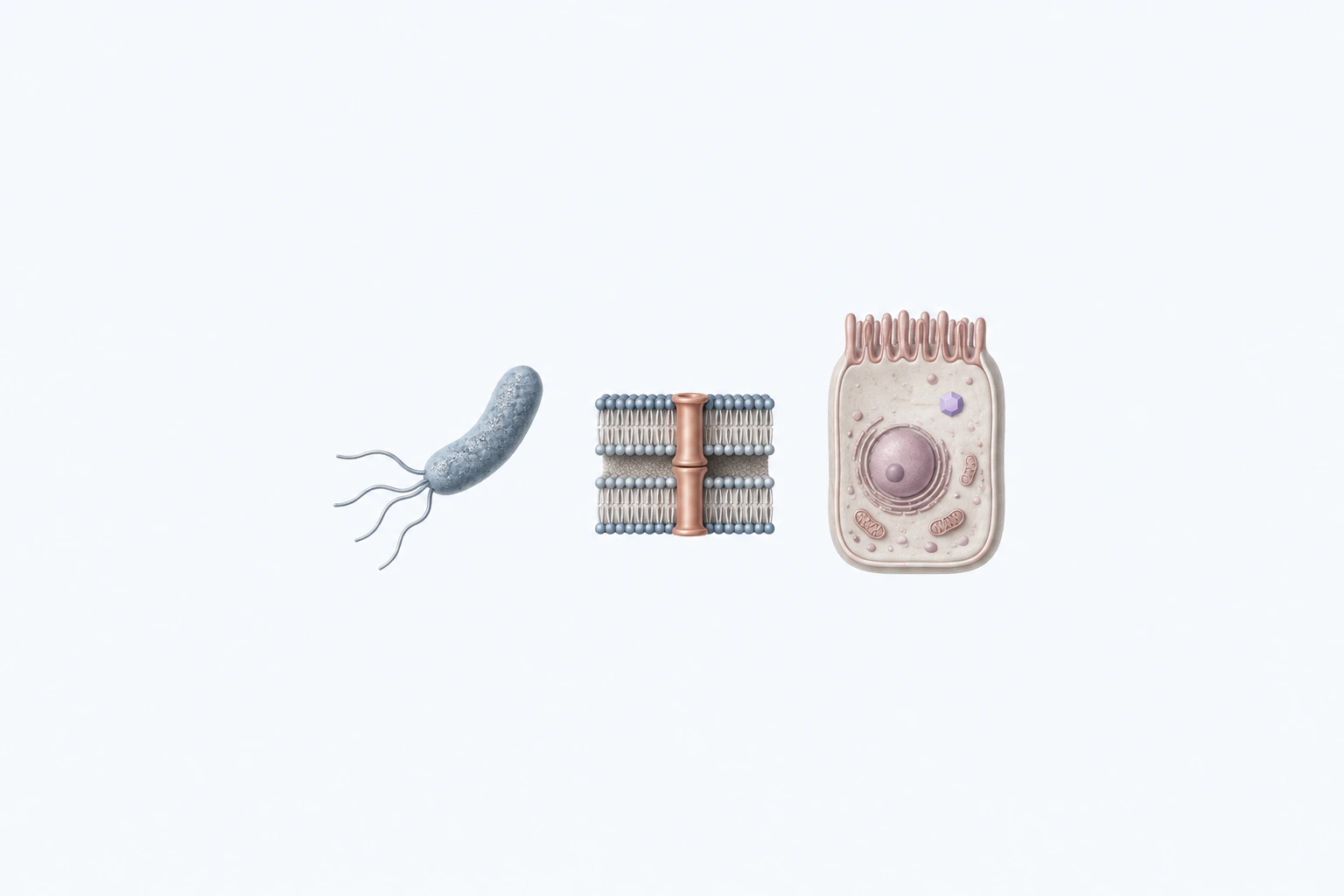
CagA is an effector protein produced by some strains of helicobacter pylori. Its name derives from “cytotoxin-associated gene A.” CagA is delivered into gastric epithelial cells through the bacterium's type IV secretion system and is therefore different from a freely se…
[NiFe] hydrogenases are the second major nickel-dependent virulence factor class in human pathogens. Less widespread than urease but critical for energy metabolism in gastric, enteric, and intracellular pathogens. The discovery that H. pylori hydrogenase powers CagA tra…
Nickel-urease (urease, EC 3.5.1.5) is a metalloenzyme that catalyzes the hydrolysis of urea (NH₂-CO-NH₂) to ammonia (NH₃) and carbon dioxide (CO₂). The active site contains two nickel ions (Ni²⁺) coordinated by histidine and cysteine residues. Nickel-urease is expressed…
NiFe-hydrogenase (also called [Ni-Fe] hydrogenase or nickel-iron hydrogenase) is a class of enzymes that catalyze reversible hydrogen (H₂) oxidation. The active site contains both nickel (Ni) and iron (Fe) metal atoms arranged in a sophisticated bimetallic cluster. The …
The most widespread nickel-dependent virulence factor across human pathogens. Urease is found in at least 40 prokaryotic and 9 eukaryotic pathogenic species, making it the single most important enzyme linking dietary/environmental nickel to infectious disease.