
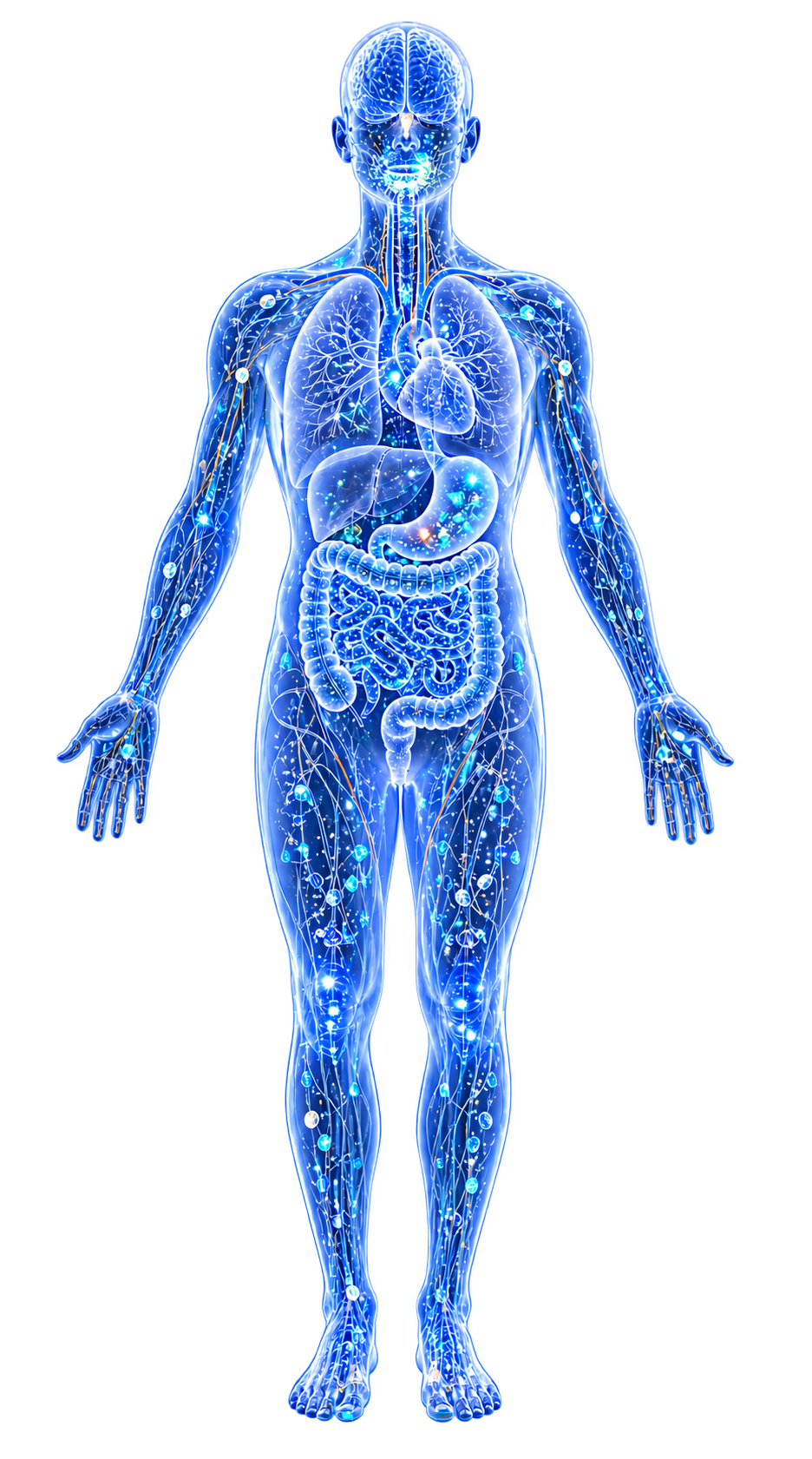
Anti-inflammatory and plant-forward diets are the standard nutritional recommendation for endometriosis, PCOS, rheumatoid arthritis, and IBD. These diets emphasize legumes, whole grains, nuts, seeds, dark chocolate, and cruciferous vegetables—precisely the foods with the highest Nickel content.
For the estimated 15-20% of the population with nickel sensitivity (8-19% of adults by patch test, with strong female predominance of 14-20% of women), these "healthy" diets may trigger Systemic Nickel Allergy Syndrome (SNAS) and Nickel Allergic Contact Mucositis (nickel (Ni) ACM), actively worsening the conditions they are prescribed to treat.
Evidence map5 cited passagesInspect provenance +
Endometriosis: Borghini et al. (2020) found that 90.3% of endometriosis patients with GI symptoms tested positive for Ni ACM via oral mucosa patch test. A 3-month low-nickel diet produced statistically significant improvement in all 15 gastrointestinal symptoms, all 7 extraintestinal symptoms, AND the three cardinal gynecological symptoms—dysmenorrhea, dy
The vegetarian case: Lopez-Botella et al. (2023) documented a 22-year-old vegetarian woman with peritoneal endometriosis whose peritoneal fluid nickel was 40.4 ug/L—a 4:1 ratio versus the control—with no occupational exposure. Her regular consumption of tomatoes (3x/week), nuts (1x/week), and other high-nickel plant foods was identified as the plausibl
The fruit-vegetable divergence: Harris et al. (2018), analyzing 70,835 women from the Nurses' Health Study II over 22 years, found that citrus fruits (high in beta-cryptoxanthin, low in nickel) reduced endometriosis risk by 22%, while cruciferous vegetables, corn, and peas/lima beans—all high-nickel foods—INCREASED risk by 13-30%. This pattern is invis
Scale of the problem: Mazza et al. (2023) found that 66% of endometriosis patients make dietary changes after diagnosis, with many increasing their vegetable, cereal, and legume intake—inadvertently raising their nickel exposure. Barnard et al. (2023) explicitly recommend plant-based diets for endometriosis without mentioning nickel, noting that these die
Nickel is a metalloestrogen—it binds estrogen receptors and can induce proliferation of ERa+ cells. For an estrogen-dependent disease like endometriosis, the combination of estrogenic dietary nickel and the inflammatory immune response of Ni ACM may create a double hit: inflammation from the allergic mucositis response plus estrogenic stimulation of endom
The Evidence#
Endometriosis: Borghini et al. (2020) found that 90.3% of endometriosis patients with GI symptoms tested positive for nickel (Ni) ACM via oral mucosa patch test.
A 3-month low-nickel diet produced statistically significant improvement in all 15 gastrointestinal symptoms, all 7 extraintestinal symptoms, AND the three cardinal gynecological symptoms—dysmenorrhea, dyspareunia, and pelvic pain (all p < 0.005).[1]Irritable Bowel Syndrome-Like Disorders in Endometriosis: Prevalence of Nickel Sensitivity and Effects of a Low-Nickel Diet. An Open-Label Pilot StudyBorghini R, Porpora MG, Casale R et al. · 2020Open reference 1 ↓
The vegetarian case: Lopez-Botella et al. (2023) documented a 22-year-old vegetarian woman with peritoneal endometriosis whose peritoneal fluid nickel was 40.4 ug/L—a 4:1 ratio versus the control—with no occupational exposure.
Her regular consumption of tomatoes (3x/week), nuts (1x/week), and other high-nickel plant foods was identified as the plausible exposure route. She had chosen her diet for health reasons.[2]Elevated Lead, Nickel, and Bismuth Levels in the Peritoneal Fluid of a Peritoneal Endometriosis Patient without Toxic Habits or Occupational Exposure following a Vegetarian DietLopez-Botella A, Gomez-Torres MJ, Sanchez R et al. · 2023Open reference 2 ↓
The fruit-vegetable divergence: Harris et al. (2018), analyzing 70,835 women from the Nurses' Health Study II over 22 years, found that citrus fruits (high in beta-cryptoxanthin, low in nickel) reduced endometriosis risk by 22%, while cruciferous vegetables, corn, and peas/lima beans—all high-nickel foods—INCREASED risk by 13-30%.
This pattern is invisible without the nickel lens: the protective effect of fruit and the harmful effect of specific vegetables maps precisely onto their nickel content.[3]Fruit and vegetable consumption and risk of endometriosisHarris HR, Eke AC, Chavarro JE et al. · 2018Open reference 3 ↓
Scale of the problem: Mazza et al. (2023) found that 66% of endometriosis patients make dietary changes after diagnosis, with many increasing their vegetable, cereal, and legume intake—inadvertently raising their nickel exposure.[4]The impact of endometriosis on dietary choices and activities of everyday life: a cross-sectional studyMazza E, Troiano E, Mazza S et al. · 2023Open reference 4 ↓
Barnard et al. (2023) explicitly recommend plant-based diets for endometriosis without mentioning nickel, noting that these diets can reduce circulating estrogen by 10-25%.[5]Nutrition in the prevention and treatment of endometriosis: A reviewBarnard ND, Holtz DN, Schmidt N et al. · 2023Open reference 5 ↓ This is correct for most patients but potentially harmful for the nickel-sensitive subgroup.
Why It Matters#
Nickel is a Metalloestrogen—it binds estrogen receptors and can induce proliferation of ERa+ cells.[1]Irritable Bowel Syndrome-Like Disorders in Endometriosis: Prevalence of Nickel Sensitivity and Effects of a Low-Nickel Diet. An Open-Label Pilot StudyBorghini R, Porpora MG, Casale R et al. · 2020Open reference 1 ↓
For an estrogen-dependent disease like endometriosis, the combination of estrogenic dietary nickel and the inflammatory immune response of nickel (Ni) ACM may create a double hit: inflammation from the allergic mucositis response plus estrogenic stimulation of endometriotic tissue.
The Clinical Gap#
No major clinical guideline for endometriosis, PCOS, RA, or IBD recommends screening for nickel sensitivity before prescribing plant-forward diets. This is a testable, actionable gap.
References 5
Numbered by first appearance in the article, then reconciled with its declared source list.
- 1
Borghini R, Porpora MG, Casale R et al. (2020). Irritable Bowel Syndrome-Like Disorders in Endometriosis: Prevalence of Nickel Sensitivity and Effects of a Low-Nickel Diet. An Open-Label Pilot Study. Nutrients.
- 2
Lopez-Botella A, Gomez-Torres MJ, Sanchez R et al. (2023). Elevated Lead, Nickel, and Bismuth Levels in the Peritoneal Fluid of a Peritoneal Endometriosis Patient without Toxic Habits or Occupational Exposure following a Vegetarian Diet. Toxics.
- 3
Harris HR, Eke AC, Chavarro JE et al. (2018). Fruit and vegetable consumption and risk of endometriosis. Human Reproduction.
- 4
Mazza E, Troiano E, Mazza S et al. (2023). The impact of endometriosis on dietary choices and activities of everyday life: a cross-sectional study. Frontiers in Nutrition.
- 5
Barnard ND, Holtz DN, Schmidt N et al. (2023). Nutrition in the prevention and treatment of endometriosis: A review. Frontiers in Nutrition.
Article network
Mentioned here 3
Pages linking here 7
Connect the evidence
Publicly readable discussion by ORCID-authenticated researchers. Questions, interpretation, methods, corrections, and new evidence stay attached to this record.
No discussion yet. Start with a precise question or a source-backed observation.
Published page changes
This record shows only material changes published on this page, including changes to its content, evidence, conclusions, or author context. Internal processes and discussion activity are excluded. Pending, declined, and withdrawn proposals remain private.
No material page changes have been recorded yet.