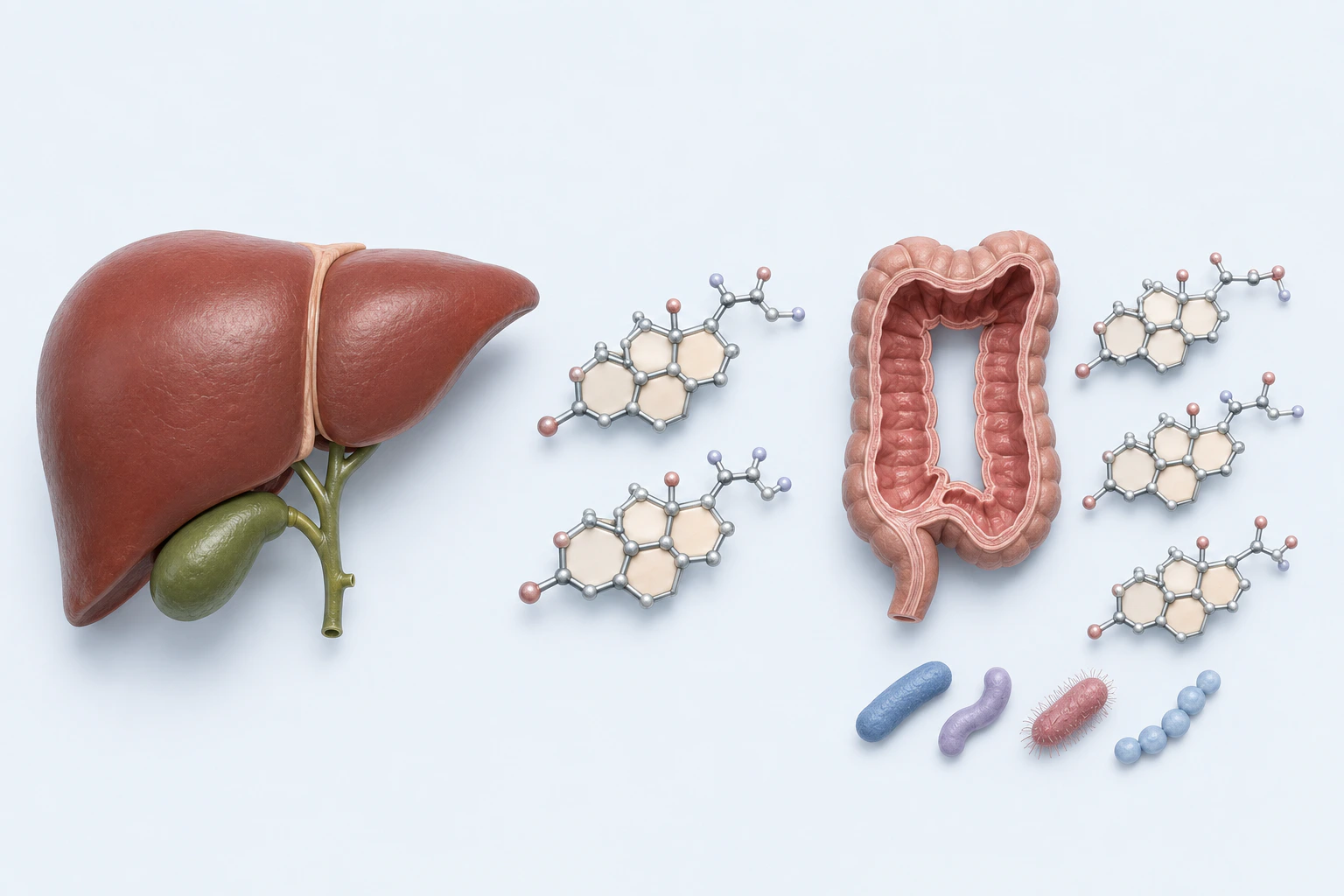
Bile acids are cholesterol-derived amphipathic molecules synthesized in the liver, secreted into the duodenum, and extensively modified by gut bacteria. The host-microbe co-metabolism of bile acids creates a signaling network with profound effects on lipid metabolism, g…
The farnesoid X receptor (FXR), also known as NR1H4, is a nuclear receptor that functions as the primary bile acid sensor in the body. Activated by bile acids — especially chenodeoxycholic acid (CDCA) — FXR regulates bile acid synthesis, cholesterol metabolism, glucose …
A condition in which cells fail to respond normally to insulin, requiring progressively higher insulin levels to maintain glucose homeostasis. Insulin resistance is central to PCOS, type 2 diabetes, and metabolic syndrome, and has extensive but complex connections to me…
A cluster of conditions — high blood pressure, impaired fasting glucose, insulin resistance, abdominal obesity (BMI ≥25), high triglycerides, low HDL-C — defined by the presence of ≥3 components. Emerging evidence links MetS to environmental nickel exposure, though find…
Nickel-glyoxalase (Ni-GlxI) is a bacterial variant of the glyoxalase I enzyme system that depends on nickel as its essential metal cofactor. This enzyme detoxifies methylglyoxal (MG), a toxic glycolysis byproduct that accumulates under glucose fermentation. Unlike the h…