
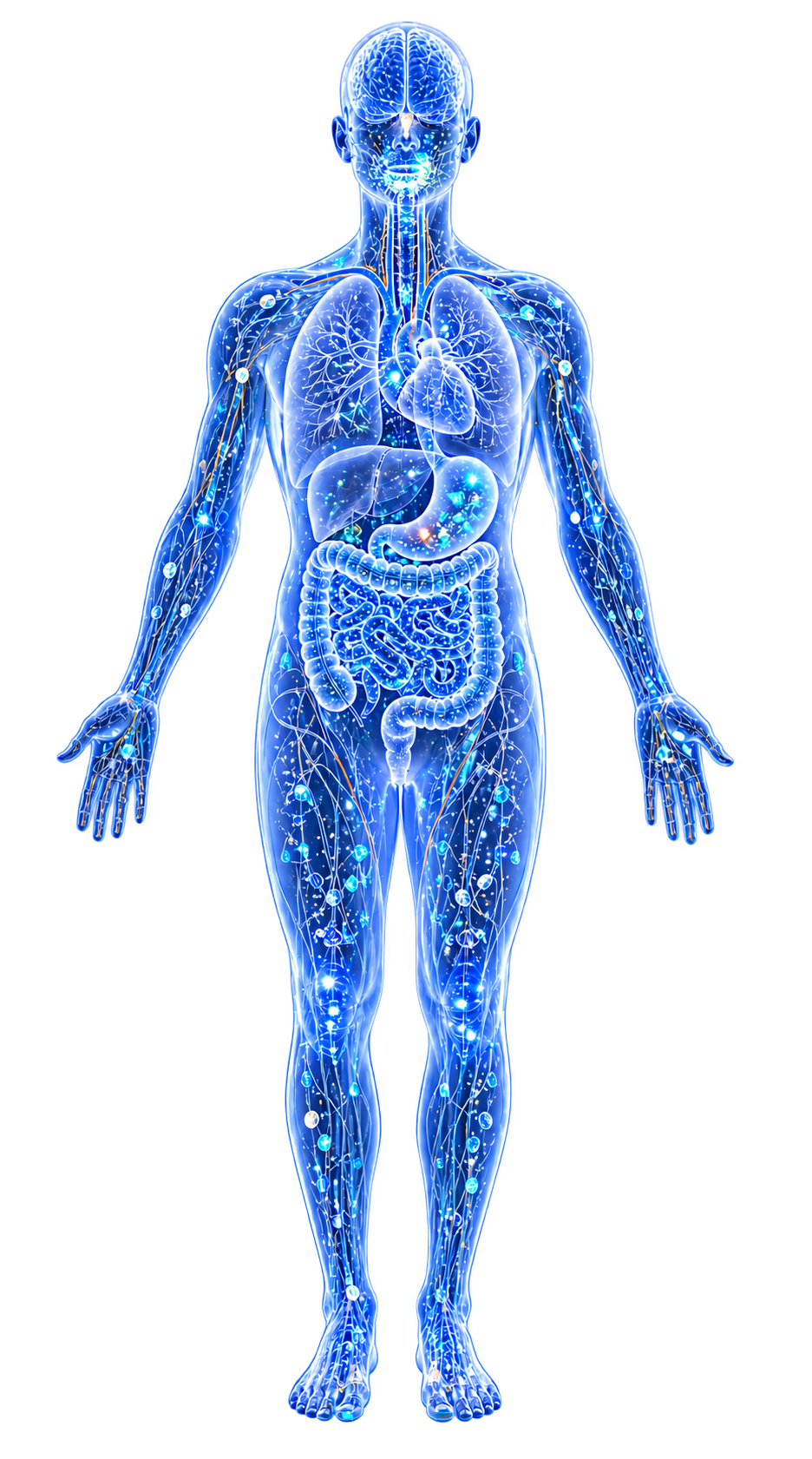
A cluster of conditions—high blood pressure, impaired fasting glucose, insulin resistance, abdominal obesity (BMI ≥25), high triglycerides, low HDL-C—defined by the presence of ≥3 components. Emerging evidence links MetS to environmental Nickel exposure, though findings remain inconclusive.[1]Cardio-Metabolic Effects of Nickel: A Narrative ReviewYucheng Liu, Xiaomin Luo, Yongde Peng et al. · 2025Open reference 1 ↓
Evidence map1 cited passagesInspect provenance +
A cluster of conditions—high blood pressure, impaired fasting glucose, insulin resistance, abdominal obesity (BMI ≥25), high triglycerides, low HDL-C—defined by the presence of ≥3 components. Emerging evidence links MetS to environmental nickel exposure, though findings remain inconclusive.
Contents
1. Evidence for Nickel-MetS Association2. Proposed Mechanism3. Key Limitations4. ConnectionsEvidence for Nickel-MetS Association#
Occupational Studies#
Chinese nickel-exposed workers (n=35,104, Jinchuan): elevated age-adjusted prevalence of MetS components (hypertension 29.5%, abnormal lipid 27.5%, BMI ≥25 13.9%). Diabetes prevalence in nickel workers: 12.8% (vs. 11.6% national average).
Higher in males than females across most MetS components.
Population Studies (NHANES)#
Eight studies used NHANES 2017-2018 data with different designs and reached contradictory conclusions—a central finding highlighting methodological challenges. Luo et al. 2024: inverted L-shaped dose-response with MetS; inflection at UNi 0.2141 μg/L. Effects strongest in males >40, less educated, smokers.
Strongest correlations: high fasting glucose, reduced HDL-C, abdominal obesity, elevated blood pressure. No significant correlation between nickel and hyperlipidemia.
Dose-Response Complexity#
Multiple non-linear patterns observed: U-shaped, inverse U-shaped, and L-shaped curves depending on the outcome and study.
Zhang et al.: plasma nickel was lower in T2DM patients vs. controls—suggesting nickel may be essential at low levels, complicating the dose-response picture.
No animal model exists at UNi-equivalent doses <6.1 μg/L.
Proposed Mechanism#
Oxidative Stress is the primary proposed link: increased SOD, reduced catalase, elevated MDA. Nickel interactions with other metals (zinc, vanadium, chromium, copper) may modulate effects. MASLD (metabolic dysfunction-associated steatotic liver disease) also linked to serum nickel in sex-specific patterns.
Key Limitations#
- All major human studies are cross-sectional—cannot establish causation.
- Studies use different clinical variables, inclusion criteria, and statistical methods on the same database.
- Biological plausibility mainly supported at high concentrations, not environmental levels.
- Nickel's potential essentiality confounds low-dose interpretation.
Connections#
- Nickel—the implicated metal
- oxidative stress—proposed mechanism
- Relates to Metal Carcinogenesis as a non-cancer endpoint of metal toxicity
References 9
Numbered by first appearance in the article, then reconciled with its declared source list.
- 1
★Yucheng Liu, Xiaomin Luo, Yongde Peng et al. (2025). Cardio-Metabolic Effects of Nickel: A Narrative Review. Cardiovascular Toxicology.
- 2
Denise Mafra, Natalia A. Borges, Livia Alvarenga et al. (2022). Fermented Food: Should Patients with Cardiometabolic Diseases Go Back to an Early Neolithic Diet?. Critical Reviews in Food Science and Nutrition.
- 3
Yuanzhao Xu, Lingyue An, Jiling Xie et al. (2026). Xu 2026 — The Gut-Prostate Axis in Benign Prostatic Hyperplasia: Systematic Review of Microbial Dysbiosis and Pathogenic Mechanisms. BMC Urology.
- 4
Adriel Latorre-Pérez, Marta Hernández, Jose Ramón Iglesias et al. (2021). Latorre-Pérez 2021 — The Spanish Gut Microbiome Reveals Links Between Microorganisms and Mediterranean Diet. Scientific Reports.
- 5
Yi Lu, Jiaqi Kang, Zhongjia Li et al. (2021). Lu 2021 — Plant-Based Diet and Erectile Dysfunction in Chinese Men. Basic and Clinical Andrology.
- 6
Patrick A. de Jonge, Koen Wortelboer, Torsten P. M. Scheithauer et al. (2022). Gut Virome Profiling Identifies a Widespread Bacteriophage Family Associated with Metabolic Syndrome. Nature Communications.
- 7
Kevin T. McVary (2007). McVary 2007 — Erectile Dysfunction Clinical Practice Review. New England Journal of Medicine.
- 8
de Vos WM, de Vos EAJ (2012). Role of the Intestinal Microbiome in Health and Disease: From Correlation to Causation. Nutrition Reviews.
- 9
Anna Griffith, Adam Perlman, Tara Karr et al. (2026). Griffith 2026 — Lifestyle Changes and Probiotic Supplementation for Improving Longstanding Type 2 Diabetes in a Male Undergoing Testosterone Replacement Therapy. Frontiers in Endocrinology.
Article network
Mentioned here 3
Pages linking here 17
Connect the evidence
Publicly readable discussion by ORCID-authenticated researchers. Questions, interpretation, methods, corrections, and new evidence stay attached to this record.
No discussion yet. Start with a precise question or a source-backed observation.
Activity and accepted changes
Accepted researcher context, editorial status, public discussion, and upstream Git revisions are shown together. Pending, declined, and withdrawn proposals remain private.
- published revision
Backfill oxidative stress concept links
Karen Pendergrass · +1 −1
Inspect exact Git diff ↗ - published revision
massive wiki expansion: 149 stubs fixed, 100+ new pages, Rule 15 scan, keystone papers
WikiBiome Deploy Bot · +22 −16
Inspect exact Git diff ↗ - published revision
nightly maintenance: 94 stub demotions, 181 source_count fixes, 22 auto-discovered stubs, 5 adversarial audits, 3 boundary fixes, 3 evidence-level corrections
WikiBiome Deploy Bot · +3 −0
Inspect exact Git diff ↗ - published revision
pre-overnight checkpoint 2026-04-18
WikiBiome Deploy Bot · +3 −1
Inspect exact Git diff ↗ - published revision
WikiBiome update — integrity fixes, metallomic diet pages, cross-condition analyses
WikiBiome Deploy Bot · +3 −1
Inspect exact Git diff ↗ - published revision
WikiBiome v7 — interactive microbiome metallomics encyclopedia
Karen Pendergrass · +49 −0
Inspect exact Git diff ↗