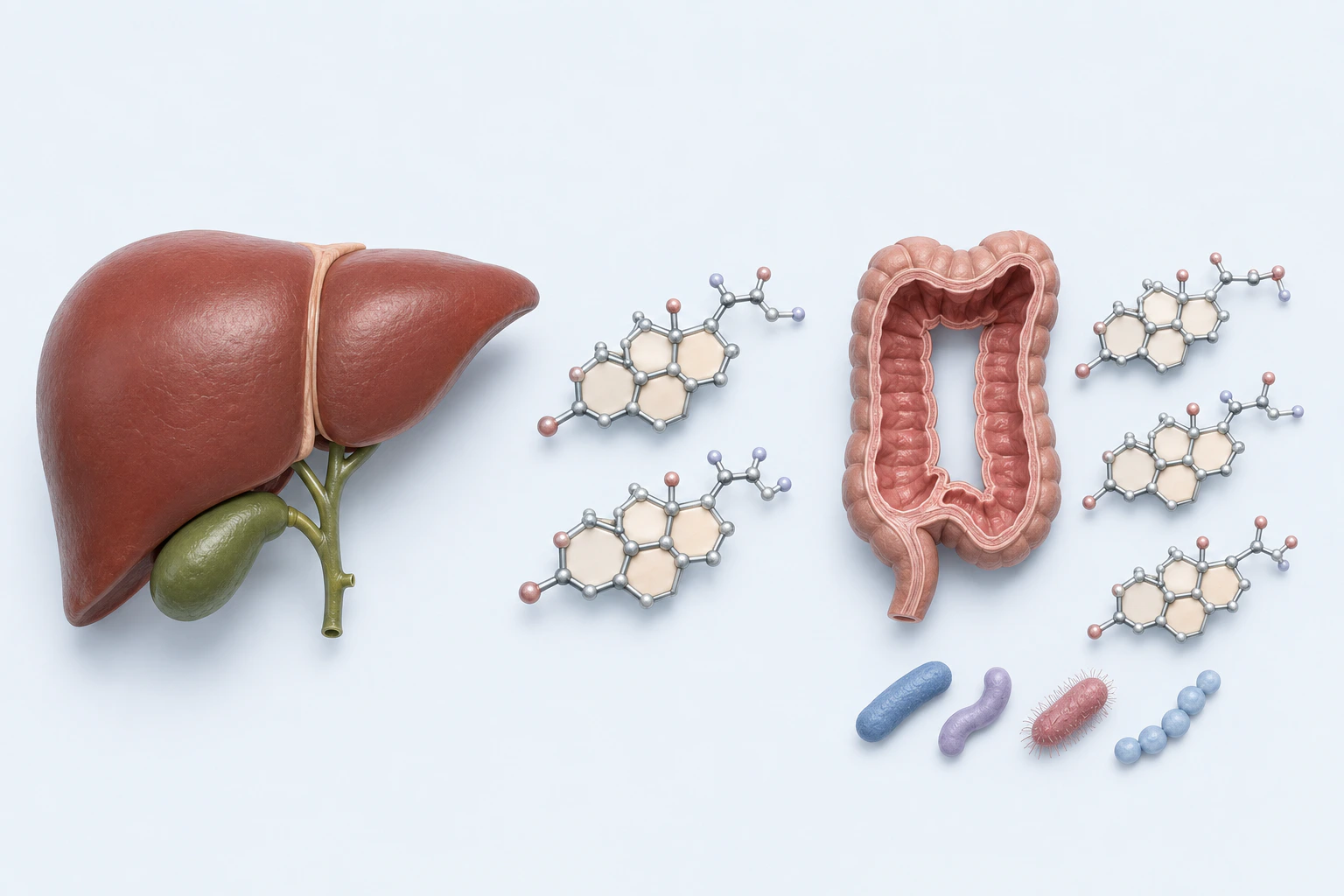
Bile acids are cholesterol-derived amphipathic molecules synthesized in the liver, secreted into the duodenum, and extensively modified by gut bacteria. The host-microbe co-metabolism of bile acids creates a signaling network with profound effects on lipid metabolism, g…
The gut-thyroid axis describes the bidirectional communication between the gut microbiome and the thyroid gland. The thyroid regulates metabolism, energy homeostasis, and immune function -- and the microbiome influences thyroid physiology at every level: mineral absorpt…
Molecular mimicry occurs when microbial antigens share structural similarity with host proteins, triggering cross-reactive immune responses that attack host tissue. It is a primary mechanism linking infections and dysbiosis to autoimmune disease — the immune system corr…
Autoimmune thyroid diseases (AITDs) -- hashimotos thyroiditis and graves disease -- are the most common organ-specific autoimmune conditions, affecting 5-10% of the global population. The thyroid gland sits at a remarkable intersection of metal biology and immune regula…