

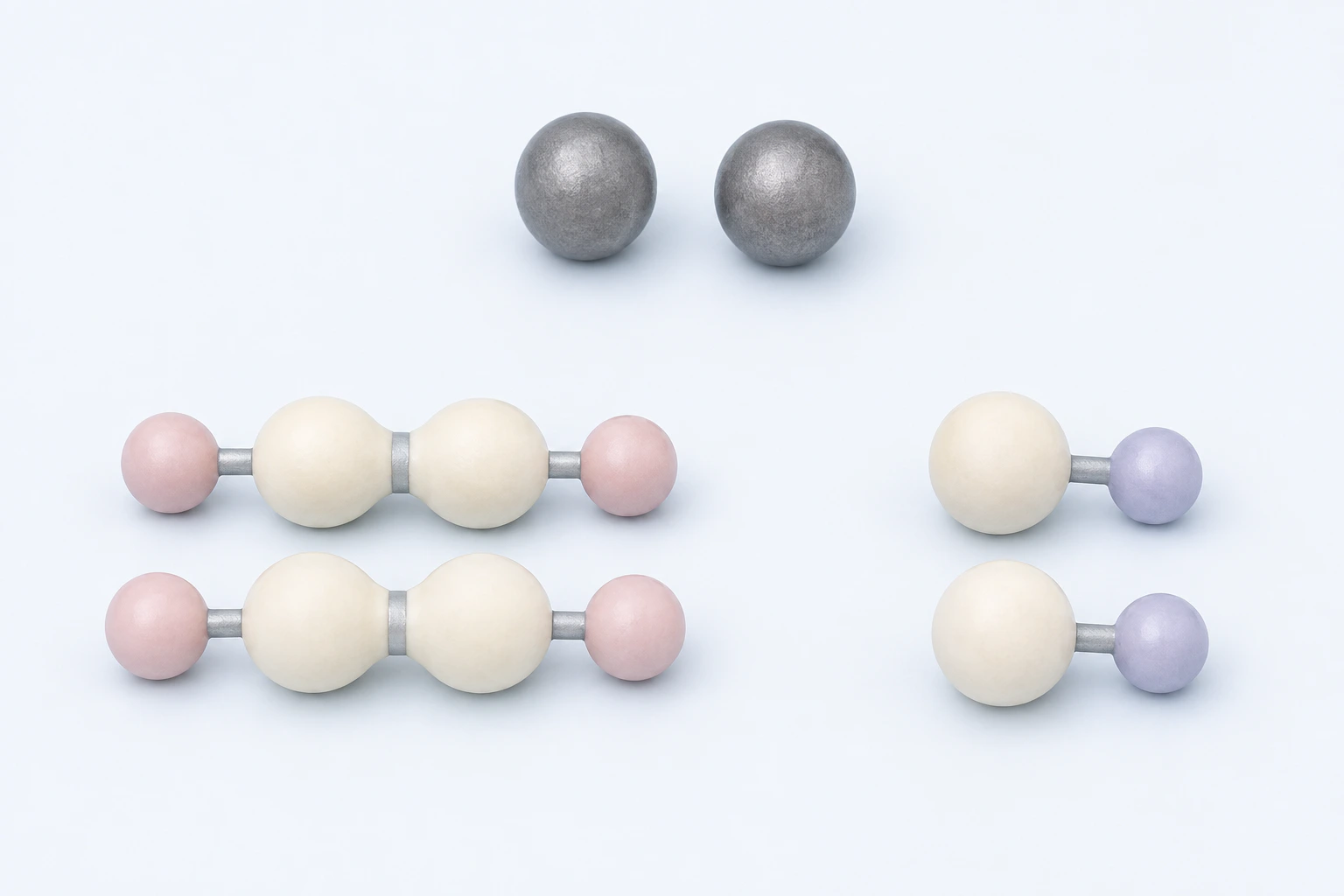
Separate iron-, peroxide-, and hydroxyl-context teaching models orient Fenton chemistry. Their counts and arrangement do not show oxidation states, stoichiometry, a reaction sequence, an intermediate, kinetics, biological damage, or treatment.
Scientific media record2 verified identifiers
- Subject
- Fenton Chemistrybiological-process
- Review
- Editorial review completeIdentifiers authority-verified · Accessibility validated · · fenton-chemistry|fenton-chemistry-mechanism-v1.webp
- Digital source
- Trained-algorithmic mediaCreated with a trained generative algorithm and reviewed by WikiBiome for subject identity, scientific framing, identifiers, provenance, and accessibility.
- Scientific basis
- Fenton reaction — IUPAC Gold BookThe Fenton reaction controversy concerning the chemistry of iron-mediated oxidationThe chemical reactions in the classic Fenton system
- License
- CC BY-SA 4.0Created
The Fenton reaction is the iron-catalyzed generation of hydroxyl radicals (OH.) from hydrogen peroxide—the most reactive oxygen species in biology. Discovered by H.J.H. Fenton in 1894, this reaction is the mechanistic bridge between metal accumulation and oxidative tissue damage.
Wherever free iron (or copper) meets hydrogen peroxide, hydroxyl radicals form and attack lipids, DNA, and proteins indiscriminately.
In the WikiBiome context, Fenton chemistry connects environmental metal exposure to cellular damage across virtually every disease domain: neurodegeneration (Parkinson's Disease, Alzheimer's Disease), cancer, kidney disease, gut barrier damage, and microbial competition for iron.
Evidence map10 cited passagesInspect provenance +
Fe2+ (ferrous iron) donates one electron to H2O2, generating a hydroxyl radical (OH.)—the most potent oxidizing species in biological systems (redox potential +2.31 V). The hydroxyl radical reacts with virtually any organic molecule within ~1 nm of its generation site.
Superoxide (O2.-) recycles Fe3+ back to Fe2+, making the process catalytic—a single iron atom can generate unlimited hydroxyl radicals as long as superoxide and peroxide are available. This is why superoxide dismutase (which removes superoxide) is the first line of defense against Fenton-mediated damage.
Copper participates in analogous Fenton-like chemistry. Cu cycling between Cu+ and Cu2+ generates hydroxyl radicals, contributing to the antimicrobial activity of copper surfaces and to copper toxicity in cuproptosis,.
| Metal | Fenton Activity | Notes | |-------|----------------|-------| | Chromium Cr(V)/Cr(IV) | Active | Generates OH. during reduction to Cr(III) | | Cobalt Co2+ | Active | Fenton-like reaction with H2O2 | | Vanadium V4+ | Active | Generates OH. in V4+/V5+ cycling | | Nickel Ni2+ | Weak direct; indirect | Ni displaces Fe from iron sulfur clusters, releasin
Hydroxyl radicals attack polyunsaturated fatty acids (PUFAs) in membranes, initiating lipid peroxidation chain reactions. When GPX4 (the primary lipid hydroperoxide scavenger) fails, uncontrolled lipid peroxidation triggers ferroptosis—iron-dependent programmed cell death.
| Defense | Mechanism | |---------|-----------| | superoxide dismutase | Removes O2.-, breaking the Haber-Weiss cycle | | Catalase | Removes H2O2, eliminating Fenton substrate | | glutathione / GPX | Reduces H2O2 and lipid hydroperoxides | | Ferritin | Sequesters labile Fe2+ in an oxidized (Fe3+) mineral core | | Dps (bacterial) | DNA-binding ferritin miniat
PrrF small RNAs in pseudomonas aeruginosa repress iron-using enzymes under iron limitation, preventing free iron accumulation that would drive Fenton chemistry. The PrrF/BrnD regulatory circuit balances iron utilization against Fenton risk.
borrelia (B. burgdorferi) represents the most radical anti-Fenton strategy: complete elimination of iron from its biology. All iron-dependent enzymes replaced with manganese-dependent alternatives. Mn does not participate in Fenton chemistry, making Borrelia immune to iron-mediated oxidative damage.
When SOD is absent or inhibited, superoxide accumulates, continuously recycling Fe3+ → Fe2+ via the Haber-Weiss cycle. In E. coli SOD-deficient mutants, this cascading Fenton chemistry damages iron sulfur clusters, releasing even more free iron in a destructive feedback loop.
Quinolinic acid (a kynurenine pathway metabolite) chelates iron and forms QUIN-Fe complexes that catalyze Fenton chemistry in neural tissue. This creates a self-amplifying neuroinflammatory loop: inflammation → IDO1 → kynurenine → quinolinic acid → QUIN-Fe → Fenton → more inflammation.
Contents
1. The Reactions2. Downstream Damage3. Cellular Defenses Against Fenton Chemistry4. Microbial Strategies5. Kynurenine-Iron-Fenton Loop6. Disease Relevance7. Cross-ReferencesThe Reactions#
Classic Fenton Reaction (Iron)#
`` Fe2+ + H2O2 → Fe3+ + OH. + OH- ``
iron(II) (Fe2+) (ferrous iron) donates one electron to H2O2, generating a hydroxyl radical (OH.)—the most potent oxidizing species in biological systems (redox potential +2.31 vanadium (V)). The hydroxyl radical reacts with virtually any organic molecule within ~1 nm of its generation site.[1]Toxicity, Mechanism and Health Effects of Some Heavy MetalsMonisha Jaishankar, Tenzin Tseten, Naresh Anbalagan et al. · 2014Open reference 1 ↓
Haber-Weiss Cycle (Catalytic Recycling)#
`` Fe3+ + O2.- → Fe2+ + O2 (superoxide reduces Fe3+ back to Fe2+) Fe2+ + H2O2 → Fe3+ + OH. + OH- (Fenton reaction) ─────────────────────────────── Net: O2.- + H2O2 → OH. + OH- + O2 ``
Superoxide (O2.-) recycles iron(III) (Fe3+) back to iron(II), making the process catalytic—a single iron atom can generate unlimited hydroxyl radicals as long as superoxide and peroxide are available.
This is why Superoxide Dismutase (which removes superoxide) is the first line of defense against Fenton-mediated damage.[2]Nong 2026 — Despite Inducing Antioxidant Regulation, Superoxide Dismutase Deficiency Makes E. coli More Sensitive to Hydrogen PeroxideYuejuan Nong, Jiaxin Qiao, Yixuan Zhao et al. · 2026Open reference 2 ↓
Copper Fenton-Like Reaction#
`` Cu+ + H2O2 → Cu2+ + OH. + OH- ``
Copper participates in analogous Fenton-like chemistry. copper cycling between copper+ and copper(II) (Cu2+) generates hydroxyl radicals, contributing to the antimicrobial activity of copper surfaces and to copper toxicity in Cuproptosis.[3]Wang 2025 — Engineering Copper and Copper-Based Materials for a Post-Antibiotic EraYingxian Wang, Tongqiang Wen, Fuchao Mao et al. · 2025Open reference 3 ↓[4]Andrei 2020 — Cu Homeostasis in Bacteria: The Ins and OutsAndreea Andrei, Yavuz Ozturk, Bahia Khalfaoui-Hassani et al. · 2020Open reference 4 ↓
Other Metal Fenton Participants#
| Metal | Fenton Activity | Notes |
|---|---|---|
| Chromium chromium (Cr)(vanadium (V))/chromium(IV) | Active | Generates OH. during reduction to chromium(III) |
| Cobalt cobalt(II) (Co2+) | Active | Fenton-like reaction with H2O2 |
| Vanadium vanadium(4) | Active | Generates OH. in vanadium(4)/V5+ cycling |
| Nickel nickel(II) (Ni2+) | Weak direct; indirect | nickel displaces iron (Fe) from Iron-Sulfur Clusters, releasing labile iron(II) for Fenton |
| Cadmium cadmium(II) (Cd2+) | No direct activity (non-redox) | Displaces iron from proteins, increasing labile iron pool → indirect Fenton[1]Toxicity, Mechanism and Health Effects of Some Heavy MetalsMonisha Jaishankar, Tenzin Tseten, Naresh Anbalagan et al. · 2014Open reference 1 ↓ |
| Lead lead(II) (Pb2+) | No direct activity (non-redox) | Depletes glutathione, reducing H2O2 scavenging → indirect Fenton |
Downstream Damage#
Lipid Peroxidation → Ferroptosis#
Hydroxyl radicals attack polyunsaturated fatty acids (PUFAs) in membranes, initiating lipid peroxidation chain reactions. When GPX4 (the primary lipid hydroperoxide scavenger) fails, uncontrolled lipid peroxidation triggers Ferroptosis—iron-dependent programmed cell death.[5]Microbial Metallomics and Parkinson's Disease: A Unified Metal-Driven Framework Linking Ferroptosis, Dysbiosis, and alpha-Synuclein PathologyKaren Pendergrass · 2025Open reference 5 ↓
DNA Damage#
OH. generates 8-hydroxydeoxyguanosine (8-OHdG) and strand breaks, contributing to mutagenesis and carcinogenesis.
Protein Oxidation#
OH. oxidizes amino acid side chains, causes protein cross-linking, and damages metal-containing enzyme active sites.
Cellular Defenses Against Fenton Chemistry#
| Defense | Mechanism |
|---|---|
| Superoxide Dismutase | Removes O2.-, breaking the Haber-Weiss cycle |
| Catalase | Removes H2O2, eliminating Fenton substrate |
| Glutathione (GSH) / GPX | Reduces H2O2 and lipid hydroperoxides |
| Ferritin | Sequesters labile iron(II) (Fe2+) in an oxidized (iron(III)) mineral core |
| Dps (bacterial) | DNA-binding ferritin miniaturizes iron storage; protects DNA from Fenton |
| Calprotectin (S100A8/A9) | Sequesters free metals at infection sites |
| manganese (Mn) substitution | Borrelia burgdorferi eliminated iron entirely, replacing iron-enzymes with manganese-enzymes to avoid Fenton risk[6]Londono 2025 — EPR Spectroscopy Reveals Antioxidant Manganese Defenses in the Lyme Disease Pathogen Borrelia burgdorferiAndres F Londono, Ajay Sharma, Venkatesan Kathiresan et al. · 2025Open reference 6 ↓ |
Microbial Strategies#
PrrF sRNAs (Pseudomonas)#
PrrF small RNAs in Pseudomonas aeruginosa repress iron-using enzymes under iron limitation, preventing free iron accumulation that would drive Fenton chemistry. The PrrF/BrnD regulatory circuit balances iron utilization against Fenton risk.[7]Ouattara 2025 — Iron and Peroxide Regulation of the PrrF sRNAs and a Conserved Dps-Like Protein in Pseudomonas aeruginosa and Pseudomonas fluorescensKhady O Ouattara, Amanda G Oglesby · 2025Open reference 7 ↓
Mn-for-Fe Substitution (Borrelia)#
Borrelia (B. burgdorferi) represents the most radical anti-Fenton strategy: complete elimination of iron from its biology. All iron-dependent enzymes replaced with manganese-dependent alternatives. manganese (Mn) does not participate in Fenton chemistry, making Borrelia immune to iron-mediated oxidative damage.[6]Londono 2025 — EPR Spectroscopy Reveals Antioxidant Manganese Defenses in the Lyme Disease Pathogen Borrelia burgdorferiAndres F Londono, Ajay Sharma, Venkatesan Kathiresan et al. · 2025Open reference 6 ↓
SOD Deficiency Amplifies Fenton#
When SOD is absent or inhibited, superoxide accumulates, continuously recycling iron(III) (Fe3+) → iron(II) via the Haber-Weiss cycle. In E. coli SOD-deficient mutants, this cascading Fenton chemistry damages Iron-Sulfur Clusters, releasing even more free iron in a destructive feedback loop.[2]Nong 2026 — Despite Inducing Antioxidant Regulation, Superoxide Dismutase Deficiency Makes E. coli More Sensitive to Hydrogen PeroxideYuejuan Nong, Jiaxin Qiao, Yixuan Zhao et al. · 2026Open reference 2 ↓
Kynurenine-Iron-Fenton Loop#
Quinolinic acid (a Kynurenine pathway metabolite) chelates iron and forms QUIN-iron (Fe) complexes that catalyze Fenton chemistry in neural tissue. This creates a self-amplifying neuroinflammatory loop: Metal-Driven Inflammation → IDO1 → kynurenine → quinolinic acid → QUIN-iron → Fenton → more inflammation.[8]Novikova 2025 -- Microbiome-Derived Metabolites in Parkinson's Disease (Thesis)Polina Novikova · 2025Open reference 8 ↓
Disease Relevance#
| Condition | Fenton Chemistry Role |
|---|---|
| Parkinson's Disease | Iron accumulation in SN → Fenton → ferroptosis in dopaminergic neurons |
| Alzheimer's Disease | Redox-active iron/copper in amyloid plaques → Fenton → oxidative neurodegeneration |
| Chronic Kidney Disease | Tubular ferroptosis via iron-driven Fenton; Cadmium displaces iron (Fe), increasing labile pool |
| Colorectal Cancer | Heme iron from red meat → Fenton in colonocytes → lipid peroxidation → mutations |
| Crohn's Disease | Iron supplementation fuels pathobiont growth AND Fenton damage at inflamed sites |
| Postpartum Depression | Iron fluctuations postpartum; Fenton-driven Oxidative Stress |
Cross-References#
- oxidative stress—Fenton chemistry as the primary ROS generation mechanism
- Ferroptosis—Iron-dependent cell death downstream of lipid peroxidation
- Iron—Primary Fenton catalyst
- Copper—Fenton-like chemistry
- Iron-Sulfur Clusters—iron (Fe)-S damage releases labile iron for Fenton
- Superoxide Dismutase—First-line defense against Haber-Weiss recycling
- Glutathione (GSH)—H2O2 scavenging prevents Fenton substrate accumulation
- Kynurenine—QUIN-iron Fenton loop in neuroinflammation
- Calprotectin (S100A8/A9)—Metal sequestration reducing Fenton at infection sites
- Cadmium—Non-redox metal that indirectly amplifies Fenton via iron displacement
References 11
Numbered by first appearance in the article, then reconciled with its declared source list.
- 1
★Monisha Jaishankar, Tenzin Tseten, Naresh Anbalagan et al. (2014). Toxicity, Mechanism and Health Effects of Some Heavy Metals. Interdisciplinary Toxicology.
- 2
Yuejuan Nong, Jiaxin Qiao, Yixuan Zhao et al. (2026). Nong 2026 — Despite Inducing Antioxidant Regulation, Superoxide Dismutase Deficiency Makes E. coli More Sensitive to Hydrogen Peroxide. Frontiers in Microbiology.
- 3
Yingxian Wang, Tongqiang Wen, Fuchao Mao et al. (2025). Wang 2025 — Engineering Copper and Copper-Based Materials for a Post-Antibiotic Era. Frontiers in Bioengineering and Biotechnology.
- 4
Andreea Andrei, Yavuz Ozturk, Bahia Khalfaoui-Hassani et al. (2020). Andrei 2020 — Cu Homeostasis in Bacteria: The Ins and Outs. Membranes.
- 5
★Karen Pendergrass (2025). Microbial Metallomics and Parkinson's Disease: A Unified Metal-Driven Framework Linking Ferroptosis, Dysbiosis, and alpha-Synuclein Pathology. Conference Presentation.
- 6
Andres F Londono, Ajay Sharma, Venkatesan Kathiresan et al. (2025). Londono 2025 — EPR Spectroscopy Reveals Antioxidant Manganese Defenses in the Lyme Disease Pathogen Borrelia burgdorferi. mBio.
- 7
Khady O Ouattara, Amanda G Oglesby (2025). Ouattara 2025 — Iron and Peroxide Regulation of the PrrF sRNAs and a Conserved Dps-Like Protein in Pseudomonas aeruginosa and Pseudomonas fluorescens. bioRxiv.
- 8
Polina Novikova (2025). Novikova 2025 -- Microbiome-Derived Metabolites in Parkinson's Disease (Thesis). PhD Thesis.
- 9
Briffa J, Sinagra E, Blundell R (2020). Heavy Metal Pollution in the Environment and Their Toxicological Effects on Humans. Heliyon.
- 10
Yamil Sanchez-Rosario, Natasha R Cornejo, Isaiah S Gonzalez et al. (2026). Sanchez-Rosario 2026 — N-benzyl-N-methyldithiocarbamate (BMDC) Combines with Metals to Produce Antimicrobial and Anti-Biofilm Activity Against MRSA and S. epidermidis. mSphere.
- 11
Jessica K Kajfasz, Hannah B Hosay, Qiwen Gao et al. (2026). Kajfasz 2026 — Zinc-Enhanced Activity of an Antimicrobial Halogenated Phenazine Against Streptococcus mutans and Other Gram-Positive Bacteria. mSphere.
Article network
Mentioned here 18
Pages linking here 11
Connect the evidence
Publicly readable discussion by ORCID-authenticated researchers. Questions, interpretation, methods, corrections, and new evidence stay attached to this record.
No discussion yet. Start with a precise question or a source-backed observation.
Published page changes
This record shows only material changes published on this page, including changes to its content, evidence, conclusions, or author context. Internal processes and discussion activity are excluded. Pending, declined, and withdrawn proposals remain private.
- published revision
Created “Fenton Chemistry”: The Fenton reaction is the iron-catalyzed generation of hydroxyl radicals (OH.) from hydrogen peroxide -- the most reactive oxygen species in biology. Discovered by H.J.H. Fenton in 1894, this…
Created “Fenton Chemistry”: The Fenton reaction is the iron-catalyzed generation of hydroxyl radicals (OH.) from hydrogen peroxide -- the most reactive oxygen species in biology. Discovered by H.J.H. Fenton in 1894, this… Published sections: Overview; Classic Fenton Reaction (Iron); Haber-Weiss Cycle (Catalytic Recycling); Copper Fenton-Like Reaction; Other Metal Fenton Participants; Lipid Peroxidation → Ferroptosis; DNA Damage; Protein Oxidation; Cellular Defenses Against Fenton Chemistry; PrrF sRNAs (Pseudomonas); Mn-for-Fe Substitution (Borrelia); SOD Deficiency Amplifies Fenton; Kynurenine-Iron-Fenton Loop; Disease Relevance; Cross-References. · WikiBiome Deploy Bot · +124 −0
Inspect exact Git diff ↗