
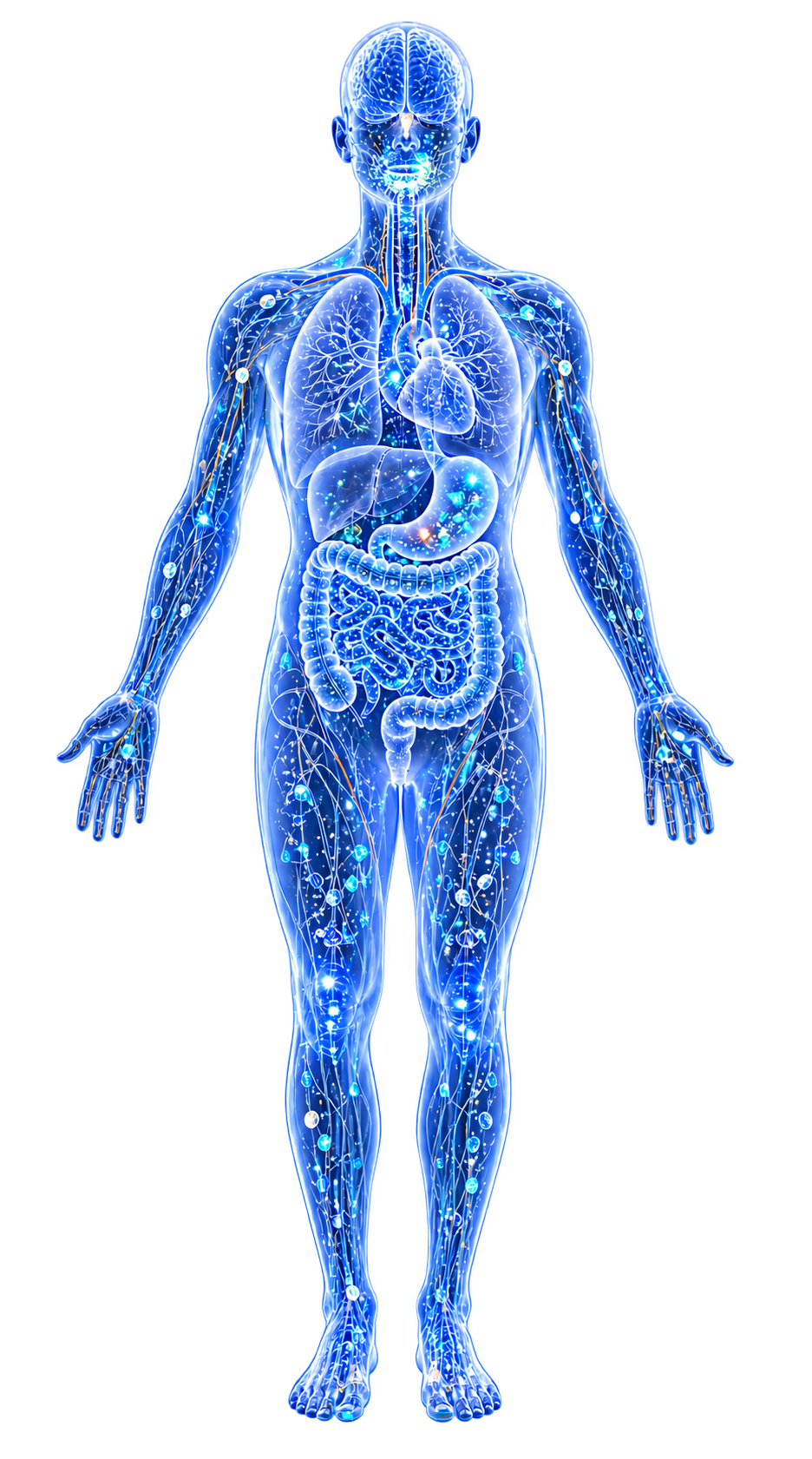
Tau is a microtubule-associated protein essential for maintaining the structural integrity of neuronal axons. In health, tau binds to and stabilizes microtubules, enabling axonal transport of organelles, vesicles, and signaling molecules.
When tau becomes hyperphosphorylated—acquiring excess phosphate groups at specific serine and threonine residues—it detaches from microtubules, misfolds, and aggregates into neurofibrillary tangles (NFTs), one of the two hallmark pathological features of Alzheimer's Disease (the other being Amyloid-Beta plaques).
The metallomics perspective reveals that Heavy Metals promote tau hyperphosphorylation through multiple converging mechanisms, and that the Gut Microbiome contributes to this process via neuroinflammatory signaling through the Gut-Brain Axis.
Evidence map8 cited passagesInspect provenance +
In Alzheimer's disease, tau carries 5-9 phosphate groups per molecule, and up to 45 of its 85 potential phosphorylation sites become occupied. This hyperphosphorylation reduces tau's microtubule affinity by 10-fold, causing it to detach, aggregate into paired helical filaments (PHFs), and eventually form the dense neurofibrillary tangles that correlate more
Post-mortem studies show elevated aluminum in brain regions with high NFT density
This "developmental origins" mechanism explains why childhood lead exposure increases late-life AD risk—the epigenetic changes act as a time bomb
The question of whether zinc excess or deficiency drives tau pathology may depend on compartmentalization: synaptic zinc depletion plus periplanar zinc accumulation
Ferroptosis-associated iron accumulation in degenerating neurons co-localizes with NFTs
NLRP3 inflammasome activation in microglia drives tau spreading between neurons
Gut bacteria produce functional amyloid proteins (e.g., curli fibers by E. coli) that can cross-seed the aggregation of human amyloid beta and tau through prion-like templating mechanisms
Metal ions (Zn, Cu, Fe, Al) accelerate both amyloid aggregation and tau phosphorylation, creating a metal-catalyzed feedforward loop
Contents
1. Normal Tau Biology2. How Metals Drive Tau Phosphorylation3. The Microbiome Connection4. The Amyloid-Tau Cascade5. Tau Pathology Beyond Alzheimer's6. Cross-ReferencesNormal Tau Biology#
Tau phosphorylation is a normal, regulated process. In healthy neurons, tau carries 2-3 phosphate groups that modulate its binding affinity to microtubules. This dynamic phosphorylation-dephosphorylation cycle is controlled by.
Kinases (add phosphate groups): GSK-3beta (glycogen synthase kinase 3-beta), CDK5 (cyclin-dependent kinase 5), MAPK, DYRK1A, CK1. Phosphatases (remove phosphate groups): PP2A (protein phosphatase 2A, responsible for ~70% of tau dephosphorylation), PP1, PP5.
In Alzheimer's disease, tau carries 5-9 phosphate groups per molecule, and up to 45 of its 85 potential phosphorylation sites become occupied.
This hyperphosphorylation reduces tau's microtubule affinity by 10-fold, causing it to detach, aggregate into paired helical filaments (PHFs), and eventually form the dense neurofibrillary tangles that correlate more closely with cognitive decline than amyloid plaque burden.[1]Recent advances in Alzheimer's disease: mechanisms, clinical trials and new drug development strategiesZhang Y, et al. · 2024Open reference 1 ↓
How Metals Drive Tau Phosphorylation#
Aluminum#
Aluminum has the longest-studied connection to tau pathology.
aluminum(III) (Al3+) directly promotes tau aggregation in vitro by inducing conformational changes that expose aggregation-prone domains. aluminum activates GSK-3beta, increasing tau phosphorylation at AD-relevant sites. aluminum inhibits PP2A activity, reducing tau dephosphorylation—a dual mechanism that simultaneously increases kinase and decreases phosphatase activity.
Post-mortem studies show elevated aluminum in brain regions with high NFT density.[2]Associations of Environmental Exposure to Arsenic, Manganese, Lead, and Cadmium with Alzheimer's Disease: A Review of Recent Evidence from Mechanistic StudiesGiasuddin Ahmed, Md. Shiblur Rahaman, Enrique Perez et al. · 2025Open reference 2 ↓[3]Metal toxicity exposure in Alzheimer's disease - literature reviewJakubowska E, Hoppe-Mitera E, Sionek I et al. · 2024Open reference 3 ↓
Lead#
Lead has pronounced developmental effects on tau. Early-life lead (Pb) exposure causes hypomethylation of tau-related genes through epigenetic mechanisms, upregulating their expression decades later. lead activates GSK-3beta and CDK5, the primary tau kinases.
lead-exposed primates show elevated phospho-tau and amyloid-beta in aged brain tissue, mirroring human AD pathology.
This "developmental origins" mechanism explains why childhood lead exposure increases late-life AD risk—the epigenetic changes act as a time bomb.[4]Environmental pollutants as risk factors for neurodegenerative disorders: Alzheimer and Parkinson diseasesChin-Chan M, Navarro-Yepes J, Quintanilla-Vega B · 2015Open reference 4 ↓
Zinc#
Zinc has a complex relationship with tau.
zinc(II) (Zn2+) binds directly to tau protein, promoting aggregation of hyperphosphorylated tau into paired helical filaments. Post-mortem analyses show 3x greater zinc accumulation in amyloid plaques and altered zinc transporter expression in AD brains. Paradoxically, zinc is also required for normal PP2A function, so zinc deficiency may impair tau dephosphorylation.
The question of whether zinc excess or deficiency drives tau pathology may depend on compartmentalization: synaptic zinc depletion plus periplanar zinc accumulation.[3]Metal toxicity exposure in Alzheimer's disease - literature reviewJakubowska E, Hoppe-Mitera E, Sionek I et al. · 2024Open reference 3 ↓
Copper#
Copper dysregulation contributes to tau pathology through. Generation of ROS via Fenton-like reactions that activate stress kinases (JNK, p38 MAPK) upstream of tau phosphorylation. Direct binding to tau protein, promoting oxidative crosslinking and aggregation.
copper(II) (Cu2+) catalyzes the oxidation of tau cysteine residues, creating disulfide bonds that stabilize toxic oligomeric forms.
Iron#
Excess Iron in the brain promotes tau phosphorylation through. ROS-mediated activation of GSK-3beta and CDK5. Quinolinic acid (from the Kynurenine Pathway) chelates iron to form redox-active complexes that promote both Oxidative Stress and tau phosphorylation. Ferroptosis-associated iron accumulation in degenerating neurons co-localizes with NFTs.[5]Microbial Metallomics and Parkinson's Disease: A Unified Metal-Driven Framework Linking Ferroptosis, Dysbiosis, and alpha-Synuclein PathologyKaren Pendergrass · 2025Open reference 5 ↓
The Microbiome Connection#
The gut microbiome contributes to tau pathology through several pathways:
Neuroinflammation-Driven Tau Phosphorylation#
Microglia activated by gut-derived LPS (translocated through a leaky gut barrier) produce TNF-alpha and IL-1beta. These pro-inflammatory cytokines activate neuronal GSK-3beta and CDK5, increasing tau phosphorylation. Activated microglia also release quinolinic acid (from the kynurenine pathway), which directly promotes tau phosphorylation.
NLRP3 inflammasome activation in microglia drives tau spreading between neurons.[6]Microglia in neurodegenerative diseases: mechanism and potential therapeutic targetsGao C, Jiang J, Tan Y et al. · 2023Open reference 6 ↓[7]Recent Advances in Therapeutics for the Treatment of Alzheimer's DiseasePasseri E, et al. · 2024Open reference 7 ↓
SCFA Depletion#
Butyrate and other Short-Chain Fatty Acids (SCFAs) suppress neuroinflammation through HDAC inhibition and regulatory T cell induction. Loss of SCFA-producing commensals (a consistent feature of AD-associated Dysbiosis) removes this anti-inflammatory brake, permitting sustained microglial activation and tau phosphorylation.
Microbial Amyloid#
- Gut bacteria produce functional amyloid proteins (e.g., curli fibers by E. coli) that can cross-seed the aggregation of human Amyloid-Beta and tau through prion-like templating mechanisms[8]Gut microbial imbalance and neurodegenerative proteinopathies: from molecular mechanisms to prospects of clinical applicationsAlonso-Garcia P, Martin R, Martinez-Pinilla E · 2021Open reference 8 ↓
The Amyloid-Tau Cascade#
The relationship between Amyloid-Beta and tau is sequential and synergistic. Amyloid-beta oligomers activate GSK-3beta and CDK5, triggering tau phosphorylation. Hyperphosphorylated tau detaches from microtubules, disrupting axonal transport.
Misfolded tau spreads trans-synaptically in a prion-like manner.
Tau pathology drives neuronal death and correlates more closely with cognitive decline than amyloid burden alone.
Metal ions (zinc (Zn), copper (Cu), iron (Fe), aluminum (Al)) accelerate both amyloid aggregation and tau phosphorylation, creating a metal-catalyzed feedforward loop.[1]Recent advances in Alzheimer's disease: mechanisms, clinical trials and new drug development strategiesZhang Y, et al. · 2024Open reference 1 ↓
Tau Pathology Beyond Alzheimer's#
Hyperphosphorylated tau is found in multiple neurodegenerative conditions (collectively called "tauopathies"). Frontotemporal dementia: Tau mutations directly cause some familial forms. Chronic traumatic encephalopathy (CTE): Repetitive head trauma promotes tau phosphorylation.
Progressive supranuclear palsy: Predominantly 4-repeat tau.
Parkinson's disease: Tau pathology co-occurs with Alpha-Synuclein in some cases.
The common thread across these conditions is that metal dyshomeostasis and neuroinflammation converge on the same kinase/phosphatase imbalance that drives tau hyperphosphorylation.
Cross-References#
- Alzheimer's Disease—the primary disease context for tau pathology
- Amyloid-Beta—the co-pathology that triggers the tau cascade
- Aluminum—the metal most directly linked to tau aggregation
- Lead—developmental epigenetic programming of late-life tau pathology
- Zinc—promotes PHF assembly from hyperphosphorylated tau
- Microglia—neuroinflammatory mediators that activate tau kinases
- neuroinflammation—the inflammatory driver of kinase/phosphatase imbalance
- Kynurenine Pathway—quinolinic acid promotes tau phosphorylation
- oxidative stress—ROS activate upstream tau kinases
- Epigenetics—lead-induced epigenetic changes prime late-life tau pathology
- Gut-Brain Axis—the route by which gut dysbiosis reaches neuronal tau
References 11
Numbered by first appearance in the article, then reconciled with its declared source list.
- 1
Zhang Y, et al. (2024). Recent advances in Alzheimer's disease: mechanisms, clinical trials and new drug development strategies. (Signal Transduction and Targeted Therapy / related journal).
- 2
★Giasuddin Ahmed, Md. Shiblur Rahaman, Enrique Perez et al. (2025). Associations of Environmental Exposure to Arsenic, Manganese, Lead, and Cadmium with Alzheimer's Disease: A Review of Recent Evidence from Mechanistic Studies. Journal of Xenobiotics.
- 3
Jakubowska E, Hoppe-Mitera E, Sionek I et al. (2024). Metal toxicity exposure in Alzheimer's disease - literature review. Journal of Education, Health and Sport.
- 4
★Chin-Chan M, Navarro-Yepes J, Quintanilla-Vega B (2015). Environmental pollutants as risk factors for neurodegenerative disorders: Alzheimer and Parkinson diseases. Frontiers in Cellular Neuroscience.
- 5
★Karen Pendergrass (2025). Microbial Metallomics and Parkinson's Disease: A Unified Metal-Driven Framework Linking Ferroptosis, Dysbiosis, and alpha-Synuclein Pathology. Conference Presentation.
- 6
Gao C, Jiang J, Tan Y et al. (2023). Microglia in neurodegenerative diseases: mechanism and potential therapeutic targets. Signal Transduction and Targeted Therapy.
- 7
Passeri E, et al. (2024). Recent Advances in Therapeutics for the Treatment of Alzheimer's Disease. (Brain Sciences / related journal).
- 8
Alonso-Garcia P, Martin R, Martinez-Pinilla E (2021). Gut microbial imbalance and neurodegenerative proteinopathies: from molecular mechanisms to prospects of clinical applications. Exploration of Neuroprotective Therapy.
- 9
Islam F, Shohag S, Akhter S et al. (2022). Exposure of metal toxicity in Alzheimer's disease: An extensive review. Frontiers in Pharmacology.
- 10
★Bakulski KM, Seo YA, Hickman RC et al. (2020). Heavy Metals Exposure and Alzheimer's Disease and Related Dementias. Journal of Alzheimer's Disease.
- 11
Khatoon S, Kalam N, Rashid S et al. (2023). Effects of gut microbiota on neurodegenerative diseases. Frontiers in Aging Neuroscience.
Article network
Connect the evidence
Publicly readable discussion by ORCID-authenticated researchers. Questions, interpretation, methods, corrections, and new evidence stay attached to this record.
No discussion yet. Start with a precise question or a source-backed observation.
Activity and accepted changes
Accepted researcher context, editorial status, public discussion, and upstream Git revisions are shown together. Pending, declined, and withdrawn proposals remain private.
- published revision
Add reviewed neuroinflammation coverage batch
Karen Pendergrass · +3 −3
Inspect exact Git diff ↗ - published revision
Backfill heavy metals concept links
Karen Pendergrass · +1 −1
Inspect exact Git diff ↗ - published revision
Backfill oxidative stress concept links
Karen Pendergrass · +1 −1
Inspect exact Git diff ↗ - published revision
Backfill gut microbiome concept links
Karen Pendergrass · +1 −1
Inspect exact Git diff ↗ - published revision
Complete corpus-wide Dysbiosis linking
Karen Pendergrass · +1 −1
Inspect exact Git diff ↗ - published revision
massive wiki expansion: 149 stubs fixed, 100+ new pages, Rule 15 scan, keystone papers
WikiBiome Deploy Bot · +7 −7
Inspect exact Git diff ↗ - published revision
pre-overnight checkpoint 2026-04-18
WikiBiome Deploy Bot · +113 −0
Inspect exact Git diff ↗