
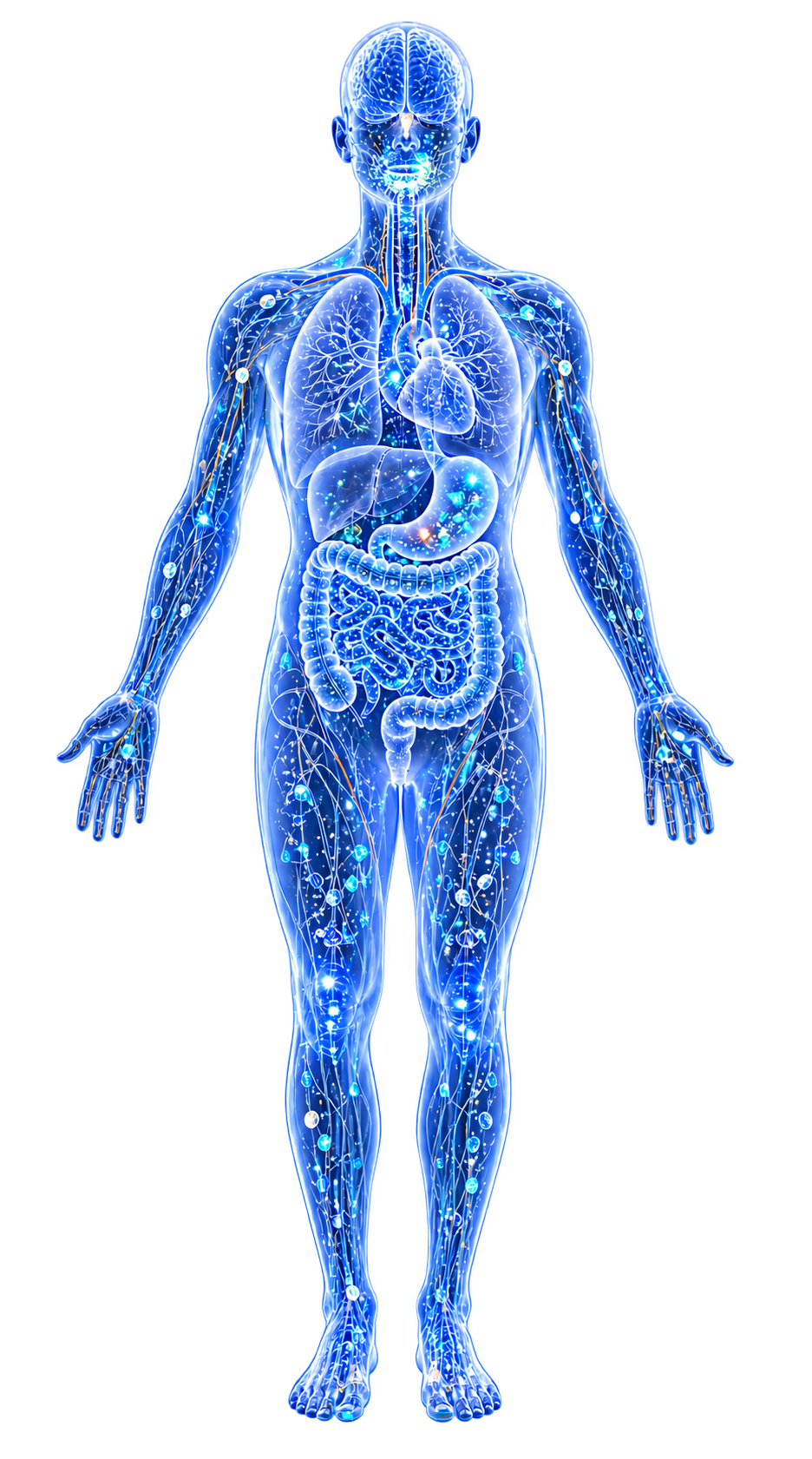
Fish is the primary dietary source of methylmercury (methylmercury (MeHg))—a potent neurotoxin that crosses the blood-brain barrier, depletes glutathione, and can increase amyloid-beta production and tau phosphorylation Mercury. methylmercury is 95-100% absorbed in the intestinal tract.
An estimated 8-10% of American women have mercury levels that could induce neurological disorders in their children.
Yet fish also provides omega-3 fatty acids (EPA, DHA), which are neuroprotective and anti-inflammatory. Higher serum EPA is associated with 82% less risk of endometriosis.[1]I Am the 1 in 10 -- What Should I Eat? A Research Review of Nutrition in EndometriosisPiecuch M, Garbicz J, Waliczek M et al. · 2022Open reference 1 ↓ Omega-3 consumption is associated with lower endometriosis risk and reduced pain in experimental models.[2]Nutrition in the prevention and treatment of endometriosis: A reviewBarnard ND, Holtz DN, Schmidt N et al. · 2023Open reference 2 ↓
Evidence map1 cited passagesInspect provenance +
Yet fish also provides omega-3 fatty acids (EPA, DHA), which are neuroprotective and anti-inflammatory. Higher serum EPA is associated with 82% less risk of endometriosis. Omega-3 consumption is associated with lower endometriosis risk and reduced pain in experimental models.
The Epidemiological Knot#
This confounding creates interpretive chaos in the neurodegeneration literature. Fish-eaters have higher mercury levels but may also have better cognitive outcomes, because the neuroprotective effects of omega-3s could mask or outweigh the neurotoxic effects of methylmercury (MeHg).
Epidemiological studies of mercury and Alzheimer's disease/dementia reach mixed results partly because "mercury exposure" is confounded by "omega-3 intake" whenever the exposure route is dietary Mercury.
Bakulski et al. (2020) explicitly flag this: "Fish consumption creates a confounding paradox: it is both the main methylmercury source and provides neuroprotective omega-3 fatty acids."
The direction of the net effect likely depends on the specific fish species (predatory fish like tuna and swordfish have higher methylmercury:omega-3 ratios than salmon or sardines), the frequency of consumption, and individual variation in mercury metabolism and detoxification.
Clinical Implication#
Blanket advice to "eat more fish" or "avoid fish" misses the paradox. Species-specific guidance is needed: small, low-trophic-level fish (sardines, anchovies, herring) provide omega-3s with lower mercury burden than large predatory fish.
For pregnant women and neurodegeneration-at-risk populations, the methylmercury (MeHg):omega-3 ratio of the specific fish matters more than total fish consumption. Algal omega-3 supplements provide the neuroprotective benefits without the mercury exposure entirely, but this eliminates other beneficial fish nutrients (selenium, vitamin D, protein).
References 2
Numbered by first appearance in the article, then reconciled with its declared source list.
- 1
Piecuch M, Garbicz J, Waliczek M et al. (2022). I Am the 1 in 10 -- What Should I Eat? A Research Review of Nutrition in Endometriosis. Nutrients.
- 2
Barnard ND, Holtz DN, Schmidt N et al. (2023). Nutrition in the prevention and treatment of endometriosis: A review. Frontiers in Nutrition.
Article network
Connect the evidence
Publicly readable discussion by ORCID-authenticated researchers. Questions, interpretation, methods, corrections, and new evidence stay attached to this record.
No discussion yet. Start with a precise question or a source-backed observation.
Published page changes
This record shows only material changes published on this page, including changes to its content, evidence, conclusions, or author context. Internal processes and discussion activity are excluded. Pending, declined, and withdrawn proposals remain private.
No material page changes have been recorded yet.