
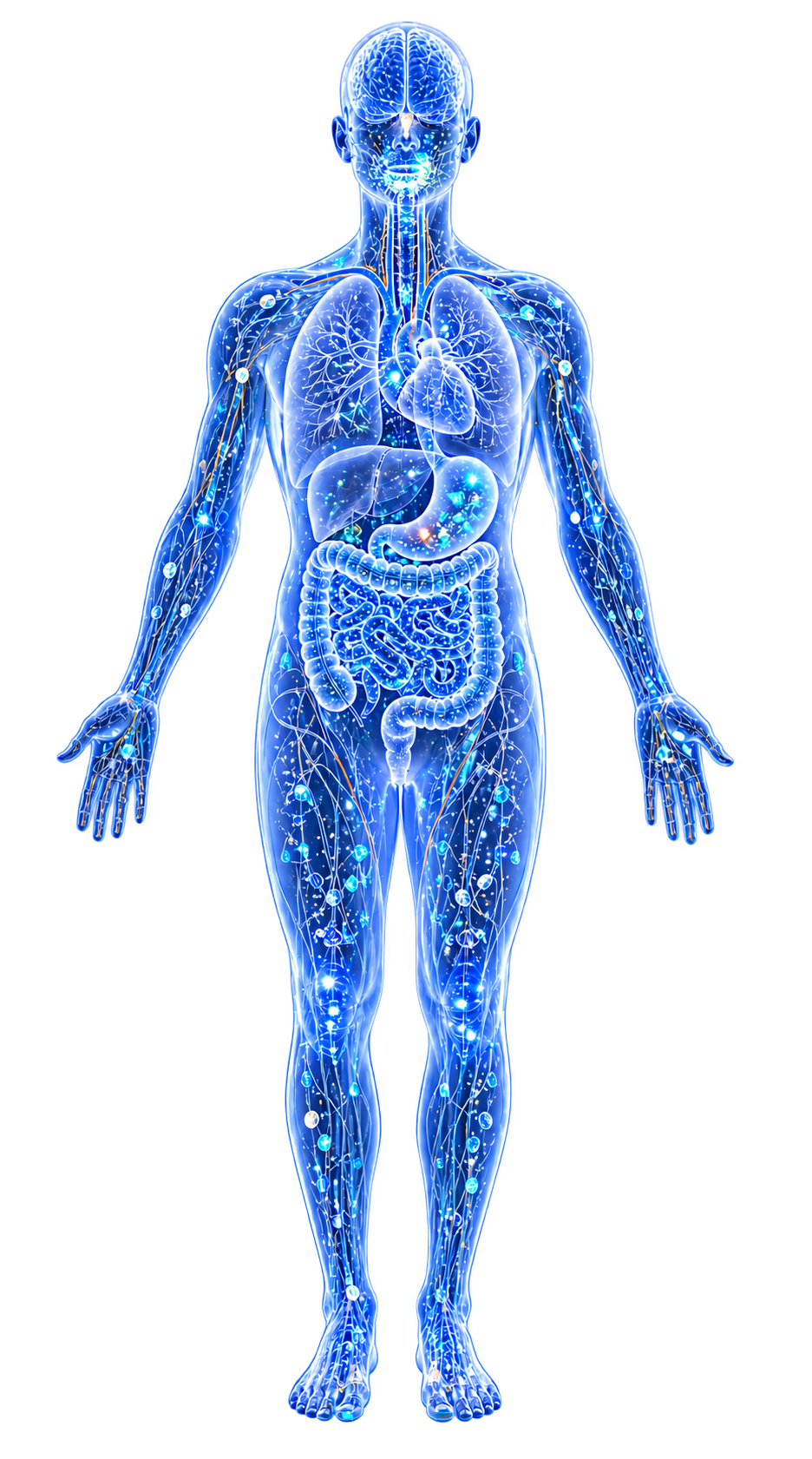
Probiotics protect the gut barrier from heavy metal toxicity. Zhai et al. (2016) demonstrated that L. plantarum CCFM8610 protected intestinal epithelial cells from cadmium through a four-part mechanism: metal sequestration in the gut lumen, alleviation of oxidative stress, tight junction protein preservation, and gut immune modulation.
In a mouse model, probiotic supplementation increased fecal cadmium excretion while decreasing liver and kidney accumulation.[1]Oral Administration of Probiotics Inhibits Absorption of the Heavy Metal Cadmium by Protecting the Intestinal BarrierZhai Q, Wang G, Zhao J et al. · 2016Open reference 1 ↓
But probiotics also accumulate beneficial trace elements. Kun et al. (2023) found that Lactobacillus and Bifidobacteria supplementation accumulates selenium, zinc, and copper—integrating them into essential organic compounds for thyroid function.[2]Kun et al. 2023 — Exploring the Oral-Gut Microbiota During Thyroid Cancer: Factors Affecting Thyroid Functions and Cancer DevelopmentKun Y, Xiaodong W, Haijun W et al. · 2023Open reference 2 ↓
This metal-accumulating property is framed as a therapeutic benefit: probiotics as delivery vehicles for trace elements.
Evidence map2 cited passagesInspect provenance +
Probiotics protect the gut barrier from heavy metal toxicity. Zhai et al. (2016) demonstrated that L. plantarum CCFM8610 protected intestinal epithelial cells from cadmium through a four-part mechanism: metal sequestration in the gut lumen, alleviation of oxidative stress, tight junction protein preservation, and gut immune modulation. In a mouse model, prob
But probiotics also accumulate beneficial trace elements. Kun et al. (2023) found that Lactobacillus and Bifidobacteria supplementation accumulates selenium, zinc, and copper—integrating them into essential organic compounds for thyroid function. This metal-accumulating property is framed as a therapeutic benefit: probiotics as delivery vehicles for trace
The Dilemma#
If probiotics bind metals indiscriminately, they may reduce the bioavailability of both toxic (cadmium (Cd), lead (Pb), mercury (Hg)) AND essential (zinc (Zn), selenium (Se), iron (Fe), copper (Cu)) metals. A probiotic that sequesters cadmium in the gut lumen—preventing its absorption—might simultaneously sequester zinc or selenium, reducing their absorption by the host.
For patients who are already zinc-depleted (cancer, ASD, T2D, PCOS) or selenium-deficient (thyroid disease, neurodegeneration), this trade-off could be clinically significant.
The critical insight from Zhai et al. is that effective probiotic strains require DUAL functionality: both metal-binding capacity AND antioxidative capacity. Strains with only one property were inferior. But no study has yet characterized whether probiotics preferentially bind toxic versus essential metals, or whether the binding is dose-dependent and saturable.
Clinical Implication#
Probiotic supplementation for metal detoxification should be accompanied by monitoring of essential trace element status (zinc (Zn), selenium (Se), iron (Fe)). Timing may matter: taking probiotics separately from mineral-rich meals could minimize competition for essential element absorption while maintaining toxic metal sequestration. Strain selection should prioritize organisms with characterized metal-binding profiles.
References 2
Numbered by first appearance in the article, then reconciled with its declared source list.
- 1
★Zhai Q, Wang G, Zhao J et al. (2016). Oral Administration of Probiotics Inhibits Absorption of the Heavy Metal Cadmium by Protecting the Intestinal Barrier. Appl Environ Microbiol.
- 2
Kun Y, Xiaodong W, Haijun W et al. (2023). Kun et al. 2023 — Exploring the Oral-Gut Microbiota During Thyroid Cancer: Factors Affecting Thyroid Functions and Cancer Development. Food Science and Nutrition.
Article network
Mentioned here 1
Pages linking here 1
Connect the evidence
Publicly readable discussion by ORCID-authenticated researchers. Questions, interpretation, methods, corrections, and new evidence stay attached to this record.
No discussion yet. Start with a precise question or a source-backed observation.
Published page changes
This record shows only material changes published on this page, including changes to its content, evidence, conclusions, or author context. Internal processes and discussion activity are excluded. Pending, declined, and withdrawn proposals remain private.
No material page changes have been recorded yet.