
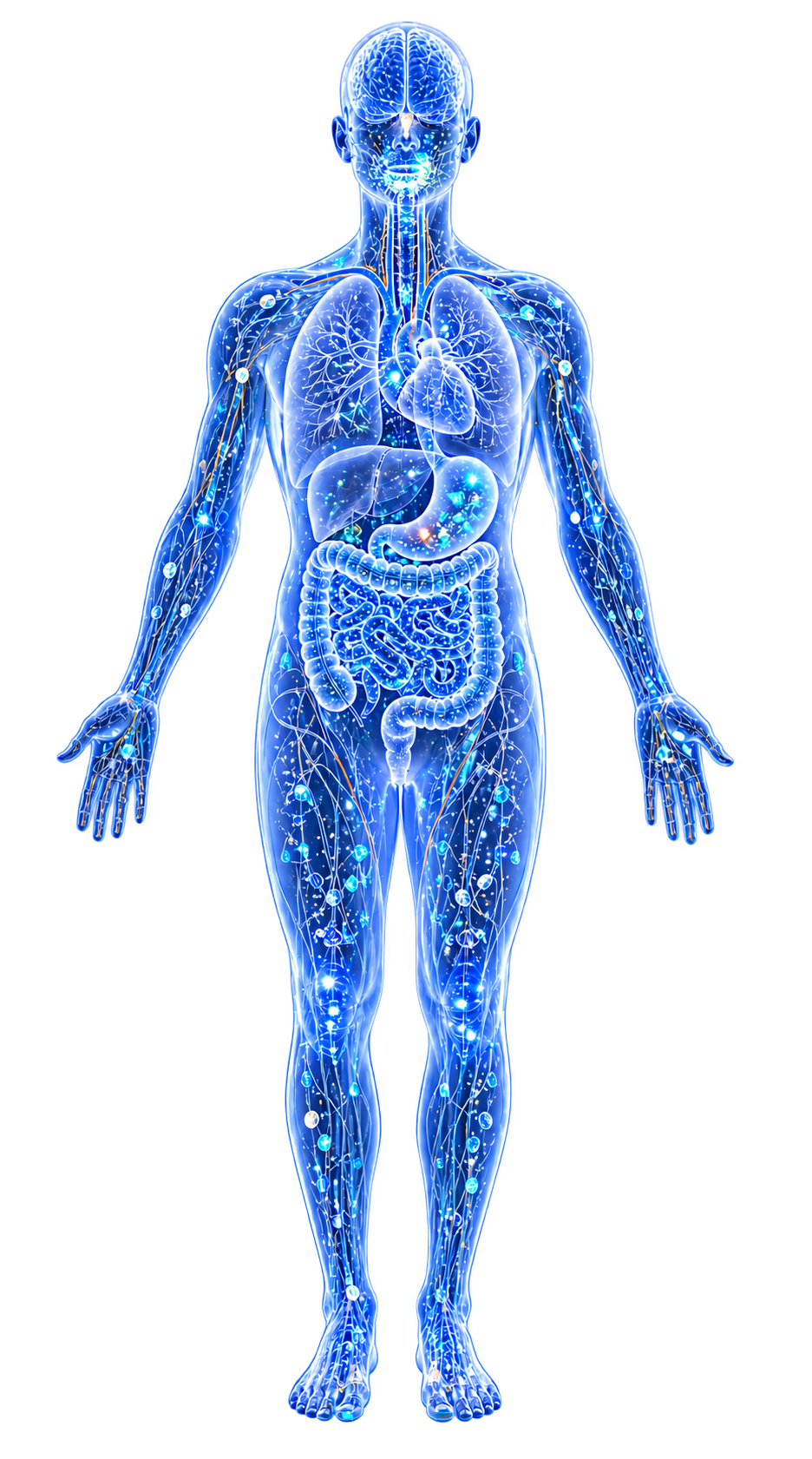
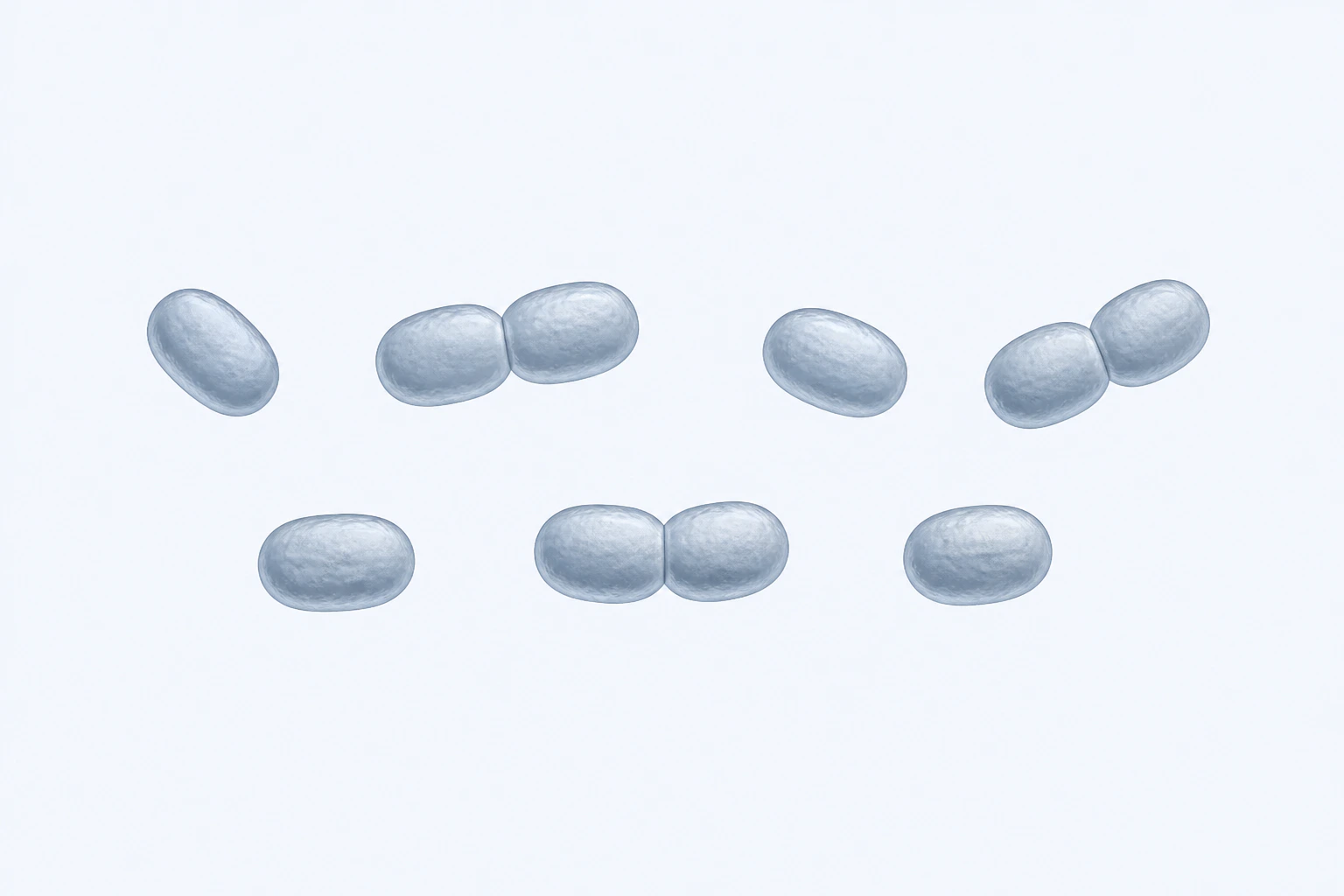
Type-species-anchored Methanobrevibacter archaeal short ovoid rods, shown as ten bodies in four single and three paired groupings. This scientific reconstruction is representative, non-universal, non-diagnostic, and not a micrograph.
Scientific media record1 verified identifier
- Subject
- Methanobrevibactertaxon · genus
- Identifiers
- NCBITaxon:2172
- Review
- Editorial review completeIdentifiers authority-verified · Accessibility validated · · methanobrevibacter|methanobrevibacter-morphology-v1.webp
- Digital source
- Trained-algorithmic mediaCreated with a trained generative algorithm and reviewed by WikiBiome for subject identity, scientific framing, identifiers, provenance, and accessibility.
- Scientific basis
- Methanobrevibacter — NCBI TaxonomyMethanobrevibacter — LPSNMethanobrevibacter genus descriptionMethanobrevibacter ruminantium neotype genomeMethanobrevibacter ruminantium DSM 1093
- License
- CC BY-SA 4.0Created
The only archaeon represented in this wiki—Methanobrevibacter smithii is the dominant methane-producing microorganism in the human gut, belonging to the domain Archaea rather than Bacteria.
As a hydrogenotrophic methanogen, it converts H2 + CO2 into methane (CH4), playing a critical role in hydrogen disposal that profoundly influences the entire gut fermentation ecosystem. Its unique metal dependencies and consistent enrichment in Multiple Sclerosis make it a key organism in the Gut-Metal-Microbiome Interactions framework.
Evidence map2 cited passagesInspect provenance +
Copper sensitivity: Cu is toxic to methanogens at very low concentrations (1.9 umol/L inhibits the related Methanococcus maripaludis). Zinc at 1.0 mmol/L can rescue copper toxicity through competitive transporter interactions.
Increased in MS patients in the landmark Jangi 2016 study, alongside akkermansia muciniphila.
Contents
1. Archaeal Biology—Not Bacteria2. Metal Dependencies3. Role in Gut Ecosystem4. Disease Associations5. Key Metabolites6. ConnectionsArchaeal Biology—Not Bacteria#
Archaea are a distinct domain of life, separate from Bacteria and Eukarya. Methanobrevibacter has a fundamentally different cell wall (pseudopeptidoglycan rather than peptidoglycan), membrane lipids (ether-linked isoprenoids), and metabolic machinery.
Despite being non-bacterial, M. smithii is detected by 16S rRNA sequencing and is increasingly recognized as an important functional member of the Gut Microbiome.
Estimated to colonize 70-80% of human guts, reaching densities of 10^8 to 10^10 organisms per gram of stool.
Metal Dependencies#
Methanobrevibacter is among the most metal-dependent organisms in the human gut. Nickel: The key enzyme methyl-coenzyme M reductase (MCR) contains coenzyme F430, a nickel (Ni)-tetrapyrrole unique to methanogens. Without nickel, methanogenesis cannot occur.
This makes Methanobrevibacter exquisitely sensitive to nickel availability and competition.
Cobalt: Required for corrinoid cofactors involved in methyl group transfer during methanogenesis. Iron: iron (Fe)-S clusters are essential for Hydrogenase enzymes that oxidize H2—the first step of hydrogenotrophic methanogenesis. Zinc: Structural roles in metalloenzymes.
Copper sensitivity: copper (Cu) is toxic to methanogens at very low concentrations (1.9 umol/L inhibits the related Methanococcus maripaludis). Zinc at 1.0 mmol/L can rescue copper toxicity through competitive transporter interactions.[1]The physiological effect of heavy metals and volatile fatty acids on Methanococcus maripaludis S2Abdel Azim A, Rittmann SKR, Fino D et al. · 2018Open reference 1 ↓
Role in Gut Ecosystem#
Consumes H2 produced by bacterial fermentation, maintaining low partial pressure of H2 that thermodynamically favors continued bacterial fermentation and SCFA production. Without methanogenic H2 disposal, H2 accumulation would inhibit NADH reoxidation in fermentative bacteria, slowing the entire gut fermentation process.
Competes with sulfate-reducing bacteria Desulfovibrio and reductive acetogens for available H2. Methane production slows colonic transit (CH4 inhibits smooth muscle contractility), linking Methanobrevibacter abundance to constipation.
Disease Associations#
Multiple Sclerosis#
Increased in MS patients in the landmark Jangi 2016 study, alongside Akkermansia muciniphila.[2]Alterations of the human gut microbiome in multiple sclerosisSushrut Jangi, Roopali Gandhi, Laura M. Cox et al. · 2016Open reference 2 ↓
Positively correlated with pro-inflammatory gene expression: dendritic cell maturation, interferon signaling, NF-kB Signaling Pathway signaling, CASP1, TRAF5, and STAT5 in circulating T cells and monocytes.
MS patients show elevated breath methane consistent with increased gut Methanobrevibacter abundance. LPS-like molecules from Methanobrevibacter activate inflammatory cells and dendritic cells. Expresses adhesin-like proteins enabling mucosal adhesion, placing it near gut-associated lymphoid tissue where it can stimulate immune responses.
Constipation-Predominant IBS#
Elevated in IBS-C (constipation-predominant irritable bowel syndrome), consistent with methane's inhibitory effect on colonic motility. Breath methane testing is used clinically to identify methane-predominant IBS patients who may benefit from targeted antimicrobial therapy (rifaximin + neomycin).
Key Metabolites#
Methane (CH4)—inhibits colonic motility; contributes to breath methane as clinical biomarker. Short-chain lipids—cell membrane ether lipids unique to archaea.
Connections#
- Multiple Sclerosis—enriched in MS; positively correlated with inflammatory gene expression
- Nickel—nickel (Ni)-dependent coenzyme F430 is essential for methanogenesis
- Cobalt—corrinoid cofactors required for methyl transfer
- Iron—iron (Fe)-S cluster hydrogenases for H2 oxidation
- Copper—extremely sensitive to copper (Cu) toxicity at micromolar concentrations
- Zinc—structural metalloenzyme roles; rescues copper toxicity via transporter competition
- Butyricimonas—shows opposite pattern in MS (depleted); anti-inflammatory correlations
- Dorea—H2 cross-feeding; Dorea produces H2 that feeds Methanobrevibacter
- Veillonella—another H2 producer whose metabolic output supports methanogenesis
- Coprococcus—Butyrate producer depleted in MS while Methanobrevibacter increases
- NF-kB Signaling Pathway—triggers NF-kB activation in immune cells
- Gut-Metal-Microbiome Interactions—the most metal-dependent organism in the human gut microbiome
References 5
Numbered by first appearance in the article, then reconciled with its declared source list.
- 1
Abdel Azim A, Rittmann SKR, Fino D et al. (2018). The physiological effect of heavy metals and volatile fatty acids on Methanococcus maripaludis S2. Biotechnology for Biofuels.
- 2
Sushrut Jangi, Roopali Gandhi, Laura M. Cox et al. (2016). Alterations of the human gut microbiome in multiple sclerosis. Nature Communications.
- 3
Matteo Bronzini, Alessandro Maglione, Rachele Rosso et al. (2023). Feeding the gut microbiome: impact on multiple sclerosis. Frontiers in Immunology.
- 4
Thirion F, Sellebjerg F, Fan Y et al. (2023). The Gut Microbiota in Multiple Sclerosis Varies with Disease Activity. Genome Medicine.
- 5
Mirza AI, Zhu F, Knox N et al. (2024). Mediterranean Diet and Associations with the Gut Microbiota and Pediatric-Onset Multiple Sclerosis Using Trivariate Analysis. Communications Medicine.
Article network
Mentioned here 17
Pages linking here 8
Connect the evidence
Publicly readable discussion by ORCID-authenticated researchers. Questions, interpretation, methods, corrections, and new evidence stay attached to this record.
No discussion yet. Start with a precise question or a source-backed observation.
Activity and accepted changes
Accepted researcher context, editorial status, public discussion, and upstream Git revisions are shown together. Pending, declined, and withdrawn proposals remain private.
- published revision
Backfill gut microbiome concept links
Karen Pendergrass · +1 −1
Inspect exact Git diff ↗ - published revision
Complete Hydrogenase contextual coverage
Karen Pendergrass · +1 −1
Inspect exact Git diff ↗ - published revision
massive wiki expansion: 149 stubs fixed, 100+ new pages, Rule 15 scan, keystone papers
WikiBiome Deploy Bot · +11 −11
Inspect exact Git diff ↗ - published revision
nightly maintenance: 94 stub demotions, 181 source_count fixes, 22 auto-discovered stubs, 5 adversarial audits, 3 boundary fixes, 3 evidence-level corrections
WikiBiome Deploy Bot · +1 −0
Inspect exact Git diff ↗ - published revision
Citation integrity pass: 38 citations added, 24 parenthesized citations fixed
WikiBiome Deploy Bot · +1 −1
Inspect exact Git diff ↗ - published revision
WikiBiome update — 2026-04-15 17:23
WikiBiome Deploy Bot · +0 −1
Inspect exact Git diff ↗ - published revision
wiki: bulk entity upgrades, new article pages, and site regeneration
WikiBiome Deploy Bot · +6 −0
Inspect exact Git diff ↗ - published revision
WikiBiome update — integrity fixes, metallomic diet pages, cross-condition analyses
WikiBiome Deploy Bot · +14 −5
Inspect exact Git diff ↗ - published revision
WikiBiome update — 2026-04-10 13:49
WikiBiome Deploy Bot · +70 −0
Inspect exact Git diff ↗