
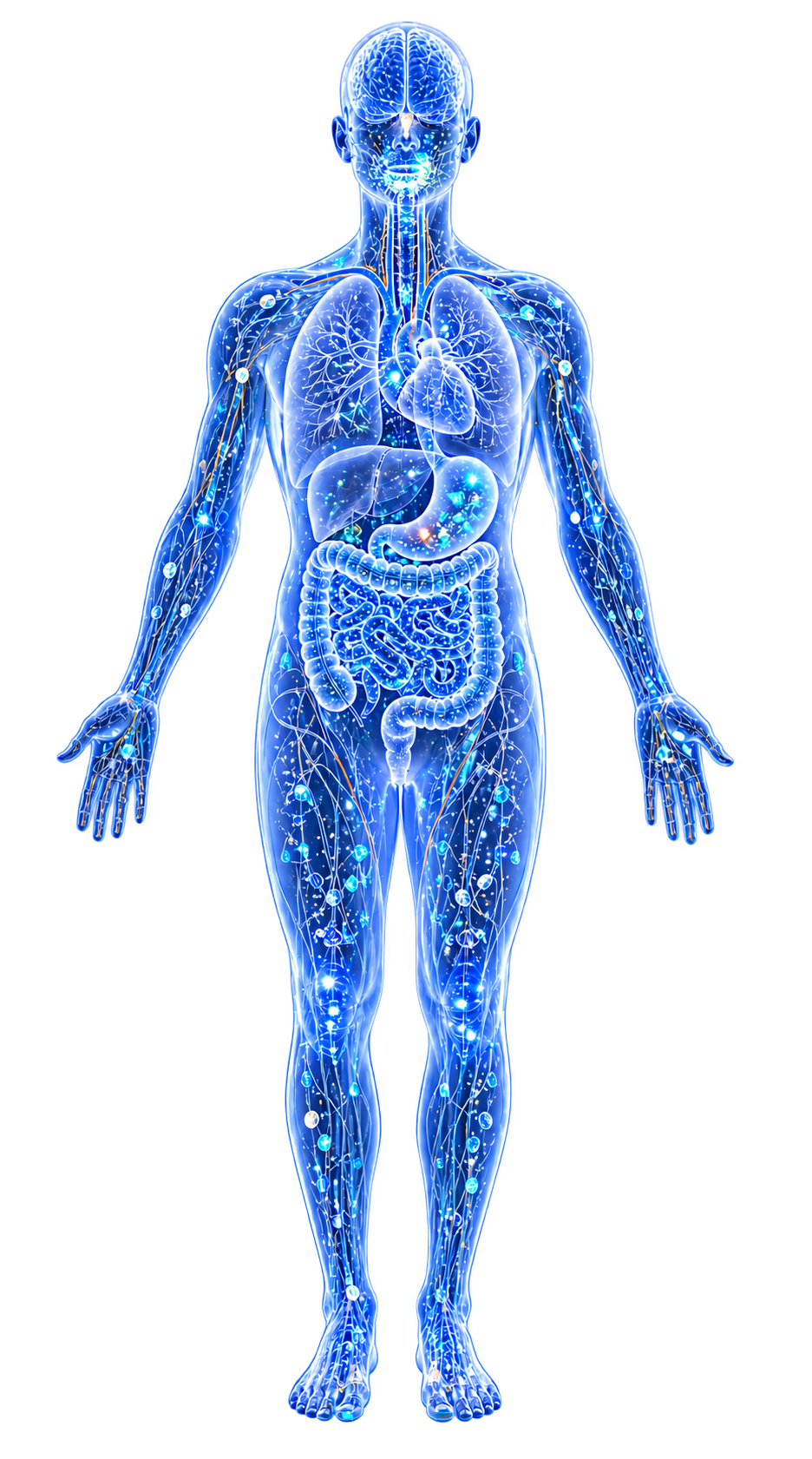
Histidine is a semi-essential amino acid with a unique property that makes it central to metal biology: its imidazole side chain is one of the strongest biological metal-binding groups, coordinating zinc, nickel, copper, iron, and other transition metals in enzymes and transport proteins.
In the gut ecosystem, histidine serves a dual role—as a critical metal-binding residue in microbial proteins and as the precursor to histamine, a potent immunomodulatory molecule.
Evidence map6 cited passagesInspect provenance +
Hpn in helicobacter pylori: 47% histidine content, 20-mer binding 5 Ni(II) per monomer. The primary nickel reservoir in gastric Helicobacter.
dialister histaminiformans: The organism historically named Allisonella histaminiformans produced histamine while using histidine as an energy source in isolates from a bovine-rumen enrichment system. That experiment does not establish a human obesity or mast-cell-activation mechanism.
Dietary histamine and microbial histamine production are distinct evidence questions. The cited D. histaminiformans experiment does not establish that changing dietary histidine or histamine treats human dysbiosis.
SOD-deficient E. coli upregulates the pentose phosphate pathway, feeding aromatic amino acid synthesis including histidine.
Supplemental histidine itself did not rescue H2O2 sensitivity, indicating the protective effect comes from intermediate metabolic pathways, not the final amino acid product.
Prenatal lead exposure differentially affects histidine biosynthesis pathways in the developing gut microbiome, with trimester-specific effects. L-histidine biosynthesis was among the amino acid pathways uniquely affected by trimester-specific Pb exposure.
Contents
1. Histidine as Metal Coordinator2. Histidine as Histamine Precursor3. Histidine in Oxidative Stress Defense4. Prenatal Lead and Histidine Metabolism5. Open Questions6. Cross-ReferencesHistidine as Metal Coordinator#
The imidazole ring of histidine coordinates transition metals through its nitrogen atoms. This property makes histidine-rich proteins essential for metal handling across all domains of life:
Nickel Storage and Handling#
Hpn in Helicobacter pylori: 47% histidine content, 20-mer binding 5 nickel (Ni)(II) per monomer. The primary nickel reservoir in gastric Helicobacter.[1]Role of Nickel in Microbial PathogenesisRobert J. Maier, Stéphane L. Benoit · 2019Open reference 1 ↓
HypB in Proteus mirabilis: 39% histidine in its histidine-rich region, serving as a nickel chaperone for Urease assembly Proteus mirabilis. The convergent evolution of histidine-rich nickel buffers in urease-dependent pathogens (H. pylori, P. mirabilis) underscores nickel's role as a virulence-enabling metal.
Zinc Binding#
Calprotectin (S100A8/A9): Contains a hexahistidine site that preferentially coordinates nickel (Ni)(II) over zinc (Zn)(II), sequestering nickel from pathogens at infection sites Staphylococcus aureus, Calprotectin (S100A8/A9). Pht (polyhistidine triad) proteins in Streptococcus pneumoniae: Surface-exposed zinc-binding/storage proteins that feed zinc to the AdcAII transporter Streptococcus pneumoniae.
Zinc finger domains: Histidine and cysteine residues coordinate zinc in transcription factors and regulatory proteins. Mis-metallation at these sites (cadmium (Cd) replacing zinc) disrupts gene regulation.
TLR-4 Activation by Nickel#
Nickel directly activates TLR-4 on human dendritic cells and keratinocytes through histidine residues. Humans have the relevant histidine residues in TLR-4 that mice lack, which is why nickel allergy is a uniquely human phenomenon Low-Nickel Diet.
Histidine as Histamine Precursor#
Bacterial Histidine Decarboxylase (HDC)#
Certain gut bacteria express histidine decarboxylase, converting free histidine to histamine:
Reaction: L-histidine → histamine + CO2
Key histamine-producing bacteria include. Dialister histaminiformans: The organism historically named Allisonella histaminiformans produced histamine while using histidine as an energy source in isolates from a bovine-rumen enrichment system.[2]Allisonella histaminiformans gen. nov., sp. nov.: a novel bacterium that produces histamine, utilizes histidine as its sole energy source, and could play a role in bovine and equine laminitisMatthew R Garner, Joseph F Flint, James B Russell · 2002Open reference 2 ↓ That experiment does not establish a human obesity or mast-cell-activation mechanism.
Morganella morganii, Lactobacillus reuteri, Enterobacteriaceae: Additional histamine producers in the gut.
Bacterial histamine production is clinically significant because it occurs independently of host mast cell degranulation, creating a microbial histamine load that can drive. Mast cell activation and allergic-type Metal-Driven Inflammation. Visceral hypersensitivity in Irritable Bowel Syndrome (IBS).
Histamine intolerance symptoms.
Immune modulation (histamine is immunomodulatory at different receptors: H1 pro-inflammatory, H2 anti-inflammatory).
Dietary Histamine Precursors#
Dietary histamine and microbial histamine production are distinct evidence questions. The cited D. histaminiformans experiment does not establish that changing dietary histidine or histamine treats human Dysbiosis.[2]Allisonella histaminiformans gen. nov., sp. nov.: a novel bacterium that produces histamine, utilizes histidine as its sole energy source, and could play a role in bovine and equine laminitisMatthew R Garner, Joseph F Flint, James B Russell · 2002Open reference 2 ↓
Histidine in Oxidative Stress Defense#
Histidine biosynthesis is upregulated as part of the Oxidative Stress response in bacteria:
- SOD-deficient E. coli upregulates the pentose phosphate pathway, feeding aromatic amino acid synthesis including histidine.[3]Nong 2026 — Despite Inducing Antioxidant Regulation, Superoxide Dismutase Deficiency Makes E. coli More Sensitive to Hydrogen PeroxideYuejuan Nong, Jiaxin Qiao, Yixuan Zhao et al. · 2026Open reference 3 ↓
- Deletion of hisD (disrupting histidine synthesis) increased H2O2 sensitivity in SOD mutants, suggesting histidine biosynthesis intermediates provide antioxidant protection.
- Supplemental histidine itself did not rescue H2O2 sensitivity, indicating the protective effect comes from intermediate metabolic pathways, not the final amino acid product.[3]Nong 2026 — Despite Inducing Antioxidant Regulation, Superoxide Dismutase Deficiency Makes E. coli More Sensitive to Hydrogen PeroxideYuejuan Nong, Jiaxin Qiao, Yixuan Zhao et al. · 2026Open reference 3 ↓
Free histidine also acts as a direct antioxidant through. Singlet oxygen quenching by the imidazole ring. Metal chelation (preventing free radical generation via Fenton Chemistry).
Hydroxyl radical scavenging.
Prenatal Lead and Histidine Metabolism#
Prenatal Lead exposure differentially affects histidine biosynthesis pathways in the developing Gut Microbiome, with trimester-specific effects. L-histidine biosynthesis was among the amino acid pathways uniquely affected by trimester-specific lead (Pb) exposure.[4]Eggers 2023 — Prenatal lead exposure is negatively associated with gut microbiome in childhood (PROGRESS cohort)Shoshannah Eggers, Vishal Midya, Moira Bixby et al. · 2023Open reference 4 ↓
Open Questions#
Unresolved questions identified by the current evidence record.
01Does histidine supplementation enhance nickel sequestration by calprotectin?+
The current WikiBiome record identifies this as an unresolved evidence gap.
02Can dietary histidine modulation alter the balance between bacterial histamine production and metal-binding functions?+
The current WikiBiome record identifies this as an unresolved evidence gap.
03Is histamine overproduction from gut bacteria a driver of symptoms in nickel-sensitive individuals?+
The current WikiBiome record identifies this as an unresolved evidence gap.
04Do histidine-rich bacterial proteins represent druggable targets for disrupting pathogen nickel acquisition?+
The current WikiBiome record identifies this as an unresolved evidence gap.
Cross-References#
- Nickel—histidine as primary nickel (Ni)-binding residue
- Calprotectin (S100A8/A9)—hexahistidine nickel-binding site
- Helicobacter pylori—Hpn (47% histidine) nickel storage
- Proteus mirabilis—HypB (39% histidine) nickel chaperone
- Dialister histaminiformans—histamine production demonstrated in a bovine-rumen isolate system
- Streptococcus pneumoniae—polyhistidine triad zinc-binding proteins
- Phenylalanine—co-regulated aromatic amino acid
- Fenton Chemistry—histidine chelation preventing free radical generation
- Mis-Metallation—zinc-finger displacement at histidine/cysteine sites
References 4
Numbered by first appearance in the article, then reconciled with its declared source list.
- 1
★Robert J. Maier, Stéphane L. Benoit (2019). Role of Nickel in Microbial Pathogenesis. Inorganics.
- 2
Matthew R Garner, Joseph F Flint, James B Russell (2002). Allisonella histaminiformans gen. nov., sp. nov.: a novel bacterium that produces histamine, utilizes histidine as its sole energy source, and could play a role in bovine and equine laminitis. Systematic and Applied Microbiology.
- 3
Yuejuan Nong, Jiaxin Qiao, Yixuan Zhao et al. (2026). Nong 2026 — Despite Inducing Antioxidant Regulation, Superoxide Dismutase Deficiency Makes E. coli More Sensitive to Hydrogen Peroxide. Frontiers in Microbiology.
- 4
Shoshannah Eggers, Vishal Midya, Moira Bixby et al. (2023). Eggers 2023 — Prenatal lead exposure is negatively associated with gut microbiome in childhood (PROGRESS cohort). Frontiers in Microbiology.
Article network
Mentioned here 18
Pages linking here 29
Connect the evidence
Publicly readable discussion by ORCID-authenticated researchers. Questions, interpretation, methods, corrections, and new evidence stay attached to this record.
No discussion yet. Start with a precise question or a source-backed observation.
Activity and accepted changes
Accepted researcher context, editorial status, public discussion, and upstream Git revisions are shown together. Pending, declined, and withdrawn proposals remain private.
- published revision
Backfill oxidative stress concept links
Karen Pendergrass · +1 −1
Inspect exact Git diff ↗ - published revision
Backfill gut microbiome concept links
Karen Pendergrass · +1 −1
Inspect exact Git diff ↗ - published revision
Backfill inflammation concept links
Karen Pendergrass · +1 −1
Inspect exact Git diff ↗ - published revision
Complete corpus-wide Dysbiosis linking
Karen Pendergrass · +1 −1
Inspect exact Git diff ↗ - published revision
Complete reviewed Urease contextual coverage
Karen Pendergrass · +1 −1
Inspect exact Git diff ↗ - published revision
Reconcile current taxonomic identities
Karen Pendergrass · +3 −3
Inspect exact Git diff ↗ - published revision
massive wiki expansion: 149 stubs fixed, 100+ new pages, Rule 15 scan, keystone papers
WikiBiome Deploy Bot · +13 −13
Inspect exact Git diff ↗ - published revision
pre-overnight checkpoint 2026-04-18
WikiBiome Deploy Bot · +95 −0
Inspect exact Git diff ↗