
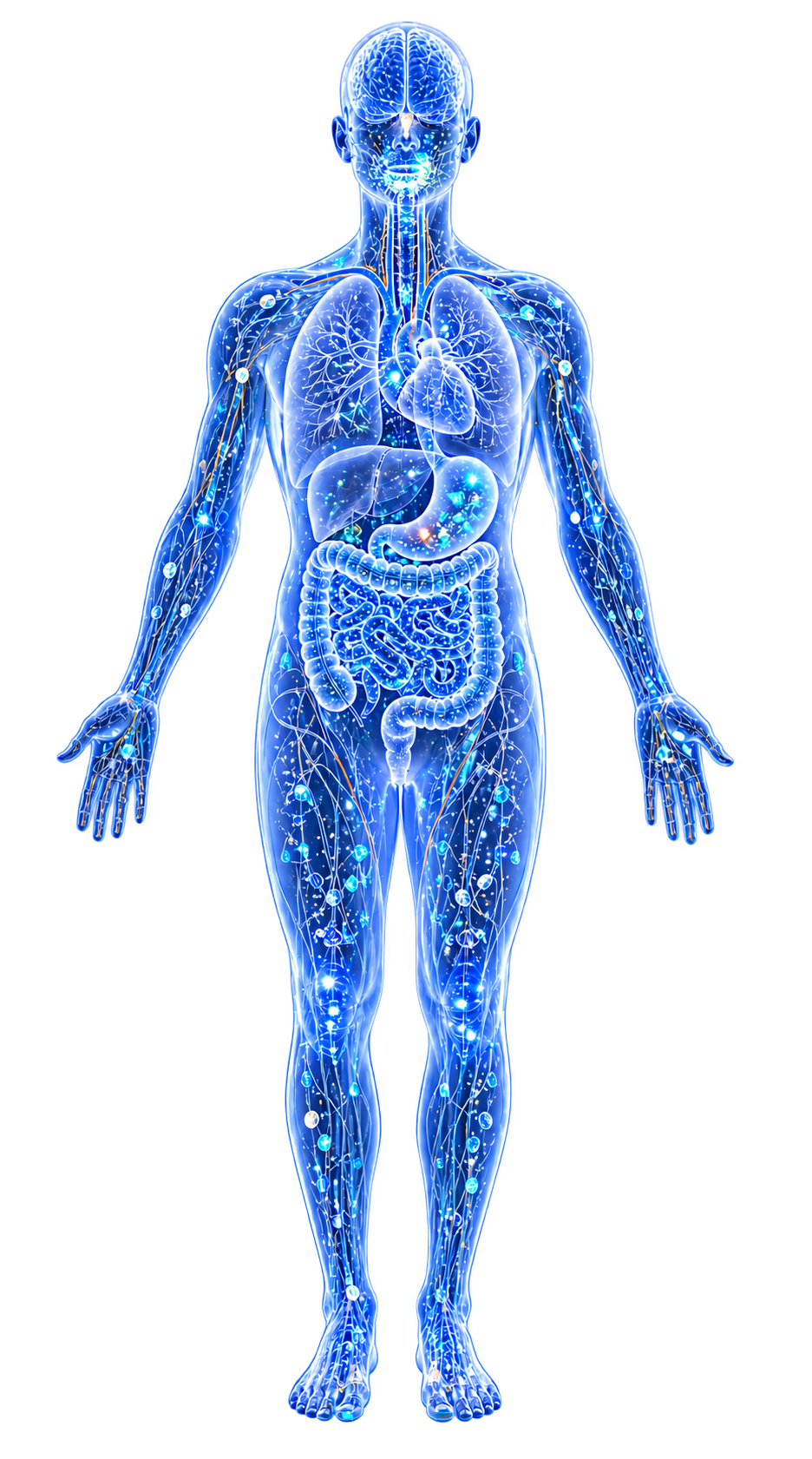
Gut barrier dysfunction—colloquially "leaky gut"—is the pathological increase in intestinal permeability that permits translocation of bacteria, bacterial products (LPS, peptidoglycan), metals, and dietary antigens from the gut lumen into the systemic circulation. It is the gateway mechanism through which the gut-metal-microbiome triad produces systemic disease.
When the barrier fails, problems that would otherwise remain confined to the intestinal lumen become whole-body problems.
For the molecular details of tight junction architecture and zonulin signaling, see Intestinal Permeability. This page focuses on the broader concept of barrier failure as a disease mechanism, emphasizing the metal and microbiome dimensions.
Evidence map7 cited passagesInspect provenance +
Cadmium: Downregulates occludin and claudin-1, increases claudin-2 (pore-forming), disrupts ZO-1 localization. Depletes glutathione in epithelial cells, increasing oxidative damage. Thins the mucus layer.
Arsenic: Induces epithelial cell apoptosis at environmentally relevant doses, increases paracellular permeability, and alters the microbiome composition toward gram-negative dominance (increasing LPS burden).
Lead: Disrupts tight junction assembly through calcium channel interference (Pb mimics Ca2+, a key tight junction signaling ion). Early-life lead exposure produces persistent barrier dysfunction.
Iron excess: Luminal iron overload (from oral supplementation or dietary excess) generates hydroxyl radicals via Fenton chemistry directly at the mucosal surface, damaging epithelial cells and selecting for iron-pirating pathogens that further compromise the barrier.
Inflammatory bowel disease: Barrier dysfunction precedes clinical relapse in IBD and is driven by both dysbiosis and metal dysregulation.
Autoimmune conditions: Molecular mimicry and antigenic translocation through a leaky gut contribute to Hashimoto's, rheumatoid arthritis, and multiple sclerosis.
Metabolic disease: LPS translocation ("metabolic endotoxemia") contributes to insulin resistance and metabolic syndrome.
Contents
1. The Three Layers of Defense2. How Metals Break the Barrier3. The Vicious Cycle4. Biomarkers of Barrier Dysfunction5. Disease Relevance6. Cross-ReferencesThe Three Layers of Defense#
The gut barrier is not a single wall but a layered defense system:
1. The Mucus Layer#
A gel-like glycoprotein matrix (primarily MUC2 mucin) secreted by goblet cells. The outer mucus layer harbors commensal bacteria; the inner layer is normally sterile. Metal exposure thins the mucus layer: Cadmium and Arsenic reduce goblet cell numbers and MUC2 expression.
Loss of Akkermansia muciniphila, the mucin-degrading commensal that paradoxically stimulates mucus production, is a consistent feature of metal-induced Dysbiosis.
2. The Epithelial Barrier#
A single layer of intestinal epithelial cells connected by tight junctions, adherens junctions, and desmosomes. This is the physical barrier, and its integrity depends on.
Tight junction proteins: Zonulin pathway activation opens tight junctions; occludin, claudins, and ZO-1 maintain them. Cellular energy: Colonocytes depend on Butyrate for mitochondrial ATP production; SCFA depletion from dysbiosis starves the barrier. Turnover rate: The epithelium renews every 3-5 days; metals that impair stem cell function slow this renewal.
3. The Immunological Barrier#
Secretory IgA, antimicrobial peptides (defensins, cathelicidins), and the lamina propria immune cells that survey for barrier breaches. Calprotectin and Lactoferrin in the gut lumen provide antimicrobial metal sequestration.
How Metals Break the Barrier#
Heavy Metals disrupt each layer through distinct mechanisms. Cadmium: Downregulates occludin and claudin-1, increases claudin-2 (pore-forming), disrupts ZO-1 localization. Depletes glutathione in epithelial cells, increasing oxidative damage.
Thins the mucus layer.[1]Effects of Heavy Metals on Gut Barrier Integrity and Gut MicrobiotaSweta Ghosh, Syam P. Nukavarpu, Venkatakrishna Rao Jala · 2024Open reference 1 ↓
Arsenic: Induces epithelial cell apoptosis at environmentally relevant doses, increases paracellular permeability, and alters the microbiome composition toward gram-negative dominance (increasing LPS burden).[2]Influence of Toxic Metal Exposure on the Gut Microbiota (Review)Federica Giambo, Sebastiano Italia, Michele Teodoro et al. · 2021Open reference 2 ↓
Lead: Disrupts tight junction assembly through calcium channel interference (lead (Pb) mimics calcium(II) (Ca2+), a key tight junction signaling ion). Early-life lead exposure produces persistent barrier dysfunction.[3]Toxic and Essential Metals: Metabolic Interactions with the Gut Microbiota and Health ImplicationsQinheng Zhu, Boyan Chen, Fu Zhang et al. · 2024Open reference 3 ↓
Mercury: Methylmercury depletes glutathione in enterocytes, increases Oxidative Stress, and disrupts the actin cytoskeleton that anchors tight junctions.
Iron excess: Luminal iron overload (from oral supplementation or dietary excess) generates hydroxyl radicals via Fenton chemistry directly at the mucosal surface, damaging epithelial cells and selecting for iron-pirating pathogens that further compromise the barrier.[4]Mechanism of Iron Ion Homeostasis in Intestinal Immunity and Gut Microbiota RemodelingHonghong Bao, Yi Wang, Hanlin Xiong et al. · 2024Open reference 4 ↓
The Vicious Cycle#
Barrier dysfunction creates a self-amplifying loop:
- Metal exposure and/or dysbiosis damage the barrier
- Barrier breach permits LPS and bacterial translocation
- Translocated LPS activates systemic Metal-Driven Inflammation (via TLR4/NF-kB)
- Inflammation induces Hepcidin, driving iron sequestration
- Iron sequestration selects for Siderophores-producing pathogens (Enterobacteriaceae bloom)
- Pathogen bloom produces more LPS and barrier-damaging toxins
- More barrier damage permits more translocation
This cycle explains why barrier dysfunction, once established, is difficult to reverse and why it connects to diseases far removed from the gut: the translocation of inflammatory mediators reaches the brain (Gut-Brain Axis), joints (rheumatoid arthritis), kidneys (CKD), liver, and cardiovascular system.
Biomarkers of Barrier Dysfunction#
| Biomarker | What It Measures | Limitations |
|---|---|---|
| Serum Zonulin | Tight junction opening | Assay specificity debated; may detect other proteins |
| Serum LPS / LPS-binding protein | Bacterial translocation | Influenced by hepatic clearance |
| Fecal Calprotectin (S100A8/A9) | Intestinal inflammation | Not specific to barrier dysfunction |
| Lactulose/mannitol ratio | Paracellular permeability | Requires oral challenge; cumbersome |
| Serum D-lactate | Bacterial translocation | Elevated in other conditions |
| Intestinal fatty acid-binding protein (I-FABP) | Enterocyte damage | Short half-life |
Disease Relevance#
Gut barrier dysfunction is implicated in virtually every disease in this wiki, but is particularly central to. Inflammatory bowel disease: Barrier dysfunction precedes clinical relapse in IBD and is driven by both dysbiosis and metal dysregulation.[5]Clinical and inflammatory biomarkers of inflammatory bowel diseases are linked to plasma trace elements and toxic metals; new insights into an old conceptAmerikanou C, Karavoltsos S, Gioxari A et al. · 2022Open reference 5 ↓
Autoimmune conditions: Molecular mimicry and antigenic translocation through a leaky gut contribute to Hashimoto's, rheumatoid arthritis, and multiple sclerosis.[6]Environmental Exposures and Autoimmune Diseases: Contribution of Gut MicrobiomeM. Firoze Khan, Hui Wang · 2020Open reference 6 ↓
Neurodegenerative diseases: LPS translocation activates Microglia via the Gut-Brain Axis, driving Neuroinflammation. Metabolic disease: LPS translocation ("metabolic endotoxemia") contributes to Insulin Resistance and Metabolic Syndrome and Metal Exposure.[7]Heavy Metals, Microbial Metallomics, and the US Obesity Epidemic: A Mechanistic Examination of a Population-Level Metabolic DisruptionKaren Pendergrass · 2026Open reference 7 ↓ Chronic kidney disease: Uremia-induced barrier dysfunction increases translocation of Uremic Toxins and LPS, accelerating renal decline.
Cross-References#
- Intestinal Permeability—molecular details of tight junction architecture
- Zonulin—the physiological regulator of paracellular permeability
- dysbiosis—microbiome disruption as both cause and consequence
- inflammation—systemic inflammation from barrier breach
- butyrate—SCFA that fuels the barrier
- Siderophores—iron competition that follows barrier-driven inflammation
- Gut-Brain Axis—how barrier failure reaches the brain
- Calprotectin (S100A8/A9)—biomarker of intestinal inflammation
- Nutritional Immunity (Metal Sequestration)—the host metal-sequestration system engaged after barrier breach
- oxidative stress—metal-generated ROS damage the barrier
References 10
Numbered by first appearance in the article, then reconciled with its declared source list.
- 1
★Sweta Ghosh, Syam P. Nukavarpu, Venkatakrishna Rao Jala (2024). Effects of Heavy Metals on Gut Barrier Integrity and Gut Microbiota. Microbiota and Host.
- 2
★Federica Giambo, Sebastiano Italia, Michele Teodoro et al. (2021). Influence of Toxic Metal Exposure on the Gut Microbiota (Review). World Academy of Sciences Journal.
- 3
★Qinheng Zhu, Boyan Chen, Fu Zhang et al. (2024). Toxic and Essential Metals: Metabolic Interactions with the Gut Microbiota and Health Implications. Frontiers in Nutrition.
- 4
★Honghong Bao, Yi Wang, Hanlin Xiong et al. (2024). Mechanism of Iron Ion Homeostasis in Intestinal Immunity and Gut Microbiota Remodeling. International Journal of Molecular Sciences.
- 5
Amerikanou C, Karavoltsos S, Gioxari A et al. (2022). Clinical and inflammatory biomarkers of inflammatory bowel diseases are linked to plasma trace elements and toxic metals; new insights into an old concept. Frontiers in Nutrition.
- 6
M. Firoze Khan, Hui Wang (2020). Environmental Exposures and Autoimmune Diseases: Contribution of Gut Microbiome. Frontiers in Immunology.
- 7
★Karen Pendergrass (2026). Heavy Metals, Microbial Metallomics, and the US Obesity Epidemic: A Mechanistic Examination of a Population-Level Metabolic Disruption. Zenodo Preprint.
- 8
Fatemeh Rezazadegan, Maryam Mahmoudi, Seyed Mohammad Mousavi (2025). Rezazadegan et al. 2025 — Heavy Metals and Gut Microbiota: A Systematic Review. Journal of Health, Population and Nutrition.
- 9
Jessica Briffa, Emmanuel Sinagra, Renald Blundell (2020). Heavy Metal Pollution in the Environment and Their Toxicological Effects on Humans. Heliyon.
- 10
Lombardi F, Fiasca F, Minelli M et al. (2020). The Effects of Low-Nickel Diet Combined with Oral Administration of Selected Probiotics on Patients with Systemic Nickel Allergy Syndrome (SNAS) and Gut Dysbiosis. Nutrients.
Article network
Mentioned here 18
Pages linking here 2
Connect the evidence
Publicly readable discussion by ORCID-authenticated researchers. Questions, interpretation, methods, corrections, and new evidence stay attached to this record.
No discussion yet. Start with a precise question or a source-backed observation.
Activity and accepted changes
Accepted researcher context, editorial status, public discussion, and upstream Git revisions are shown together. Pending, declined, and withdrawn proposals remain private.
- published revision
Backfill heavy metals concept links
Karen Pendergrass · +1 −1
Inspect exact Git diff ↗ - published revision
Backfill oxidative stress concept links
Karen Pendergrass · +1 −1
Inspect exact Git diff ↗ - published revision
Backfill inflammation concept links
Karen Pendergrass · +1 −1
Inspect exact Git diff ↗ - published revision
Complete corpus-wide Dysbiosis linking
Karen Pendergrass · +3 −3
Inspect exact Git diff ↗ - published revision
Complete Tight junctions contextual coverage
Karen Pendergrass · +1 −1
Inspect exact Git diff ↗ - published revision
massive wiki expansion: 149 stubs fixed, 100+ new pages, Rule 15 scan, keystone papers
WikiBiome Deploy Bot · +20 −20
Inspect exact Git diff ↗ - published revision
pre-overnight checkpoint 2026-04-18
WikiBiome Deploy Bot · +93 −0
Inspect exact Git diff ↗