
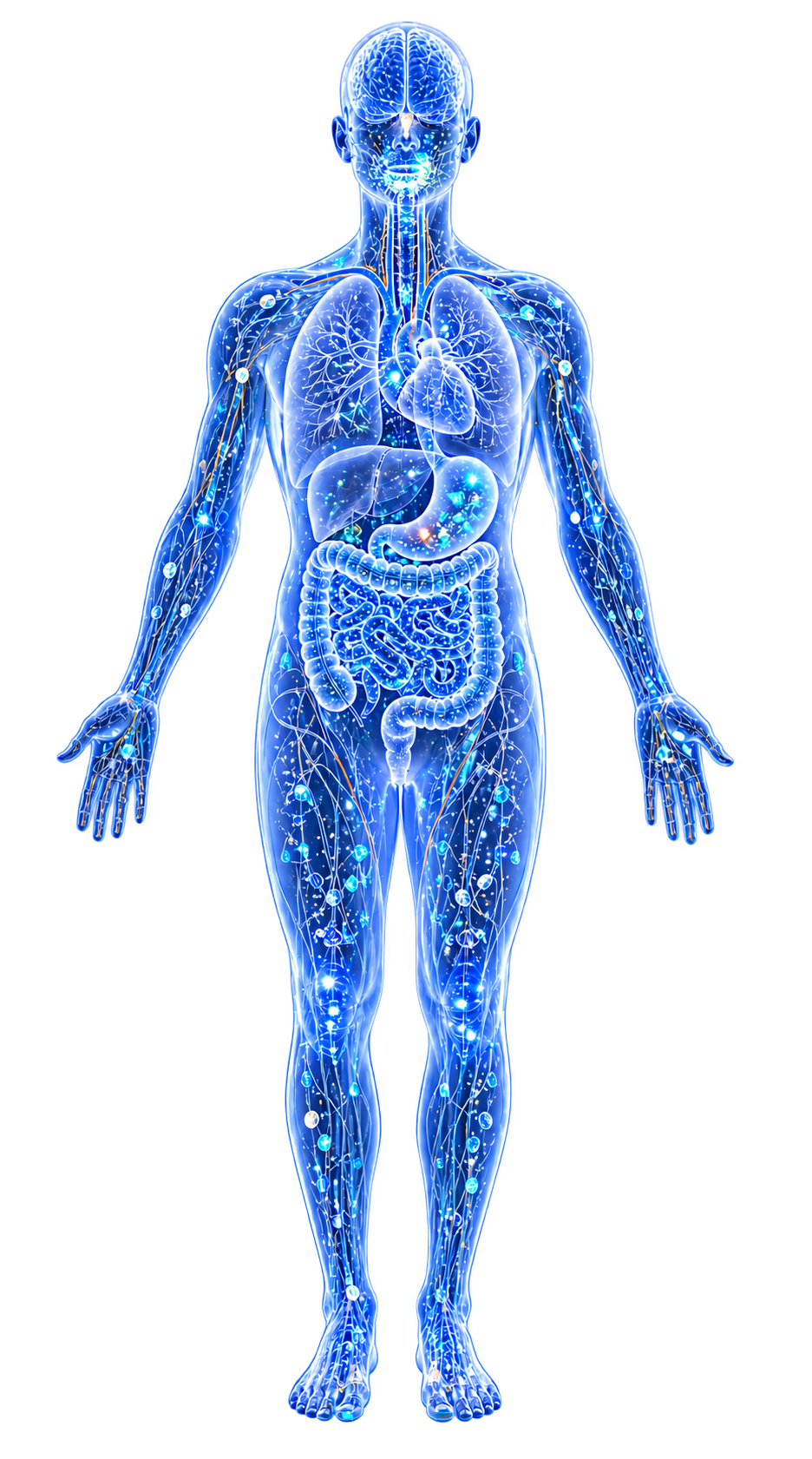
Statins (HMG-CoA reductase inhibitors) are the most widely prescribed drug class globally, used primarily for cholesterol lowering and cardiovascular risk reduction. Over 200 million people take statins worldwide.
Beyond their canonical mechanism of inhibiting cholesterol synthesis, statins have pleiotropic effects on Metal-Driven Inflammation, immune function, and—as increasingly recognized—the Gut Microbiome.
In the WikiBiome framework, statins are a prime example of Pharmacomicrobiomics: a drug whose off-target microbiome effects may contribute to both therapeutic benefits and adverse effects.
Evidence map4 cited passagesInspect provenance +
Statins reduce salivary Streptococcus levels in older adults, suggesting direct oral microbiome effects
Rosuvastatin treatment alters gut microbial composition in ways that may contribute to its therapeutic effects:
A Mendelian randomization study using genetic instruments identified causal relationships between statin use and specific gut taxa abundance changes, providing genetic-level evidence that the microbiome effects are real and not confounded by lifestyle factors.
The statin-microbiome-Parkinson's connection is complex:
Contents
1. Canonical Mechanism2. Microbiome Effects3. Bile Acid Connection4. Statins and Neurodegeneration5. Anti-Inflammatory Properties6. Statins and Cancer7. Adverse Effects: A Microbiome Perspective8. Open Questions9. Cross-ReferencesCanonical Mechanism#
Statins inhibit 3-hydroxy-3-methylglutaryl-CoA (HMG-CoA) reductase, the rate-limiting enzyme in hepatic cholesterol biosynthesis. By reducing intracellular cholesterol, they upregulate LDL receptor expression, increasing clearance of circulating LDL cholesterol. This mechanism alone does not explain statins' cardiovascular benefit—their anti-inflammatory, endothelial-protective, and microbiome-modulating effects likely contribute.
Microbiome Effects#
Direct Antimicrobial Activity#
Several statins have direct antimicrobial properties. Simvastatin inhibits bacterial cell membrane synthesis (the mevalonate pathway is conserved in some bacteria). Atorvastatin reduces Biofilm formation by Staphylococcus aureus in vitro.
Statins reduce salivary Streptococcus levels in older adults, suggesting direct oral microbiome effects.[1]Alteration of salivary Streptococcus is associated with statin therapy in older adults: a cohort studyDaisuke Hisamatsu, Yusuke Ogata, Wataru Suda et al. · 2025Open reference 1 ↓
Microbiome Composition Changes#
Rosuvastatin treatment alters gut microbial composition in ways that may contribute to its therapeutic effects:[2]Gut Microbiome Associates With Lipid-Lowering Effect of Rosuvastatin in VivoYinhui Liu, Xiaobo Song, Huimin Zhou et al. · 2018Open reference 2 ↓
- Increased: Bifidobacterium, Lactobacillus—SCFA producers and anti-inflammatory commensals
- Decreased: Desulfovibrio—hydrogen sulfide producer associated with gut inflammation
- Functional shift: Increased bile salt hydrolase (BSH) activity, altered bile acid metabolism
Mendelian Randomization Evidence#
A Mendelian randomization study using genetic instruments identified causal relationships between statin use and specific gut taxa abundance changes,[3]A two-sample Mendelian randomization study reveals the causal effects of statin medication on gut microbiota abundanceZhou P, Qiu C, Zhuang Z et al. · 2024Open reference 3 ↓ providing genetic-level evidence that the microbiome effects are real and not confounded by lifestyle factors.
Bile Acid Connection#
Statins' most significant microbiome interaction may operate through bile acid metabolism:
- Statins reduce hepatic cholesterol, altering bile acid composition
- Bile acids are potent antimicrobials in the gut—their composition shapes microbial community structure
- Gut bacteria with bile salt hydrolase (BSH) activity deconjugate bile acids, affecting their antimicrobial spectrum
- Secondary bile acid production by gut bacteria (7-alpha-dehydroxylation) generates deoxycholic acid and lithocholic acid
- These secondary bile acids activate FXR and TGR5 receptors, feeding back to hepatic cholesterol metabolism
This creates a statin-bile acid-microbiome feedback loop where the drug alters bile composition, bile composition selects for different microbes, and those microbes further modify bile acids.
Metal Connection#
Bile acids affect metal solubility and absorption in the gut. Bile acid-metal complexes influence cadmium, lead, and zinc bioavailability. Statin-induced bile acid changes could theoretically alter metal absorption patterns.
This remains largely unexplored but represents a hidden metallomics dimension of statin therapy.
Statins and Neurodegeneration#
Parkinson's Disease#
The statin-microbiome-Parkinson's connection is complex.[4]Mertsalmi 2023 -- Statins and Gut Microbiome in Parkinson's DiseaseEero Mertsalmi, Velma T E Aho, Pedro A B Pereira et al. · 2023Open reference 4 ↓ Epidemiological studies show mixed associations between statin use and PD risk. Statins' anti-inflammatory effects could protect dopaminergic neurons.
Statins' microbiome effects could improve the gut-brain axis dysfunction seen in Parkinson's Disease.
However, cholesterol is essential for Alpha-Synuclein membrane interactions, and excessive lowering could alter protein aggregation dynamics. Statin-induced changes in bile acid profiles may affect gut-brain signaling via the vagus nerve.
The [[pharmacomicrobiomics]] Implication#
Individual microbiome composition may predict statin response. Patients with higher baseline Bacteroides abundance respond differently to statins than those with Firmicutes-dominant microbiomes. This could explain the well-known variability in statin efficacy.
Anti-Inflammatory Properties#
Statins suppress inflammation through multiple pathways relevant to microbiome-disease interactions:
- NF-kB inhibition: Reduces LPS-driven inflammatory signaling
- Isoprenylation block: Inhibits Rho and Ras GTPase prenylation, reducing immune cell activation
- eNOS upregulation: Increases endothelial nitric oxide production—directly relevant to Gut-Penis Axis and cardiovascular protection
- Reduced CRP: Consistent anti-inflammatory effect across trials
Statins and Cancer#
Emerging evidence connects statin use to altered cancer risk through microbiome pathways. Simvastatin inhibits colorectal cancer cell growth and promotes Lactobacillus expansion in the gut. Statin-mediated bile acid changes may influence Fusobacterium nucleatum colonization of tumors.
Anti-inflammatory effects could reduce the chronic inflammation driving colorectal carcinogenesis.
Adverse Effects: A Microbiome Perspective#
Common statin side effects may have microbiome components.
GI disturbances (nausea, diarrhea, constipation): Direct microbiome disruption. Myopathy: Gut microbial metabolism of statins affects their systemic bioavailability; high metabolizer microbiomes may reduce active drug reaching target tissues. Diabetes risk: Statins increase T2D risk by ~9%; could this partly reflect microbiome-mediated metabolic changes?
Open Questions#
Unresolved questions identified by the current evidence record.
01Can pre-treatment microbiome profiling predict statin responders vs. non-responders?+
The current WikiBiome record identifies this as an unresolved evidence gap.
02Do statin-induced microbiome changes persist after discontinuation?+
The current WikiBiome record identifies this as an unresolved evidence gap.
03Is the cardiovascular benefit of statins partly microbiome-mediated?+
The current WikiBiome record identifies this as an unresolved evidence gap.
04Can the diabetes-promoting effect of statins be mitigated by concurrent probiotic supplementation?+
The current WikiBiome record identifies this as an unresolved evidence gap.
Cross-References#
- Pharmacomicrobiomics—drug-microbiome interaction framework
- Bile Acid Metabolism—statin-bile acid-microbiome loop
- Drug Repurposing—statins as anti-inflammatory/anticancer agents
- Cardiovascular Disease—primary indication
- Parkinson's Disease—neuroprotective debate
- Atherosclerosis—anti-inflammatory mechanism
References 4
Numbered by first appearance in the article, then reconciled with its declared source list.
- 1
Daisuke Hisamatsu, Yusuke Ogata, Wataru Suda et al. (2025). Alteration of salivary Streptococcus is associated with statin therapy in older adults: a cohort study. Frontiers in Pharmacology.
- 2
Yinhui Liu, Xiaobo Song, Huimin Zhou et al. (2018). Gut Microbiome Associates With Lipid-Lowering Effect of Rosuvastatin in Vivo. Frontiers in Microbiology.
- 3
Zhou P, Qiu C, Zhuang Z et al. (2024). A two-sample Mendelian randomization study reveals the causal effects of statin medication on gut microbiota abundance. Frontiers in Genetics.
- 4
Eero Mertsalmi, Velma T E Aho, Pedro A B Pereira et al. (2023). Mertsalmi 2023 -- Statins and Gut Microbiome in Parkinson's Disease. Nature Communications.
Article network
Mentioned here 16
Pages linking here 3
Connect the evidence
Publicly readable discussion by ORCID-authenticated researchers. Questions, interpretation, methods, corrections, and new evidence stay attached to this record.
No discussion yet. Start with a precise question or a source-backed observation.
Published page changes
This record shows only material changes published on this page, including changes to its content, evidence, conclusions, or author context. Internal processes and discussion activity are excluded. Pending, declined, and withdrawn proposals remain private.
- published revision
Created “Statins”: Statins (HMG-CoA reductase inhibitors) are the most widely prescribed drug class globally, used primarily for cholesterol lowering and cardiovascular risk reduction. Over 200 million people take…
Created “Statins”: Statins (HMG-CoA reductase inhibitors) are the most widely prescribed drug class globally, used primarily for cholesterol lowering and cardiovascular risk reduction. Over 200 million people take… Published sections: Overview; Canonical Mechanism; Direct Antimicrobial Activity; Microbiome Composition Changes; Mendelian Randomization Evidence; Bile Acid Connection; Metal Connection; Parkinson's Disease; The pharmacomicrobiomics Implication; Anti-Inflammatory Properties; Statins and Cancer; Adverse Effects: A Microbiome Perspective; Open Questions; Cross-References. · WikiBiome Deploy Bot · +121 −0
Inspect exact Git diff ↗