
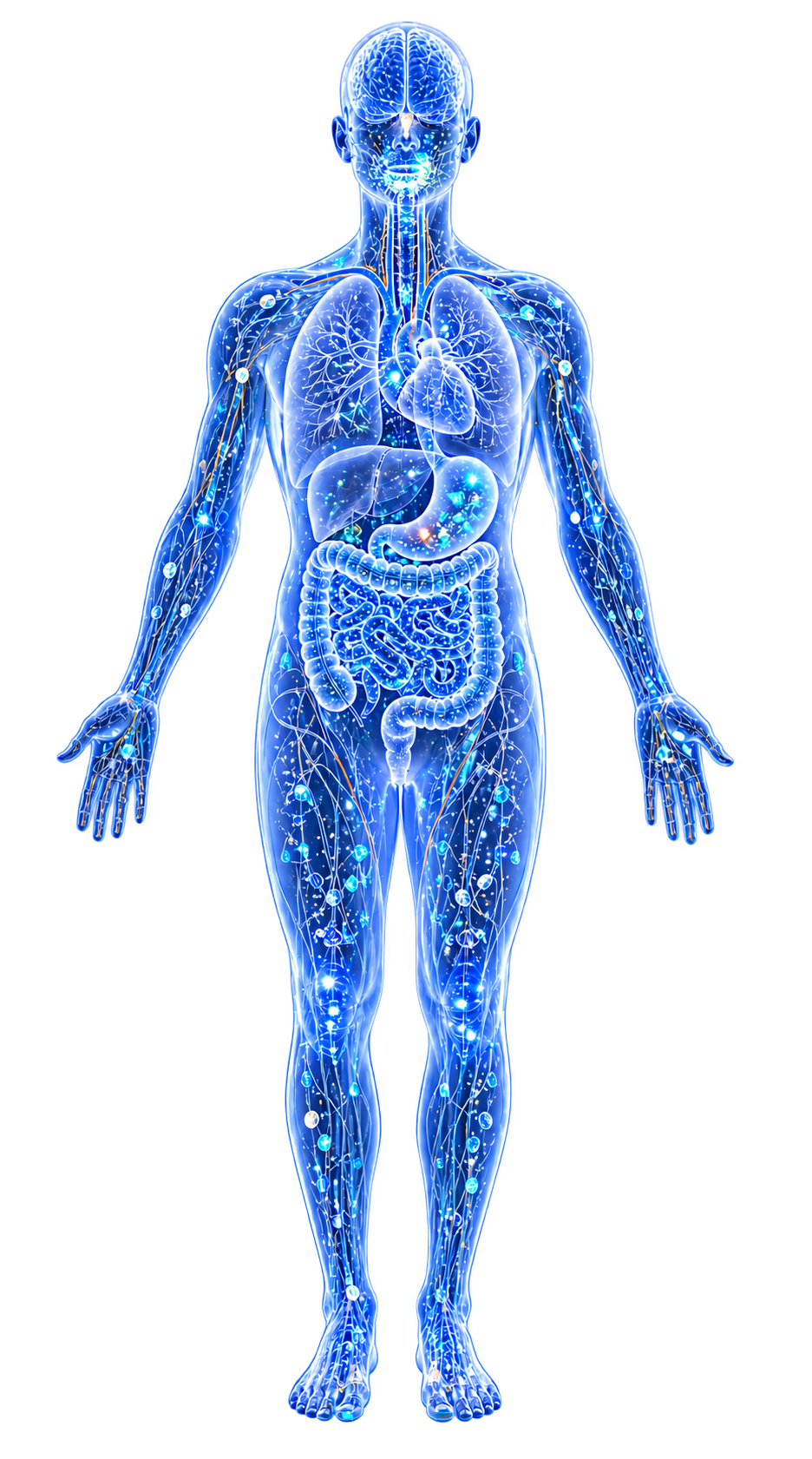
Polyphenols are a diverse class of plant-derived compounds characterized by multiple phenol structural units. They are among the most abundant antioxidants in the human diet, found in fruits, vegetables, tea, coffee, wine, chocolate, and spices.
What makes polyphenols particularly interesting from a metallomics perspective is their dual identity: they are both potent metal chelators and microbiome modulators, creating a bridge between dietary metal exposure and gut ecology that is rarely discussed in conventional nutrition science.
Evidence map8 cited passagesInspect provenance +
Daily polyphenol intake varies widely by diet, ranging from ~200 mg on Western diets to 1,000 mg on mediterranean diet patterns rich in fruits, vegetables, and olive oil.
The specific metabolites produced depend on an individual's microbiome composition, creating a personalized response to the same dietary polyphenol.
Prebiotic effects: Promote growth of bifidobacterium, lactobacillus, and akkermansia muciniphila—organisms associated with gut health and barrier integrity.
Polyphenols show neuroprotective effects across multiple neurodegenerative conditions. In Parkinson's disease, dietary polyphenol intake correlates with favorable gut microbiome composition and reduced neuroinflammation. The Mediterranean diet's neuroprotective association is partly attributed to its high polyphenol content.
Polyphenols including EGCG, resveratrol, and curcumin demonstrate antipsychotic-like effects in preclinical models through antioxidant, anti-inflammatory, and gut-microbiome-modulating mechanisms. Their metal chelation properties may contribute by reducing metal-driven oxidative stress in the brain.
Dietary polyphenols reduce intestinal inflammation in IBD models through NF-kB suppression, antioxidant activity, and microbiome modulation. Their iron-chelating properties may be particularly relevant by reducing luminal iron available to bloom-associated Enterobacteriaceae.
Polyphenol-rich diets are associated with reduced cardiovascular risk. Mechanisms include LDL oxidation inhibition, endothelial function improvement, and anti-platelet effects. The microbiome-dependent metabolite IPA (from tryptophan) and urolithin A (from ellagitannins) may mediate some of these effects.
Polyphenols activate the Nrf2 pathway, upregulating antioxidant defenses and suppressing neuroinflammation. Their microbiome-modulating effects may improve the depleted SCFA production characteristic of MS dysbiosis.
Contents
1. Classes and Dietary Sources2. The Bioavailability Paradox3. Metal Chelation Properties4. Microbiome Modulation5. Disease-Specific Evidence6. Cross-ReferencesClasses and Dietary Sources#
Polyphenols encompass over 8,000 identified compounds organized into several major classes:
| Class | Examples | Key Sources |
|---|---|---|
| Flavonoids | Quercetin, catechins (EGCG), anthocyanins, naringenin | Tea, berries, citrus, onions |
| Phenolic acids | Chlorogenic acid, caffeic acid, gallic acid | Coffee, whole grains, fruits |
| Stilbenes | Resveratrol | Grapes, red wine, peanuts |
| Lignans | Secoisolariciresinol | Flaxseed, sesame, whole grains |
| Tannins | Ellagitannins, proanthocyanidins | Pomegranate, walnuts, tea |
| Curcuminoids | Curcumin | Turmeric |
Daily polyphenol intake varies widely by diet, ranging from ~200 mg on Western diets to >1,000 mg on Mediterranean Diet patterns rich in fruits, vegetables, and olive oil.[1]Bioavailability of Dietary Polyphenols and the Cardiovascular DiseasesK. S. Shivashankara, S. N. Acharya · 2010Open reference 1 ↓
The Bioavailability Paradox#
Only 5-10% of ingested polyphenols are absorbed in the small intestine. The remaining 90-95% reach the colon intact, where they become substrates for microbial metabolism.
This low systemic bioavailability was initially seen as a limitation, but it is actually the key to understanding polyphenol function: their primary biological impact may be through the microbiome rather than through direct systemic effects.
Colonic bacteria transform polyphenols into smaller, more bioavailable metabolites. Urolithin A (from ellagitannins, by Gordonibacter urolithinfaciens and related species): anti-inflammatory, mitophagy-inducing. Equol (from soy isoflavones): phytoestrogenic.
3,4-Dihydroxyphenylacetic acid (from quercetin): antioxidant.
Valerolactones (from catechins): neuroprotective.
The specific metabolites produced depend on an individual's microbiome composition, creating a personalized response to the same dietary polyphenol.[1]Bioavailability of Dietary Polyphenols and the Cardiovascular DiseasesK. S. Shivashankara, S. N. Acharya · 2010Open reference 1 ↓
Metal Chelation Properties#
Polyphenols are effective metal chelators, binding iron, copper, zinc, aluminum, and various toxic metals through their hydroxyl groups. This chelation activity has several consequences.
Iron chelation: Polyphenols (especially tannins and EGCG) bind non-heme dietary iron, reducing absorption by 50-90%. This is traditionally viewed as a nutritional negative ("iron inhibitors"), but in the context of iron-overloaded inflammatory states, it may be protective by reducing substrate for Siderophores-producing pathogens.
Copper chelation: Quercetin and other flavonoids chelate copper(II) (Cu2+), potentially reducing Fenton-like reactions that generate hydroxyl radicals (Oxidative Stress). Aluminum binding: Tea polyphenols chelate aluminum and may reduce its gastrointestinal absorption and neurotoxicity. Toxic metal binding: Polyphenols can bind cadmium, lead, and mercury, potentially reducing their bioavailability and tissue accumulation.
The metal-chelating capacity of polyphenols positions them as natural modulators of the metal-microbiome interface—reducing the metal substrate that drives pathogen selection while simultaneously acting as Prebiotics for beneficial bacteria.
Microbiome Modulation#
Polyphenols act as selective antimicrobials and prebiotics. Prebiotic effects: Promote growth of Bifidobacterium, Lactobacillus, and Akkermansia muciniphila—organisms associated with gut health and barrier integrity.[2]Emerging Evidence on the Effects of Dietary Factors on the Gut Microbiome in Colorectal CancerAppunni S, Rubens M, Ramamoorthy V et al. · 2021Open reference 2 ↓
Antimicrobial effects: Inhibit pathogenic species including E. coli, Clostridium perfringens, and Helicobacter pylori at concentrations achievable in the colon. SCFA enhancement: Increase production of Butyrate and other Short-Chain Fatty Acids (SCFAs) by supporting saccharolytic fermentation.
Barrier protection: Strengthen tight junctions and reduce Intestinal Permeability through multiple mechanisms including ZO-1 upregulation and inflammatory cytokine suppression.
Disease-Specific Evidence#
Neurodegenerative Diseases#
Polyphenols show neuroprotective effects across multiple neurodegenerative conditions. In Parkinson's disease, dietary polyphenol intake correlates with favorable Gut Microbiome composition and reduced Neuroinflammation.[3]Cilia 2020 -- Microbiome-Gut-Brain Axis and Dietary Interventions in Parkinson's DiseaseRoberto Cilia, Emanuele Cereda, Valentina Ferri et al. · 2020Open reference 3 ↓ The Mediterranean diet's neuroprotective association is partly attributed to its high polyphenol content.[4]Perez-Pardo 2022 -- Mediterranean Diet Adherence in People with Parkinson's Disease Reduces Constipation Symptoms and Changes Fecal MicrobiomePaula Perez-Pardo, Mitch Hartog, Johan Garssen et al. · 2022Open reference 4 ↓
Schizophrenia#
Polyphenols including EGCG, resveratrol, and curcumin demonstrate antipsychotic-like effects in preclinical models through antioxidant, anti-inflammatory, and gut-microbiome-modulating mechanisms. Their metal chelation properties may contribute by reducing metal-driven oxidative stress in the brain.[5]Plant-Derived Polyphenolic Compounds for Managing Schizophrenia: Mechanisms and Therapeutic PotentialJi X, Chai J, Zhao S et al. · 2025Open reference 5 ↓
Inflammatory Bowel Disease#
Dietary polyphenols reduce intestinal Metal-Driven Inflammation in IBD models through NF-kB suppression, antioxidant activity, and microbiome modulation. Their iron-chelating properties may be particularly relevant by reducing luminal iron available to bloom-associated Enterobacteriaceae.[6]A Review of the Efficacy of Dietary Polyphenols in Experimental Models of Inflammatory Bowel DiseasesMartin DA, Bolling BW · 2015Open reference 6 ↓
Cardiovascular Disease#
Polyphenol-rich diets are associated with reduced cardiovascular risk. Mechanisms include LDL oxidation inhibition, endothelial function improvement, and anti-platelet effects. The microbiome-dependent metabolite IPA (from Tryptophan) and urolithin A (from ellagitannins) may mediate some of these effects.[1]Bioavailability of Dietary Polyphenols and the Cardiovascular DiseasesK. S. Shivashankara, S. N. Acharya · 2010Open reference 1 ↓
Multiple Sclerosis#
Polyphenols activate the Nrf2 pathway, upregulating antioxidant defenses and suppressing neuroinflammation. Their microbiome-modulating effects may improve the depleted SCFA production characteristic of MS Dysbiosis.[7]The Diet-Multiple Sclerosis Connection: Oxidative Stress and Emerging MechanismsBucciero C, Croce A, Castellano G et al. · 2026Open reference 7 ↓
Cross-References#
- Mediterranean Diet—the dietary pattern richest in polyphenols
- oxidative stress—the primary mechanism polyphenols counteract
- Prebiotics—polyphenols function as colonic prebiotics
- Iron—polyphenols chelate dietary iron
- Siderophores—iron chelation by polyphenols may reduce substrate for pathogen siderophores
- Short-Chain Fatty Acids (SCFAs)—polyphenol fermentation increases SCFA production
- Gordonibacter urolithinfaciens—key polyphenol-metabolizing organism
- Neuroinflammation—polyphenols suppress neuroinflammatory cascades
- Intestinal Permeability—polyphenols strengthen the gut barrier
References 10
Numbered by first appearance in the article, then reconciled with its declared source list.
- 1
K. S. Shivashankara, S. N. Acharya (2010). Bioavailability of Dietary Polyphenols and the Cardiovascular Diseases. The Open Nutraceuticals Journal.
- 2
Appunni S, Rubens M, Ramamoorthy V et al. (2021). Emerging Evidence on the Effects of Dietary Factors on the Gut Microbiome in Colorectal Cancer. Frontiers in Nutrition.
- 3
Roberto Cilia, Emanuele Cereda, Valentina Ferri et al. (2020). Cilia 2020 -- Microbiome-Gut-Brain Axis and Dietary Interventions in Parkinson's Disease. CNS & Neurological Disorders - Drug Targets.
- 4
Paula Perez-Pardo, Mitch Hartog, Johan Garssen et al. (2022). Perez-Pardo 2022 -- Mediterranean Diet Adherence in People with Parkinson's Disease Reduces Constipation Symptoms and Changes Fecal Microbiome. Nutrients.
- 5
Ji X, Chai J, Zhao S et al. (2025). Plant-Derived Polyphenolic Compounds for Managing Schizophrenia: Mechanisms and Therapeutic Potential. Frontiers in Pharmacology.
- 6
Martin DA, Bolling BW (2015). A Review of the Efficacy of Dietary Polyphenols in Experimental Models of Inflammatory Bowel Diseases. Food & Function.
- 7
Bucciero C, Croce A, Castellano G et al. (2026). The Diet-Multiple Sclerosis Connection: Oxidative Stress and Emerging Mechanisms. Molecular Neurobiology.
- 8
Piecuch M, Garbicz J, Waliczek M et al. (2022). I Am the 1 in 10 -- What Should I Eat? A Research Review of Nutrition in Endometriosis. Nutrients.
- 9
Kieran M. Tuohy, Francesca Fava, Roberto Viola (2014). The way to a man's heart is through his gut microbiota -- dietary pro- and prebiotics for the management of cardiovascular risk. Proceedings of the Nutrition Society.
- 10
Maria Garcia-Martinez, Ana Rodriguez, Luis Fernandez (2024). Garcia-Martinez 2024 -- Influence of Fermented Foods on the Gut Microbiome in Neurodegenerative Diseases: Parkinson's and Alzheimer's. Nutricion Hospitalaria.
Article network
Mentioned here 18
Pages linking here 4
Connect the evidence
Publicly readable discussion by ORCID-authenticated researchers. Questions, interpretation, methods, corrections, and new evidence stay attached to this record.
No discussion yet. Start with a precise question or a source-backed observation.
Activity and accepted changes
Accepted researcher context, editorial status, public discussion, and upstream Git revisions are shown together. Pending, declined, and withdrawn proposals remain private.
- published revision
Backfill oxidative stress concept links
Karen Pendergrass · +2 −2
Inspect exact Git diff ↗ - published revision
Backfill gut microbiome concept links
Karen Pendergrass · +1 −1
Inspect exact Git diff ↗ - published revision
Backfill inflammation concept links
Karen Pendergrass · +1 −1
Inspect exact Git diff ↗ - published revision
Complete corpus-wide Dysbiosis linking
Karen Pendergrass · +1 −1
Inspect exact Git diff ↗ - published revision
Complete Tight junctions contextual coverage
Karen Pendergrass · +1 −1
Inspect exact Git diff ↗ - published revision
massive wiki expansion: 149 stubs fixed, 100+ new pages, Rule 15 scan, keystone papers
WikiBiome Deploy Bot · +19 −19
Inspect exact Git diff ↗ - published revision
pre-overnight checkpoint 2026-04-18
WikiBiome Deploy Bot · +93 −0
Inspect exact Git diff ↗