
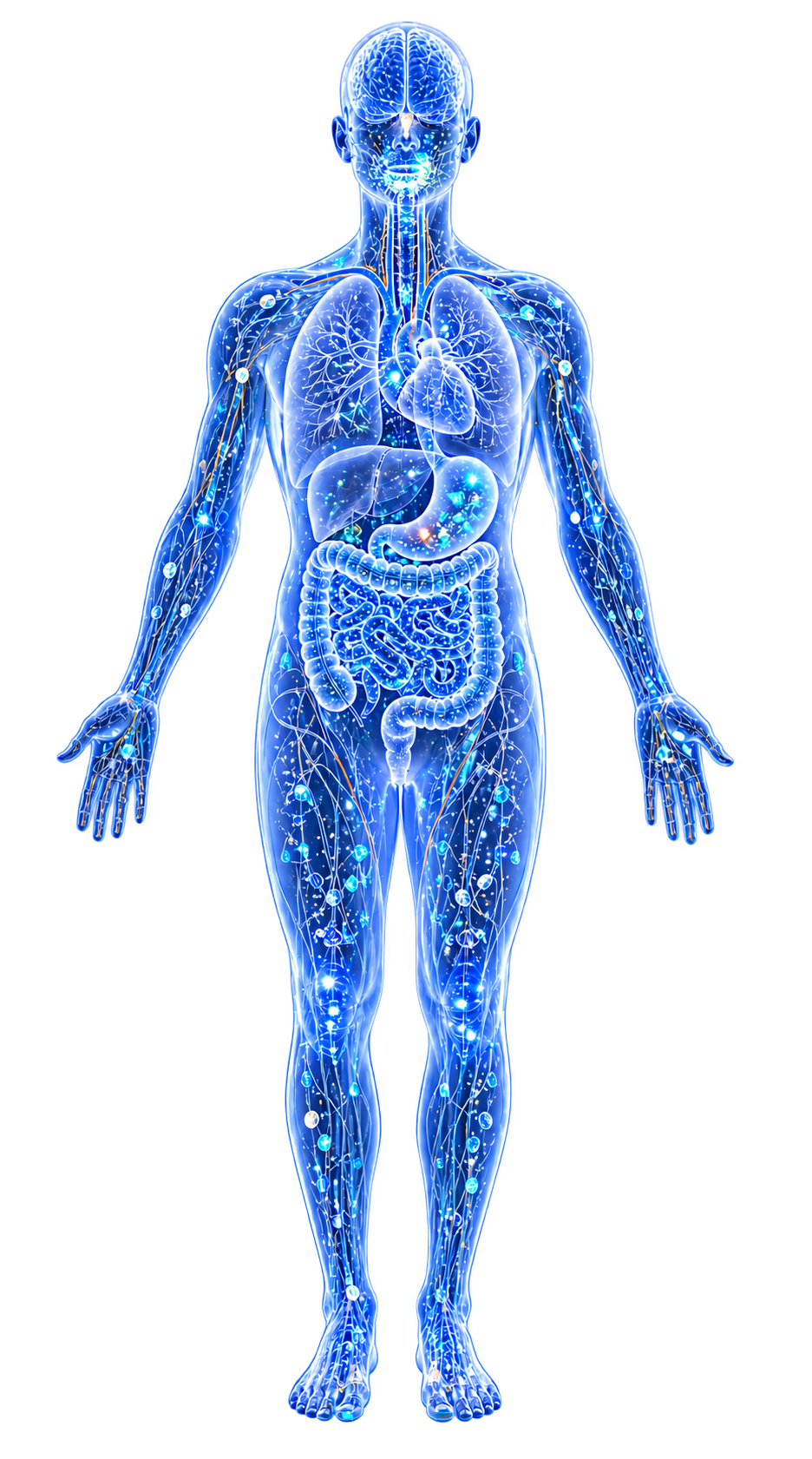
Metformin is a biguanide antihyperglycemic drug and the most widely prescribed medication for Type 2 Diabetes worldwide (~150 million users).
While traditionally understood to work through hepatic AMPK activation and gluconeogenesis suppression, landmark studies have demonstrated that metformin's therapeutic effects are partially mediated through the Gut Microbiome—a paradigm-shifting finding that explains its GI side effects, its surprisingly broad efficacy across conditions, and why its effects vary between patients.
Metformin is the most studied example of Pharmacomicrobiomics—the bidirectional interaction between drugs and the microbiome.
Evidence map4 cited passagesInspect provenance +
Wu et al. used a multi-pronged approach to prove metformin's microbiome-mediated effects:
| Effect | Direction | Significance | |--------|-----------|-------------| | akkermansia muciniphila | Increased | Mucin-degrader; strengthens gut barrier; metabolic protection | | bifidobacterium adolescentis | Increased | SCFA production; immune modulation | | short chain fatty acids | Increased | butyrate/propionate production enhanced | | Escherichia-Shi
Metformin alters the gut microbiome within 24 hours of first dose in healthy volunteers, before any significant glycemic changes occur.
| Condition | Evidence | Mechanism | |-----------|----------|-----------| | parkinsons disease | Drug repurposing candidate | AMPK activation + microbiome remodeling; neuroprotection | | pcos | RCT evidence | Gut microbiome restructuring; metabolic improvement | | endometriosis | Emerging evidence | Anti-proliferative + microbiome effects | | colorectal canc
Contents
1. Microbiome-Mediated Mechanism2. Pharmacomicrobiomics: Bidirectional Effects3. Drug Repurposing Across Conditions4. Cross-ReferencesMicrobiome-Mediated Mechanism#
The Wu et al. Proof (2017)#
Wu et al. used a multi-pronged approach to prove metformin's microbiome-mediated effects:[1]Metformin alters the gut microbiome of individuals with treatment-naive type 2 diabetes, contributing to the therapeutic effects of the drugHao Wu, Eduardo Esteve, Valentina Tremaroli et al. · 2017Open reference 1 ↓
- Whole-genome shotgun metagenomics: Metformin treatment restructures the gut microbiome independently of glycemic status.
- Targeted metabolomics: SCFA production increases with metformin treatment.
- In vitro gut simulator: Metformin effects on microbiome composition are reproducible ex vivo.
- FMT to germ-free mice: Fecal transplant from metformin-treated donors improved glucose tolerance in recipient mice—proving the microbiome changes are causally sufficient for metabolic benefit.
Key Microbiome Effects#
| Effect | Direction | Significance |
|---|---|---|
| Akkermansia muciniphila | Increased | Mucin-degrader; strengthens gut barrier; metabolic protection |
| Bifidobacterium adolescentis | Increased | SCFA production; immune modulation |
| Short-Chain Fatty Acids (SCFAs) | Increased | Butyrate/propionate production enhanced |
| Escherichia-Shigella | Increased | Explains GI side effects (diarrhea, bloating)[2]Association of metformin administration with gut microbiome dysbiosis in healthy volunteersIlze Elbere, Ineta Kalnina, Ivars Silamikelis et al. · 2018Open reference 2 ↓ |
| Microbial diversity | Decreased (acutely) | Immediate reduction within 24 hours in healthy volunteers |
Speed of Effect#
Metformin alters the gut microbiome within 24 hours of first dose in healthy volunteers, before any significant glycemic changes occur.[2]Association of metformin administration with gut microbiome dysbiosis in healthy volunteersIlze Elbere, Ineta Kalnina, Ivars Silamikelis et al. · 2018Open reference 2 ↓
Pharmacomicrobiomics: Bidirectional Effects#
Microbiome → Drug Response#
Baseline gut microbiome composition predicts metformin efficacy in T2D. Patients with certain pre-treatment microbial profiles respond better than others, suggesting microbiome-guided precision medicine is feasible.
Drug → Microbiome#
Metformin restructures the gut community toward a composition associated with metabolic health (Akkermansia, Bifidobacterium enrichment), but also introduces pathobiont expansion (Escherichia-Shigella) that causes GI intolerance in ~30% of patients.
GI Side Effects#
The Escherichia-Shigella bloom explains metformin's notorious GI side effects. Prebiotic co-administration may mitigate these effects by buffering the microbiome shift.
Drug Repurposing Across Conditions#
Metformin's microbiome-mediated effects extend its potential far beyond T2D:
| Condition | Evidence | Mechanism |
|---|---|---|
| Parkinson's Disease | Drug repurposing candidate | AMPK activation + microbiome remodeling; neuroprotection[3]Sampson 2024 -- Drug Repurposing for Parkinson's Disease Through Microbiome ModulationTimothy R Sampson, Madelyn C Houser · 2024Open reference 3 ↓ |
| Polycystic Ovary Syndrome | RCT evidence | Gut microbiome restructuring; metabolic improvement[4]Long 2025 — Combination metformin and liraglutide in PCOS: RCT clinical efficacy + rat gut microbiome modulationLong XF, Fang YQ, Li YH et al. · 2025Open reference 4 ↓ |
| Endometriosis | Emerging evidence | Anti-proliferative + microbiome effects |
| Colorectal Cancer | Epidemiological | Reduced CRC incidence in metformin users |
| Breast Cancer | Epidemiological + mechanistic | Anti-proliferative; microbiome-mediated immune modulation |
| COVID-19 | Observational | Reduced severity in metformin users; anti-inflammatory[5]Ibrahim, Lowe, Bramante et al. 2021 — Metformin and COVID-19: focused review of mechanisms and current literature suggesting benefitSherehan Ibrahim, Jamie R. Lowe, Carolyn T. Bramante et al. · 2021Open reference 5 ↓ |
Cross-References#
- Pharmacomicrobiomics—Metformin as the canonical example
- Akkermansia muciniphila—Key organism enriched by metformin
- Bifidobacterium—cobalt (Co)-enriched with Akkermansia
- Type 2 Diabetes—Primary indication
- Polycystic Ovary Syndrome—Established microbiome-mediated benefit
- Short-Chain Fatty Acids (SCFAs)—SCFA production enhanced
- gut microbiome—Target of metformin's microbiome remodeling
- Proteobacteria (Pseudomonadota)—Escherichia-Shigella bloom causing GI side effects
References 8
Numbered by first appearance in the article, then reconciled with its declared source list.
- 1
Hao Wu, Eduardo Esteve, Valentina Tremaroli et al. (2017). Metformin alters the gut microbiome of individuals with treatment-naive type 2 diabetes, contributing to the therapeutic effects of the drug. Nature Medicine.
- 2
Ilze Elbere, Ineta Kalnina, Ivars Silamikelis et al. (2018). Association of metformin administration with gut microbiome dysbiosis in healthy volunteers. PLOS ONE.
- 3
Timothy R Sampson, Madelyn C Houser (2024). Sampson 2024 -- Drug Repurposing for Parkinson's Disease Through Microbiome Modulation. Clinical Pharmacology & Therapeutics.
- 4
Long XF, Fang YQ, Li YH et al. (2025). Long 2025 — Combination metformin and liraglutide in PCOS: RCT clinical efficacy + rat gut microbiome modulation. Frontiers in Endocrinology.
- 5
Sherehan Ibrahim, Jamie R. Lowe, Carolyn T. Bramante et al. (2021). Ibrahim, Lowe, Bramante et al. 2021 — Metformin and COVID-19: focused review of mechanisms and current literature suggesting benefit. Frontiers in Endocrinology.
- 6
Hao Wu, Eduardo Esteve, Valentina Tremaroli et al. (2017). Metformin alters the gut microbiome of individuals with treatment-naive type 2 diabetes, contributing to the therapeutic effects of the drug. Nature Medicine.
- 7
Thomas Bryrup, Cecilie W. Thomsen, Timo Kern et al. (2019). Bryrup 2019 — Metformin-Induced Changes of the Gut Microbiota in Healthy Young Men: Results of a Non-Blinded, One-Armed Intervention Study. Diabetologia.
- 8
Ilze Elbere (2021). Metformin Effects on Gut Microbiome and Epigenetics in Type 2 Diabetes Patients and Healthy Individuals. Doctoral Thesis, University of Latvia.
Article network
Mentioned here 13
Pages linking here 4
Connect the evidence
Publicly readable discussion by ORCID-authenticated researchers. Questions, interpretation, methods, corrections, and new evidence stay attached to this record.
No discussion yet. Start with a precise question or a source-backed observation.
Activity and accepted changes
Accepted researcher context, editorial status, public discussion, and upstream Git revisions are shown together. Pending, declined, and withdrawn proposals remain private.
- published revision
Backfill gut microbiome concept links
Karen Pendergrass · +2 −2
Inspect exact Git diff ↗ - published revision
massive wiki expansion: 149 stubs fixed, 100+ new pages, Rule 15 scan, keystone papers
WikiBiome Deploy Bot · +20 −20
Inspect exact Git diff ↗ - published revision
pre-overnight checkpoint 2026-04-18
WikiBiome Deploy Bot · +82 −0
Inspect exact Git diff ↗