
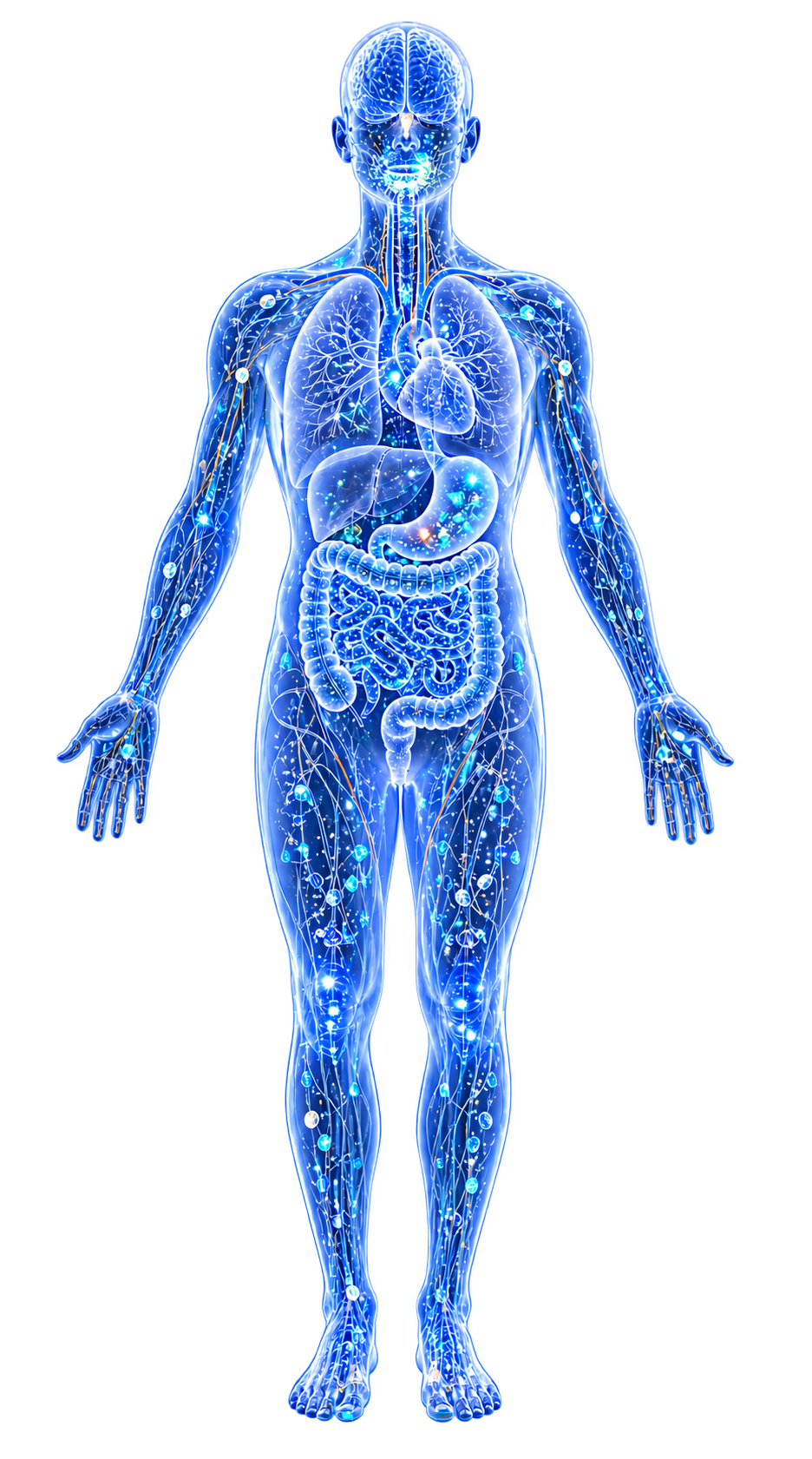
Exogenous chemicals that interfere with hormone synthesis, secretion, transport, binding, or elimination, mimicking or blocking endogenous hormones at physiologically relevant concentrations.
In the metallomics-microbiome framework, endocrine disruptors occupy a critical intersection: Heavy Metals act as endocrine disruptors directly (metalloestrogens), while also reshaping the Gut Microbiome in ways that amplify hormonal disruption through the Estrobolome.
Evidence map7 cited passagesInspect provenance +
Cadmium is the most extensively studied metalloestrogen. It promotes breast cancer cell proliferation through ERalpha interaction and is consistently elevated in plasma, urine, hair, and tissue of breast cancer patients.
BPA exposure alters gut microbiota composition in animal models, favoring shifts in the Firmicutes/Bacteroidetes ratio and enriching potentially pathogenic taxa.
Perinatal exposure to EDCs is associated with altered neurodevelopment and psychopathology, potentially mediated through gut-brain axis disruption.
endometriosis: Gut microbiota associations include enrichment of beta-glucuronidase producers and depletion of protective lactobacillus crispatus.
breast cancer: Metal-driven estrogenic signaling compounds with microbiome-mediated estrogen recirculation.
PCOS: Altered vaginal and gut microbiomes in PCOS patients, with obesity as a compounding factor.
EDCs reshape the microbiome: Metal and organic EDC exposure directly alters microbial community structure, often depleting beneficial commensals like akkermansia muciniphila and lactobacillus species.
Contents
1. Metalloestrogens2. Organic Endocrine Disruptors and the Microbiome3. The Estrobolome Connection4. Gut Microbiome as Both Target and Mediator5. Cross-ReferencesMetalloestrogens#
A class of metals and metalloids that activate estrogen receptors without being structurally similar to estradiol. Their estrogenic activity operates through direct receptor binding, epigenetic modification, and interference with steroidogenic enzymes:
| Metal | Estrogenic Mechanism | Evidence Level |
|---|---|---|
| Cadmium | Binds ERalpha at a site distinct from estradiol; promotes breast cancer cell proliferation; half-life of 12-30 years in the human body | Prospective cohort, in vitro |
| Nickel | Activates estrogen-responsive genes via epigenetic mechanisms (histone modification, DNA methylation); classified as Group 1 carcinogen by IARC | In vitro, animal model |
| Lead | Disrupts hypothalamic-pituitary-gonadal axis; alters puberty timing; interferes with progesterone receptor signaling | Epidemiological, animal model |
| Arsenic | Activates glucocorticoid receptor at low doses; disrupts thyroid hormone metabolism; sex-dependent gut microbiome effects | Animal model |
| Copper | Elevated in estrogen-responsive cancers; associated with lysyl oxidase-like proteins and GPER1 signaling in breast cancer | Case-control |
Cadmium is the most extensively studied metalloestrogen. It promotes Breast Cancer cell proliferation through ERalpha interaction and is consistently elevated in plasma, urine, hair, and tissue of breast cancer patients.[1]Impact of heavy metals on breast cancer (Review)Ali AS, Nazar ME, Mustafa RM et al. · 2024Open reference 1 ↓
Organic Endocrine Disruptors and the Microbiome#
Bisphenol A (BPA)#
BPA exposure alters gut microbiota composition in animal models, favoring shifts in the Firmicutes/Bacteroidetes ratio and enriching potentially pathogenic taxa.[2]Gut dysbiosis in animals due to environmental chemical exposuresRosenfeld CS · 2017Open reference 2 ↓
The gut microbiome itself metabolizes BPA through glucuronidation and deconjugation cycles, meaning that Beta-Glucuronidase-producing gut bacteria can reactivate BPA from its conjugated (inactive) form—the same mechanism that recirculates estrogen.
BPA-induced Dysbiosis is sex-dependent: male and female animals show distinct microbial community shifts under identical exposure conditions.
Other Organic EDCs#
Phthalates, parabens, and organochlorines also disrupt the gut microbiome-endocrine axis, though mechanisms are less characterized than for metals and BPA. Perinatal exposure to EDCs is associated with altered neurodevelopment and psychopathology, potentially mediated through gut-brain axis disruption.[3]Exposure to environmental chemicals and perinatal psychopathologyJacobson MH, Ghassabian A, Gore AC et al. · 2022Open reference 3 ↓
The Estrobolome Connection#
Endocrine disruptors amplify hormonal disruption through a two-hit mechanism. Direct hit: Metalloestrogens and xenoestrogens activate estrogen receptors, adding to the total estrogenic burden.
Microbiome-mediated hit: EDC exposure reshapes the gut microbiome, enriching Beta-Glucuronidase-producing bacteria that deconjugate estrogen metabolites in the gut, returning active estrogens to circulation via the Estrobolome pathway.
This dual mechanism is particularly relevant to estrogen-dependent conditions. Endometriosis: Gut microbiota associations include enrichment of beta-glucuronidase producers and depletion of protective Lactobacillus crispatus.[4]Associations Between Endometriosis and Gut MicrobiotaSvensson A, Brunkwall L, Roth B et al. · 2021Open reference 4 ↓ Breast Cancer: Metal-driven estrogenic signaling compounds with microbiome-mediated estrogen recirculation.[1]Impact of heavy metals on breast cancer (Review)Ali AS, Nazar ME, Mustafa RM et al. · 2024Open reference 1 ↓
PCOS: Altered vaginal and gut microbiomes in PCOS patients, with obesity as a compounding factor.[5]Differential enrichment of bacteria and phages in the vaginal microbiomes in PCOS and obesity: shotgun sequencing analysisZheng S, Chen H, Yang H et al. · 2024Open reference 5 ↓
Gut Microbiome as Both Target and Mediator#
The relationship between EDCs and the gut microbiome is bidirectional. EDCs reshape the microbiome: Metal and organic EDC exposure directly alters microbial community structure, often depleting beneficial commensals like Akkermansia muciniphila and Lactobacillus species.[2]Gut dysbiosis in animals due to environmental chemical exposuresRosenfeld CS · 2017Open reference 2 ↓
The microbiome metabolizes EDCs: Gut bacteria can activate, deactivate, or transform EDCs, modulating their bioavailability and toxicity. Beta-glucuronidase activity is the best-characterized example.
Dysbiosis amplifies EDC effects: A disrupted microbiome has reduced capacity to detoxify EDCs (e.g., reduced glutathione conjugation) while increased intestinal permeability enhances systemic EDC exposure.
Cross-References#
- Estrobolome—gut microbial estrogen metabolism
- Beta-Glucuronidase—enzyme linking EDCs to estrogen recirculation
- Cadmium—strongest metalloestrogen
- Nickel—epigenetic estrogen-mimicking effects
- Breast Cancer—estrogen-dependent condition with metal involvement
- Endometriosis—estrogen-dependent condition with microbiome disruption
- Gut-Metal-Microbiome Interactions—framework for metal-driven dysbiosis
References 8
Numbered by first appearance in the article, then reconciled with its declared source list.
- 1
★Ali AS, Nazar ME, Mustafa RM et al. (2024). Impact of heavy metals on breast cancer (Review). World Academy of Sciences Journal.
- 2
Rosenfeld CS (2017). Gut dysbiosis in animals due to environmental chemical exposures. Frontiers in Cellular and Infection Microbiology.
- 3
Jacobson MH, Ghassabian A, Gore AC et al. (2022). Exposure to environmental chemicals and perinatal psychopathology. Biochemical Pharmacology.
- 4
Svensson A, Brunkwall L, Roth B et al. (2021). Associations Between Endometriosis and Gut Microbiota. Reproductive Sciences.
- 5
Zheng S, Chen H, Yang H et al. (2024). Differential enrichment of bacteria and phages in the vaginal microbiomes in PCOS and obesity: shotgun sequencing analysis. Frontiers in Microbiomes.
- 6
★Monisha Jaishankar, Tenzin Tseten, Naresh Anbalagan et al. (2014). Toxicity, Mechanism and Health Effects of Some Heavy Metals. Interdisciplinary Toxicology.
- 7
Chadchan SB, Cheng M, Parnell LA et al. (2019). Antibiotic therapy with metronidazole reduces endometriosis disease progression in mice: a potential role for gut microbiota. Human Reproduction.
- 8
Mendoza L (2019). Potential effect of probiotics in the treatment of breast cancer. Oncology Reviews.
Article network
Connect the evidence
Publicly readable discussion by ORCID-authenticated researchers. Questions, interpretation, methods, corrections, and new evidence stay attached to this record.
No discussion yet. Start with a precise question or a source-backed observation.
Published page changes
This record shows only material changes published on this page, including changes to its content, evidence, conclusions, or author context. Internal processes and discussion activity are excluded. Pending, declined, and withdrawn proposals remain private.
- published revision
Created “Endocrine Disruptors”: Exogenous chemicals that interfere with hormone synthesis, secretion, transport, binding, or elimination, mimicking or blocking endogenous hormones at physiologically relevant concentrations. In the…
Created “Endocrine Disruptors”: Exogenous chemicals that interfere with hormone synthesis, secretion, transport, binding, or elimination, mimicking or blocking endogenous hormones at physiologically relevant concentrations. In the… Published sections: Endocrine Disruptors; Metalloestrogens; Bisphenol A (BPA); Other Organic EDCs; The Estrobolome Connection; Gut Microbiome as Both Target and Mediator; Cross-References. · WikiBiome Deploy Bot · +75 −0
Inspect exact Git diff ↗