

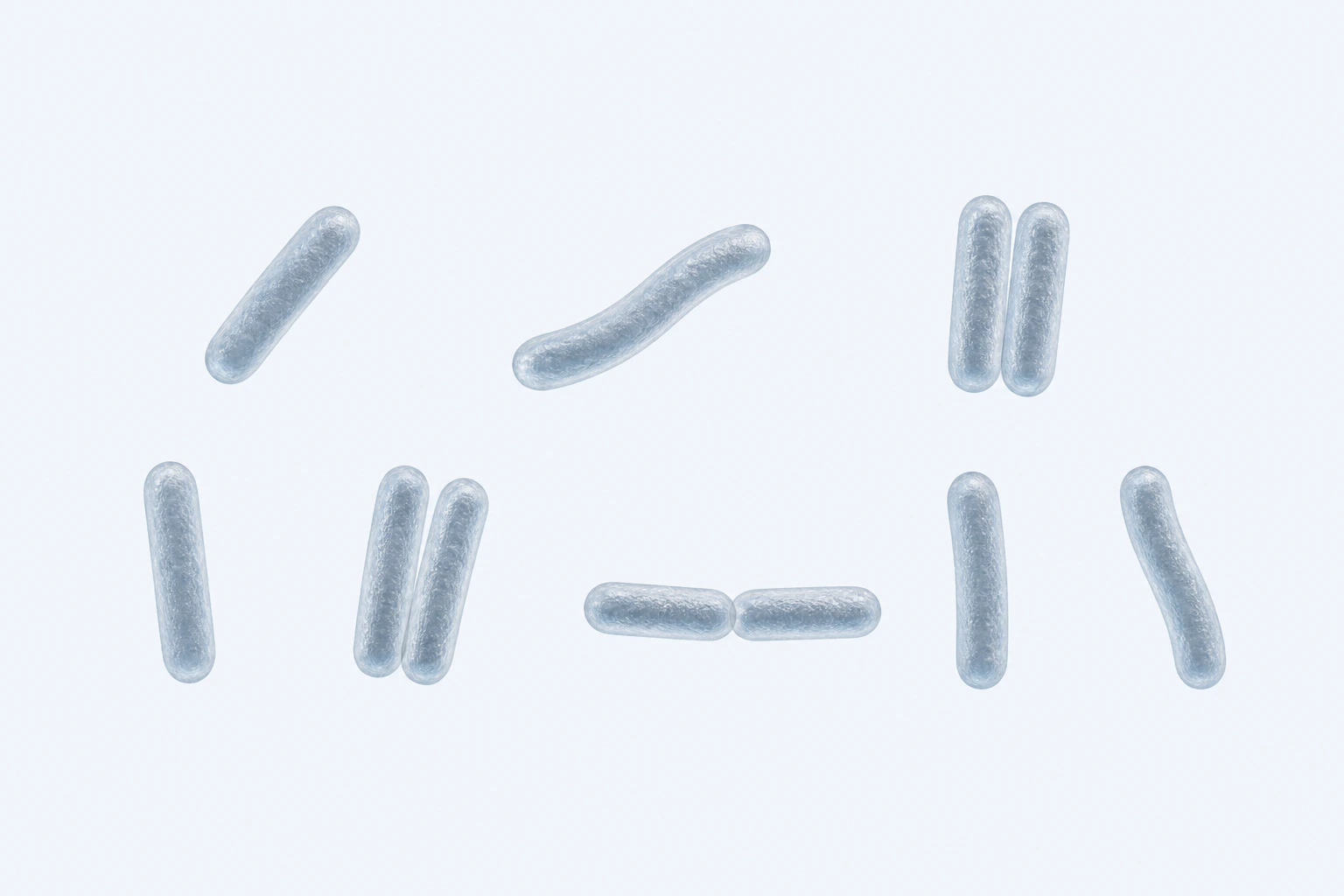
Type-strain-anchored Lactobacillus crispatus rods, shown as eleven bodies in five single and three paired groupings. This scientific reconstruction is representative, non-diagnostic, not a micrograph, and makes no universal phenotype claim.
Scientific media record1 verified identifier
- Subject
- Lactobacillus crispatustaxon · species
- Identifiers
- NCBITaxon:47770
- Review
- Editorial review completeIdentifiers authority-verified · Accessibility validated · · lactobacillus-crispatus|lactobacillus-crispatus-morphology-v1.webp
- Digital source
- Trained-algorithmic mediaCreated with a trained generative algorithm and reviewed by WikiBiome for subject identity, scientific framing, identifiers, provenance, and accessibility.
- Scientific basis
- Lactobacillus crispatus — NCBI TaxonomyLactobacillus crispatus — LPSNLactobacillus crispatus type strainLactobacillus crispatus nomenclatural description
- License
- CC BY-SA 4.0Created
A Gram-positive, facultatively anaerobic bacterium that is the dominant species in the healthy human vaginal microbiome and a defining member of Community State Type I (CST-I). L. crispatus dominance is associated with reproductive health, pathogen resistance, and reduced risk of sexually transmitted infections.
Its depletion marks a transition toward dysbiotic states linked to gynecological disease.
Evidence map6 cited passagesInspect provenance +
lactoferrin—the iron-binding glycoprotein abundant in cervicovaginal fluid—supports L. crispatus dominance by sequestering iron from iron-dependent pathogens while having minimal impact on Lactobacillus growth.
Endometriosis: Vaginal microbiome profiles of endometriosis patients show reduced L. crispatus abundance and a shift toward mixed anaerobic communities. This shift correlates with increased inflammatory signaling and may contribute to disease progression.
Ovarian cancer: L. crispatus is depleted in the reproductive tract microbiome of ovarian cancer patients, with potential diagnostic and prognostic significance.
PCOS: Women with polycystic ovary syndrome and obesity show reduced vaginal Lactobacillus dominance, with phage-mediated lysis of L. crispatus proposed as a contributing mechanism.
Tubal infertility: Chlamydia-associated tubal factor infertility correlates with loss of L. crispatus dominance and expansion of anaerobic pathobionts.
Adenomyosis: Genital tract microbiota in adenomyosis patients shows reduced Lactobacillus dominance alongside altered intestinal microbiota, suggesting a genital-intestinal dysbiosis axis.
Contents
1. Vaginal Ecosystem Dominance2. Metal Dependencies and Iron Ecology3. Depletion in Gynecological Disease4. Relationship to the Estrobolome5. Cross-ReferencesVaginal Ecosystem Dominance#
L. crispatus maintains vaginal pH at 3.5-4.5 through vigorous production of D- and L-lactic acid, creating an environment hostile to most pathogenic bacteria and fungi.
Produces hydrogen peroxide (H2O2), which directly kills or inhibits anaerobic pathogens including gardnerella-vaginalis and Prevotella species. Adheres to vaginal epithelial cells via surface-layer proteins, competitively excluding pathogens from mucosal binding sites.
CST-I (L. crispatus-dominant) communities show the lowest inflammatory cytokine profiles among all vaginal community state types, indicating active immune modulation rather than merely passive acidification.
Metal Dependencies and Iron Ecology#
L. crispatus has a low iron requirement compared to many pathogens, giving it a competitive advantage in iron-restricted environments.
Lactoferrin—the iron-binding glycoprotein abundant in cervicovaginal fluid—supports L. crispatus dominance by sequestering iron from iron-dependent pathogens while having minimal impact on Lactobacillus growth.[1]Mucosal lactoferrin response to genital tract infections is associated with iron and nutritional biomarkers in young Burkinabe womenRoberts SA, Brabin L, Diallo S et al. · 2019Open reference 1 ↓
This iron ecology represents a natural Nutritional Immunity (Metal Sequestration) mechanism: the host starves pathogens of iron while maintaining conditions favorable to L. crispatus. Manganese is an important cofactor for L. crispatus superoxide dismutase and other enzymes, providing Oxidative Stress protection without relying on iron-dependent systems.
Depletion in Gynecological Disease#
The loss of L. crispatus dominance is a recurring finding across reproductive and gynecological conditions.
Endometriosis: Vaginal microbiome profiles of endometriosis patients show reduced L. crispatus abundance and a shift toward mixed anaerobic communities. This shift correlates with increased inflammatory signaling and may contribute to disease progression.[2]The Vaginal Microbiome as a Tool to Predict rASRM Stage of Disease in Endometriosis: a Pilot StudyPerrotta AR, Borrelli GM, Martins CO et al. · 2020Open reference 2 ↓
Ovarian cancer: L. crispatus is depleted in the reproductive tract microbiome of ovarian cancer patients, with potential diagnostic and prognostic significance.[3]Asangba 2023 — Diagnostic and prognostic potential of the microbiome in ovarian cancer treatment responseAsangba AE, Chen J, Goergen KM et al. · 2023Open reference 3 ↓
PCOS: Women with polycystic ovary syndrome and obesity show reduced vaginal Lactobacillus dominance, with phage-mediated lysis of L. crispatus proposed as a contributing mechanism.[4]Zheng 2024 — Differential enrichment of bacteria and phages in vaginal microbiomes in PCOS and obesity: shotgun sequencing analysisZheng S, Chen H, Yang H et al. · 2024Open reference 4 ↓
Tubal infertility: Chlamydia-associated tubal factor infertility correlates with loss of L. crispatus dominance and expansion of anaerobic pathobionts.[5]Chen 2021 — Alterations of vaginal microbiota in women with infertility and Chlamydia trachomatis infectionChen H, Wang L, Zhao L et al. · 2021Open reference 5 ↓
Adenomyosis: Genital tract microbiota in adenomyosis patients shows reduced Lactobacillus dominance alongside altered intestinal microbiota, suggesting a genital-intestinal Dysbiosis axis.[6]Ponomaryova 2022 — Changes in microbiota of genital tract and intestines in patients with adenomyosis and infertilityPonomaryova IG, Lisyana TO, Trokhimovych OV et al. · 2022Open reference 6 ↓
Relationship to the Estrobolome#
Vaginal L. crispatus abundance is influenced by estrogen status. Estrogen promotes glycogen deposition in vaginal epithelium, which L. crispatus ferments to lactic acid. Conditions that alter estrogen metabolism—including Beta-Glucuronidase-mediated estrogen recirculation by gut bacteria—can indirectly affect vaginal Lactobacillus populations.
This gut-vaginal axis connects the Estrobolome concept to vaginal ecosystem health.
Cross-References#
- Lactobacillus—genus overview
- Lactoferrin—iron-sequestering protein that supports L. crispatus dominance
- Nutritional Immunity (Metal Sequestration)—host metal restriction as pathogen control
- Endometriosis—condition with L. crispatus depletion
- Estrobolome—gut-estrogen-vaginal axis
- Beta-Glucuronidase—enzyme linking gut and reproductive tract microbiomes
References 6
Numbered by first appearance in the article, then reconciled with its declared source list.
- 1
Roberts SA, Brabin L, Diallo S et al. (2019). Mucosal lactoferrin response to genital tract infections is associated with iron and nutritional biomarkers in young Burkinabe women. European Journal of Clinical Nutrition.
- 2
Perrotta AR, Borrelli GM, Martins CO et al. (2020). The Vaginal Microbiome as a Tool to Predict rASRM Stage of Disease in Endometriosis: a Pilot Study. Reproductive Sciences.
- 3
Asangba AE, Chen J, Goergen KM et al. (2023). Asangba 2023 — Diagnostic and prognostic potential of the microbiome in ovarian cancer treatment response. Scientific Reports.
- 4
Zheng S, Chen H, Yang H et al. (2024). Zheng 2024 — Differential enrichment of bacteria and phages in vaginal microbiomes in PCOS and obesity: shotgun sequencing analysis. Frontiers in Microbiomes.
- 5
Chen H, Wang L, Zhao L et al. (2021). Chen 2021 — Alterations of vaginal microbiota in women with infertility and Chlamydia trachomatis infection. Frontiers in Cellular and Infection Microbiology.
- 6
Ponomaryova IG, Lisyana TO, Trokhimovych OV et al. (2022). Ponomaryova 2022 — Changes in microbiota of genital tract and intestines in patients with adenomyosis and infertility. Medical Research Journal.
Article network
Mentioned here 10
Pages linking here 8
Connect the evidence
Publicly readable discussion by ORCID-authenticated researchers. Questions, interpretation, methods, corrections, and new evidence stay attached to this record.
No discussion yet. Start with a precise question or a source-backed observation.
Published page changes
This record shows only material changes published on this page, including changes to its content, evidence, conclusions, or author context. Internal processes and discussion activity are excluded. Pending, declined, and withdrawn proposals remain private.
- published revision
Revised “Vaginal Ecosystem Dominance”: now reads “kills or inhibits anaerobic pathogens including gardnerella-vaginalis and prevotella species. - Adheres to”.
Revised “Vaginal Ecosystem Dominance”: changed “kills or inhibits anaerobic pathogens including gardnerella vaginalis and prevotella species. - Adheres to” to “kills or inhibits anaerobic pathogens including gardnerella-vaginalis and prevotella species. - Adheres to”. · WikiBiome Deploy Bot · +1 −1
Inspect exact Git diff ↗ - published revision
Created “Lactobacillus crispatus”: A Gram-positive, facultatively anaerobic bacterium that is the dominant species in the healthy human vaginal microbiome and a defining member of Community State Type I (CST-I). L. crispatus dominance…
Created “Lactobacillus crispatus”: A Gram-positive, facultatively anaerobic bacterium that is the dominant species in the healthy human vaginal microbiome and a defining member of Community State Type I (CST-I). L. crispatus dominance… Published sections: Lactobacillus crispatus; Vaginal Ecosystem Dominance; Metal Dependencies and Iron Ecology; Depletion in Gynecological Disease; Relationship to the Estrobolome; Cross-References. · WikiBiome Deploy Bot · +64 −0
Inspect exact Git diff ↗