
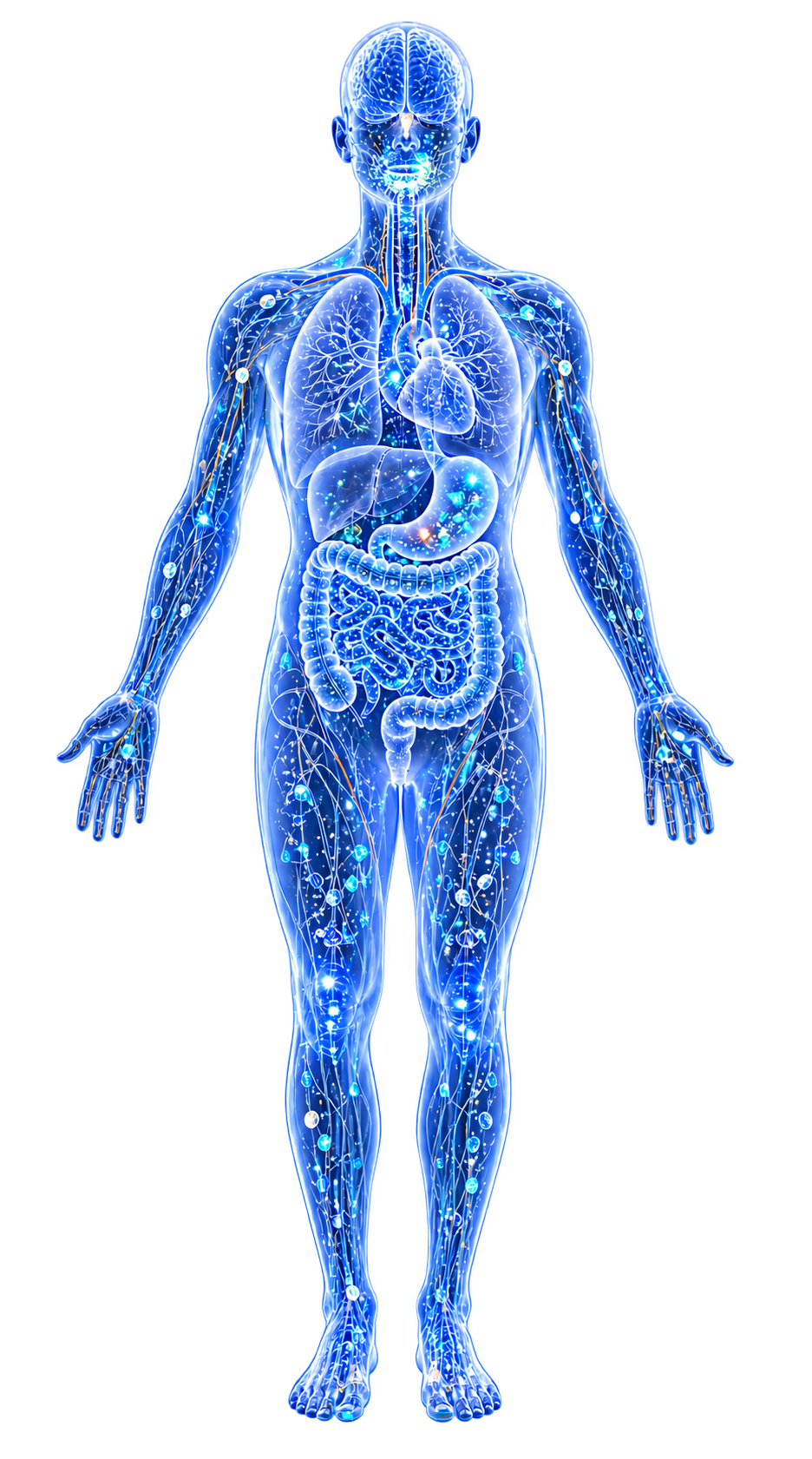
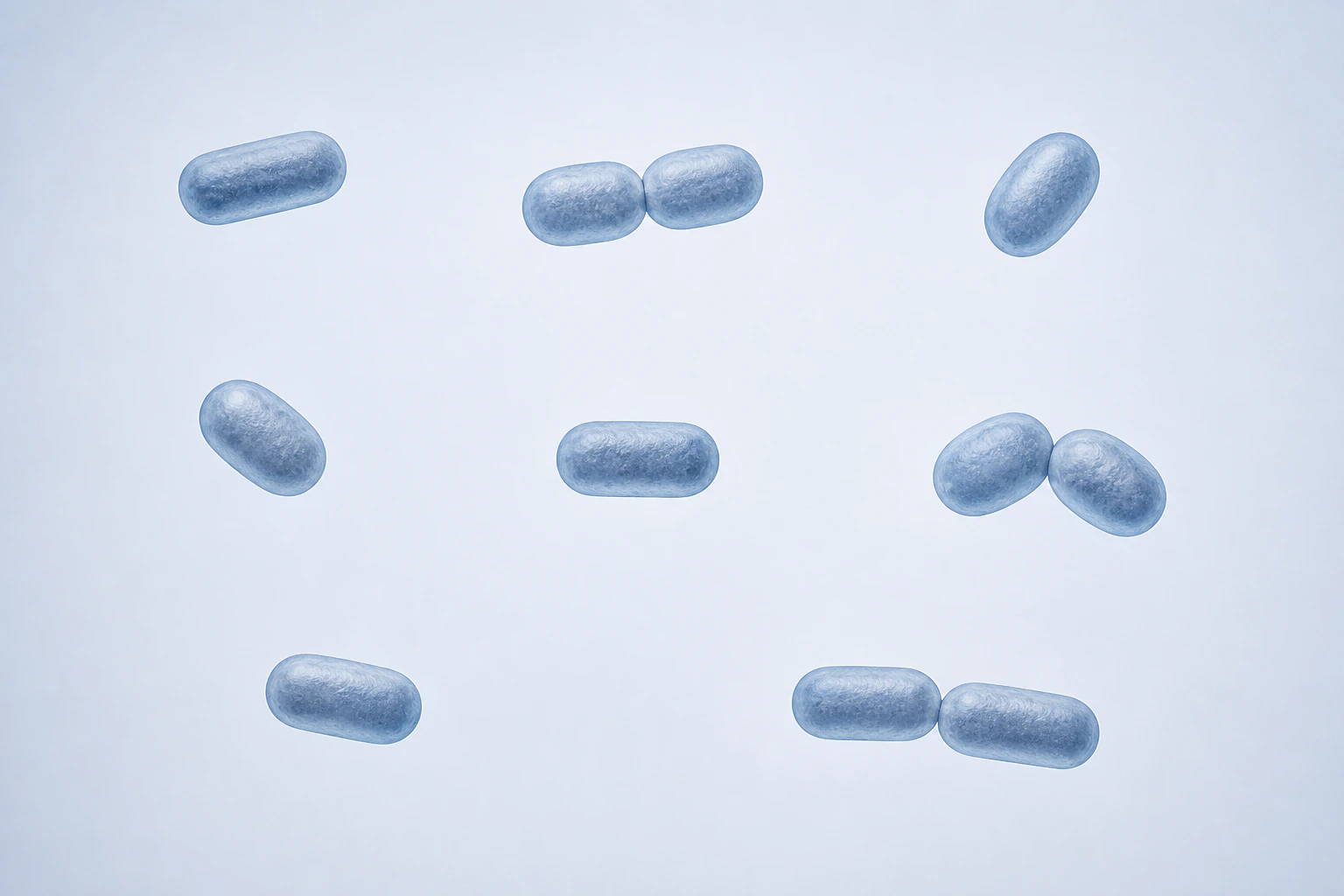
Type-species-anchored Gardnerella short-rod and coccobacillary forms, shown as eleven bodies in five single and three paired groupings. This genus-level reconstruction is representative, non-diagnostic, and not a universal genus form or a micrograph.
Scientific media record1 verified identifier
- Subject
- Gardnerellataxon · genus
- Identifiers
- NCBITaxon:2701
- Review
- Editorial review completeIdentifiers authority-verified · Accessibility validated · · gardnerella|gardnerella-morphology-v1.webp
- Digital source
- Trained-algorithmic mediaCreated with a trained generative algorithm and reviewed by WikiBiome for subject identity, scientific framing, identifiers, provenance, and accessibility.
- Scientific basis
- Gardnerella — NCBI TaxonomyGardnerella — LPSNGardnerella gen. nov.Emended description of GardnerellaGardnerella genus treatment
- License
- CC BY-SA 4.0Created
Gardnerella vaginalis is a Gram-variable, facultatively anaerobic bacterium that is the key organism in bacterial vaginosis (BV), the most common vaginal infection in women of reproductive age.
Its sialidase production, biofilm-forming capacity, and associations with heavy metal exposure make it a pathobiont at the intersection of reproductive health and environmental toxicology.
Evidence map5 cited passagesInspect provenance +
metalloestrogens (Cd, Ni, Pb) may alter cervicovaginal immune responses and mucus composition in ways that favor Gardnerella colonization.
Enriched in cervical microbiota of stage 3/4 endometriosis patients (67.7% vs 36.8% of non-Lactobacillus taxa in sensitivity analysis).
Detected within deep endometriotic lesion tissue alongside Lactobacillus, Enterococcus, and Pseudomonas.
GnRH agonist treatment increased Gardnerella colony formation in endometriosis patients.
Decreased in stool of endometriosis patients, suggesting body-site-specific shifts.
Contents
1. Pathogenic Mechanisms2. Metal Associations3. Endometriosis Associations4. BV and Reproductive Health5. ConnectionsPathogenic Mechanisms#
Sialidase and Mucus Degradation#
G. vaginalis produces sialidase (neuraminidase), which cleaves sialic acid residues from mucin glycoproteins. Sialidase activity degrades the protective cervicovaginal mucus layer, exposing epithelial surfaces to secondary infection. Sialidase levels in vaginal fluid are a clinical marker for BV diagnosis and correlate with adverse pregnancy outcomes.
Biofilm Formation#
G. vaginalis is the primary architect of polymicrobial biofilms on the vaginal epithelium.
These biofilms are highly resistant to antibiotics (metronidazole, clindamycin) and host immune clearance, explaining the high recurrence rate of BV (>50% within 12 months).
Biofilm cells shed from the vaginal epithelium can re-seed infection, maintaining a chronic dysbiotic state.
Vaginolysin#
Produces vaginolysin, a cholesterol-dependent cytolysin that lyses human epithelial cells. Vaginolysin is human-specific, binding CD59 on human cells, which limits animal model studies.
Metal Associations#
Heavy Metal Exposure#
Vaginal Gardnerella abundance is associated with environmental heavy metal exposure, with Cadmium, Lead, and Mercury potentially promoting BV-associated Dysbiosis by suppressing protective Lactobacillus species.
Metalloestrogens (cadmium (Cd), nickel (Ni), lead (Pb)) may alter cervicovaginal immune responses and mucus composition in ways that favor Gardnerella colonization.[1]The Endobiota Study: Comparison of Vaginal, Cervical and Gut Microbiota Between Women with Stage 3/4 Endometriosis and Healthy ControlsAta B, Yildiz S, Turkgeldi E et al. · 2019Open reference 1 ↓
Iron Acquisition#
G. vaginalis requires Iron for growth and competes with vaginal lactobacilli for this limiting nutrient. Menstrual blood provides periodic iron supplementation that can transiently favor Gardnerella expansion. Iron availability in the vaginal environment is a key determinant of the Lactobacillus-Gardnerella competitive balance.
Endometriosis Associations#
Gardnerella appears across multiple endometriosis microbiome studies. Enriched in cervical microbiota of stage 3/4 endometriosis patients (67.7% vs 36.8% of non-Lactobacillus taxa in sensitivity analysis).[1]The Endobiota Study: Comparison of Vaginal, Cervical and Gut Microbiota Between Women with Stage 3/4 Endometriosis and Healthy ControlsAta B, Yildiz S, Turkgeldi E et al. · 2019Open reference 1 ↓
Detected within deep endometriotic lesion tissue alongside Lactobacillus, Enterococcus, and Pseudomonas.[2]Microbiome Profile of Deep Endometriosis Patients: Comparison of Vaginal Fluid, Endometrium and LesionHernandes C, Silveira P, Sereia AFR et al. · 2020Open reference 2 ↓ GnRH agonist treatment increased Gardnerella colony formation in endometriosis patients.[3]Molecular detection of intrauterine microbial colonization in women with endometriosisKhan KN, Fujishita A, Masumoto H et al. · 2016Open reference 3 ↓
Decreased in stool of endometriosis patients, suggesting body-site-specific shifts.[1]The Endobiota Study: Comparison of Vaginal, Cervical and Gut Microbiota Between Women with Stage 3/4 Endometriosis and Healthy ControlsAta B, Yildiz S, Turkgeldi E et al. · 2019Open reference 1 ↓
BV and Reproductive Health#
BV caused by G. vaginalis-dominant communities is associated with preterm birth, pelvic inflammatory disease, increased HIV acquisition, and post-surgical infections. The transition from Lactobacillus-dominant (CST I-III) to Gardnerella-dominant (CST IV) vaginal communities represents a clinically significant shift in vaginal ecosystem state.
BV treatment with antibiotics is often followed by recurrence due to biofilm persistence and re-establishment of the dysbiotic community.
Connections#
- Endometriosis—enriched in cervical microbiota of endometriosis patients
- Iron—iron competition with Lactobacillus shapes vaginal community dynamics
- Metalloestrogens—heavy metal estrogen mimics may promote Gardnerella dominance
- Cadmium—environmental cadmium (Cd) exposure associated with BV-like vaginal dysbiosis
- Biofilm—primary biofilm architect in the vaginal environment
- Lactobacillus—competitive exclusion dynamics define vaginal health vs. BV
- dysbiosis—Gardnerella dominance defines the BV dysbiotic state
References 4
Numbered by first appearance in the article, then reconciled with its declared source list.
- 1
Ata B, Yildiz S, Turkgeldi E et al. (2019). The Endobiota Study: Comparison of Vaginal, Cervical and Gut Microbiota Between Women with Stage 3/4 Endometriosis and Healthy Controls. Scientific Reports.
- 2
Hernandes C, Silveira P, Sereia AFR et al. (2020). Microbiome Profile of Deep Endometriosis Patients: Comparison of Vaginal Fluid, Endometrium and Lesion. Diagnostics.
- 3
Khan KN, Fujishita A, Masumoto H et al. (2016). Molecular detection of intrauterine microbial colonization in women with endometriosis. European Journal of Obstetrics and Gynecology and Reproductive Biology.
- 4
Akiyama K, Nishioka K, Khan KN et al. (2019). Molecular detection of microbial colonization in cervical mucus of women with and without endometriosis. American Journal of Reproductive Immunology.
Article network
Mentioned here 9
Pages linking here 13
Connect the evidence
Publicly readable discussion by ORCID-authenticated researchers. Questions, interpretation, methods, corrections, and new evidence stay attached to this record.
No discussion yet. Start with a precise question or a source-backed observation.
Activity and accepted changes
Accepted researcher context, editorial status, public discussion, and upstream Git revisions are shown together. Pending, declined, and withdrawn proposals remain private.
- published revision
Complete corpus-wide Dysbiosis linking
Karen Pendergrass · +2 −2
Inspect exact Git diff ↗ - published revision
massive wiki expansion: 149 stubs fixed, 100+ new pages, Rule 15 scan, keystone papers
WikiBiome Deploy Bot · +3 −3
Inspect exact Git diff ↗ - published revision
nightly maintenance: 94 stub demotions, 181 source_count fixes, 22 auto-discovered stubs, 5 adversarial audits, 3 boundary fixes, 3 evidence-level corrections
WikiBiome Deploy Bot · +1 −0
Inspect exact Git diff ↗ - published revision
WikiBiome update — 2026-04-15 17:23
WikiBiome Deploy Bot · +0 −1
Inspect exact Git diff ↗ - published revision
wiki: bulk entity upgrades, new article pages, and site regeneration
WikiBiome Deploy Bot · +6 −0
Inspect exact Git diff ↗ - published revision
WikiBiome update — integrity fixes, metallomic diet pages, cross-condition analyses
WikiBiome Deploy Bot · +12 −5
Inspect exact Git diff ↗ - published revision
WikiBiome update — 2026-04-10 13:49
WikiBiome Deploy Bot · +66 −0
Inspect exact Git diff ↗