
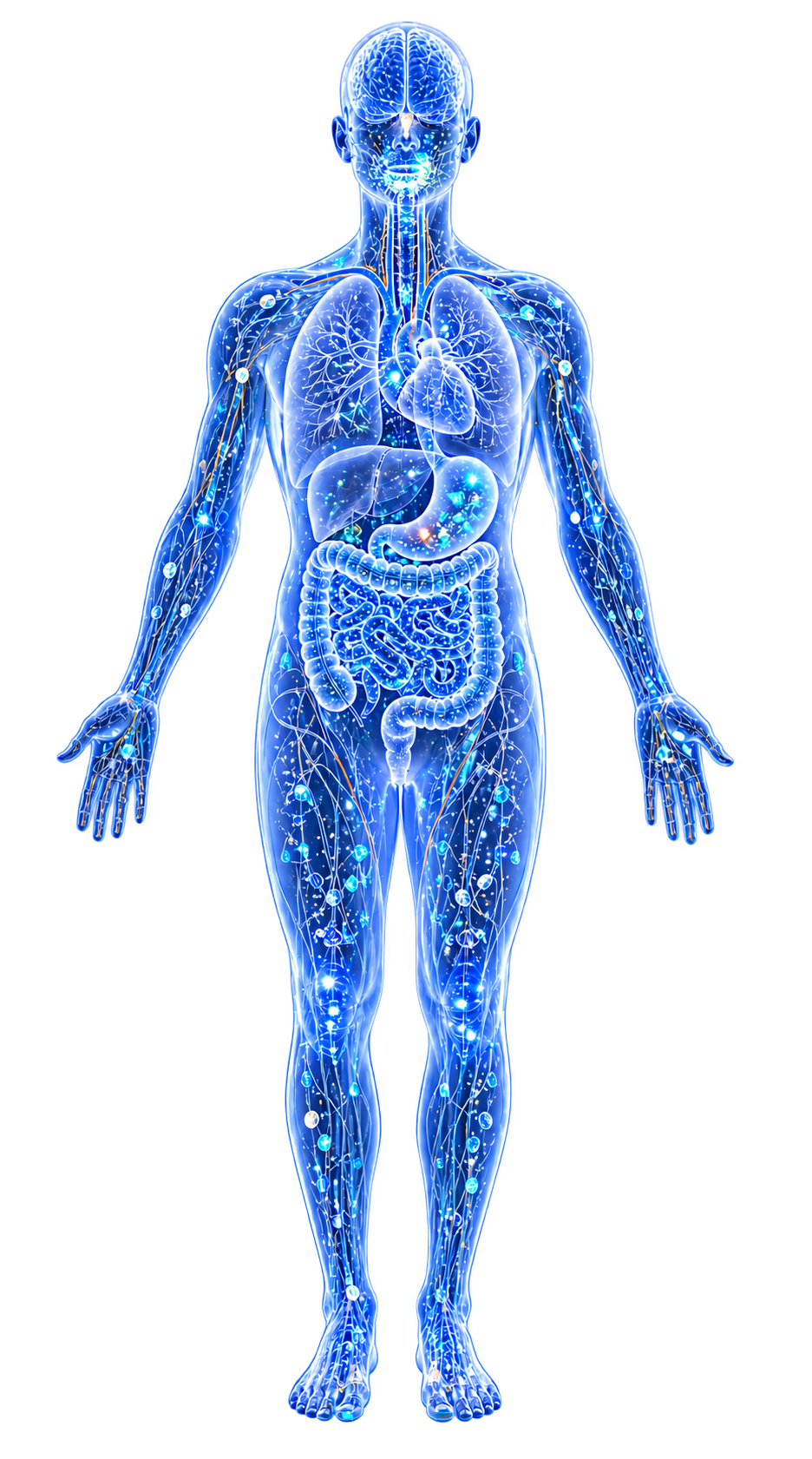
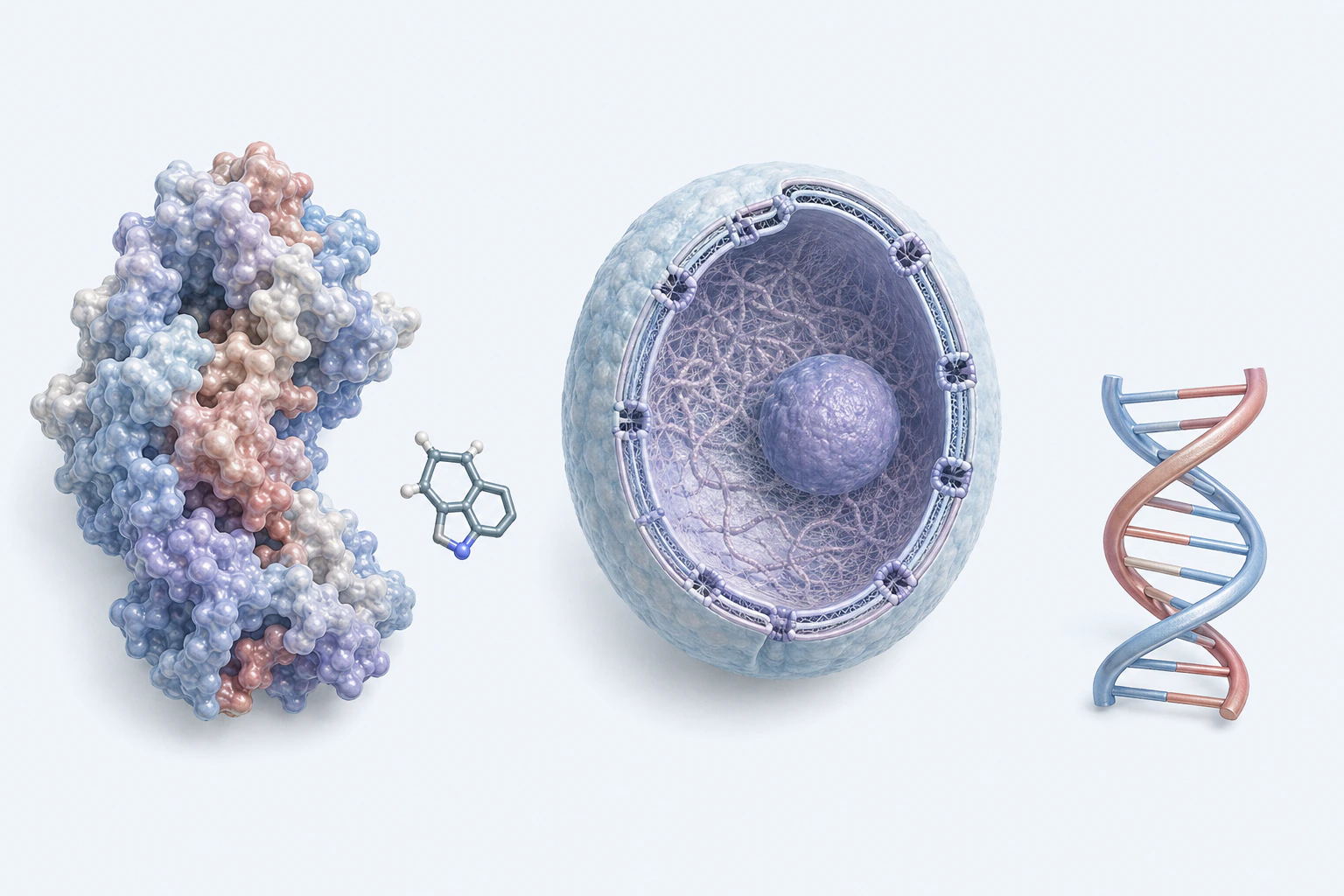
Human AHR cellular context. The separated teaching forms do not establish protein conformation, ligand binding, translocation, DNA interaction, transcription, pathway activity, exposure response, biomarker status, or diagnosis.
Scientific media record2 verified identifiers
- Subject
- Aryl Hydrocarbon Receptorbiological-process
- Review
- Editorial review completeIdentifiers authority-verified · Accessibility validated · · aryl-hydrocarbon-receptor|aryl-hydrocarbon-receptor-mechanism-v1.webp
- Digital source
- Trained-algorithmic mediaCreated with a trained generative algorithm and reviewed by WikiBiome for subject identity, scientific framing, identifiers, provenance, and accessibility.
- License
- CC BY-SA 4.0Created
This page serves as a cross-reference point for the existing AhR (Aryl Hydrocarbon Receptor) concept page, which provides comprehensive coverage of AhR signaling, microbiome-derived ligands, and immune regulation.
The aryl hydrocarbon receptor is a ligand-activated transcription factor that integrates microbial, dietary, and environmental signals to regulate gut barrier integrity, immune tolerance, and Metal-Driven Inflammation.
Originally identified as a xenobiotic sensor (binding dioxins and polycyclic aromatic hydrocarbons), AhR is now recognized as a critical node in the microbiome-immune axis, where microbial tryptophan metabolites serve as its primary endogenous ligands.
For full coverage, see AhR (Aryl Hydrocarbon Receptor).
Contents
1. Key Cross-ReferencesKey Cross-References#
- AhR (Aryl Hydrocarbon Receptor)—comprehensive concept page
- Serotonin—3-IAld/AhR/TPH1 pathway tipping tryptophan toward serotonin
- Indoxyl Sulfate—toxic tryptophan metabolite; contrast to protective AhR ligands
- Lactobacillus—major producer of AhR ligands (3-IAld, ILA)
- Anaerostipes—ILA production linking to AhR immunity
- Necrotizing Enterocolitis—maternal AhR activation protects neonatal gut
- Celiac Disease—altered indole/AhR ligand production
- Bacteroides thetaiotaomicron—indole-derived AhR ligand production
References 8
Numbered by first appearance in the article, then reconciled with its declared source list.
- 1
Natalia A. Borges, Amanda F. Barros, Lia S. Nakao et al. (2016). Protein-Bound Uremic Toxins from Gut Microbiota and Inflammatory Markers in CKD. Journal of Renal Nutrition.
- 2
Friederike Gutmann, Lina Samira Bahr, Ulrike Bruning et al. (2025). Functional Microbiome Reprogramming Links Dietary Interventions to Neuroinflammatory Outcomes in Multiple Sclerosis. Research Square (preprint).
- 3
Shokufeh Ghasemian Sorboni, Hanieh Shakeri Moghaddam, Reza Jafarzadeh-Esfehani et al. (2023). Ghasemian Sorboni 2023 — Comprehensive Review on Gut Microbiome in Neurological Disorders. Unknown.
- 4
Various (2023). Metabolic Pathways 2023-2025 — Gut Microbiome Metabolic Activity in Type 1 Diabetes. Various.
- 5
Allison M. Plummer, Yvette L. Matos, Henry C. Lin et al. (2023). Plummer et al 2023 — Gut-Brain Pathogenesis of Post-Acute COVID-19 Neurocognitive Symptoms. Frontiers in Neuroscience.
- 6
Nicholas Dopkins, William Becker, Kathryn Miranda et al. (2021). Tryptamine Attenuates Experimental Multiple Sclerosis Through Activation of Aryl Hydrocarbon Receptor. Frontiers in Pharmacology.
- 7
Benedetta Parodi, Nicole Kerlero de Rosbo (2021). The Gut-Brain Axis in Multiple Sclerosis. Is Its Dysfunction a Pathological Trigger or a Consequence of the Disease?. Frontiers in Immunology.
- 8
Qing Zhang, Liqian Lu, Jiao Wang et al. (2024). Metabolomic Profiling Reveals Step-Wise Alteration of Bile Acid Metabolism in Diabetic Kidney Disease. Nutrition and Diabetes.
Article network
Connect the evidence
Publicly readable discussion by ORCID-authenticated researchers. Questions, interpretation, methods, corrections, and new evidence stay attached to this record.
No discussion yet. Start with a precise question or a source-backed observation.
Published page changes
This record shows only material changes published on this page, including changes to its content, evidence, conclusions, or author context. Internal processes and discussion activity are excluded. Pending, declined, and withdrawn proposals remain private.
- published revision
Added references: borges-2016-uremic-toxins-inflammatory-markers-ckd; gutmann-2025-functional-microbiome-diet-ms; ghasemian-sorboni-2023-gut-microbiome-neurological-review; metabolic-pathways-2023-2025-gut-microbiome-t1d;…
Added references: borges-2016-uremic-toxins-inflammatory-markers-ckd; gutmann-2025-functional-microbiome-diet-ms; ghasemian-sorboni-2023-gut-microbiome-neurological-review; metabolic-pathways-2023-2025-gut-microbiome-t1d; plummer-2023-gut-brain-pathogenesis-post-acute-covid-neurocognitive; dopkins-2021-tryptamine-eae-aryl-hydrocarbon-receptor; parodi-2021-gut-brain-axis-ms-trigger-or-consequence; zhang-2024-bile-acid-metabolism-diabetic-kidney-disease. Removed references: zelante-2024-microbial-ahr-ligand-3iald-tolerogenic-ms; sami-2023-human-milk-nutrients-preventing-nec. · WikiBiome Deploy Bot · +14 −8
Inspect exact Git diff ↗ - published revision
Created “Aryl Hydrocarbon Receptor (AhR)”: This page serves as a cross-reference point for the existing ahr concept page, which provides comprehensive coverage of AhR signaling, microbiome-derived ligands, and immune regulation. The aryl…
Created “Aryl Hydrocarbon Receptor (AhR)”: This page serves as a cross-reference point for the existing ahr concept page, which provides comprehensive coverage of AhR signaling, microbiome-derived ligands, and immune regulation. The aryl… Published sections: Aryl Hydrocarbon Receptor (AhR); Key Cross-References. · WikiBiome Deploy Bot · +32 −0
Inspect exact Git diff ↗