
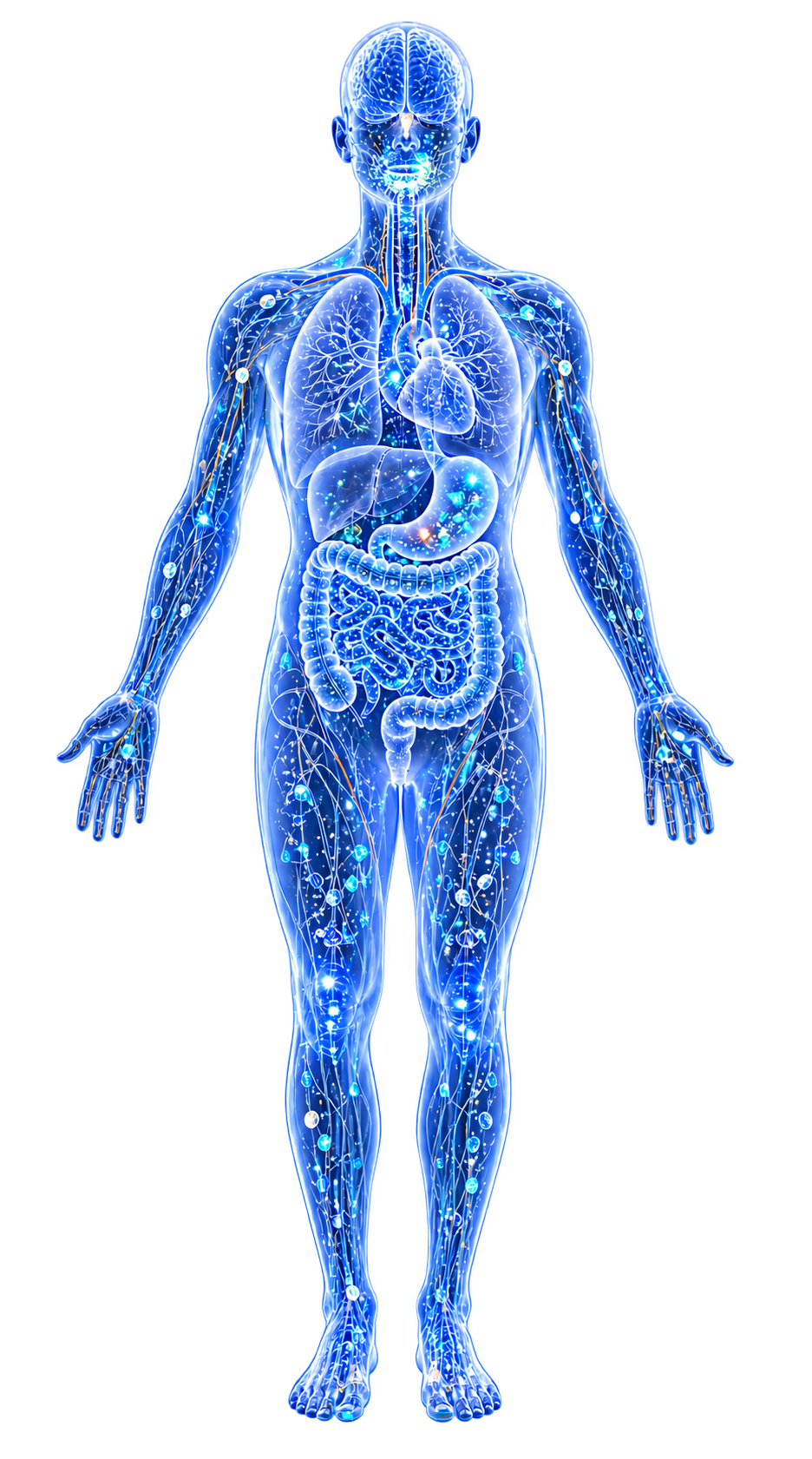
 metals · microbes · host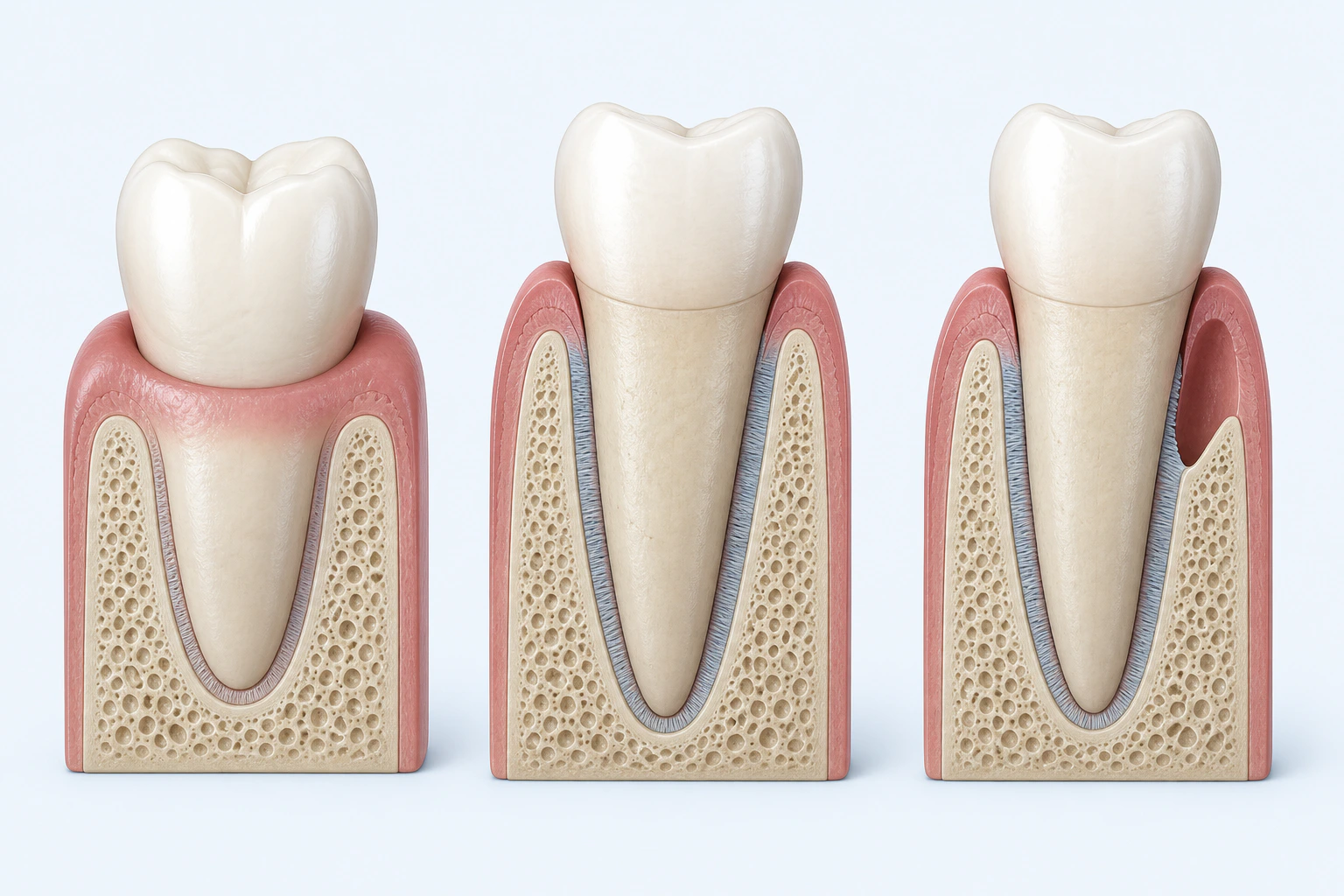
Representative periodontal-support orientation without disease subtype, grade, stage, cause, severity, treatment need, prognosis, or diagnosis.
Scientific media record1 verified identifier
- Subject
- Periodontitiscondition
- Identifiers
- MeSH:D010518
- Review
- Editorial review completeIdentifiers authority-verified · Accessibility validated · · periodontitis|periodontitis-pathology-v1.webp
- Digital source
- Trained-algorithmic mediaCreated with a trained generative algorithm and reviewed by WikiBiome for subject identity, scientific framing, identifiers, provenance, and accessibility.
- Scientific basis
- Periodontitis — MeSHPeriodontal (Gum) Disease
- License
- CC BY-SA 4.0Created
Periodontitis is a chronic inflammatory disease of the periodontal tissues (gingiva, periodontal ligament, alveolar bone) driven by a dysbiotic polymicrobial biofilm in the subgingival pocket. The keystone pathogen is Porphyromonas gingivalis, whose zinc-dependent gingipains drive tissue destruction, immune evasion, and systemic dissemination.
Periodontitis affects ~50% of adults globally and is increasingly recognized as a driver of systemic disease through the oral-systemic Metal-Driven Inflammation axis.
Evidence map5 cited passagesInspect provenance +
CVD: Periodontal bacteria enter the bloodstream during chewing/procedures → endothelial damage → atherosclerosis.
T2D: Bidirectional relationship—periodontitis worsens glycemic control; hyperglycemia worsens periodontitis.
Breast cancer: Missing mandibular molars (severe periodontitis marker) → 2.36x breast cancer risk.
functional shielding: C. albicans shields P. gingivalis from immune recognition, amplifying gingipain activity 10-fold and enabling chronic persistence.
cortisol: Stress hormone directly promotes P. gingivalis surface translocation and virulence.
One disease. Five evidence layers.
A generated systems view of the metals, organisms, host sequestration signals, ecological conditions, and microbial functions indexed for Periodontitis.
Evidence layer
Taxonomic signature
Organisms reported as enriched or depleted, with their indexed functional context kept beside the name.No structured taxa indexed yet.
No structured taxa indexed yet.
Evidence layer
Nutritional immunity
Host metal-withholding, inflammatory, antioxidant, and microbial-metabolite signals indexed in the signature.Elevated host signals
0No structured signals indexed yet.
Depleted protective signals
0No structured signals indexed yet.
Evidence layer
Ecological state
The environmental conditions that connect the organism-level observations into a system.No structured ecological features indexed yet.
Evidence layer
Virulence functions
Microbial structures, enzymes, and acquisition systems implicated by the linked evidence.No structured virulence functions indexed yet.
The disease record, in full.
The original WikiBiome disease narrative remains intact beneath the generated signature atlas.
Oral-Systemic Disease Connections#
CVD: Periodontal bacteria enter the bloodstream during chewing/procedures → endothelial damage → atherosclerosis.[1]Gualtero 2023 — Oral Microbiome Mediated Inflammation, a Potential Inductor of Vascular Diseases: A Comprehensive ReviewDiego F. Gualtero, Gloria Ines Lafaurie, Diana Marcela Buitrago et al. · 2023Open reference 1 ↓[2]Periodontal Biomarkers in Cardiovascular Disease: Mechanisms, Diagnostics, and Clinical ImplicationsMax Foroughi, Keykavous Parang · 2026Open reference 2 ↓
Alzheimer's: P. gingivalis gingipains found in AD brains; cleave APP and tau → amyloidogenic fragments (see Porphyromonas gingivalis). T2D: Bidirectional relationship—periodontitis worsens glycemic control; hyperglycemia worsens periodontitis.[3]Periodontitis and T2D — Endogenous and Microbial Biomarkers for Periodontitis and Type 2 Diabetes MellitusVarious · 2021Open reference 3 ↓[4]Tang 2022 — The Bidirectional Biological Interplay between Microbiome and Viruses in Periodontitis and Type-2 Diabetes MellitusBoyu Tang, Caixia Yan, Xin Shen et al. · 2022Open reference 4 ↓
Breast cancer: Missing mandibular molars (severe periodontitis marker) → 2.36x breast cancer risk.[5]Söder et al. 2010 — Periodontal Disease May Associate with Breast CancerBirgitta Söder, Maha Yakob, Jukka H. Meurman et al. · 2010Open reference 5 ↓
Metal and Shielding Context#
P. gingivalis is a heme specialist—gingival bleeding provides iron/heme substrate that fuels pathogen expansion.
Functional Shielding: C. albicans shields P. gingivalis from immune recognition, amplifying gingipain activity 10-fold and enabling chronic persistence.[6]Bartnicka et al. 2020 — Candida albicans Shields the Periodontal Killer Porphyromonas gingivalis from Recognition by the Host Immune System and Supports the Bacterial Infection of Gingival TissueDominika Bartnicka, Miriam Gonzalez-Gonzalez, Joanna Sykut et al. · 2020Open reference 6 ↓
Cortisol: Stress hormone directly promotes P. gingivalis surface translocation and virulence.[7]Kim et al. 2022 — Cortisol Promotes Surface Translocation of Porphyromonas gingivalisHey-Min Kim, Christina Magda Rothenberger, Mary Ellen Davey · 2022Open reference 7 ↓
Cross-References#
- Porphyromonas gingivalis—keystone periodontal pathogen
- Functional Shielding—C. albicans shields P. gingivalis
- Cortisol—stress-driven virulence activation
- Cardiovascular Disease—oral-CVD axis
- Alzheimer's Disease—gingipain-amyloid connection
- Breast Cancer—periodontitis as risk factor
- Iron—heme/iron acquisition drives P. gingivalis expansion
References 7
Numbered by first appearance in the article, then reconciled with its declared source list.
- 1
Diego F. Gualtero, Gloria Ines Lafaurie, Diana Marcela Buitrago et al. (2023). Gualtero 2023 — Oral Microbiome Mediated Inflammation, a Potential Inductor of Vascular Diseases: A Comprehensive Review. Frontiers in Cardiovascular Medicine.
- 2
Max Foroughi, Keykavous Parang (2026). Periodontal Biomarkers in Cardiovascular Disease: Mechanisms, Diagnostics, and Clinical Implications. Infection.
- 3
Various (2021). Periodontitis and T2D — Endogenous and Microbial Biomarkers for Periodontitis and Type 2 Diabetes Mellitus. Various.
- 4
Boyu Tang, Caixia Yan, Xin Shen et al. (2022). Tang 2022 — The Bidirectional Biological Interplay between Microbiome and Viruses in Periodontitis and Type-2 Diabetes Mellitus. Frontiers in Immunology.
- 5
Birgitta Söder, Maha Yakob, Jukka H. Meurman et al. (2010). Söder et al. 2010 — Periodontal Disease May Associate with Breast Cancer. Breast Cancer Research and Treatment.
- 6
★Dominika Bartnicka, Miriam Gonzalez-Gonzalez, Joanna Sykut et al. (2020). Bartnicka et al. 2020 — Candida albicans Shields the Periodontal Killer Porphyromonas gingivalis from Recognition by the Host Immune System and Supports the Bacterial Infection of Gingival Tissue. International Journal of Molecular Sciences.
- 7
Hey-Min Kim, Christina Magda Rothenberger, Mary Ellen Davey (2022). Kim et al. 2022 — Cortisol Promotes Surface Translocation of Porphyromonas gingivalis. Pathogens.
Article network
Connect the evidence
Publicly readable discussion by ORCID-authenticated researchers. Questions, interpretation, methods, corrections, and new evidence stay attached to this record.
No discussion yet. Start with a precise question or a source-backed observation.
Activity and accepted changes
Accepted researcher context, editorial status, public discussion, and upstream Git revisions are shown together. Pending, declined, and withdrawn proposals remain private.
- published revision
Backfill inflammation concept links
Karen Pendergrass · +1 −1
Inspect exact Git diff ↗ - published revision
massive wiki expansion: 149 stubs fixed, 100+ new pages, Rule 15 scan, keystone papers
WikiBiome Deploy Bot · +51 −0
Inspect exact Git diff ↗