
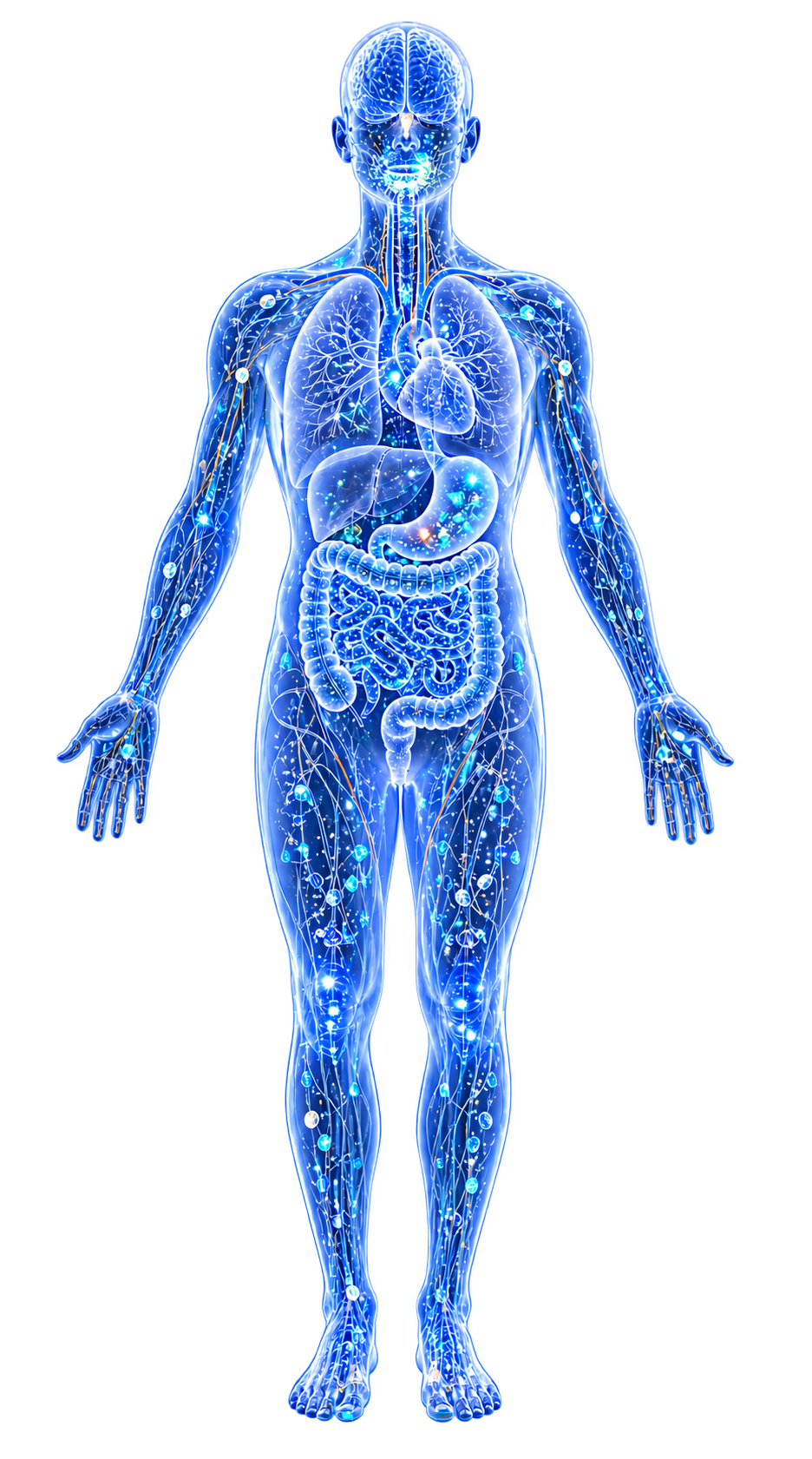
The gut-gonadal axis describes the bidirectional communication between the intestinal microbiome and the reproductive endocrine system. Gut bacteria modulate sex hormone levels through enzymatic activity (particularly Beta-Glucuronidase-mediated estrogen deconjugation), metabolite production (SCFAs influencing GnRH pulsatility), and immune signaling.
Conversely, sex hormones reshape the Gut Microbiome—testosterone, estrogen, and progesterone all influence microbial community composition and barrier function.
This axis explains why reproductive disorders such as Polycystic Ovary Syndrome, Female Infertility, and Premature Ovarian Insufficiency consistently show gut microbiome alterations, and why metabolic drugs targeting gut hormones (GLP-1 agonists, metformin) have unexpected fertility benefits.
Evidence map1 cited passagesInspect provenance +
The GLP-1 and GIP signaling pathways connect metabolic and reproductive function through the gut. Mouse models deficient in GIPR or GLP-1R showed disrupted estrous cycling, smaller litters, and fewer breeding successes. Oral metformin—which acts partly through gut microbiome modulation—significantly improved litter size, confirming that the gut-gonadal a
Mechanisms#
Microbiome to Gonads#
Estrobolome: The collective bacterial gene set encoding Beta-Glucuronidase and other estrogen-metabolizing enzymes. Enrichment of beta-glucuronidase-producing taxa (e.g., Escherichia coli, Bacteroides fragilis) increases circulating estrogen through deconjugation and enterohepatic recirculation. This drives estrogen-dependent conditions including Endometriosis and Breast Cancer.
SCFA signaling: Butyrate and propionate influence hypothalamic GnRH neurons via free fatty acid receptors (FFAR2/3), modulating pulsatile gonadotropin release. SCFA depletion from Dysbiosis may contribute to anovulation.
Inflammatory cytokines: LPS-driven TNF-alpha and IL-6 directly suppress ovarian steroidogenesis and impair follicular development.
Gonads to Microbiome#
Testosterone: Elevated androgens in PCOS reshape gut communities toward reduced diversity and enrichment of inflammatory taxa. Conversely, testosterone depletion in male hypogonadism reduces Lactobacillus colonization.
Estrogen: Fluctuations across the menstrual cycle alter vaginal and gut microbial composition. Estrogen supports Lactobacillus-dominant vaginal communities; its decline in menopause shifts communities toward higher diversity with increased Prevotella and BV-associated taxa.
Gut Hormone Mediators#
The GLP-1 and GIP signaling pathways connect metabolic and reproductive function through the gut. Mouse models deficient in GIPR or GLP-1R showed disrupted estrous cycling, smaller litters, and fewer breeding successes.
Oral metformin—which acts partly through gut microbiome modulation—significantly improved litter size, confirming that the gut-gonadal axis depends on incretin signaling.[1]Belle Martin & Duggan 2024 — An exploration of gut hormone therapy to treat infertility caused by Type 2 DiabetesBelle Martin A, Duggan E · 2024Open reference 1 ↓
Disease Associations#
| Condition | Gut-Gonadal Mechanism |
|---|---|
| Polycystic Ovary Syndrome | Hyperandrogenism reshapes gut microbiome; dysbiosis amplifies insulin resistance and androgen excess |
| Female Infertility | Beta-glucuronidase enrichment disrupts estrogen balance; SCFA depletion impairs folliculogenesis |
| Premature Ovarian Insufficiency | Altered gut microbiota composition correlates with FSH and LH levels |
| Endometriosis | Estrogen recirculation via estrobolome feeds ectopic endometrial tissue |
Cross-References#
- Estrobolome—estrogen-metabolizing microbial gene repertoire
- Beta-Glucuronidase—key enzyme in estrogen deconjugation
- Hyperandrogenism—androgen-microbiome feedback loop
- Polycystic Ovary Syndrome—canonical gut-gonadal axis disorder
- Female Infertility—clinical manifestation of axis disruption
References 9
Numbered by first appearance in the article, then reconciled with its declared source list.
- 1
Belle Martin A, Duggan E (2024). Belle Martin & Duggan 2024 — An exploration of gut hormone therapy to treat infertility caused by Type 2 Diabetes. UCC Student Medical Journal.
- 2
Svensson A, Brunkwall L, Roth B et al. (2021). Associations Between Endometriosis and Gut Microbiota. Reproductive Sciences.
- 3
Zirun Jin, Yuzhuo Yang, Yalei Cao et al. (2023). Jin 2023 — Gut Metabolite 3-HPAA Rejuvenates Spermatogenic Dysfunction in Aged Mice through GPX4-Mediated Ferroptosis. Microbiome.
- 4
Yan Guo, Yunhua Dong, Runzi Zheng et al. (2024). Guo 2024 — Correlation Between Viral Infections in Male Semen and Infertility: A Literature Review. Virology Journal.
- 5
Georgina Quaranta, Mauro Pittiruti, Brunella Posteraro et al. (2019). Quaranta 2019 — FMT as a Potential Tool for Female Reproductive Tract Diseases (Review). Frontiers in Immunology.
- 6
Huang X, Xu R, Yang Q et al. (2024). The depletion of gut microbiome impairs the beneficial effect of Gui-Shen-Wan in restoring mice ovarian function. Frontiers in Cellular and Infection Microbiology.
- 7
Shuya Lv, Jingrong Huang, Yadan Luo et al. (2024). Lv 2024 — Gut Microbiota Is Involved in Male Reproductive Function: A Review. Frontiers in Microbiology.
- 8
Kevin T. McVary (2007). McVary 2007 — Erectile Dysfunction Clinical Practice Review. New England Journal of Medicine.
- 9
Uzuner C, Mak J, El-Assaad F et al. (2023). The bidirectional relationship between endometriosis and microbiome. Frontiers in Endocrinology.
Article network
Mentioned here 15
Pages linking here 2
Connect the evidence
Publicly readable discussion by ORCID-authenticated researchers. Questions, interpretation, methods, corrections, and new evidence stay attached to this record.
No discussion yet. Start with a precise question or a source-backed observation.
Published page changes
This record shows only material changes published on this page, including changes to its content, evidence, conclusions, or author context. Internal processes and discussion activity are excluded. Pending, declined, and withdrawn proposals remain private.
- published revision
Revised “Microbiome to Gonads”: now reads “and breast cancer. - SCFA signaling: butyrate and propionate influence hypothalamic GnRH neurons”.
Revised “Microbiome to Gonads”: changed “and breast cancer. - SCFA signaling: Butyrate and propionate influence hypothalamic GnRH neurons” to “and breast cancer. - SCFA signaling: butyrate and propionate influence hypothalamic GnRH neurons”. · Karen Pendergrass · +1 −1
Inspect exact Git diff ↗ - published revision
Added references: svensson-2021-endometriosis-gut-microbiota-associations; jin-2023-3hpaa-spermatogenesis-ferroptosis; guo-2024-viral-infections-semen-infertility; quaranta-2019-fmt-female-reproductive-tract-diseases; huang-2024-gui-shen-wan-gut-microbiome-ovarian-function;…
Added references: svensson-2021-endometriosis-gut-microbiota-associations; jin-2023-3hpaa-spermatogenesis-ferroptosis; guo-2024-viral-infections-semen-infertility; quaranta-2019-fmt-female-reproductive-tract-diseases; huang-2024-gui-shen-wan-gut-microbiome-ovarian-function; lv-2024-gut-microbiota-male-reproductive-function-review; mcvary-2007-erectile-dysfunction-clinical-review; uzuner-2023-bidirectional-relationship-endometriosis-microbiome. Removed references: bellemartin-2024-gut-hormone-therapy-t2d-infertility-review. · WikiBiome Deploy Bot · +16 −11
Inspect exact Git diff ↗ - published revision
Created “Gut-Gonadal Axis”: The gut-gonadal axis describes the bidirectional communication between the intestinal microbiome and the reproductive endocrine system. Gut bacteria modulate sex hormone levels through enzymatic…
Created “Gut-Gonadal Axis”: The gut-gonadal axis describes the bidirectional communication between the intestinal microbiome and the reproductive endocrine system. Gut bacteria modulate sex hormone levels through enzymatic… Published sections: Overview; Microbiome to Gonads; Gonads to Microbiome; Gut Hormone Mediators; Disease Associations; Cross-References. · WikiBiome Deploy Bot · +69 −0
Inspect exact Git diff ↗