
 metals · microbes · host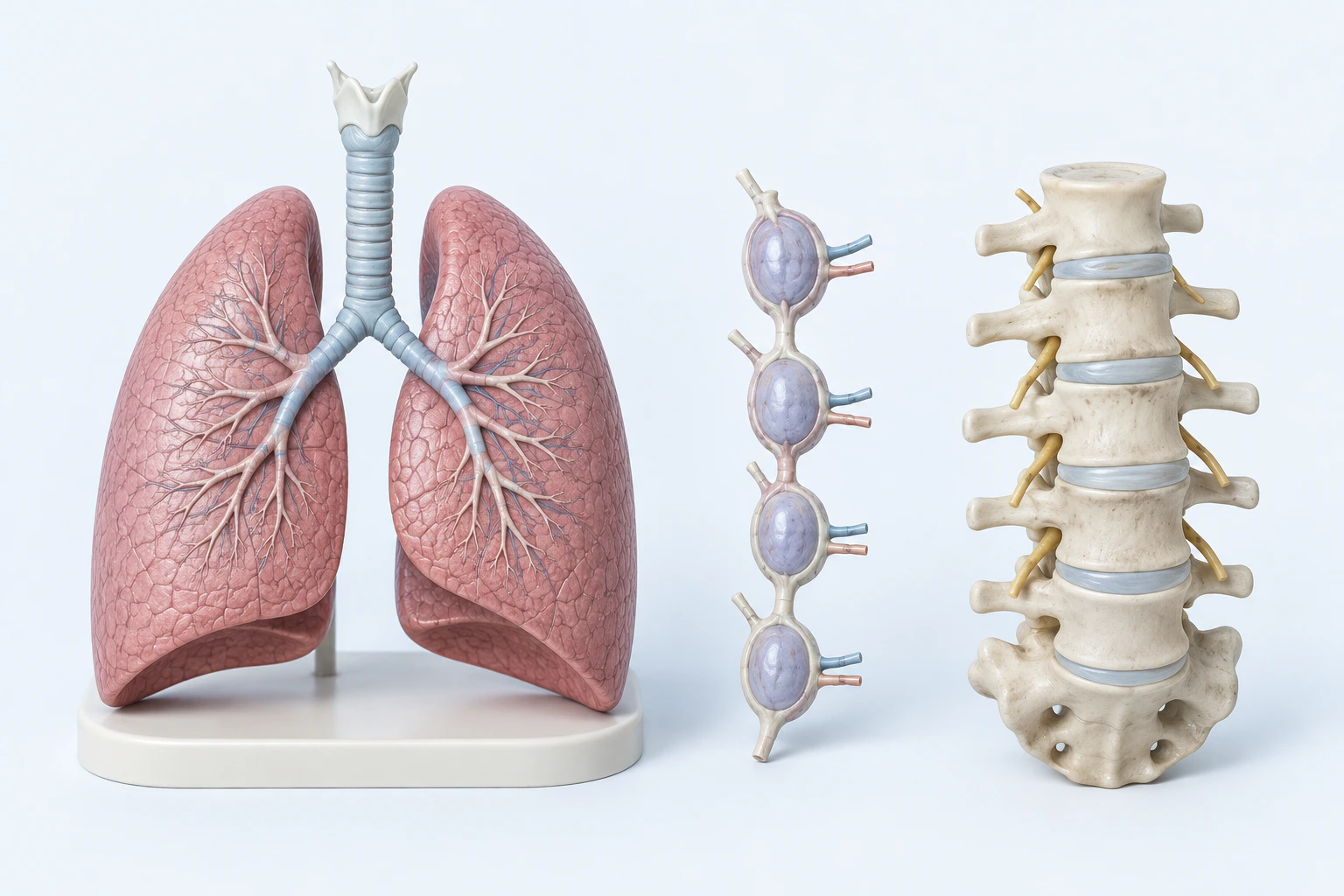
Broad pulmonary and extrapulmonary orientation for tuberculosis. These selected intact structures do not establish site prevalence, involvement in every case, active versus inactive disease, transmission, lesion, stage, severity, prognosis, or diagnosis.
Scientific media record1 verified identifier
- Subject
- Tuberculosiscondition
- Identifiers
- MeSH:D014376
- Review
- Editorial review completeIdentifiers authority-verified · Accessibility validated · · tuberculosis|tuberculosis-pathology-v1.webp
- Digital source
- Trained-algorithmic mediaCreated with a trained generative algorithm and reviewed by WikiBiome for subject identity, scientific framing, identifiers, provenance, and accessibility.
- Scientific basis
- Tuberculosis — MeSHAbout Tuberculosis
- License
- CC BY-SA 4.0Created
Tuberculosis is caused by Mycobacterium tuberculosis, an intracellular pathogen that survives inside macrophage phagosomes.
In the WikiBiome framework, TB exemplifies the intracellular metal battleground: M. tuberculosis deploys mycobactins (lipophilic siderophores) and carboxymycobactins (hydrophilic siderophores) to pirate iron from the host, while the host uses IFN-γ-driven Nutritional Immunity (Metal Sequestration) to restrict iron access.[1]Infection metallomics for critical care in the post-COVID eraPatil RH, Luptakova D, Havlicek V · 2021Open reference 1 ↓
Evidence map3 cited passagesInspect provenance +
Tuberculosis is caused by mycobacterium tuberculosis, an intracellular pathogen that survives inside macrophage phagosomes. In the WikiBiome framework, TB exemplifies the intracellular metal battleground: M. tuberculosis deploys mycobactins (lipophilic siderophores) and carboxymycobactins (hydrophilic siderophores) to pirate iron from the host, while the hos
Zinc: M. tuberculosis zinc uptake regulated by Zur regulon; zinc is essential for multiple metalloenzymes.
Co-selection: Metal resistance genes in environmental mycobacteria co-selected with antibiotic resistance.
One disease. Five evidence layers.
A generated systems view of the metals, organisms, host sequestration signals, ecological conditions, and microbial functions indexed for Tuberculosis.
Evidence layer
Taxonomic signature
Organisms reported as enriched or depleted, with their indexed functional context kept beside the name.No structured taxa indexed yet.
No structured taxa indexed yet.
Evidence layer
Nutritional immunity
Host metal-withholding, inflammatory, antioxidant, and microbial-metabolite signals indexed in the signature.Elevated host signals
0No structured signals indexed yet.
Depleted protective signals
0No structured signals indexed yet.
Evidence layer
Ecological state
The environmental conditions that connect the organism-level observations into a system.No structured ecological features indexed yet.
Evidence layer
Virulence functions
Microbial structures, enzymes, and acquisition systems implicated by the linked evidence.No structured virulence functions indexed yet.
The disease record, in full.
The original WikiBiome disease narrative remains intact beneath the generated signature atlas.
Metal Ecology#
Iron: Mycobactin/carboxymycobactin iron acquisition is essential for intraphagosomal survival. Mycobactin detection in patient sputum serves as a TB diagnostic biomarker. Zinc: M. tuberculosis zinc uptake regulated by Zur regulon; zinc is essential for multiple metalloenzymes.[2]Mikhaylina 2018 — Bacterial Zinc Uptake Regulator Proteins and Their RegulonsAlevtina Mikhaylina, Amira Z. Ksibe, David J. Scanlan et al. · 2018Open reference 2 ↓
cobalt (Co)-selection: Metal resistance genes in environmental mycobacteria co-selected with antibiotic resistance.[3]Understanding the Development of Environmental Resistance Among Microbes: A ReviewSrivastava J, Chandra H, Singh N et al. · 2016Open reference 3 ↓
Cross-References#
- Mycobacterium tuberculosis—species page
- Iron—mycobactin siderophore system
- Siderophores—mycobactin as species-specific siderophore
- Nutritional Immunity (Metal Sequestration)—IFN-γ-driven iron restriction
- IFN-gamma (Interferon Gamma)—primary host defense cytokine against TB
- HIV/AIDS—major TB co-infection
References 3
Numbered by first appearance in the article, then reconciled with its declared source list.
- 1
★Patil RH, Luptakova D, Havlicek V (2021). Infection metallomics for critical care in the post-COVID era. Mass Spectrometry Reviews.
- 2
Alevtina Mikhaylina, Amira Z. Ksibe, David J. Scanlan et al. (2018). Mikhaylina 2018 — Bacterial Zinc Uptake Regulator Proteins and Their Regulons. Biochemical Society Transactions.
- 3
Srivastava J, Chandra H, Singh N et al. (2016). Understanding the Development of Environmental Resistance Among Microbes: A Review. Clean - Soil, Air, Water.
Article network
Mentioned here 6
Pages linking here 1
Connect the evidence
Publicly readable discussion by ORCID-authenticated researchers. Questions, interpretation, methods, corrections, and new evidence stay attached to this record.
No discussion yet. Start with a precise question or a source-backed observation.
Activity and accepted changes
Accepted researcher context, editorial status, public discussion, and upstream Git revisions are shown together. Pending, declined, and withdrawn proposals remain private.
- published revision
massive wiki expansion: 149 stubs fixed, 100+ new pages, Rule 15 scan, keystone papers
WikiBiome Deploy Bot · +39 −0
Inspect exact Git diff ↗