
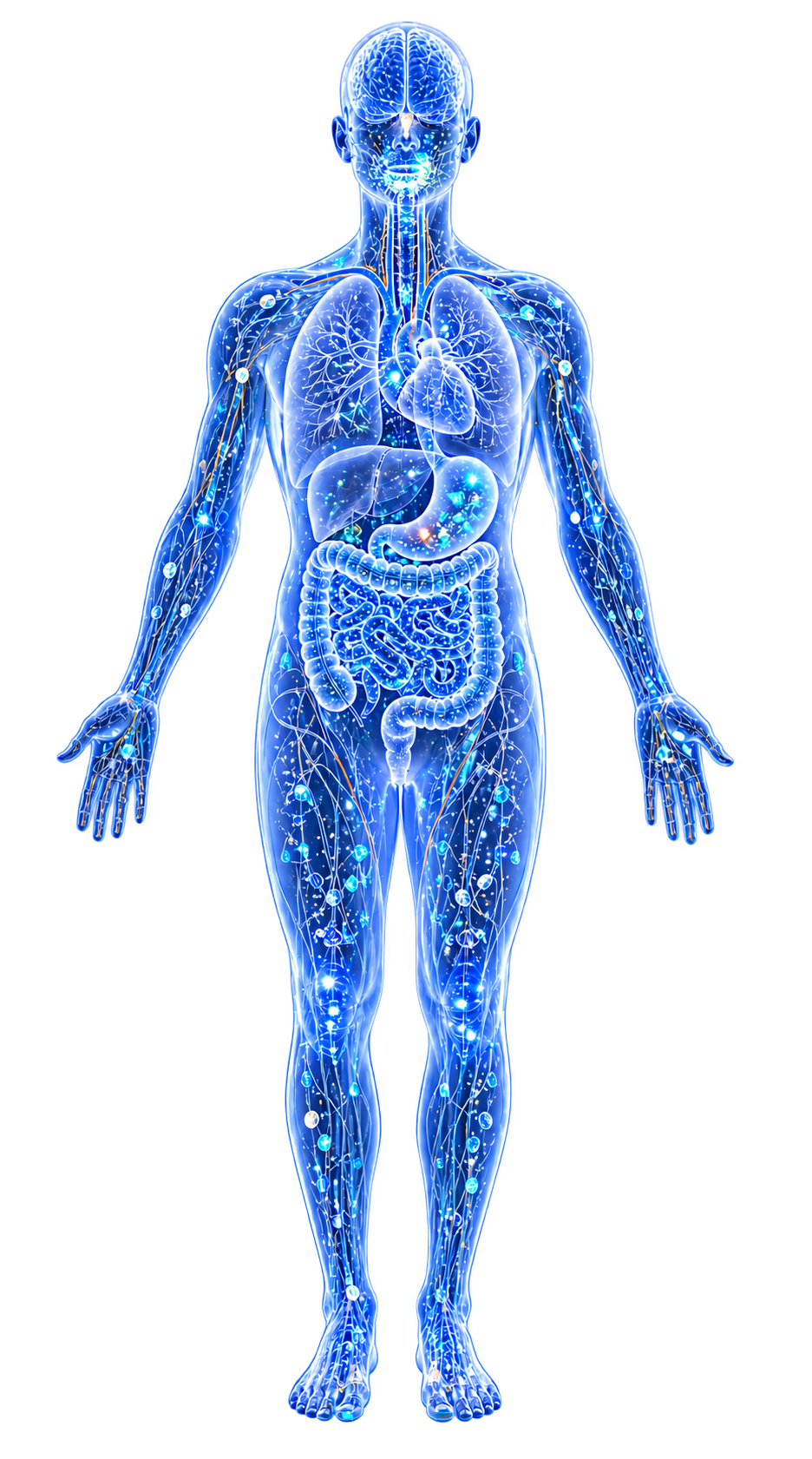
Interferon gamma (IFN-γ) is the signature Th1 cytokine and the primary activator of macrophage antimicrobial functions.
In the WikiBiome framework, IFN-γ is critical for two reasons: it drives nutritional immunity (iron restriction against intracellular pathogens) and it activates IDO-mediated tryptophan depletion—the mechanism that shunts tryptophan away from Serotonin synthesis toward the neurotoxic Kynurenine Pathway.
Evidence map4 cited passagesInspect provenance +
This is the primary host defense against chlamydia trachomatis—IFN-γ-induced iron starvation forces Chlamydia into its non-replicating persistent form. Karen's Brain Primitive 2: what appears as iron deficiency may be host-directed iron restriction.
ASD: IFN-γ elevated (5.96 vs. 3.50 pg/ml, p=0.001).
Schizophrenia: Elevated in FEP; drives IDO-mediated tryptophan shunting.
MS: Virus-induced IFN-γ drives gut dysbiosis and neuroinflammation; S. thermophilus suppresses IFN-γ in MS models.
Contents
1. Iron Restriction (Nutritional Immunity)2. Tryptophan-Kynurenine Shunting3. Disease Relevance4. Cross-ReferencesIron Restriction (Nutritional Immunity)#
IFN-γ is the master activator of iron-restriction defense against intracellular pathogens. Upregulates ferroportin (iron export from macrophages → starves intracellular pathogens of iron). Upregulates ferritin (iron sequestration into storage).
Downregulates transferrin receptor (reduces iron import into infected cells).
This is the primary host defense against Chlamydia trachomatis—IFN-γ-induced iron starvation forces Chlamydia into its non-replicating persistent form.[1]Chen 2021 — Alterations of vaginal microbiota in women with infertility and Chlamydia trachomatis infectionChen H, Wang L, Zhao L et al. · 2021Open reference 1 ↓ Karen's Brain Primitive 2: what appears as iron deficiency may be host-directed iron restriction.
Tryptophan-Kynurenine Shunting#
IFN-γ induces indoleamine 2,3-dioxygenase (IDO), which catabolizes tryptophan → kynurenine. This serves dual purposes. Antimicrobial: Tryptophan depletion starves tryptophan-auxotrophic pathogens (Chlamydia, Toxoplasma).
Collateral damage: Reduced tryptophan → reduced serotonin synthesis → depression, anxiety, cognitive impairment.
The kynurenine branch in microglia produces neurotoxic quinolinic acid (NMDA agonist → excitotoxicity), while the astrocyte branch produces neuroprotective kynurenic acid (NMDA antagonist). Chronic IFN-γ elevation shifts the balance toward quinolinic acid → neurodegeneration.
Disease Relevance#
ASD: IFN-γ elevated (5.96 vs. 3.50 pg/ml, p=0.001).[2]Cao 2021 — Dysbiotic Gut Microbiota and Dysregulation of Cytokine Profile in Children and Teens With Autism Spectrum DisorderXia Cao, Kevin Liu, Jun Liu et al. · 2021Open reference 2 ↓ Schizophrenia: Elevated in FEP; drives IDO-mediated tryptophan shunting.[3]Immune System Abnormalities in Schizophrenia: An Integrative View and Translational PerspectivesErmakov EA, Melamud MM, Buneva VN et al. · 2022Open reference 3 ↓
MS: Virus-induced IFN-γ drives gut Dysbiosis and neuroinflammation;[4]Gut Dysbiosis and Neuroimmune Responses to Brain Infection with Theiler's Murine Encephalomyelitis VirusF. J. Carrillo-Salinas, L. Mestre, M. Mecha et al. · 2017Open reference 4 ↓ S. thermophilus suppresses IFN-γ in MS models.[5]Streptococcus thermophilus ST285 Alters Pro-Inflammatory to Anti-Inflammatory Cytokine Secretion against Multiple Sclerosis Peptide in MiceDargahi N, Matsoukas J, Apostolopoulos V · 2020Open reference 5 ↓
Cross-References#
- Nutritional Immunity (Metal Sequestration)—IFN-γ as master iron restrictor
- Ferroportin—IFN-γ-upregulated iron exporter
- Chlamydia trachomatis—primary target of IFN-γ iron restriction
- Kynurenine Pathway—IDO-mediated tryptophan shunting
- Serotonin—depleted by IFN-γ-induced tryptophan diversion
- Tryptophan—substrate competed for by IDO
- Th17/Treg Balance—IFN-γ as Th1 counterbalance to Th17
References 5
Numbered by first appearance in the article, then reconciled with its declared source list.
- 1
Chen H, Wang L, Zhao L et al. (2021). Chen 2021 — Alterations of vaginal microbiota in women with infertility and Chlamydia trachomatis infection. Frontiers in Cellular and Infection Microbiology.
- 2
Xia Cao, Kevin Liu, Jun Liu et al. (2021). Cao 2021 — Dysbiotic Gut Microbiota and Dysregulation of Cytokine Profile in Children and Teens With Autism Spectrum Disorder. Frontiers in Neuroscience.
- 3
Ermakov EA, Melamud MM, Buneva VN et al. (2022). Immune System Abnormalities in Schizophrenia: An Integrative View and Translational Perspectives. Frontiers in Psychiatry.
- 4
F. J. Carrillo-Salinas, L. Mestre, M. Mecha et al. (2017). Gut Dysbiosis and Neuroimmune Responses to Brain Infection with Theiler's Murine Encephalomyelitis Virus. Scientific Reports.
- 5
Dargahi N, Matsoukas J, Apostolopoulos V (2020). Streptococcus thermophilus ST285 Alters Pro-Inflammatory to Anti-Inflammatory Cytokine Secretion against Multiple Sclerosis Peptide in Mice. Brain Sciences.
Article network
Connect the evidence
Publicly readable discussion by ORCID-authenticated researchers. Questions, interpretation, methods, corrections, and new evidence stay attached to this record.
No discussion yet. Start with a precise question or a source-backed observation.
Published page changes
This record shows only material changes published on this page, including changes to its content, evidence, conclusions, or author context. Internal processes and discussion activity are excluded. Pending, declined, and withdrawn proposals remain private.
- published revision
Created “IFN-gamma (Interferon Gamma)”: Interferon gamma (IFN-γ) is the signature Th1 cytokine and the primary activator of macrophage antimicrobial functions. In the WikiBiome framework, IFN-γ is critical for two reasons: it drives…
Created “IFN-gamma (Interferon Gamma)”: Interferon gamma (IFN-γ) is the signature Th1 cytokine and the primary activator of macrophage antimicrobial functions. In the WikiBiome framework, IFN-γ is critical for two reasons: it drives… Published sections: Overview; Iron Restriction (Nutritional Immunity); Tryptophan-Kynurenine Shunting; Disease Relevance; Cross-References. · WikiBiome Deploy Bot · +57 −0
Inspect exact Git diff ↗