
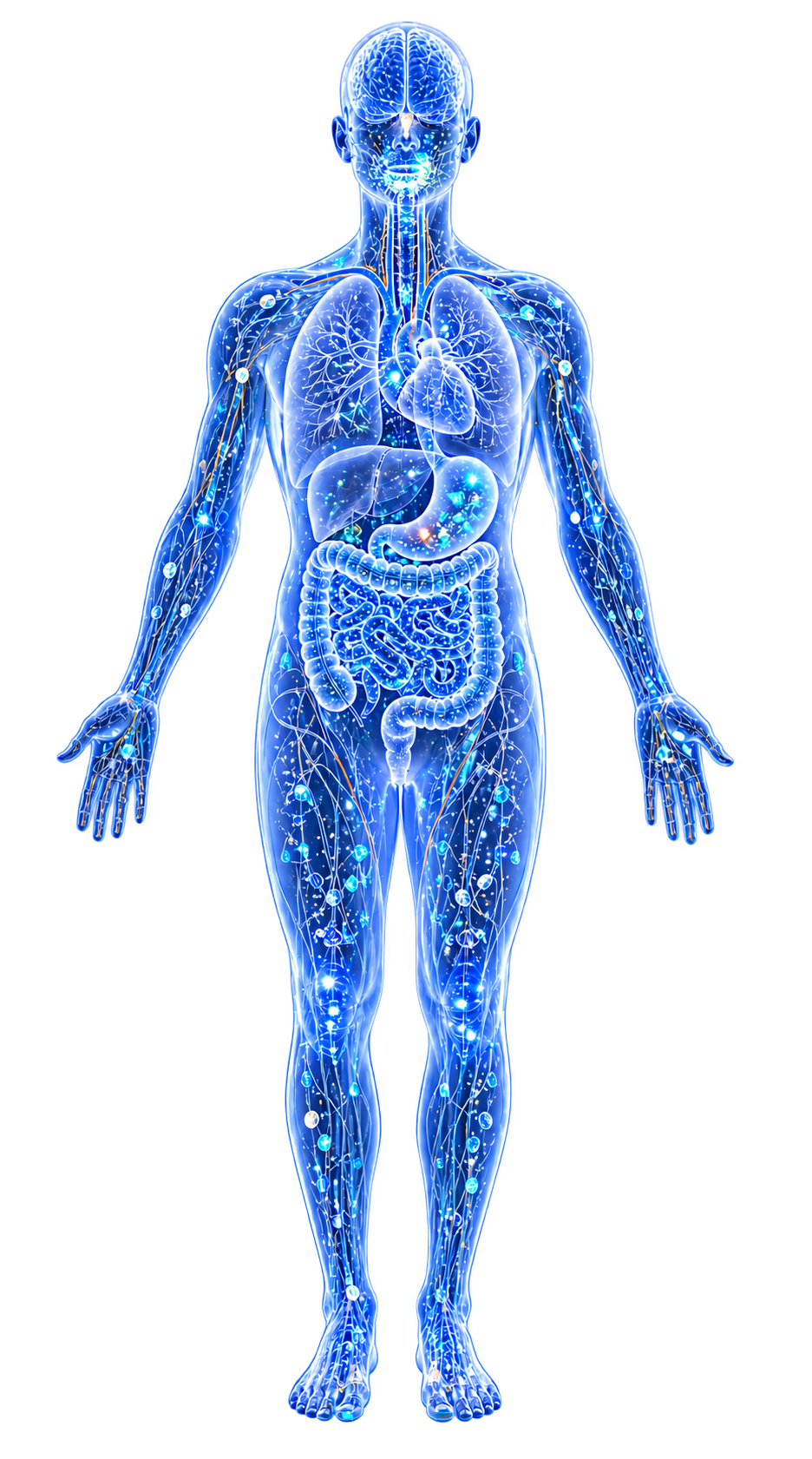
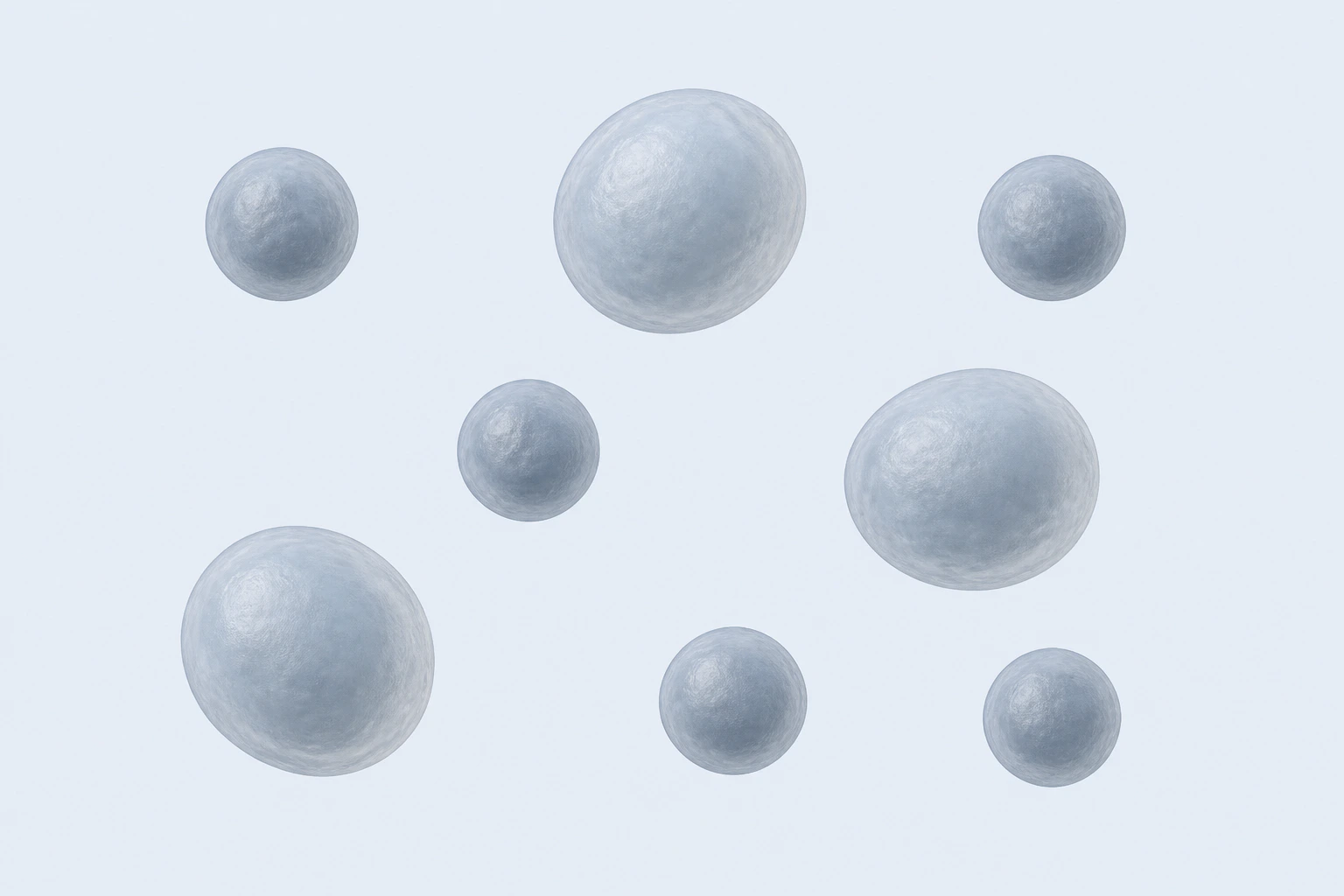
Representative Chlamydia trachomatis body-form size classes, shown as eight isolated bodies. The species is not visually diagnostic from this reconstruction, which has no metrological scale and is not a micrograph or lifecycle diagram.
Scientific media record1 verified identifier
- Subject
- Chlamydia trachomatistaxon · species
- Identifiers
- NCBITaxon:813
- Review
- Editorial review completeIdentifiers authority-verified · Accessibility validated · · chlamydia-trachomatis|chlamydia-trachomatis-morphology-v1.webp
- Digital source
- Trained-algorithmic mediaCreated with a trained generative algorithm and reviewed by WikiBiome for subject identity, scientific framing, identifiers, provenance, and accessibility.
- Scientific basis
- Chlamydia trachomatis — NCBI TaxonomyChlamydia trachomatis — LPSNChlamydia trachomatis type strain — BacDiveThree-dimensional Chlamydia trachomatis morphologyChlamydia trachomatis cryo-electron tomography
- License
- CC BY-SA 4.0Created
Chlamydia trachomatis is a Gram-negative, obligate intracellular bacterium and the most common bacterial sexually transmitted infection worldwide. Its biphasic developmental cycle—alternating between the infectious elementary body (EB) and the replicative reticulate body (RB)—makes it uniquely dependent on host cell resources, particularly iron.
In the WikiBiome framework, C. trachomatis exemplifies how an organism's absolute metal dependency becomes its Achilles' heel, and how the surrounding microbial community (vaginal Lactobacillus species) determines whether that vulnerability is exploited.
Evidence map1 cited passagesInspect provenance +
lactobacillus iners dominance—Permissive. In women with tubal infertility and CT infection, the vaginal microbiota was L. iners-dominated rather than L. crispatus-dominated, with significantly lower Shannon diversity. L. iners produces only L-lactic acid (less potent than D-lactic acid) and generates less H2O2.
Contents
1. Metal Dependencies2. Key Enzymes and Virulence Factors3. Ecological Role—Vaginal Microbiome Context4. Conditions Associated5. Cross-ReferencesMetal Dependencies#
Iron—The Critical Requirement#
C. trachomatis cannot synthesize heme or acquire iron independently. The reticulate body replicating within its intracellular inclusion vacuole depends entirely on host cell iron delivered via transferrin receptor-mediated endocytosis and the labile iron pool. This creates a decisive vulnerability.
IFN-gamma—The host's primary anti-chlamydial defense upregulates ferroportin (iron export) and ferritin (iron sequestration), starving the inclusion vacuole of iron. This is nutritional immunity in its most direct form.
Iron supplementation paradox—Exogenous iron supplementation in iron-deficient women may inadvertently support chlamydial replication by overriding the host's iron-restriction defense.
Persistent state—Under iron deprivation, C. trachomatis enters a non-replicating persistent form (aberrant bodies) that can reactivate when iron becomes available again. This persistence mechanism explains chronic and recurrent infections.
Zinc#
Zinc-finger motifs in chlamydial type III secretion system effectors are essential for host cell manipulation. Zinc-dependent effectors modulate host signaling to maintain the inclusion vacuole and prevent lysosomal fusion.
Key Enzymes and Virulence Factors#
Type III secretion system (T3SS)—Injects effector proteins into the host cell to maintain the inclusion vacuole, prevent apoptosis, and redirect nutrient trafficking.
Zinc-finger effectors—Multiple zinc-containing proteins that manipulate host signaling.
Tryptophan synthase—Genital serovars (D-K) encode a functional tryptophan synthase that can use indole (provided by certain vaginal bacteria) as a substrate, partially rescuing IFN-gamma-induced tryptophan starvation.
Ecological Role—Vaginal Microbiome Context#
The vaginal microbiome determines C. trachomatis susceptibility and disease outcomes. Lactobacillus crispatus dominance—Protective. L. crispatus produces high levels of D-lactic acid and hydrogen peroxide, maintaining low vaginal pH and directly inhibiting C. trachomatis EB infectivity. Women with L. crispatus-dominant communities have lower CT acquisition and clearance rates.
Lactobacillus iners dominance—Permissive. In women with tubal infertility and CT infection, the vaginal microbiota was L. iners-dominated rather than L. crispatus-dominated, with significantly lower Shannon diversity.[1]Chen 2021 — Alterations of vaginal microbiota in women with infertility and Chlamydia trachomatis infectionChen H, Wang L, Zhao L et al. · 2021Open reference 1 ↓ L. iners produces only L-lactic acid (less potent than D-lactic acid) and generates less H2O2.
BV-associated Dysbiosis—Prevotella, Gardnerella, and Atopobium dominance provides indole (rescuing CT tryptophan starvation) and reduces lactic acid defense.
Conditions Associated#
| Condition | Mechanism |
|---|---|
| Female Infertility (tubal factor) | Ascending infection → salpingitis → tubal scarring and occlusion |
| Pelvic inflammatory disease | Endometrial and tubal Metal-Driven Inflammation |
| Ectopic pregnancy | Tubal damage from prior CT infection |
| Trachoma | Ocular serovars (A-C) cause conjunctival scarring → blindness |
| Reactive arthritis | Post-infectious autoimmune joint inflammation |
Cross-References#
- Iron—absolute requirement for CT developmental cycle; nutritional immunity target
- Lactobacillus iners—permissive vaginal community member
- Female Infertility—tubal factor infertility from ascending CT infection
- Tryptophan Metabolism—IFN-gamma induces IDO-mediated tryptophan starvation as anti-CT defense
- Nutritional Immunity (Metal Sequestration)—host iron restriction as primary anti-chlamydial mechanism
References 6
Numbered by first appearance in the article, then reconciled with its declared source list.
- 1
Chen H, Wang L, Zhao L et al. (2021). Chen 2021 — Alterations of vaginal microbiota in women with infertility and Chlamydia trachomatis infection. Frontiers in Cellular and Infection Microbiology.
- 2
Qian Yang, Yaping Wang, Xinyi Wei et al. (2020). Yang 2020 — Vaginal Microbiome Alterations in HPV16 Infection by Shotgun Metagenomics. Frontiers in Cellular and Infection Microbiology.
- 3
Vittorio Magri, Matteo Boltri, Tommaso Cai et al. (2018). Magri 2018 — Multidisciplinary Approach to Prostatitis. Archivio Italiano di Urologia e Andrologia.
- 4
Hongyu Jin, Zhaoyuan Niu, Xinyue Zhao (2025). Jin 2025 — Dietary Fiber Intake and Pelvic Inflammatory Disease (NHANES 2015–2018). BMC Women's Health.
- 5
Ciro Gargiulo Isacco, Raffaele Del Prete, Pietro Distratis et al. (2024). May the SSRIs play a role in the onset of peri- and post-menopausal cervical cancer?. Discover Applied Sciences.
- 6
Sipos A, Ujlaki G, Miko E et al. (2021). The role of the microbiome in ovarian cancer: mechanistic insights into oncobiosis and to bacterial metabolite signaling. Molecular Medicine.
Article network
Mentioned here 9
Pages linking here 5
Connect the evidence
Publicly readable discussion by ORCID-authenticated researchers. Questions, interpretation, methods, corrections, and new evidence stay attached to this record.
No discussion yet. Start with a precise question or a source-backed observation.
Published page changes
This record shows only material changes published on this page, including changes to its content, evidence, conclusions, or author context. Internal processes and discussion activity are excluded. Pending, declined, and withdrawn proposals remain private.
- published revision
Added references: yang-2020-vaginal-microbiome-hpv16-shotgun-metagenomics; magri-2018-multidisciplinary-prostatitis; jin-2025-dietary-fiber-pelvic-inflammatory-disease-nhanes; gargiulo-isacco-2024-ssris-cervical-cancer-microbiome;…
Added references: yang-2020-vaginal-microbiome-hpv16-shotgun-metagenomics; magri-2018-multidisciplinary-prostatitis; jin-2025-dietary-fiber-pelvic-inflammatory-disease-nhanes; gargiulo-isacco-2024-ssris-cervical-cancer-microbiome; sipos-2021-microbiome-ovarian-cancer-oncobiosis-review. · WikiBiome Deploy Bot · +17 −14
Inspect exact Git diff ↗ - published revision
Created “Chlamydia trachomatis”: Chlamydia trachomatis is a Gram-negative, obligate intracellular bacterium and the most common bacterial sexually transmitted infection worldwide. Its biphasic developmental cycle — alternating…
Created “Chlamydia trachomatis”: Chlamydia trachomatis is a Gram-negative, obligate intracellular bacterium and the most common bacterial sexually transmitted infection worldwide. Its biphasic developmental cycle — alternating… Published sections: Overview; Iron — The Critical Requirement; Zinc; Key Enzymes and Virulence Factors; Ecological Role — Vaginal Microbiome Context; Conditions Associated; Cross-References. · WikiBiome Deploy Bot · +95 −0
Inspect exact Git diff ↗