
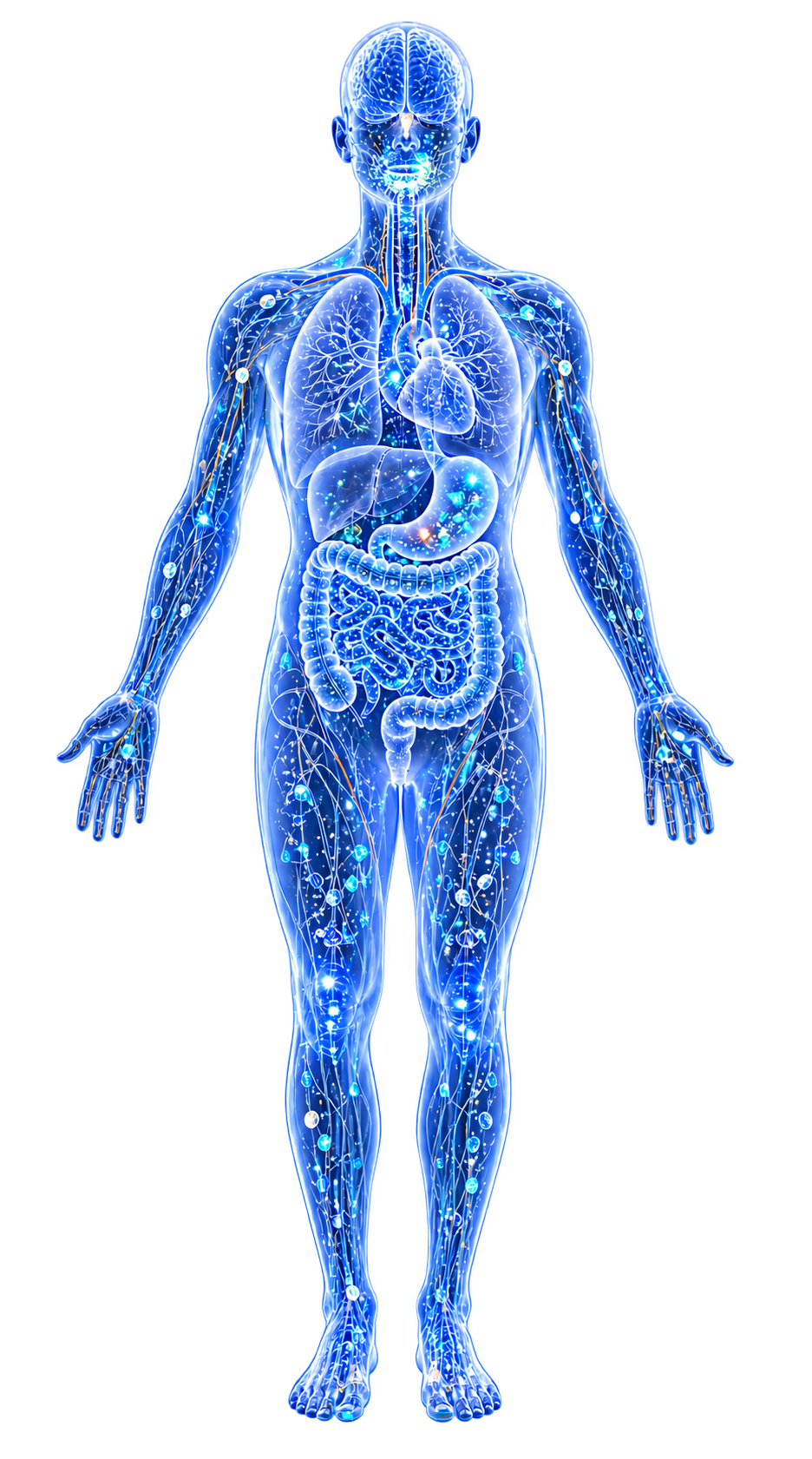
Polyunsaturated fatty acids (PUFAs) are fatty acids with multiple double bonds, divided into omega-3 (EPA, DHA, ALA) and omega-6 (arachidonic acid, linoleic acid) families. The omega-6:omega-3 ratio determines inflammatory tone—Western diets (~15:1) favor pro-inflammatory Arachidonic Acid metabolism, while ratios closer to 2:1 favor anti-inflammatory and pro-resolving mediator production.
Evidence map4 cited passagesInspect provenance +
T1D: Omega-3 PUFAs ameliorate autoimmunity.
MS: Dietary PUFAs influence neuroinflammation.
Hashimoto's: PUFA intake affects thyroid autoimmunity risk.
ED: Altered fatty acid profiles in diabetic ED.
Microbiome Interface#
PUFAs modulate Gut Microbiome composition: omega-3 supplementation increases Lactobacillus and Bifidobacterium; omega-6 excess favors Enterobacteriaceae. Gut bacteria metabolize PUFAs, producing conjugated linoleic acid (CLA) and other bioactive lipid derivatives. PUFA membrane composition affects epithelial barrier integrity and susceptibility to Lipid Peroxidation.
Disease Relevance#
T1D: Omega-3 PUFAs ameliorate autoimmunity.[1]Bi 2017 — Omega-3 Polyunsaturated Fatty Acids Ameliorate Type 1 Diabetes and AutoimmunityXinyun Bi, Fanghong Li, Shanshan Liu et al. · 2017Open reference 1 ↓ MS: Dietary PUFAs influence neuroinflammation.[2]The Role of Diet in Multiple Sclerosis: Mechanistic Connections and Current EvidenceKatz Sand I · 2018Open reference 2 ↓ Hashimoto's: PUFA intake affects thyroid autoimmunity risk.[3]Role of Food and Nutrition in Pathogenesis and Prevention of Hashimoto's ThyroiditisPuszkarz I, Guty E, Stefaniak I et al. · 2018Open reference 3 ↓
ED: Altered fatty acid profiles in diabetic ED.[4]Ben Khedher 2017 — Disturbed Fatty Acids Metabolism in Diabetic Erectile DysfunctionMohamed Raâfet Ben Khedher, Houda Bouhajja, Samia Haj Ahmed et al. · 2017Open reference 4 ↓
Cross-References#
- Omega-3 Fatty Acids (EPA/DHA)—intervention page (EPA/DHA)
- Arachidonic Acid—primary omega-6 PUFA
- Lipid Metabolism—broader lipid context
- Lipid Peroxidation—PUFAs as oxidation targets
- Metal-Driven Inflammation—omega-6/omega-3 ratio determines inflammatory tone
References 5
Numbered by first appearance in the article, then reconciled with its declared source list.
- 1
Xinyun Bi, Fanghong Li, Shanshan Liu et al. (2017). Bi 2017 — Omega-3 Polyunsaturated Fatty Acids Ameliorate Type 1 Diabetes and Autoimmunity. Journal of Clinical Investigation.
- 2
Katz Sand I (2018). The Role of Diet in Multiple Sclerosis: Mechanistic Connections and Current Evidence. Current Nutrition Reports.
- 3
Puszkarz I, Guty E, Stefaniak I et al. (2018). Role of Food and Nutrition in Pathogenesis and Prevention of Hashimoto's Thyroiditis. Journal of Education, Health and Sport.
- 4
Mohamed Raâfet Ben Khedher, Houda Bouhajja, Samia Haj Ahmed et al. (2017). Ben Khedher 2017 — Disturbed Fatty Acids Metabolism in Diabetic Erectile Dysfunction. Lipids in Health and Disease.
- 5
Yin G, Chen F, Chen G et al. (2022). Alterations of bacteriome, mycobiome and metabolome characteristics in PCOS patients with normal/overweight individuals. Journal of Ovarian Research.
Article network
Connect the evidence
Publicly readable discussion by ORCID-authenticated researchers. Questions, interpretation, methods, corrections, and new evidence stay attached to this record.
No discussion yet. Start with a precise question or a source-backed observation.
Activity and accepted changes
Accepted researcher context, editorial status, public discussion, and upstream Git revisions are shown together. Pending, declined, and withdrawn proposals remain private.
- published revision
Backfill gut microbiome concept links
Karen Pendergrass · +1 −1
Inspect exact Git diff ↗ - published revision
massive wiki expansion: 149 stubs fixed, 100+ new pages, Rule 15 scan, keystone papers
WikiBiome Deploy Bot · +45 −0
Inspect exact Git diff ↗