
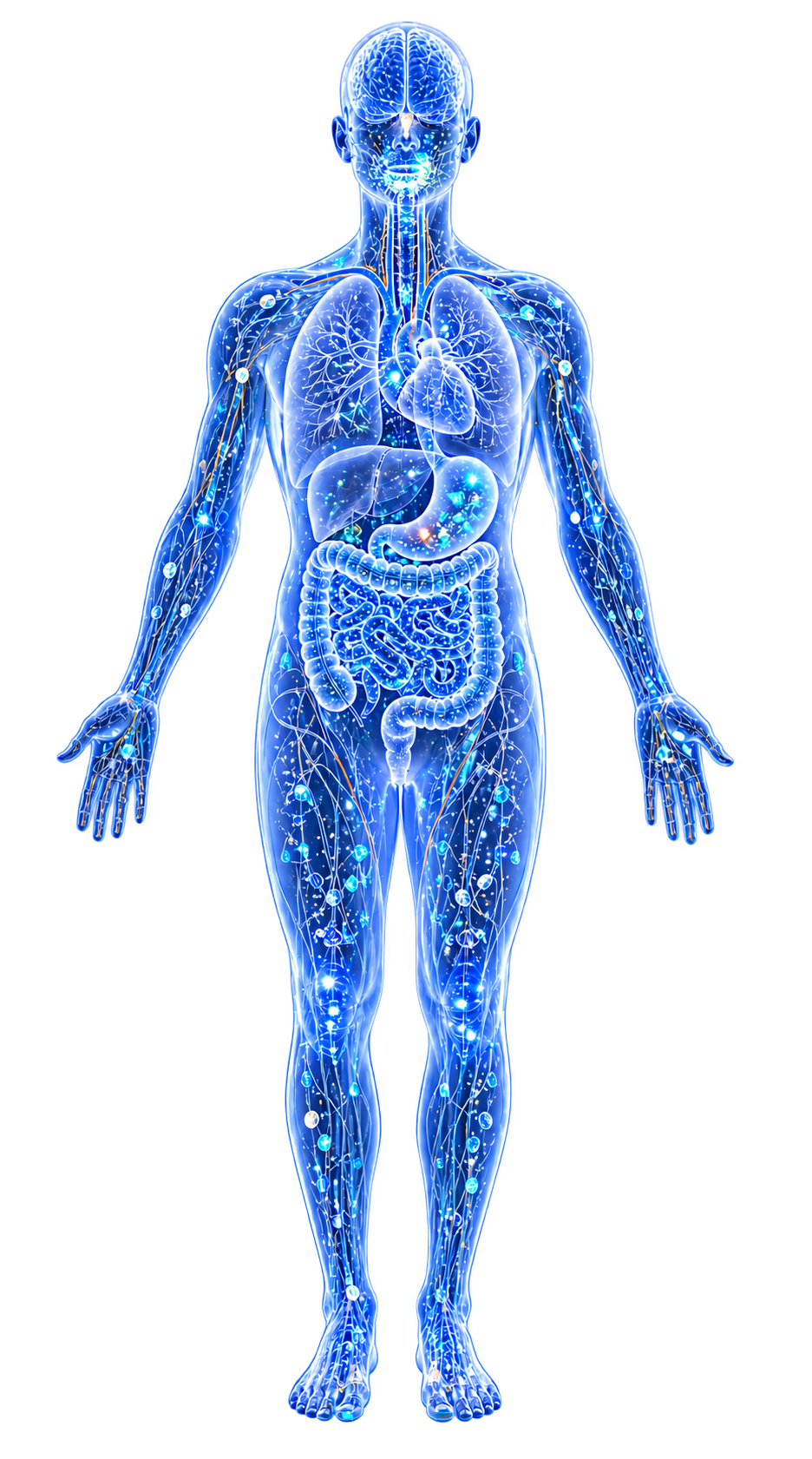
Lipid peroxidation is the oxidative degradation of polyunsaturated fatty acids (PUFAs) in cell membranes by reactive oxygen species (ROS). The process generates toxic aldehydes—malondialdehyde (MDA) and 4-hydroxynonenal (4-HNE)—that damage proteins, DNA, and mitochondria.
When iron-dependent and self-propagating, lipid peroxidation drives Ferroptosis—the regulated cell death pathway central to neurodegeneration, CKD, and cancer.
Evidence map3 cited passagesInspect provenance +
Iron: Fe2+ catalyzes Fenton chemistry (Fe2+ + H2O2 → Fe3+ + OH• + OH−), generating hydroxyl radicals that attack membrane PUFAs. This is the basis of ferroptosis.
Nickel: Induces lipid peroxidation in brain tissue, correlating with neurobehavioral deficits.
Cadmium, lead, mercury: All generate ROS and deplete glutathione (the primary endogenous lipid peroxidation defense), amplifying oxidative membrane damage.
Metal Drivers#
Heavy Metals are potent initiators of lipid peroxidation. Iron: iron(II) (Fe2+) catalyzes Fenton chemistry (iron(II) + H2O2 → iron(III) + OH• + OH−), generating hydroxyl radicals that attack membrane PUFAs. This is the basis of Ferroptosis.[1]Microbial Metallomics and Parkinson's Disease: A Unified Metal-Driven Framework Linking Ferroptosis, Dysbiosis, and alpha-Synuclein PathologyKaren Pendergrass · 2025Open reference 1 ↓[2]Riederer 2021 — Iron as Concert Master in Parkinson's DiseaseRiederer P, Monoranu C, Strobel S et al. · 2021Open reference 2 ↓
Nickel: Induces lipid peroxidation in brain tissue, correlating with neurobehavioral deficits.[3]Effect of Chronic Administration of Nickel on Affective and Cognitive Behavior in Male and Female RatsLamtai M, Azirar S, Zghari O et al. · 2018Open reference 3 ↓
Cadmium, lead, mercury: All generate ROS and deplete Glutathione (GSH) (the primary endogenous lipid peroxidation defense), amplifying oxidative membrane damage.[4]Molecular Mechanisms of Cellular Injury and Role of Toxic Heavy Metals in Chronic Kidney DiseaseManish Mishra, Larry Nichols, Aditi A. Dave et al. · 2022Open reference 4 ↓[5]Heavy Metal Pollution in the Environment and Their Toxicological Effects on HumansBriffa J, Sinagra E, Blundell R · 2020Open reference 5 ↓
Microbiome Connection#
The Gut Microbiome modulates lipid peroxidation through. Glutathione production: Certain commensals contribute to glutathione synthesis; Dysbiosis reduces the antioxidant pool. SCFA-mediated protection: Butyrate enhances mitochondrial function and reduces ROS generation.
Iron ecology: Microbial iron acquisition (Siderophores) alters the labile iron pool available for Fenton chemistry.
Cross-References#
- Ferroptosis—iron-dependent lipid peroxidation-driven cell death
- Reactive Oxygen Species (ROS)—ROS initiate the peroxidation chain
- Glutathione (GSH)—primary defense against lipid peroxidation
- Iron—Fenton chemistry catalyst
- Oxidative Stress—broader context
References 6
Numbered by first appearance in the article, then reconciled with its declared source list.
- 1
★Karen Pendergrass (2025). Microbial Metallomics and Parkinson's Disease: A Unified Metal-Driven Framework Linking Ferroptosis, Dysbiosis, and alpha-Synuclein Pathology. Conference Presentation.
- 2
Riederer P, Monoranu C, Strobel S et al. (2021). Riederer 2021 — Iron as Concert Master in Parkinson's Disease. Journal of Neural Transmission.
- 3
Lamtai M, Azirar S, Zghari O et al. (2018). Effect of Chronic Administration of Nickel on Affective and Cognitive Behavior in Male and Female Rats. Brain Sciences.
- 4
★Manish Mishra, Larry Nichols, Aditi A. Dave et al. (2022). Molecular Mechanisms of Cellular Injury and Role of Toxic Heavy Metals in Chronic Kidney Disease. International Journal of Molecular Sciences.
- 5
Briffa J, Sinagra E, Blundell R (2020). Heavy Metal Pollution in the Environment and Their Toxicological Effects on Humans. Heliyon.
- 6
Islam F, Shohag S, Akhter S et al. (2022). Exposure of metal toxicity in Alzheimer's disease: An extensive review. Frontiers in Pharmacology.
Article network
Mentioned here 10
Pages linking here 6
Connect the evidence
Publicly readable discussion by ORCID-authenticated researchers. Questions, interpretation, methods, corrections, and new evidence stay attached to this record.
No discussion yet. Start with a precise question or a source-backed observation.
Activity and accepted changes
Accepted researcher context, editorial status, public discussion, and upstream Git revisions are shown together. Pending, declined, and withdrawn proposals remain private.
- published revision
Backfill heavy metals concept links
Karen Pendergrass · +1 −1
Inspect exact Git diff ↗ - published revision
Backfill gut microbiome concept links
Karen Pendergrass · +1 −1
Inspect exact Git diff ↗ - published revision
Complete corpus-wide Dysbiosis linking
Karen Pendergrass · +1 −1
Inspect exact Git diff ↗ - published revision
massive wiki expansion: 149 stubs fixed, 100+ new pages, Rule 15 scan, keystone papers
WikiBiome Deploy Bot · +48 −0
Inspect exact Git diff ↗