
 metals · microbes · host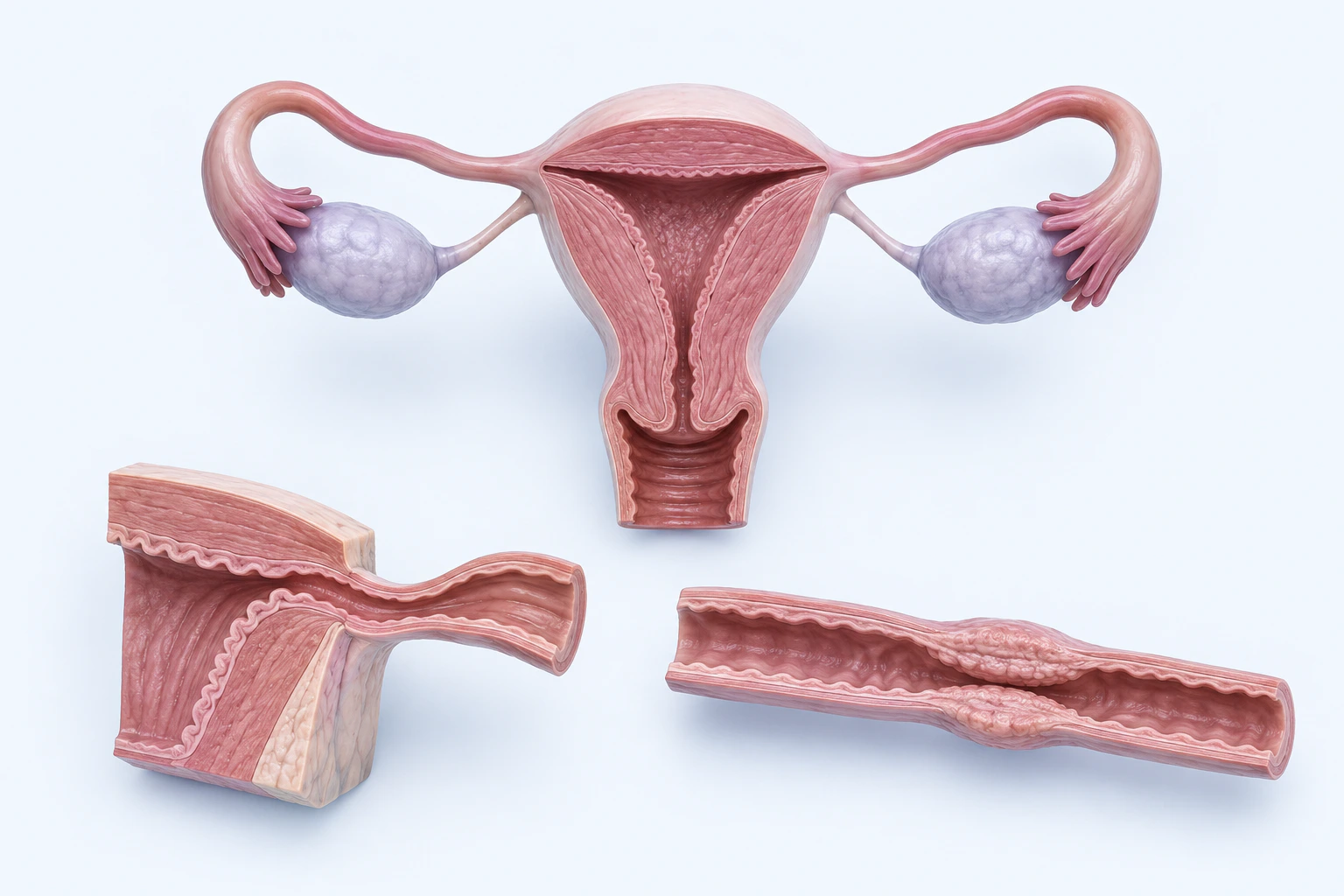
Representative pelvic inflammatory disease orientation without a named pathogen, abscess, fertility claim, complication, severity, prognosis, or diagnosis.
Scientific media record1 verified identifier
- Subject
- Pelvic Inflammatory Diseasecondition
- Identifiers
- MeSH:D000292
- Review
- Editorial review completeIdentifiers authority-verified · Accessibility validated · · pelvic-inflammatory-disease|pelvic-inflammatory-disease-pathology-v1.webp
- Digital source
- Trained-algorithmic mediaCreated with a trained generative algorithm and reviewed by WikiBiome for subject identity, scientific framing, identifiers, provenance, and accessibility.
- Scientific basis
- Pelvic Inflammatory Disease — MeSHPelvic Inflammatory Disease
- License
- CC BY-SA 4.0Created
Pelvic inflammatory disease (PID) is an ascending infection of the female upper reproductive tract—uterus, fallopian tubes, and ovaries. Traditionally attributed to Neisseria gonorrhoeae and Chlamydia trachomatis, PID is now recognized as predominantly polymicrobial, with bacterial vaginosis-associated organisms playing a central role in many cases.
Evidence map1 cited passagesInspect provenance +
A cross-sectional analysis of NHANES 2015–2018 data (n=2,345 women) found that higher dietary fiber intake was inversely associated with PID prevalence, with an L-shaped dose-response and an inflection point at 19.45 g/day (, cross-sectional, n=2,345). Women in the highest fiber quartile had 69% lower PID prevalence compared to the lowest quartile (OR = 0.31
One disease. Five evidence layers.
A generated systems view of the metals, organisms, host sequestration signals, ecological conditions, and microbial functions indexed for Pelvic Inflammatory Disease.
Evidence layer
Taxonomic signature
Organisms reported as enriched or depleted, with their indexed functional context kept beside the name.No structured taxa indexed yet.
No structured taxa indexed yet.
Evidence layer
Nutritional immunity
Host metal-withholding, inflammatory, antioxidant, and microbial-metabolite signals indexed in the signature.Elevated host signals
0No structured signals indexed yet.
Depleted protective signals
0No structured signals indexed yet.
Evidence layer
Ecological state
The environmental conditions that connect the organism-level observations into a system.No structured ecological features indexed yet.
Evidence layer
Virulence functions
Microbial structures, enzymes, and acquisition systems implicated by the linked evidence.No structured virulence functions indexed yet.
The disease record, in full.
The original WikiBiome disease narrative remains intact beneath the generated signature atlas.
Microbiome Associations#
Culture-independent studies have revealed that PID-associated microbiomes are enriched in BV-associated organisms including gardnerella-vaginalis, Fannyhessea vaginae (reported in older literature as Atopobium vaginae), Prevotella bivia, and Sneathia species. These organisms ascend from the vaginal tract when the protective Lactobacillus-dominant community is disrupted.
The Gut-Vagina Axis may contribute to vaginal Dysbiosis that precedes PID.
Metal Associations#
Iron availability in the upper reproductive tract increases during menstruation and Metal-Driven Inflammation, potentially facilitating pathogen expansion. Organisms implicated in PID—particularly Prevotella and Gardnerella—possess iron acquisition systems that exploit this iron-rich environment. Zinc deficiency has been associated with increased PID susceptibility through impaired local immune function.
Associated Conditions#
PID shares microbial overlap with Bacterial Vaginosis (which often precedes it), Endometriosis (shared inflammatory and microbial patterns in the peritoneal cavity), and tubal factor infertility (scarring sequela). Recurrent PID episodes progressively increase infertility risk, highlighting the importance of addressing the underlying microbial ecology rather than relying solely on antibiotic courses.
Environmental and Dietary Factors#
A cross-sectional analysis of NHANES 2015–2018 data (n=2,345 women) found that higher dietary fiber intake was inversely associated with PID prevalence, with an L-shaped dose-response and an inflection point at 19.45 g/day (,[1]Jin 2025 — Dietary Fiber Intake and Pelvic Inflammatory Disease (NHANES 2015–2018)Hongyu Jin, Zhaoyuan Niu, Xinyue Zhao · 2025Open reference 1 ↓ cross-sectional, n=2,345).
Women in the highest fiber quartile had 69% lower PID prevalence compared to the lowest quartile (OR = 0.31, 95% CI: 0.15–0.62). The proposed mechanism involves fiber-driven SCFA production by Lachnospiraceae (Family), Akkermansia muciniphila, and Lactobacillus, which suppresses systemic inflammation and may modulate vaginal microbiota via the Gut-Vagina Axis.
Magnesium co-intake from fiber-rich foods may also contribute.
Open Questions#
Unresolved questions identified by the current evidence record.
01Whether Gut Microbiome restoration could reduce PID recurrence—by improving vaginal Lactobacillus colonization through the gut-vagina axis—remains untested in clinical trials.+
The current WikiBiome record identifies this as an unresolved evidence gap.
02Whether the fiber-PID association is causal or reflects confounding by overall health behaviors requires prospective cohort and interventional confirmation.+
The current WikiBiome record identifies this as an unresolved evidence gap.
Cross-References#
- Fannyhessea vaginae—BV-associated species reported historically as Atopobium vaginae
- Bacterial Vaginosis—predisposing condition
- Gut-Vagina Axis—cross-compartment microbial source
- Endometriosis—shared pelvic inflammatory ecology
References 5
Numbered by first appearance in the article, then reconciled with its declared source list.
- 1
Hongyu Jin, Zhaoyuan Niu, Xinyue Zhao (2025). Jin 2025 — Dietary Fiber Intake and Pelvic Inflammatory Disease (NHANES 2015–2018). BMC Women's Health.
- 2
Tatarchuk TF, Kosei NV, Vetokh HV et al. (2016). Serum Micro- and Macroelements Levels in Women with Polycystic Ovary Syndrome Associated with Pelvic Inflammatory Disease. Reproductive Endocrinology.
- 3
Miao R, Badger TC, Groesch K et al. (2020). Assessment of peritoneal microbial features and tumor marker levels as potential diagnostic tools for ovarian cancer. PLoS ONE.
- 4
Prachi A. Ughade, Deepti Shrivastava, Kamlesh Chaudhari (2024). Ughade 2024 — Navigating the Microbial Landscape: Understanding Dysbiosis in Human Genital Tracts and Its Impact on Fertility. Cureus.
- 5
Montoya VK (2013). Metagenomic Analyses of Two Female Genital Tract Diseases: Bacterial Vaginosis and Ovarian Cancer. University of British Columbia MSc Thesis.
Article network
Connect the evidence
Publicly readable discussion by ORCID-authenticated researchers. Questions, interpretation, methods, corrections, and new evidence stay attached to this record.
No discussion yet. Start with a precise question or a source-backed observation.
Published page changes
This record shows only material changes published on this page, including changes to its content, evidence, conclusions, or author context. Internal processes and discussion activity are excluded. Pending, declined, and withdrawn proposals remain private.
- published revision
Revised “Microbiome Associations”: now reads “enriched in BV-associated organisms including gardnerella-vaginalis, fannyhessea vaginae (reported in older literature as Atopobium vaginae), Prevotella bivia, and Sneathia species. These”.
Revised “Microbiome Associations”: changed “enriched in BV-associated organisms including gardnerella-vaginalis, atopobium vaginae, Prevotella bivia, and Sneathia species. These” to “enriched in BV-associated organisms including gardnerella-vaginalis, fannyhessea vaginae (reported in older literature as Atopobium vaginae), Prevotella bivia, and Sneathia species. These”. Revised “Cross-References”: changed “- atopobium vaginae — BV biomarker ascending in PID - bacterial vaginosis — predisposing condition” to “- fannyhessea vaginae — BV-associated species reported historically as Atopobium vaginae - bacterial vaginosis — predisposing condition”. · Karen Pendergrass · +3 −3
Inspect exact Git diff ↗ - published revision
Added references: tatarchuk-2016-micro-macroelements-pcos; miao-2020-peritoneal-microbial-features-ovarian-cancer-diagnostics; ughade-2024-genital-dysbiosis-fertility-review; montoya-2013-metagenomic-analyses-bv-ovarian-cancer-thesis.
WikiBiome Deploy Bot · +9 −7
Inspect exact Git diff ↗ - published revision
Created “Pelvic Inflammatory Disease”: Pelvic inflammatory disease (PID) is an ascending infection of the female upper reproductive tract — uterus, fallopian tubes, and ovaries. Traditionally attributed to Neisseria gonorrhoeae and…
Created “Pelvic Inflammatory Disease”: Pelvic inflammatory disease (PID) is an ascending infection of the female upper reproductive tract — uterus, fallopian tubes, and ovaries. Traditionally attributed to Neisseria gonorrhoeae and… Published sections: Overview; Microbiome Associations; Metal Associations; Associated Conditions; Environmental and Dietary Factors; Open Questions; Cross-References. · WikiBiome Deploy Bot · +66 −0
Inspect exact Git diff ↗