
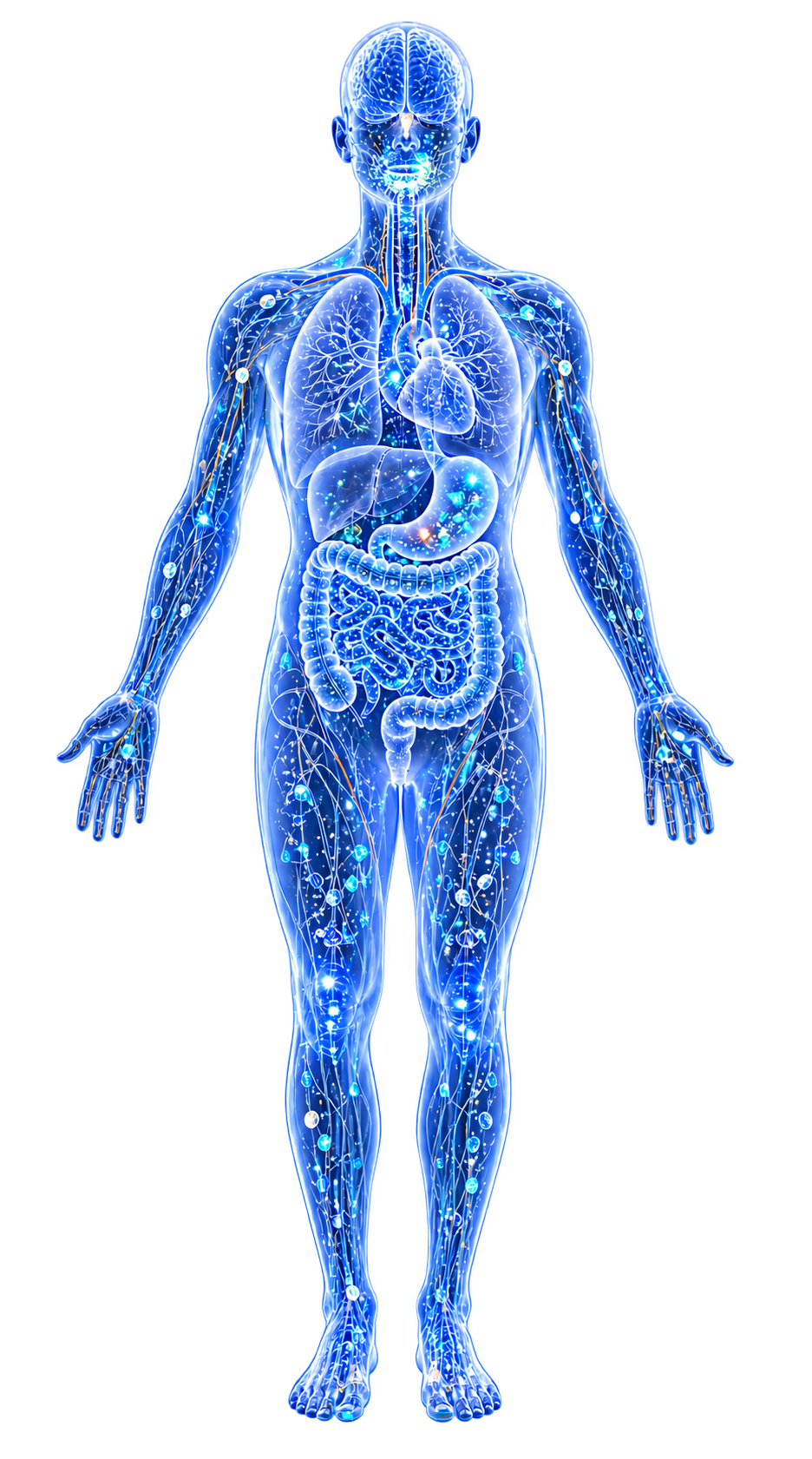
The gut-vagina axis describes the bidirectional relationship between the intestinal and vaginal microbiomes. Emerging evidence shows that gut microbial composition influences vaginal colonization patterns through immune modulation, metabolite exchange, and direct microbial translocation via the perineal route.
Contents
1. Mechanisms of Cross-Compartment Influence2. Metal Connections3. Clinical Significance4. Cross-ReferencesMechanisms of Cross-Compartment Influence#
Three primary pathways connect gut and vaginal microbial ecosystems. First, direct translocation: gut bacteria (particularly Lactobacillus and BV-associated organisms) reach the vaginal tract via the perineal skin bridge. Metagenomic strain-tracking confirms identical strains in both compartments.
Second, immune modulation: gut-derived short-chain fatty acids shape systemic immune tone, influencing vaginal mucosal immunity. Third, the estrobolome pathway: gut bacteria with Beta-Glucuronidase activity deconjugate estrogens, raising circulating estrogen levels that drive vaginal glycogen deposition and thus Lactobacillus dominance.
Metal Connections#
Gut metal ecology indirectly influences vaginal health. Iron-driven expansion of Proteobacteria in the gut can displace Lactobacillus species that would otherwise seed the vaginal niche.
Cadmium and lead exposure has been associated with altered vaginal microbiome composition in epidemiological studies, though the mechanism—direct toxicity versus gut-mediated immune disruption—remains unclear.
Clinical Significance#
Recurrent bacterial vaginosis (BV) may partly originate in gut Dysbiosis. Women with gut microbiomes depleted in Lactobacillus species have higher BV recurrence rates.
This reframes BV treatment beyond vaginal antibiotics toward restoring gut-vaginal ecosystem integrity. Fannyhessea vaginae is a BV-associated vaginal organism, but the cited evidence here does not establish gut-to-vagina translocation for that species.
Cross-References#
- Fannyhessea vaginae—BV-associated species historically reported as Atopobium vaginae
- Beta-Glucuronidase—estrobolome pathway
- Lactobacillus—shared gut-vaginal protective role
- Estrobolome—hormone-microbiome connection
References 5
Numbered by first appearance in the article, then reconciled with its declared source list.
- 1
Georgina Quaranta, Mauro Pittiruti, Brunella Posteraro et al. (2019). Quaranta 2019 — FMT as a Potential Tool for Female Reproductive Tract Diseases (Review). Frontiers in Immunology.
- 2
Md Fakruddin, Moftiful Islam, Mahi Rubayia Islam et al. (2025). Fakruddin 2025 — Probiotics as a Therapeutic Modulator of Menstrual Health (Systematic Review). Microbial Bioactives.
- 3
Hongyu Jin, Zhaoyuan Niu, Xinyue Zhao (2025). Jin 2025 — Dietary Fiber Intake and Pelvic Inflammatory Disease (NHANES 2015–2018). BMC Women's Health.
- 4
Zheng S, Chen H, Yang H et al. (2024). Zheng 2024 — Differential enrichment of bacteria and phages in vaginal microbiomes in PCOS and obesity: shotgun sequencing analysis. Frontiers in Microbiomes.
- 5
Ponomaryova IG, Lisyana TO, Trokhimovych OV et al. (2022). Ponomaryova 2022 — Changes in microbiota of genital tract and intestines in patients with adenomyosis and infertility. Medical Research Journal.
Article network
Mentioned here 5
Pages linking here 1
Connect the evidence
Publicly readable discussion by ORCID-authenticated researchers. Questions, interpretation, methods, corrections, and new evidence stay attached to this record.
No discussion yet. Start with a precise question or a source-backed observation.
Published page changes
This record shows only material changes published on this page, including changes to its content, evidence, conclusions, or author context. Internal processes and discussion activity are excluded. Pending, declined, and withdrawn proposals remain private.
- published revision
Revised “Clinical Significance”: now reads “vaginal antibiotics toward restoring gut-vaginal ecosystem integrity. fannyhessea vaginae is a BV-associated vaginal organism, but the cited evidence here does not establish gut-to-vagina…”.
Revised “Clinical Significance”: changed “vaginal antibiotics toward restoring gut-vaginal ecosystem integrity, an insight that connects to atopobium vaginae persistence patterns.” to “vaginal antibiotics toward restoring gut-vaginal ecosystem integrity. fannyhessea vaginae is a BV-associated vaginal organism, but the cited evidence here does not establish gut-to-vagina…”. Revised “Cross-References”: changed “- atopobium vaginae — BV biomarker with gut-vaginal translocation - beta glucuronidase — estrobolome pathway” to “- fannyhessea vaginae — BV-associated species historically reported as Atopobium vaginae - beta glucuronidase — estrobolome pathway”. · Karen Pendergrass · +2 −2
Inspect exact Git diff ↗ - published revision
Added references: quaranta-2019-fmt-female-reproductive-tract-diseases; fakruddin-2025-probiotics-menstrual-health-systematic-review; jin-2025-dietary-fiber-pelvic-inflammatory-disease-nhanes; zheng-2024-pcos-obesity-vaginal-microbiome-phages;…
Added references: quaranta-2019-fmt-female-reproductive-tract-diseases; fakruddin-2025-probiotics-menstrual-health-systematic-review; jin-2025-dietary-fiber-pelvic-inflammatory-disease-nhanes; zheng-2024-pcos-obesity-vaginal-microbiome-phages; ponomaryova-2022-adenomyosis-infertility-genital-intestinal-microbiota. · WikiBiome Deploy Bot · +10 −7
Inspect exact Git diff ↗ - published revision
Created “Gut-Vagina Axis”: The gut-vagina axis describes the bidirectional relationship between the intestinal and vaginal microbiomes. Emerging evidence shows that gut microbial composition influences vaginal colonization…
Created “Gut-Vagina Axis”: The gut-vagina axis describes the bidirectional relationship between the intestinal and vaginal microbiomes. Emerging evidence shows that gut microbial composition influences vaginal colonization… Published sections: Overview; Mechanisms of Cross-Compartment Influence; Metal Connections; Clinical Significance; Cross-References. · WikiBiome Deploy Bot · +43 −0
Inspect exact Git diff ↗