
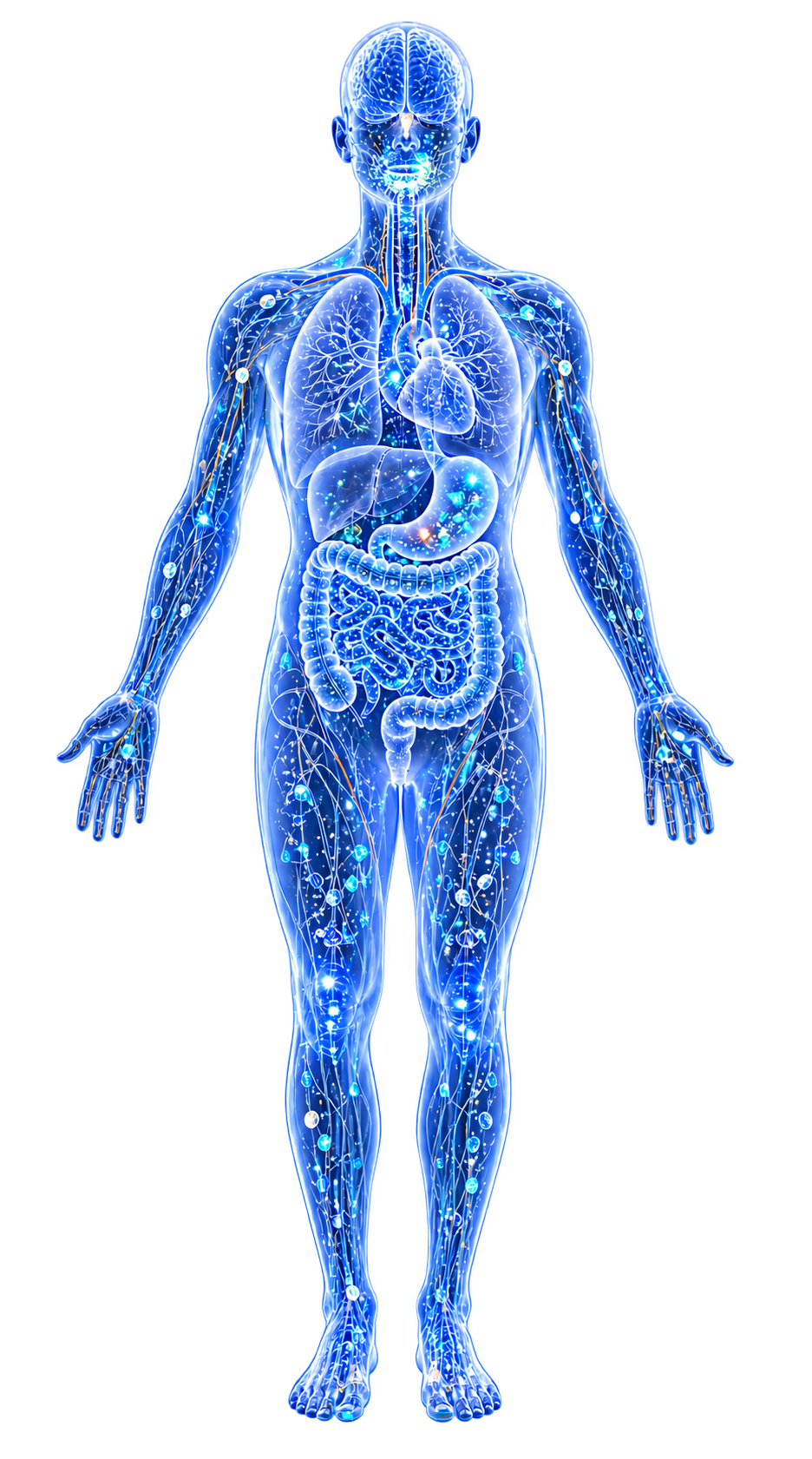
Essential oils are volatile aromatic compounds extracted from plants, composed primarily of terpenes, phenylpropanoids, and their oxygenated derivatives. In the WikiBiome context, essential oils are relevant not as aromatherapy but as sources of bioactive molecules with documented antimicrobial, antibiofilm, and metal-chelating properties.
Several essential oil components—particularly carvacrol, thymol, cinnamaldehyde, and thymoquinone—have been studied at the molecular level for their interactions with metal-dependent virulence systems and microbial biofilms.
Evidence map5 cited passagesInspect provenance +
Carvacrol (2-methyl-5-(1-methylethyl)phenol) is the primary phenolic monoterpene in oregano and thyme oils:
Codrug strategy: Carvacrol-antibiotic conjugates (codrugs) show synergistic activity, with the carvacrol moiety disrupting the membrane barrier that normally excludes antibiotics
Synergistic with thymoquinone against drug-resistant organisms
Thymoquinone is the primary bioactive compound in Nigella sativa (black seed) oil:
Essential oil components do not sterilize the gut—they exert selective pressure on microbial communities:
Contents
1. Key Bioactive Components2. Microbiome Modulation3. Metal-Chelating Properties4. Limitations and Cautions5. Open Questions6. Cross-ReferencesKey Bioactive Components#
Carvacrol#
Carvacrol (2-methyl-5-(1-methylethyl)phenol) is the primary phenolic monoterpene in oregano and thyme oils.[1]Cacciatore 2015 — Carvacrol codrugs: a new approach in the antimicrobial planIvana Cacciatore, Mara Di Giulio, Erika Fornasari et al. · 2015Open reference 1 ↓ Mechanism: Disrupts bacterial cell membrane integrity by inserting into the lipid bilayer, increasing permeability to ions (H+, K+), and collapsing the proton motive force.
Antibiofilm activity: Inhibits biofilm formation by Staphylococcus aureus, Escherichia coli, Pseudomonas aeruginosa, and Candida albicans at sub-MIC concentrations. Metal chelation: Carvacrol's phenolic hydroxyl group chelates iron(II) (Fe2+) and iron(III), creating a dual mechanism—membrane disruption plus iron deprivation.
Codrug strategy: Carvacrol-antibiotic conjugates (codrugs) show synergistic activity, with the carvacrol moiety disrupting the membrane barrier that normally excludes antibiotics.[1]Cacciatore 2015 — Carvacrol codrugs: a new approach in the antimicrobial planIvana Cacciatore, Mara Di Giulio, Erika Fornasari et al. · 2015Open reference 1 ↓
Thymol#
Thymol (2-isopropyl-5-methylphenol) is the structural isomer of carvacrol, found in thyme and oregano:
- Similar membrane-disrupting mechanism to carvacrol
- Antimicrobial activity against both Gram-positive and Gram-negative bacteria
- Synergistic with thymoquinone against drug-resistant organisms[2]Rahman 2024 — Nigella sativa extract: phytochemical analysis and antimicrobial/antioxidant activityAnees Ur Rahman, Abdullah Abdullah, Shah Faisal et al. · 2024Open reference 2 ↓
- Inhibits nickel-urease activity in vitro, potentially relevant to Helicobacter pylori management
Thymoquinone#
Thymoquinone is the primary bioactive compound in Nigella sativa (black seed) oil:[2]Rahman 2024 — Nigella sativa extract: phytochemical analysis and antimicrobial/antioxidant activityAnees Ur Rahman, Abdullah Abdullah, Shah Faisal et al. · 2024Open reference 2 ↓
- Antimicrobial: Active against MRSA, VRE, and multi-drug-resistant Gram-negatives
- Anti-inflammatory: Suppresses NF-kB and COX-2
- Metal interaction: Chelates iron and reduces metal-catalyzed Oxidative Stress
- Anticancer: Induces apoptosis in cancer cells; being explored in breast and colorectal cancer
Cinnamaldehyde#
The primary active compound in cinnamon oil:
- Inhibits bacterial quorum sensing, disrupting coordinated virulence factor expression
- Anti-biofilm activity against mixed-species biofilms
- Iron-chelating properties that starve siderophore-dependent pathogens
Microbiome Modulation#
Selective Antimicrobial Effects#
Essential oil components do not sterilize the gut—they exert selective pressure on microbial communities.[3]Bauer 2019 — Oregano powder reduces Streptococcus and increases SCFA concentration in mixed bacterial culture assayBenjamin W. Bauer, Sheeana Gangadoo, Yadav Sharma Bajagai et al. · 2019Open reference 3 ↓
Oregano oil supplementation shifts the Gut Microbiome, increasing Short-Chain Fatty Acids (SCFAs) (Butyrate, propionate) production. Selective activity against pathogenic Streptococcus species while sparing beneficial lactobacilli. Sub-inhibitory concentrations alter gene expression in surviving bacteria, including virulence factor regulation.
Biofilm Disruption#
Essential oil compounds disrupt Biofilm architecture through multiple mechanisms:
- Membrane disruption: Phenolic monoterpenes increase membrane permeability of biofilm-embedded bacteria
- Quorum sensing interference: Cinnamaldehyde and carvacrol block autoinducer signaling
- Metal deprivation: Iron chelation by phenolic hydroxyl groups starves biofilm iron metabolism
- EPS disruption: Some components degrade the extracellular polymeric substances that form the biofilm matrix
This is particularly relevant for conditions where Inter-Kingdom Metal Shielding creates protected niches for pathogens within fungal-bacterial biofilms.
Metal-Chelating Properties#
The phenolic hydroxyl groups common to carvacrol, thymol, and related compounds create natural metal-chelating capacity:
| Compound | Metals Chelated | Significance |
|---|---|---|
| Carvacrol | iron(II) (Fe2+), iron(III) | Starves siderophore-dependent pathogens |
| Thymol | iron(II), iron(III) | Reduces iron-catalyzed ROS generation |
| Thymoquinone | iron(II), copper(II) (Cu2+) | Antioxidant through metal sequestration |
| Eugenol (clove) | iron(III) | Anti-inflammatory through metal-ROS reduction |
This natural chelation is gentler than pharmaceutical Chelation Therapy—it operates at the local (gut lumen) level rather than systemically, reducing the risk of essential metal depletion.
Limitations and Cautions#
Bioavailability: Most essential oil compounds are rapidly absorbed in the upper GI tract and may not reach the colon in active form. Dose-response: Antimicrobial effects require concentrations often higher than achievable through dietary intake alone. Hepatotoxicity: High-dose essential oil supplementation can cause liver injury (especially pennyroyal, wormwood).
Drug interactions: Carvacrol and thymol inhibit CYP enzymes, potentially altering drug metabolism. Quality control: Essential oil composition varies dramatically with plant source, extraction method, and storage. Not a substitute: Essential oils complement but do not replace evidence-based antimicrobial therapy.
Open Questions#
Unresolved questions identified by the current evidence record.
01Can encapsulated essential oil formulations deliver active concentrations to the colon?+
The current WikiBiome record identifies this as an unresolved evidence gap.
02Do essential oil components synergize with Nutritional Immunity (Metal Sequestration) by depleting luminal iron?+
The current WikiBiome record identifies this as an unresolved evidence gap.
03What is the long-term effect of daily essential oil consumption on microbiome composition?+
The current WikiBiome record identifies this as an unresolved evidence gap.
04Can carvacrol-antibiotic codrugs overcome biofilm-mediated resistance in clinical settings?+
The current WikiBiome record identifies this as an unresolved evidence gap.
Cross-References#
- Biofilm—target for essential oil disruption
- Inter-Kingdom Metal Shielding—fungal-bacterial biofilm target
- Siderophores and Metallophores—iron competition
- Pharmacomicrobiomics—drug-microbiome interactions
- oxidative stress—metal-catalyzed ROS target
- Helicobacter pylori—urease inhibition by thymol
References 3
Numbered by first appearance in the article, then reconciled with its declared source list.
- 1
Ivana Cacciatore, Mara Di Giulio, Erika Fornasari et al. (2015). Cacciatore 2015 — Carvacrol codrugs: a new approach in the antimicrobial plan. PLOS ONE.
- 2
Anees Ur Rahman, Abdullah Abdullah, Shah Faisal et al. (2024). Rahman 2024 — Nigella sativa extract: phytochemical analysis and antimicrobial/antioxidant activity. BMC Complementary Medicine and Therapies.
- 3
Benjamin W. Bauer, Sheeana Gangadoo, Yadav Sharma Bajagai et al. (2019). Bauer 2019 — Oregano powder reduces Streptococcus and increases SCFA concentration in mixed bacterial culture assay. PLOS ONE.
Article network
Mentioned here 16
Connect the evidence
Publicly readable discussion by ORCID-authenticated researchers. Questions, interpretation, methods, corrections, and new evidence stay attached to this record.
No discussion yet. Start with a precise question or a source-backed observation.
Activity and accepted changes
Accepted researcher context, editorial status, public discussion, and upstream Git revisions are shown together. Pending, declined, and withdrawn proposals remain private.
- published revision
Backfill oxidative stress concept links
Karen Pendergrass · +2 −2
Inspect exact Git diff ↗ - published revision
Backfill gut microbiome concept links
Karen Pendergrass · +1 −1
Inspect exact Git diff ↗ - published revision
Complete reviewed Urease contextual coverage
Karen Pendergrass · +1 −1
Inspect exact Git diff ↗ - published revision
massive wiki expansion: 149 stubs fixed, 100+ new pages, Rule 15 scan, keystone papers
WikiBiome Deploy Bot · +23 −23
Inspect exact Git diff ↗ - published revision
pre-overnight checkpoint 2026-04-18
WikiBiome Deploy Bot · +115 −0
Inspect exact Git diff ↗