
 metals · microbes · host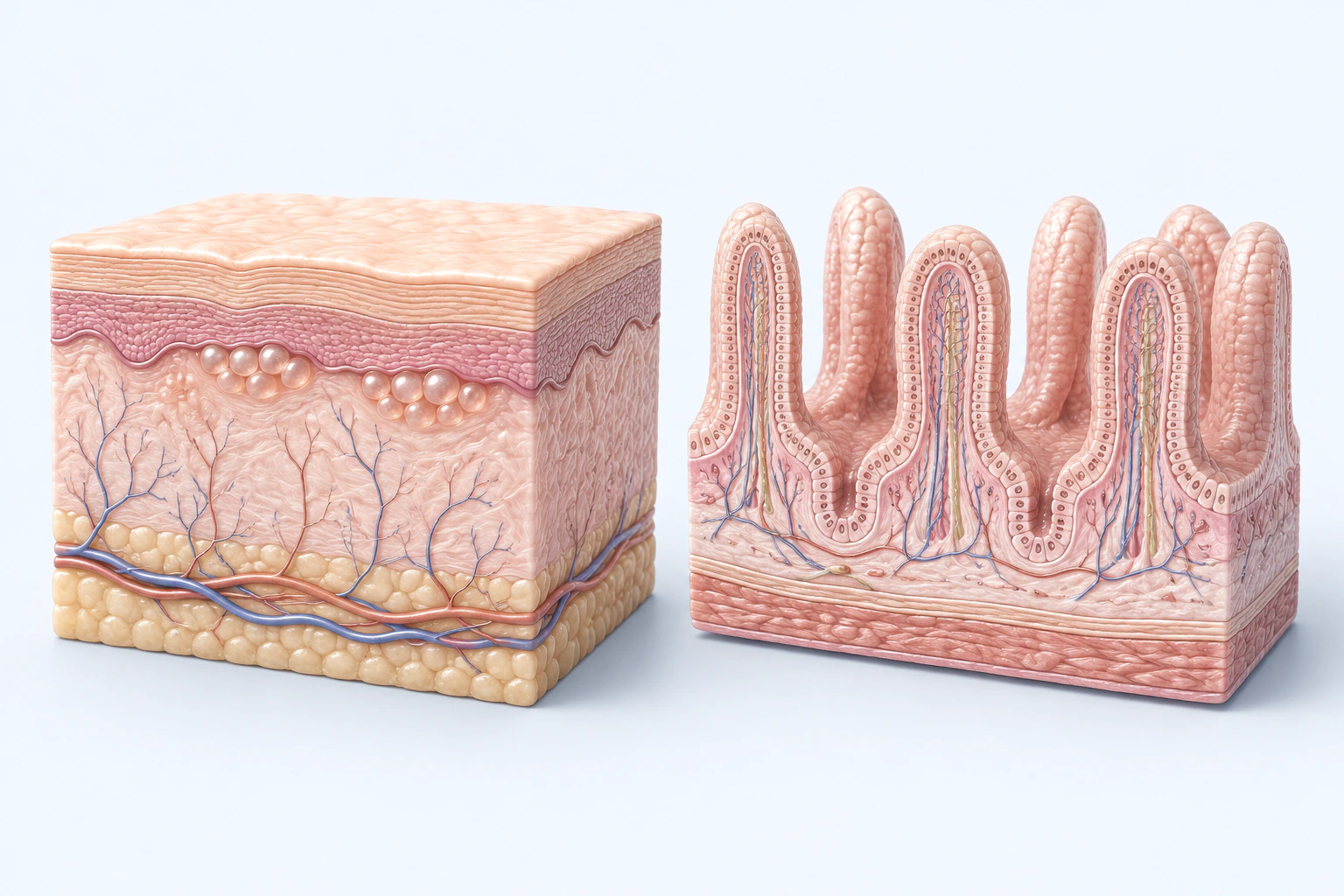
Representative skin-layer and small-intestinal orientation for dermatitis herpetiformis. This reconstruction does not depict herpes infection, a patient, rash distribution, biopsy, diagnostic stain, severity, or diagnosis.
Scientific media record1 verified identifier
- Subject
- Dermatitis Herpetiformiscondition
- Identifiers
- MeSH:D003874
- Review
- Editorial review completeIdentifiers authority-verified · Accessibility validated · · dermatitis-herpetiformis|dermatitis-herpetiformis-pathology-v1.webp
- Digital source
- Trained-algorithmic mediaCreated with a trained generative algorithm and reviewed by WikiBiome for subject identity, scientific framing, identifiers, provenance, and accessibility.
- License
- CC BY-SA 4.0Created
Dermatitis herpetiformis (DH) is the cutaneous manifestation of Celiac Disease, presenting as intensely pruritic, grouped vesicles on the elbows, knees, buttocks, and scalp. It is driven by IgA antibodies against epidermal transglutaminase (eTG), the skin homolog of tissue transglutaminase (tTG) targeted in celiac disease.
Virtually all DH patients have underlying celiac enteropathy, though intestinal symptoms may be subclinical.
One disease. Five evidence layers.
A generated systems view of the metals, organisms, host sequestration signals, ecological conditions, and microbial functions indexed for Dermatitis Herpetiformis.
Evidence layer
Taxonomic signature
Organisms reported as enriched or depleted, with their indexed functional context kept beside the name.No structured taxa indexed yet.
No structured taxa indexed yet.
Evidence layer
Nutritional immunity
Host metal-withholding, inflammatory, antioxidant, and microbial-metabolite signals indexed in the signature.Elevated host signals
0No structured signals indexed yet.
Depleted protective signals
0No structured signals indexed yet.
Evidence layer
Ecological state
The environmental conditions that connect the organism-level observations into a system.No structured ecological features indexed yet.
Evidence layer
Virulence functions
Microbial structures, enzymes, and acquisition systems implicated by the linked evidence.No structured virulence functions indexed yet.
The disease record, in full.
The original WikiBiome disease narrative remains intact beneath the generated signature atlas.
Microbiome Associations#
DH shares the Gut Microbiome alterations documented in celiac disease: reduced Bifidobacterium and Lactobacillus, increased Proteobacteria and Bacteroides. The gut-skin axis in DH likely operates through immune-mediated pathways—intestinal Dysbiosis promotes systemic Metal-Driven Inflammation and aberrant IgA production that deposits in dermal papillae.
Whether skin-resident microbiome changes contribute to lesion formation remains under investigation.
Metal Associations#
The subclinical celiac enteropathy in DH patients impairs absorption of iron, zinc, and selenium through villous atrophy. Iron deficiency is common even without overt anemia. Zinc malabsorption may contribute to impaired wound healing and skin barrier dysfunction.
These micronutrient deficiencies compound the immune dysregulation driving the disease.
Associated Conditions#
DH clusters with other autoimmune conditions: Celiac Disease (virtually universal), autoimmune thyroid disease, and Type 1 Diabetes. This autoimmune clustering suggests shared genetic susceptibility (HLA-DQ2/DQ8) and potentially shared gut microbiome-immune interactions.
Cross-References#
- Celiac Disease—underlying intestinal condition
- Iron—malabsorption from enteropathy
- Zinc—deficiency and skin barrier
- gut-skin-axis—immune-mediated cross-talk
References 8
Numbered by first appearance in the article, then reconciled with its declared source list.
- 1
Flyvholm MA, Nielsen GD, Andersen A (1984). Nickel Content of Food and Estimation of Dietary Intake. Zeitschrift fur Lebensmittel-Untersuchung und Forschung.
- 2
★Monisha Jaishankar, Tenzin Tseten, Naresh Anbalagan et al. (2014). Toxicity, Mechanism and Health Effects of Some Heavy Metals. Interdisciplinary Toxicology.
- 3
Di Gioacchino M, Gatta A, Della Valle L et al. (2018). Systemic Nickel Allergy Syndrome. Metal Allergy (book chapter).
- 4
Veien NK, Hattel T, Laurberg G (1993). Low nickel diet: An open, prospective trial. Journal of the American Academy of Dermatology.
- 5
Borghini R, Porpora MG, Casale R et al. (2020). Irritable Bowel Syndrome-Like Disorders in Endometriosis: Prevalence of Nickel Sensitivity and Effects of a Low-Nickel Diet. An Open-Label Pilot Study. Nutrients.
- 6
Sharma AD (2006). Disulfiram and low nickel diet in the management of hand eczema: A clinical study. Indian Journal of Dermatology, Venereology and Leprology.
- 7
Genchi G, Carocci A, Lauria G et al. (2020). Genchi 2020 — Nickel: Human Health and Environmental Toxicology. International Journal of Environmental Research and Public Health.
- 8
Braga M, Quecchia C, Perotta C et al. (2013). Systemic Nickel Allergy Syndrome: Nosologic Framework and Usefulness of Diet Regimen for Diagnosis. International Journal of Immunopathology and Pharmacology.
Article network
Mentioned here 8
Pages linking here 1
Connect the evidence
Publicly readable discussion by ORCID-authenticated researchers. Questions, interpretation, methods, corrections, and new evidence stay attached to this record.
No discussion yet. Start with a precise question or a source-backed observation.
Published page changes
This record shows only material changes published on this page, including changes to its content, evidence, conclusions, or author context. Internal processes and discussion activity are excluded. Pending, declined, and withdrawn proposals remain private.
- published revision
Added references: flyvholm-1984-nickel-food-content; jaishankar-2014-heavy-metal-toxicity-mechanisms; di-gioacchino-2018-snas-chapter; veien-1993-low-nickel-diet-trial; borghini-2020-endometriosis-nickel-ibs; sharma-2006-disulfiram-low-nickel-diet-hand-eczema;…
Added references: flyvholm-1984-nickel-food-content; jaishankar-2014-heavy-metal-toxicity-mechanisms; di-gioacchino-2018-snas-chapter; veien-1993-low-nickel-diet-trial; borghini-2020-endometriosis-nickel-ibs; sharma-2006-disulfiram-low-nickel-diet-hand-eczema; genchi-2020-nickel-human-health-environmental-toxicology; braga-2013-snas-nosologic-framework. · WikiBiome Deploy Bot · +13 −7
Inspect exact Git diff ↗ - published revision
Created “Dermatitis Herpetiformis”: Dermatitis herpetiformis (DH) is the cutaneous manifestation of celiac disease, presenting as intensely pruritic, grouped vesicles on the elbows, knees, buttocks, and scalp. It is driven by IgA…
Created “Dermatitis Herpetiformis”: Dermatitis herpetiformis (DH) is the cutaneous manifestation of celiac disease, presenting as intensely pruritic, grouped vesicles on the elbows, knees, buttocks, and scalp. It is driven by IgA… Published sections: Overview; Microbiome Associations; Metal Associations; Associated Conditions; Cross-References. · WikiBiome Deploy Bot · +60 −0
Inspect exact Git diff ↗