
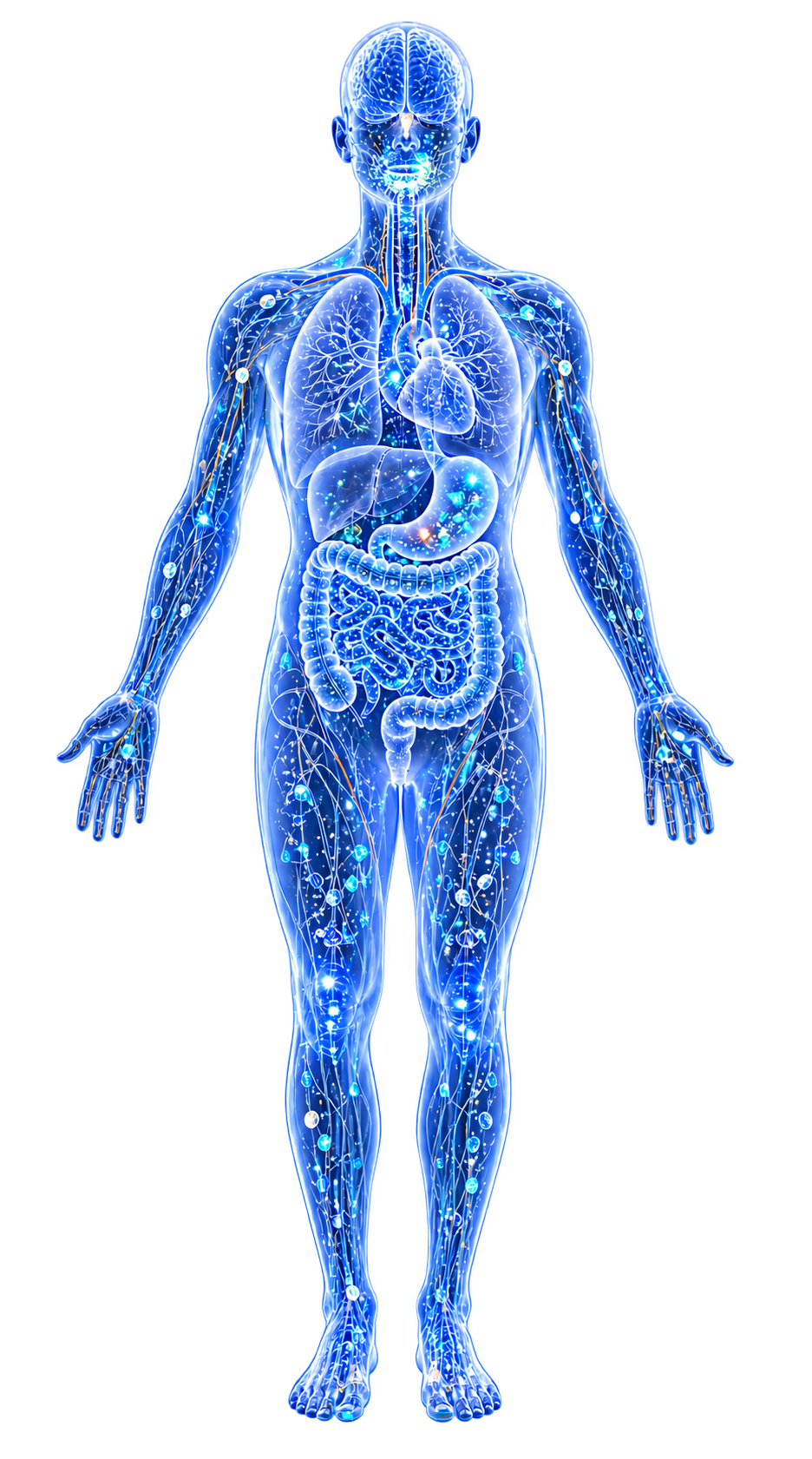
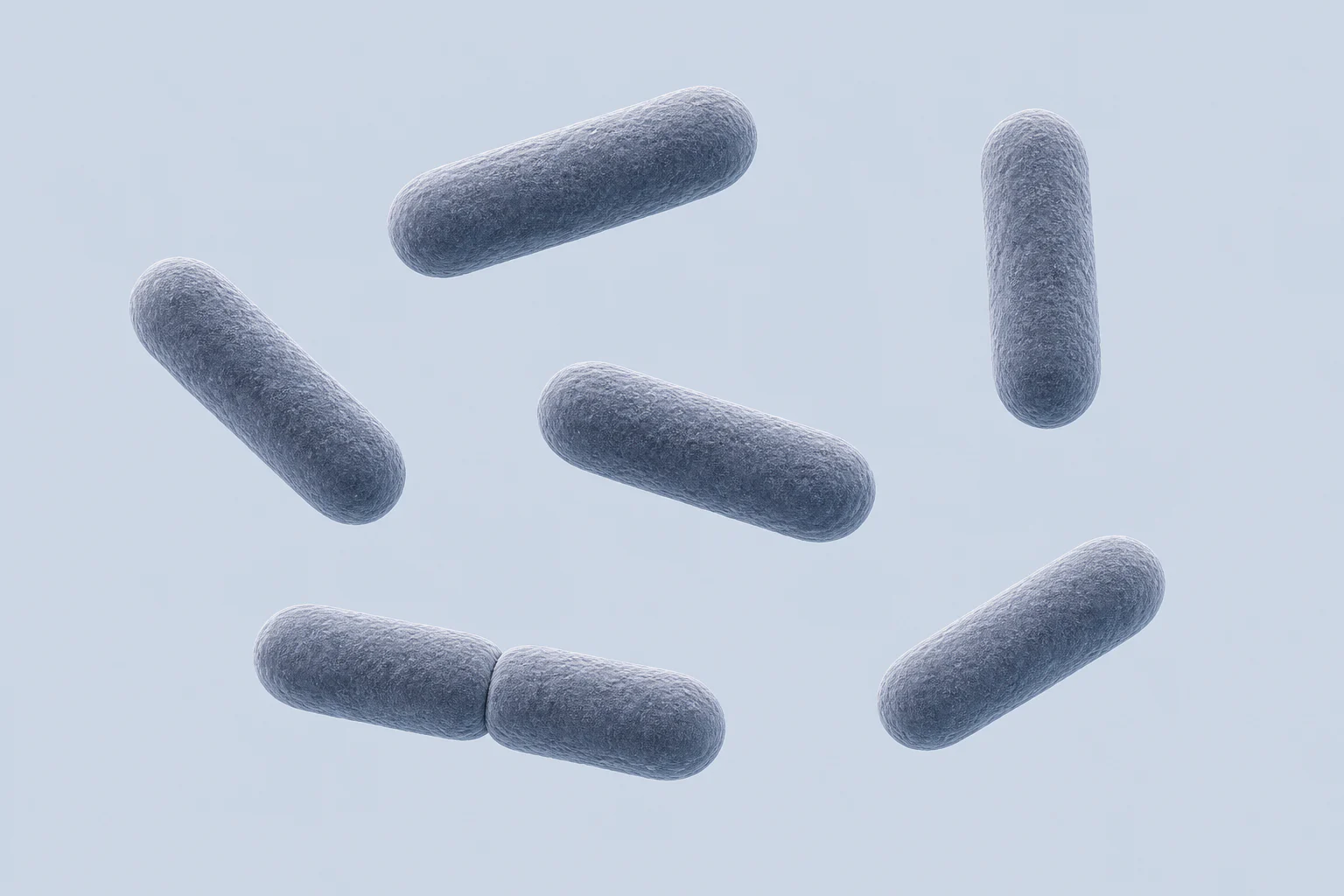
Representative Bacteroides caccae rod morphology grounded in the species and type-strain descriptions. This reconstruction is not diagnostic and is not a micrograph.
Scientific media record1 verified identifier
- Subject
- Bacteroides caccaetaxon · species
- Identifiers
- NCBITaxon:47678
- Review
- Editorial review completeIdentifiers authority-verified · Accessibility validated · · bacteroides-caccae|bacteroides-caccae-morphology-v1.webp
- Digital source
- Trained-algorithmic mediaCreated with a trained generative algorithm and reviewed by WikiBiome for subject identity, scientific framing, identifiers, provenance, and accessibility.
- Scientific basis
- Bacteroides caccae — NCBI TaxonomyBacteroides caccae type strainBacteroides caccae sp. nov.
- License
- CC BY-SA 4.0Created
Bacteroides caccae is a Gram-negative, obligate anaerobic member of the Bacteroidetes (Bacteroidota) phylum and a common fiber-degrading commensal in the human colon.
While less individually prominent than Bacteroides fragilis or Bacteroides thetaiotaomicron, B. caccae has emerged as a significant organism in the Developmental Metal Vulnerability: Critical Windows of Susceptibility framework—it is the most reproducible lead-depleted taxon across multiple study populations, suggesting particular sensitivity to heavy metal disruption during critical developmental windows.
Evidence map2 cited passagesInspect provenance +
The PROGRESS cohort study (prospective, n=123, Mexico City) demonstrated that prenatal lead exposure in both the 2nd and 3rd trimesters was consistently associated with depletion of B. caccae in the childhood gut microbiome at ages 9-11 years. Key findings:
The consistency of B. caccae depletion with lead exposure across studies from different populations represents one of the most reproducible findings in the metals-microbiome field.
Contents
1. Metal Dependencies2. Key Enzymes and Functional Features3. Ecological Role4. Lead Sensitivity—The Defining Feature5. Conditions Associated6. Cross-ReferencesMetal Dependencies#
Like other Bacteroides, B. caccae requires iron for various metabolic processes including fumarate reductase and cytochrome-dependent electron transport. Its obligate anaerobic lifestyle makes it sensitive to iron-mediated Oxidative Stress (Fenton chemistry), which may partly explain its vulnerability to lead exposure—lead disrupts iron homeostasis and generates reactive oxygen species.
Key Enzymes and Functional Features#
Polysaccharide utilization loci (PULs)—B. caccae encodes multiple PUL systems for degrading complex dietary fibers including plant cell wall polysaccharides, pectins, and hemicelluloses.
Beta-glucosidase—Contributes to the breakdown of dietary glycosides and plant polyphenol metabolism. Bile salt hydrolase—Participates in bile acid deconjugation, contributing to the broader Bacteroides role in bile acid metabolism and Farnesoid X Receptor (FXR) signaling.
Ecological Role#
In the healthy gut, B. caccae contributes to the primary degradation of dietary fiber, releasing oligosaccharides and simple sugars that cross-feed Butyrate-producing Firmicutes.
Its loss through metal-induced depletion therefore has cascading effects on the broader community's SCFA output—a mechanism by which prenatal metal exposure can produce functional consequences that persist years beyond the original exposure.
Lead Sensitivity—The Defining Feature#
The PROGRESS cohort study (prospective, n=123, Mexico City) demonstrated that prenatal lead exposure in both the 2nd and 3rd trimesters was consistently associated with depletion of B. caccae in the childhood Gut Microbiome at ages 9-11 years.[1]Prenatal Lead Exposure is Negatively Associated with the Gut Microbiome in ChildhoodEggers S, Midya V, Bixby M et al. · 2023Open reference 1 ↓ Key findings.
B. caccae exceeded the weighted quantile sum (WQS) importance threshold in ≥80% of repeated holdouts for both trimesters, making it one of the most reproducibly lead (Pb)-depleted taxa.
This depletion persisted years after the prenatal exposure window, consistent with developmental programming of the gut microbiome. cobalt (Co)-depleted taxa included Bifidobacterium longum, Bifidobacterium bifidum, Ruminococcus gnavus, and Alistipes indistinctus—suggesting a lead-sensitive microbial consortium.
The consistency of B. caccae depletion with lead exposure across studies from different populations represents one of the most reproducible findings in the metals-microbiome field.[2]Eggers 2023 — Prenatal lead exposure is negatively associated with gut microbiome in childhood (PROGRESS cohort)Shoshannah Eggers, Vishal Midya, Moira Bixby et al. · 2023Open reference 2 ↓
Conditions Associated#
Currently no disease-specific enrichment patterns. The primary association is depletion under lead exposure, with implications for downstream SCFA production and fiber metabolism in metal-exposed populations.
Cross-References#
- Lead—prenatal exposure depletes B. caccae in childhood gut
- Developmental Metal Vulnerability: Critical Windows of Susceptibility—B. caccae as exemplar of persistent metal-induced microbiome programming
- Bacteroidetes (Bacteroidota)—parent phylum
- Bifidobacterium longum—co-depleted with B. caccae under lead exposure
- Bacteroides thetaiotaomicron—related species with broader starch degradation capacity
References 9
Numbered by first appearance in the article, then reconciled with its declared source list.
- 1
Eggers S, Midya V, Bixby M et al. (2023). Prenatal Lead Exposure is Negatively Associated with the Gut Microbiome in Childhood. Frontiers in Microbiology.
- 2
Shoshannah Eggers, Vishal Midya, Moira Bixby et al. (2023). Eggers 2023 — Prenatal lead exposure is negatively associated with gut microbiome in childhood (PROGRESS cohort). Frontiers in Microbiology.
- 3
Ghorbani M, Joseph GBS, Tew MM et al. (2024). Functional Associations of the Gut Microbiome with Dopamine, Serotonin, and BDNF in Schizophrenia: A Pilot Study. Egyptian Journal of Neurology, Psychiatry and Neurosurgery.
- 4
Yuanzhao Xu, Lingyue An, Jiling Xie et al. (2026). Xu 2026 — The Gut-Prostate Axis in Benign Prostatic Hyperplasia: Systematic Review of Microbial Dysbiosis and Pathogenic Mechanisms. BMC Urology.
- 5
Svensson A, Brunkwall L, Roth B et al. (2021). Associations Between Endometriosis and Gut Microbiota. Reproductive Sciences.
- 6
Natalia A. Borges, Amanda F. Barros, Lia S. Nakao et al. (2016). Protein-Bound Uremic Toxins from Gut Microbiota and Inflammatory Markers in CKD. Journal of Renal Nutrition.
- 7
Friederike Gutmann, Lina Samira Bahr, Ulrike Bruning et al. (2025). Functional Microbiome Reprogramming Links Dietary Interventions to Neuroinflammatory Outcomes in Multiple Sclerosis. Research Square (preprint).
- 8
Cristina Vocca, Diana Marisol Abrego-Guandique, Erika Cione et al. (2025). Vocca 2025 — Probiotics in the Management of Chronic Bacterial Prostatitis: A Randomized, Double-Blind Trial to Evaluate a Possible Link Between Gut Microbiota Restoring and Symptom Relief. Microorganisms.
- 9
Chrobak AA, Nowakowski J, Dudek D (2016). Interactions between the Gut Microbiome and the Central Nervous System and Their Role in Schizophrenia, Bipolar Disorder and Depression. Archives of Psychiatry and Psychotherapy.
Article network
Connect the evidence
Publicly readable discussion by ORCID-authenticated researchers. Questions, interpretation, methods, corrections, and new evidence stay attached to this record.
No discussion yet. Start with a precise question or a source-backed observation.
Published page changes
This record shows only material changes published on this page, including changes to its content, evidence, conclusions, or author context. Internal processes and discussion activity are excluded. Pending, declined, and withdrawn proposals remain private.
- published revision
Added references: ghorbani-2024-gut-microbiome-dopamine-serotonin-bdnf-schizophrenia; xu-2026-gut-prostate-axis-bph-systematic-review; svensson-2021-endometriosis-gut-microbiota-associations; borges-2016-uremic-toxins-inflammatory-markers-ckd;…
Added references: ghorbani-2024-gut-microbiome-dopamine-serotonin-bdnf-schizophrenia; xu-2026-gut-prostate-axis-bph-systematic-review; svensson-2021-endometriosis-gut-microbiota-associations; borges-2016-uremic-toxins-inflammatory-markers-ckd; gutmann-2025-functional-microbiome-diet-ms; vocca-2025-probiotics-chronic-bacterial-prostatitis-rct; chrobak-2016-gut-microbiome-cns-schizophrenia-bipolar-depression. Removed references: eggers-2023-prenatal-lead-exposure-gut-microbiome-childhood. · WikiBiome Deploy Bot · +15 −11
Inspect exact Git diff ↗ - published revision
Created “Bacteroides caccae”: Bacteroides caccae is a Gram-negative, obligate anaerobic member of the bacteroidetes phylum and a common fiber-degrading commensal in the human colon. While less individually prominent than…
Created “Bacteroides caccae”: Bacteroides caccae is a Gram-negative, obligate anaerobic member of the bacteroidetes phylum and a common fiber-degrading commensal in the human colon. While less individually prominent than… Published sections: Overview; Metal Dependencies; Key Enzymes and Functional Features; Ecological Role; Lead Sensitivity — The Defining Feature; Conditions Associated; Cross-References. · WikiBiome Deploy Bot · +80 −0
Inspect exact Git diff ↗