
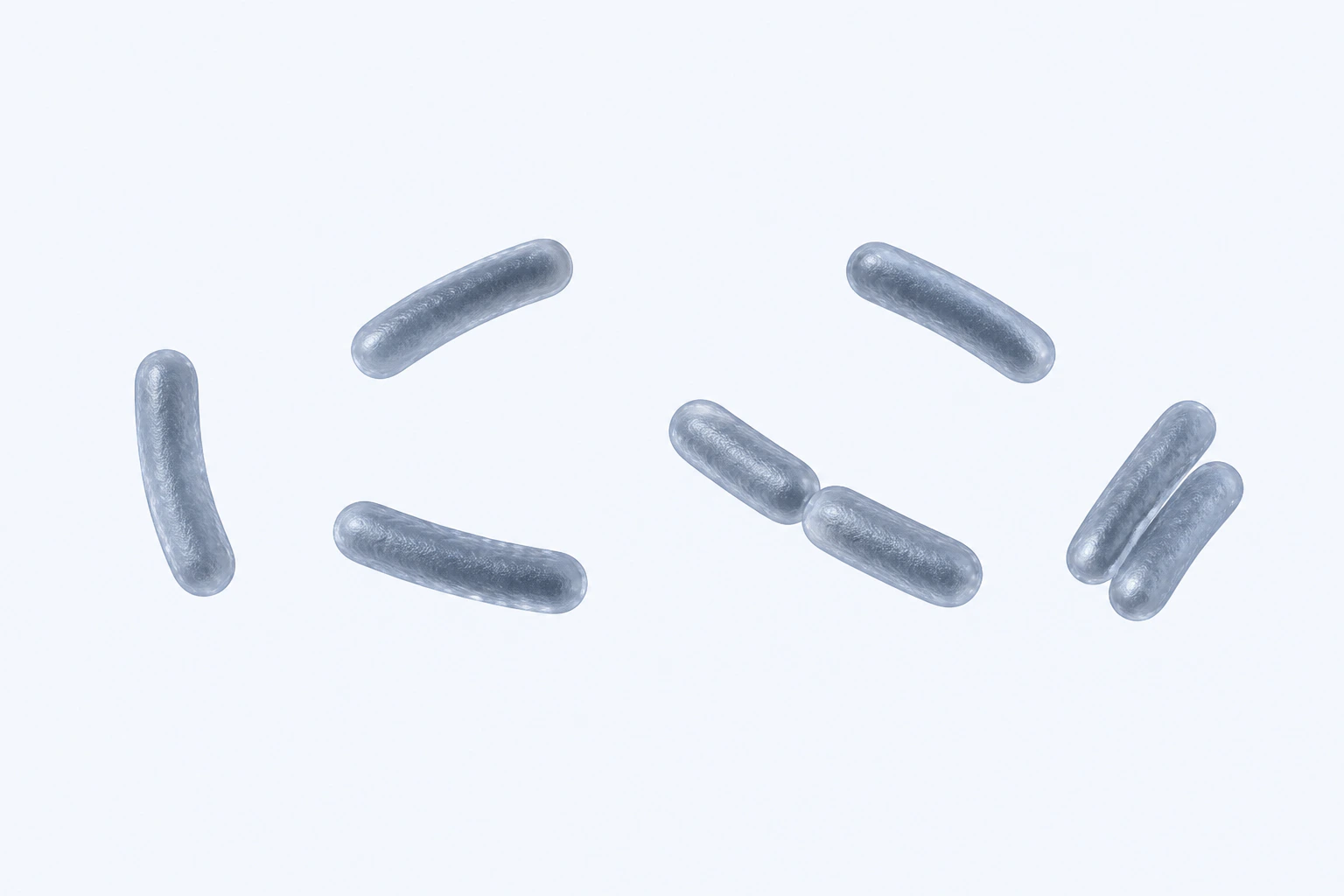
Type-strain-anchored Parabacteroides distasonis reconstruction showing eight rounded-pole rods in four single and two paired arrangements. This species plate is representative, non-diagnostic, does not imply visual separability from genus-level forms, and is not a micrograph.
Scientific media record1 verified identifier
- Subject
- Parabacteroides distasonistaxon · species
- Identifiers
- NCBITaxon:823
- Review
- Editorial review completeIdentifiers authority-verified · Accessibility validated · · parabacteroides-distasonis|parabacteroides-distasonis-morphology-v1.webp
- Digital source
- Trained-algorithmic mediaCreated with a trained generative algorithm and reviewed by WikiBiome for subject identity, scientific framing, identifiers, provenance, and accessibility.
- Scientific basis
- Parabacteroides distasonis — NCBI TaxonomyParabacteroides distasonis — LPSNParabacteroides distasonis current combinationThe Bacteroides of Human FecesParabacteroides distasonis type strain
- License
- CC BY-SA 4.0Created
Parabacteroides distasonis is a Gram-negative obligate anaerobe formerly classified within Bacteroides. It is a core member of the healthy human Gut Microbiome, typically found in the colon where it contributes to polysaccharide degradation and Bile Acid Metabolism.
Metal Dependencies#
P. distasonis requires iron for central metabolic enzymes and zinc for its hydrolase activities. Paradoxically, the iron-rich inflammatory environments that favor Proteobacteria tend to suppress P. distasonis, suggesting it is outcompeted when Nutritional Immunity (Metal Sequestration) breaks down and luminal iron rises.
Ecological Role#
In a balanced gut, P. distasonis performs critical bile acid biotransformations through bile salt hydrolase activity, converting primary bile acids to secondary forms that regulate host metabolism and immune signaling. Its depletion shifts the bile acid pool toward pro-inflammatory and pro-tumorigenic profiles.
The organism also produces short-chain fatty acids that support epithelial barrier integrity.
Conditions Associated#
Depletion of P. distasonis is consistently reported in Obesity, Type 2 Diabetes, and Inflammatory Bowel Disease (IBD). Animal studies show that oral supplementation with P. distasonis reduces adiposity, improves glucose tolerance, and attenuates intestinal Metal-Driven Inflammation—positioning it as a candidate next-generation probiotic.
Cross-References#
- Bile Acid Metabolism—bile salt hydrolase activity
- Iron—growth requirement, competitive disadvantage in iron-excess
- Short-Chain Fatty Acids (SCFAs)—metabolic output
- Obesity—depleted in metabolic disease
References 5
Numbered by first appearance in the article, then reconciled with its declared source list.
- 1
Giorgio Casaburi, Jingjing Wei, Sufyan Kazi et al. (2022). Casaburi 2022 — Formate as a metabolic driver of NEC: integrated metagenomics and targeted metabolomics. Frontiers in Pediatrics.
- 2
Matteo Bronzini, Alessandro Maglione, Rachele Rosso et al. (2023). Feeding the gut microbiome: impact on multiple sclerosis. Frontiers in Immunology.
- 3
Esraa Mohsen, Hesham Haffez, Sandra Ahmed et al. (2025). Multiple Sclerosis: A Story of the Interaction Between Gut Microbiome and Components of the Immune System. Molecular Neurobiology.
- 4
Ilze Elbere, Ivars Silamikelis, Ilze Izabella Dindune et al. (2020). Elbere 2020 — Baseline Gut Microbiome Composition Predicts Metformin Therapy Short-Term Efficacy in Newly Diagnosed Type 2 Diabetes Patients. PLoS ONE.
- 5
Dorothea Katharina Hoffelner, Tim Hendrikx (2025). Emerging therapy targets to modulate microbiome-mediated effects evident in cardiovascular disease. Frontiers in Cardiovascular Medicine.
Article network
Connect the evidence
Publicly readable discussion by ORCID-authenticated researchers. Questions, interpretation, methods, corrections, and new evidence stay attached to this record.
No discussion yet. Start with a precise question or a source-backed observation.
Activity and accepted changes
Accepted researcher context, editorial status, public discussion, and upstream Git revisions are shown together. Pending, declined, and withdrawn proposals remain private.
- published revision
Backfill gut microbiome concept links
Karen Pendergrass · +1 −1
Inspect exact Git diff ↗ - published revision
Backfill inflammation concept links
Karen Pendergrass · +1 −1
Inspect exact Git diff ↗ - published revision
massive wiki expansion: 149 stubs fixed, 100+ new pages, Rule 15 scan, keystone papers
WikiBiome Deploy Bot · +11 −8
Inspect exact Git diff ↗ - published revision
maintenance: 409 source fixes, 34 entity updates, 17 concept updates, 30 analysis outputs
WikiBiome Deploy Bot · +57 −0
Inspect exact Git diff ↗