
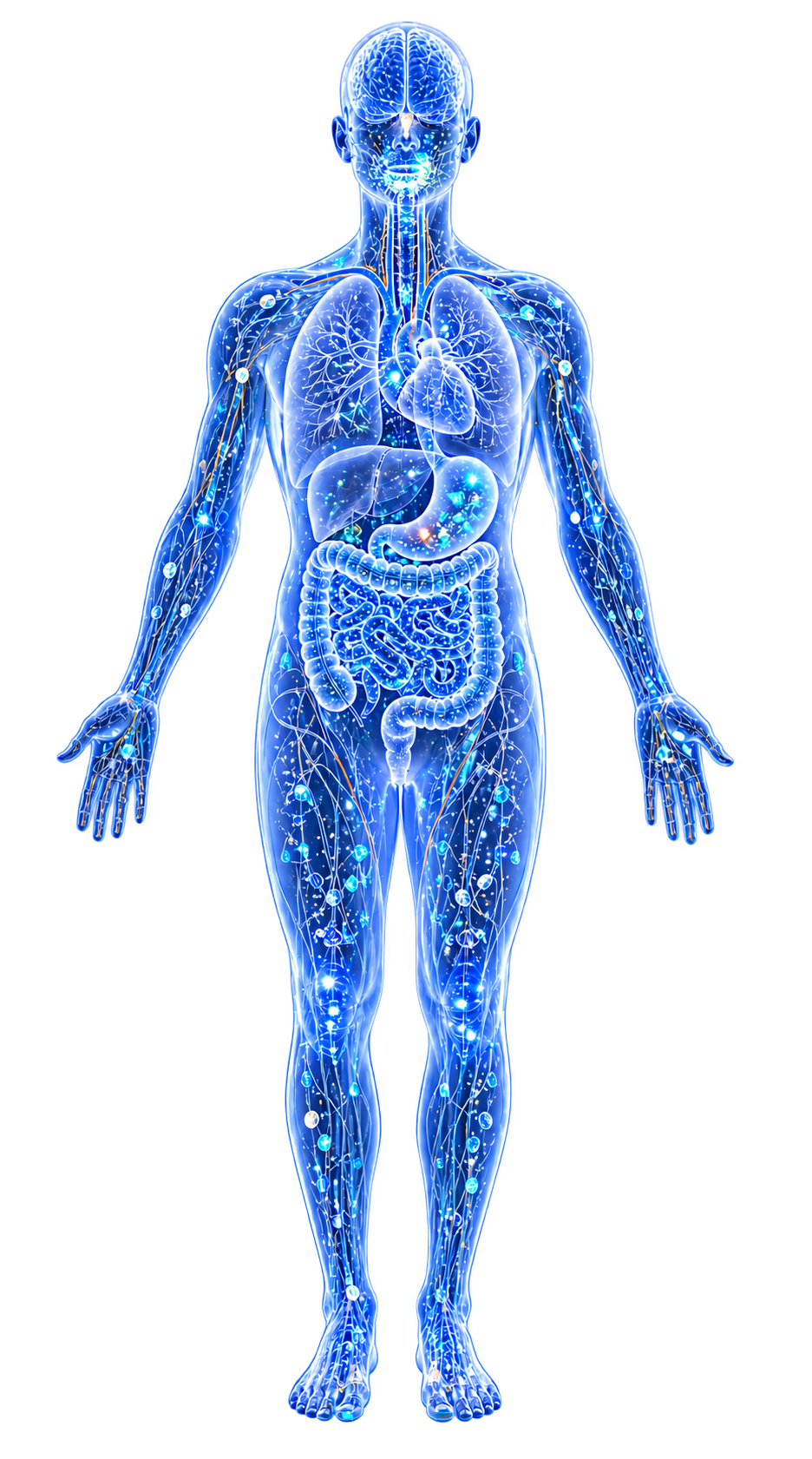
A microbial metabolite produced by gut bacteria through tyrosine fermentation that has emerged as one of the most consistent biomarkers linking gut Dysbiosis to neurological and renal disease. p-Cresol (4-methylphenol) is a simple aromatic compound, but its effects are anything but simple: it inhibits dopamine beta-hydroxylase, damages kidney tubular cells, disrupts sulfation metabolism, and crosses the blood-brain barrier.
Its elevation in autism spectrum disorder and chronic kidney disease illustrates how gut microbial metabolic output directly shapes distant organ pathology.
Evidence map5 cited passagesInspect provenance +
The production pathway: L-tyrosine is transaminated to 4-hydroxyphenylpyruvate, decarboxylated to 4-hydroxyphenylacetaldehyde or 4-hydroxyphenylacetate, and then converted to p-cresol. This pathway competes with tryptophan-to-indole metabolism for aromatic amino acid substrates.
The most striking finding: urinary p-cresol is significantly elevated in children with ASD, particularly in the 2-7 year age window:
Competes with dopamine for sulfation by phenol sulfotransferase, potentially increasing free dopamine while depleting sulfation capacity
p-Cresol sulfate is classified as a protein-bound uremic toxin—one of the most difficult class of toxins to remove by dialysis:
p-Cresol has been identified among the altered microbial metabolites in PD gut-brain axis studies. Its DBH-inhibiting activity is particularly relevant given the catecholaminergic neurodegeneration in PD.
Contents
1. Production and Metabolism2. Autism Spectrum Disorder3. Chronic Kidney Disease4. Parkinson's Disease5. Metal Connections6. Open Questions7. ConnectionsProduction and Metabolism#
Microbial Origin#
p-Cresol is produced exclusively by gut bacteria—the human host does not synthesize it. Key producers include.
Clostridioides difficile: The most prolific p-cresol producer, via the hydroxyphenylacetate decarboxylase (HpdBCA) enzyme complex that converts 4-hydroxyphenylacetate to p-cresol. Clostridium spp.: Multiple species within the Clostridiaceae family produce p-cresol from tyrosine via 4-hydroxyphenylacetate. Blautia hydrogenotrophica and other Firmicutes: Contribute to aromatic amino acid fermentation.
The production pathway: L-tyrosine is transaminated to 4-hydroxyphenylpyruvate, decarboxylated to 4-hydroxyphenylacetaldehyde or 4-hydroxyphenylacetate, and then converted to p-cresol. This pathway competes with tryptophan-to-indole metabolism for aromatic amino acid substrates.[1]Zheng 2021 -- The Role of Bacterial-Derived Aromatic Amino Acids Metabolites Relevant in Autism Spectrum Disorders: A Comprehensive ReviewYuanpeng Zheng, Marie K. Bek, Naika Z. Prince et al. · 2021Open reference 1 ↓
Host Metabolism#
Once absorbed from the gut. Sulfation: p-Cresol is conjugated to p-cresol sulfate (PCS) by sulfotransferases in the colonic epithelium and liver—the major circulating form. Glucuronidation: p-Cresol glucuronide (PCG) is the secondary conjugate.
Renal excretion: Both PCS and PCG are cleared by the kidneys via organic anion transporters; impaired clearance in CKD leads to accumulation.
Autism Spectrum Disorder#
The most striking finding: urinary p-cresol is significantly elevated in children with ASD, particularly in the 2-7 year age window.[2]Serrano-Tomas 2025 -- Recognition of the Microbial Metabolite p-Cresol in Autism Spectrum Disorder: Systematic Review and Meta-AnalysisMaria Isabel Serrano-Tomas, Paulina Contreras-Romero, Mara Parellada et al. · 2025Open reference 2 ↓
Meta-analysis of 3 urine studies: pooled effect p = 0.46 (moderate), low heterogeneity (I-squared = 0.00%). Urinary total p-cresol: ASD 98.8 +/- 17.3 ug/mL vs controls 52.0 +/- 7.8 ug/mL. p-Cresol levels up to 40% higher in ASD populations.
Fecal p-cresol did not show significant differences, suggesting the key distinction is absorption and host metabolism rather than production alone.
Neurological Mechanism#
p-Cresol's neurotoxicity operates through a specific enzyme target. Inhibits dopamine beta-hydroxylase (DBH): Blocks conversion of dopamine to norepinephrine, potentially altering catecholamine balance in developing brains. Crosses the Blood-Brain Barrier.
Competes with dopamine for sulfation by phenol sulfotransferase, potentially increasing free dopamine while depleting sulfation capacity.[3]Vernocchi 2023 — Gut Microbiota Functional Profiling in ASD: Bacterial VOCs and Related Metabolic Pathways Acting as Disease Biomarkers and PredictorsPamela Vernocchi, Chiara Marangelo, Silvia Guerrera et al. · 2023Open reference 3 ↓
Chronic Kidney Disease#
p-Cresol sulfate is classified as a protein-bound uremic toxin—one of the most difficult class of toxins to remove by dialysis:[4]High-Throughput Sequencing Analysis of Intestinal Flora Changes in ESRD and CKD PatientsJianguang Hu, Xiaoshi Zhong, Jing Yan et al. · 2020Open reference 4 ↓
- Accumulates as GFR declines due to reduced renal clearance
- Damages renal tubular cells, creating a vicious cycle: CKD increases p-cresol, p-cresol worsens CKD
- Associated with cardiovascular mortality in dialysis patients
- Binds albumin with high affinity (~90% protein-bound), making it poorly dialyzable
The CKD-dysbiosis axis involves expansion of proteolytic bacteria (Clostridiaceae, Enterobacteriaceae) and loss of saccharolytic bacteria (Bifidobacterium, Lactobacillus), shifting gut metabolism from carbohydrate fermentation (producing beneficial Butyrate) toward amino acid fermentation (producing toxic p-cresol and indoxyl sulfate).
Parkinson's Disease#
p-Cresol has been identified among the altered microbial metabolites in PD gut-brain axis studies.[5]Tan 2021 -- Microbiome-Derived Metabolites in Parkinson's DiseaseAi Huey Tan, Shen Yang Lim, Anthony E Lang · 2021Open reference 5 ↓ Its DBH-inhibiting activity is particularly relevant given the catecholaminergic neurodegeneration in PD.
Metal Connections#
While p-cresol itself is not a metal-related molecule, its production and effects intersect with metallomic pathology.
Clostridioides species that produce p-cresol are iron-dependent organisms whose expansion is favored by luminal iron excess—linking iron supplementation to p-cresol overproduction. p-Cresol sulfation depends on sulfotransferase enzymes that are sensitive to heavy metal inhibition.
The CKD context connects p-cresol accumulation to the Alpha-Klotho-metal axis: uremic toxin burden and metal toxicity converge on renal tubular damage.
Open Questions#
Unresolved questions identified by the current evidence record.
01Can reducing Clostridioides abundance (via targeted probiotics or dietary intervention) lower p-cresol levels and improve ASD symptoms?+
The current WikiBiome record identifies this as an unresolved evidence gap.
02Does iron supplementation increase p-cresol production by expanding iron-dependent Clostridiaceae?+
The current WikiBiome record identifies this as an unresolved evidence gap.
03Is the ASD biomarker signal driven by increased production, decreased clearance, or altered sulfation capacity?+
The current WikiBiome record identifies this as an unresolved evidence gap.
Connections#
- Clostridioides difficile—primary p-cresol producer
- Autism Spectrum Disorder—urinary p-cresol as ASD biomarker
- Chronic Kidney Disease—p-cresol sulfate as protein-bound uremic toxin
- Dopamine—p-cresol inhibits dopamine beta-hydroxylase
- Blood-Brain Barrier—p-cresol crosses BBB
- butyrate—saccharolytic (butyrate) vs proteolytic (p-cresol) fermentation balance
- dysbiosis—proteolytic shift increases p-cresol production
- microbiome-derived metabolites—p-cresol as key microbial metabolite
References 5
Numbered by first appearance in the article, then reconciled with its declared source list.
- 1
Yuanpeng Zheng, Marie K. Bek, Naika Z. Prince et al. (2021). Zheng 2021 -- The Role of Bacterial-Derived Aromatic Amino Acids Metabolites Relevant in Autism Spectrum Disorders: A Comprehensive Review. Frontiers in Neuroscience.
- 2
Maria Isabel Serrano-Tomas, Paulina Contreras-Romero, Mara Parellada et al. (2025). Serrano-Tomas 2025 -- Recognition of the Microbial Metabolite p-Cresol in Autism Spectrum Disorder: Systematic Review and Meta-Analysis. Frontiers in Molecular Neuroscience.
- 3
Pamela Vernocchi, Chiara Marangelo, Silvia Guerrera et al. (2023). Vernocchi 2023 — Gut Microbiota Functional Profiling in ASD: Bacterial VOCs and Related Metabolic Pathways Acting as Disease Biomarkers and Predictors. Frontiers in Microbiology.
- 4
Jianguang Hu, Xiaoshi Zhong, Jing Yan et al. (2020). High-Throughput Sequencing Analysis of Intestinal Flora Changes in ESRD and CKD Patients. BMC Nephrology.
- 5
Ai Huey Tan, Shen Yang Lim, Anthony E Lang (2021). Tan 2021 -- Microbiome-Derived Metabolites in Parkinson's Disease. Molecular Neurodegeneration.
Article network
Connect the evidence
Publicly readable discussion by ORCID-authenticated researchers. Questions, interpretation, methods, corrections, and new evidence stay attached to this record.
No discussion yet. Start with a precise question or a source-backed observation.
Published page changes
This record shows only material changes published on this page, including changes to its content, evidence, conclusions, or author context. Internal processes and discussion activity are excluded. Pending, declined, and withdrawn proposals remain private.
- published revision
Revised “Connections”: now reads “proteolytic shift increases p-cresol production - microbiome-derived metabolites -- p-cresol as key microbial”.
Revised “Connections”: changed “proteolytic shift increases p-cresol production - microbiome derived metabolites -- p-cresol as key microbial” to “proteolytic shift increases p-cresol production - microbiome-derived metabolites -- p-cresol as key microbial”. · Karen Pendergrass · +2 −2
Inspect exact Git diff ↗ - published revision
Created “p-Cresol”: A microbial metabolite produced by gut bacteria through tyrosine fermentation that has emerged as one of the most consistent biomarkers linking gut dysbiosis to neurological and renal disease.…
Created “p-Cresol”: A microbial metabolite produced by gut bacteria through tyrosine fermentation that has emerged as one of the most consistent biomarkers linking gut dysbiosis to neurological and renal disease.… Published sections: p-Cresol; Microbial Origin; Host Metabolism; Autism Spectrum Disorder; Neurological Mechanism; Chronic Kidney Disease; Parkinson's Disease; Metal Connections; Open Questions; Connections. · WikiBiome Deploy Bot · +94 −0
Inspect exact Git diff ↗