
 metals · microbes · host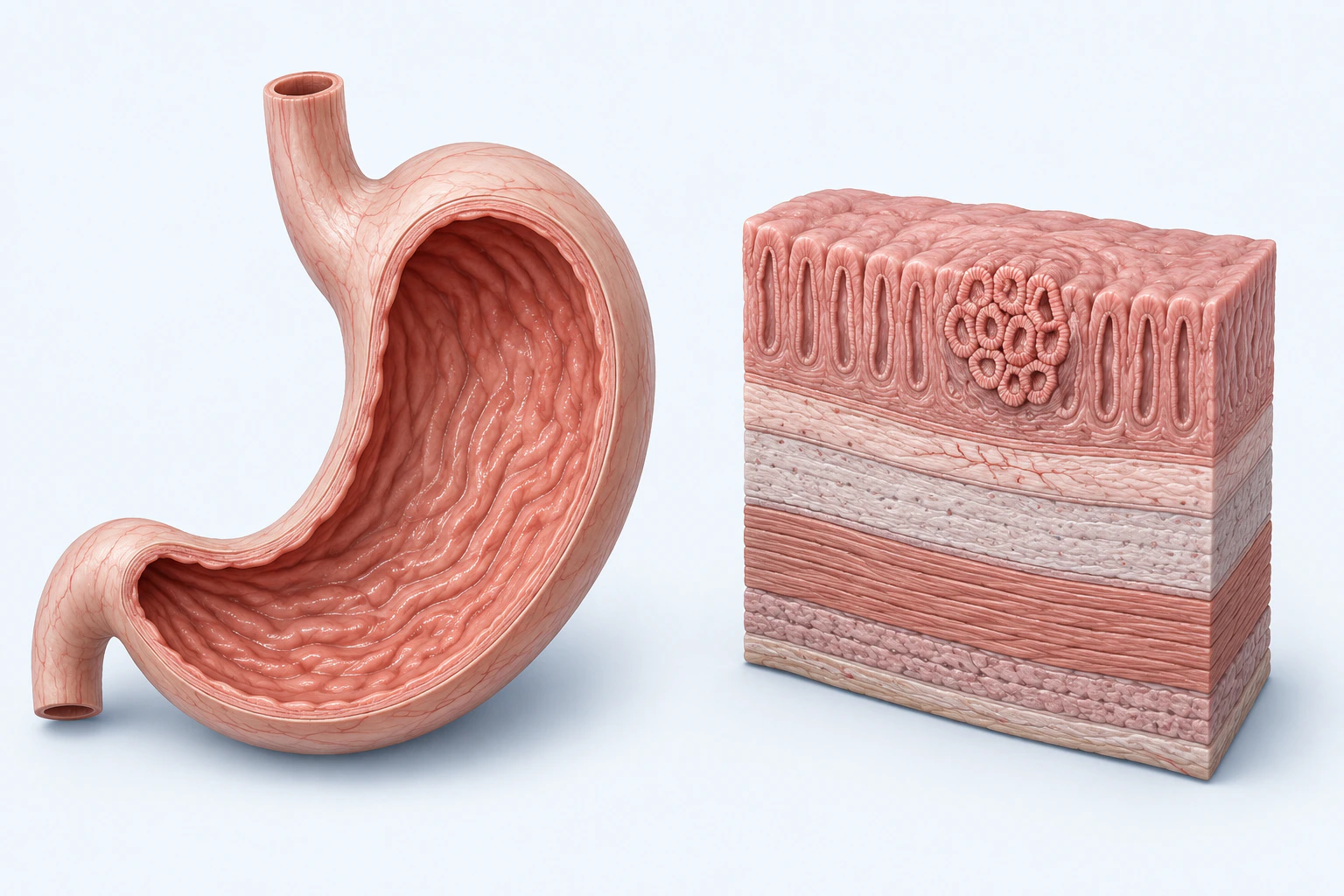
Localized gland-forming mucosal orientation for gastric adenocarcinoma. The cluster is an editorial reconstruction, not diagnostic histology, a patient finding, molecular subtype, invasion-depth measure, stage, spread, prognosis, or diagnosis.
Scientific media record2 verified identifiers
- Subject
- Gastric Adenocarcinomacondition
- Identifiers
- MeSH:D013274MeSH:D000230
- Review
- Editorial review completeIdentifiers authority-verified · Accessibility validated · · gastric-adenocarcinoma|gastric-adenocarcinoma-pathology-v1.webp
- Digital source
- Trained-algorithmic mediaCreated with a trained generative algorithm and reviewed by WikiBiome for subject identity, scientific framing, identifiers, provenance, and accessibility.
- License
- CC BY-SA 4.0Created
The most common malignancy of the stomach, accounting for over 95% of gastric cancers. Helicobacter pylori infection is the strongest known risk factor, classified as a Group 1 carcinogen by IARC.
In the metallomics framework, gastric adenocarcinoma reveals a striking dependency on nickel-powered virulence machinery: the very enzymes that enable H. pylori to survive in the stomach also drive the carcinogenic cascade.
Evidence map8 cited passagesInspect provenance +
NiFe hydrogenase oxidizes molecular hydrogen (H2) in the gastric environment, generating proton motive force that powers the type IV secretion system (T4SS) responsible for injecting the oncoprotein CagA into gastric epithelial cells.
Hydrogenase deletion mutants of H. pylori cannot translocate CagA and fail to induce gastric cancer in the Mongolian gerbil model, establishing that nickel-powered hydrogen metabolism is essential for carcinogenesis.
The rising pH in atrophic gastritis enables colonization by bacteria that cannot survive normal gastric acid, creating a progressively more complex and potentially carcinogenic microbial community.
fusobacterium nucleatum, a recognized promoter of colorectal carcinogenesis, is also enriched in gastric cancer tissue, suggesting shared carcinogenic mechanisms across GI malignancies.
Mendelian randomization studies provide causal evidence supporting gut microbiota involvement in gastric cancer risk.
The gastric fungal community undergoes significant shifts in gastric cancer, with altered diversity and composition compared to healthy controls.
Candida species expansion has been documented in the gastric cancer mycobiome, potentially contributing to the inflammatory and immunosuppressive tumor microenvironment.
gerd: PPI treatment for GERD raises gastric pH, altering the microbiome in ways that may influence cancer risk.
One disease. Five evidence layers.
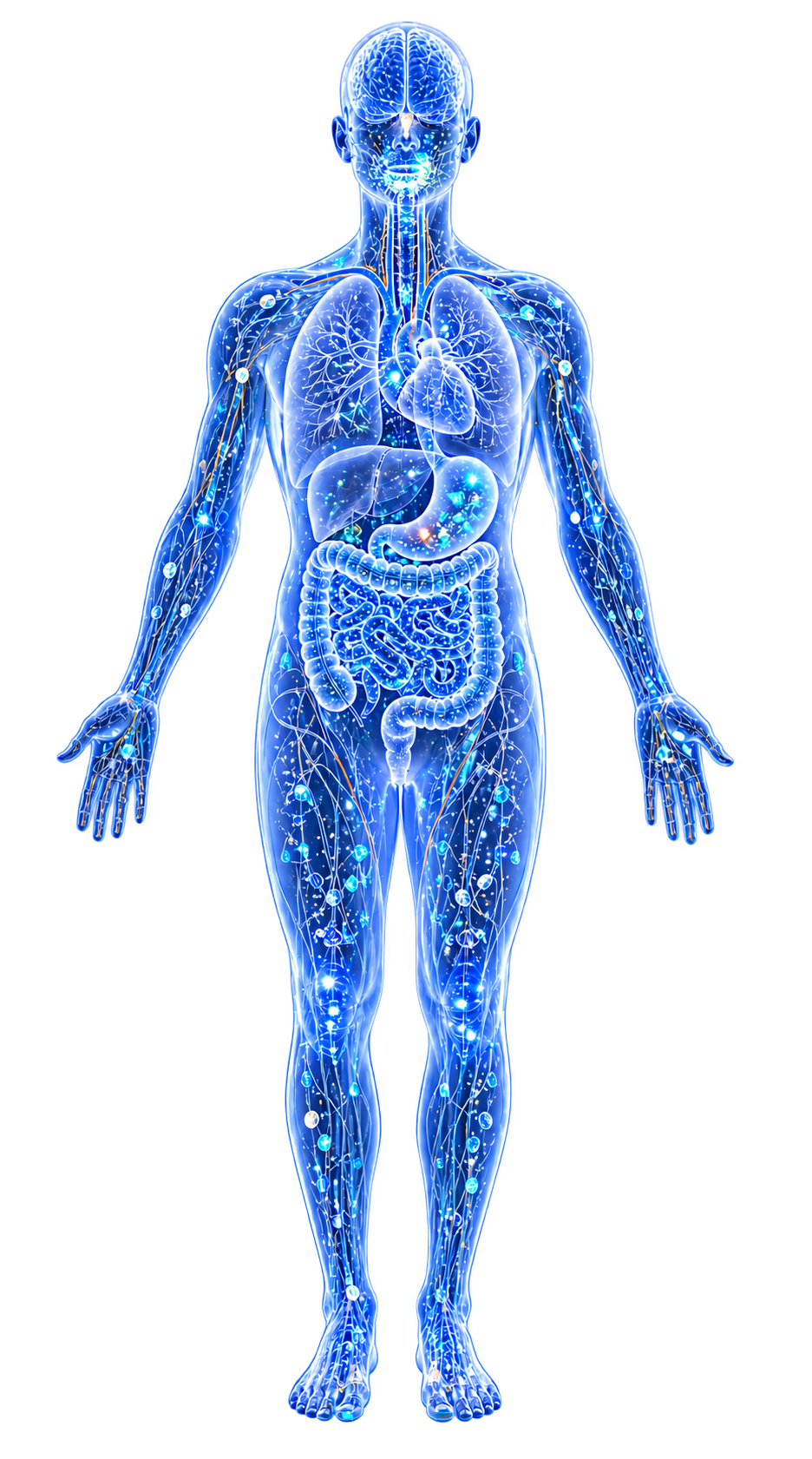
A generated systems view of the metals, organisms, host sequestration signals, ecological conditions, and microbial functions indexed for Gastric Adenocarcinoma.
Evidence layer
Taxonomic signature
Organisms reported as enriched or depleted, with their indexed functional context kept beside the name.No structured taxa indexed yet.
No structured taxa indexed yet.
Evidence layer
Nutritional immunity
Host metal-withholding, inflammatory, antioxidant, and microbial-metabolite signals indexed in the signature.Elevated host signals
0No structured signals indexed yet.
Depleted protective signals
0No structured signals indexed yet.
Evidence layer
Ecological state
The environmental conditions that connect the organism-level observations into a system.No structured ecological features indexed yet.
Evidence layer
Virulence functions
Microbial structures, enzymes, and acquisition systems implicated by the linked evidence.No structured virulence functions indexed yet.
The disease record, in full.
The original WikiBiome disease narrative remains intact beneath the generated signature atlas.
The Nickel-Hydrogenase-CagA Axis#
The mechanistic link between H. pylori and gastric carcinogenesis runs through nickel-dependent enzymes. NiFe hydrogenase oxidizes molecular hydrogen (H2) in the gastric environment, generating proton motive force that powers the type IV secretion system (T4SS) responsible for injecting the oncoprotein CagA into gastric epithelial cells.[1]Role of Nickel in Microbial PathogenesisRobert J. Maier, Stéphane L. Benoit · 2019Open reference 1 ↓
CagA is phosphorylated by host kinases and disrupts cell polarity, tight junctions, and proliferation signaling—directly promoting the transformation toward malignancy.
Hydrogenase deletion mutants of H. pylori cannot translocate CagA and fail to induce gastric cancer in the Mongolian gerbil model, establishing that nickel-powered hydrogen metabolism is essential for carcinogenesis.[1]Role of Nickel in Microbial PathogenesisRobert J. Maier, Stéphane L. Benoit · 2019Open reference 1 ↓
Strains isolated from gastric cancer patients show higher hydrogenase activity than strains from patients with gastritis alone, suggesting a dose-response relationship between nickel enzyme activity and cancer risk.
The Correa Cascade#
Gastric carcinogenesis follows a well-characterized progression, with microbial involvement at each stage:
- Normal mucosa to chronic active gastritis—driven by H. pylori Urease-mediated mucosal Metal-Driven Inflammation
- Atrophic gastritis—loss of parietal cells, rising pH, shifting microbial community
- Intestinal metaplasia—goblet cell appearance, further microbial community change
- Dysplasia to adenocarcinoma—accumulated genetic damage from chronic inflammation and CagA signaling
The rising pH in atrophic gastritis enables colonization by bacteria that cannot survive normal gastric acid, creating a progressively more complex and potentially carcinogenic microbial community.[2]Corruption of Bacterial-Host Homeostasis as a Potential Risk Factor and Biomarker for Upper Gastrointestinal CarcinogenesisCatala-Valentin AR, Mikhail S, Bernard JN et al. · 2021Open reference 2 ↓
Microbiome Associations#
Bacterial Community Shifts#
H. pylori dominance decreases as the stomach progresses through the Correa cascade, with increasing diversity of oral and intestinal bacteria colonizing the achlorhydric stomach.
Fusobacterium nucleatum, a recognized promoter of colorectal carcinogenesis, is also enriched in gastric cancer tissue, suggesting shared carcinogenic mechanisms across GI malignancies.[2]Corruption of Bacterial-Host Homeostasis as a Potential Risk Factor and Biomarker for Upper Gastrointestinal CarcinogenesisCatala-Valentin AR, Mikhail S, Bernard JN et al. · 2021Open reference 2 ↓
Mendelian randomization studies provide causal evidence supporting gut microbiota involvement in gastric cancer risk.[3]Causal Relationship between Gut Microbiota and Cancers: A Two-Sample Mendelian Randomisation StudyLong Y, Tang L, Zhou Y et al. · 2023Open reference 3 ↓
Mycobiome Dysbiosis#
The gastric fungal community undergoes significant shifts in gastric cancer, with altered diversity and composition compared to healthy controls.[4]Fungal microbiota dysbiosis and ecological alterations in gastric cancerPing Yang, Xiaoshan Zhang, Rui Xu et al. · 2022Open reference 4 ↓
Candida species expansion has been documented in the gastric cancer mycobiome, potentially contributing to the inflammatory and immunosuppressive tumor microenvironment.[5]Predicting cancer-related mycobiome aspects in gastrointestinal cancers: a systematic reviewGyorgy Szklenarik, Peter Kiraly, Gabor Szegvari et al. · 2024Open reference 5 ↓
Fungal-bacterial interkingdom interactions in the stomach remain poorly characterized but may influence carcinogenesis through Biofilm formation and metabolite production.
Metal Associations#
Nickel: Essential for H. pylori virulence enzymes (urease, hydrogenase) that drive the carcinogenic process. Environmental nickel exposure may modulate cancer risk in H. pylori-colonized individuals.
Iron: Iron deficiency anemia is a common presentation of gastric cancer. The tumor microenvironment shows altered iron metabolism, and H. pylori itself competes for iron using dedicated acquisition systems.
Salt (NaCl): While not a metal in the WikiBiome framework, high dietary salt synergizes with H. pylori to promote gastric carcinogenesis by damaging the mucosal barrier and enhancing CagA expression.
Associated Conditions#
Gastric Ulcer: Shares the H. pylori etiology and nickel-dependent virulence mechanisms. Chronic ulceration is a recognized precursor lesion.
Gastroesophageal Reflux Disease (GERD): PPI treatment for GERD raises gastric pH, altering the microbiome in ways that may influence cancer risk.[2]Corruption of Bacterial-Host Homeostasis as a Potential Risk Factor and Biomarker for Upper Gastrointestinal CarcinogenesisCatala-Valentin AR, Mikhail S, Bernard JN et al. · 2021Open reference 2 ↓
Colorectal cancer: Shares enrichment of Fusobacterium nucleatum and iron-dependent ecological disruption.
Cross-References#
- Helicobacter pylori—primary microbial driver
- Nickel—essential cofactor for carcinogenic virulence machinery
- Nickel Transporters—NixA/NiuBDE as therapeutic targets
- Gastric Ulcer—precursor condition
- Fusobacterium nucleatum—shared across GI malignancies
- NiFe-Hydrogenase—nickel enzyme powering CagA injection
References 5
Numbered by first appearance in the article, then reconciled with its declared source list.
- 1
★Robert J. Maier, Stéphane L. Benoit (2019). Role of Nickel in Microbial Pathogenesis. Inorganics.
- 2
Catala-Valentin AR, Mikhail S, Bernard JN et al. (2021). Corruption of Bacterial-Host Homeostasis as a Potential Risk Factor and Biomarker for Upper Gastrointestinal Carcinogenesis. Journal of Gastroenterology and Hepatobiliary Medicine.
- 3
Long Y, Tang L, Zhou Y et al. (2023). Causal Relationship between Gut Microbiota and Cancers: A Two-Sample Mendelian Randomisation Study. BMC Medicine.
- 4
Ping Yang, Xiaoshan Zhang, Rui Xu et al. (2022). Fungal microbiota dysbiosis and ecological alterations in gastric cancer. Frontiers in Microbiology.
- 5
Gyorgy Szklenarik, Peter Kiraly, Gabor Szegvari et al. (2024). Predicting cancer-related mycobiome aspects in gastrointestinal cancers: a systematic review. Frontiers in Medicine.
Article network
Mentioned here 14
Pages linking here 6
Connect the evidence
Publicly readable discussion by ORCID-authenticated researchers. Questions, interpretation, methods, corrections, and new evidence stay attached to this record.
No discussion yet. Start with a precise question or a source-backed observation.
Activity and accepted changes
Accepted researcher context, editorial status, public discussion, and upstream Git revisions are shown together. Pending, declined, and withdrawn proposals remain private.
- published revision
Backfill inflammation concept links
Karen Pendergrass · +1 −1
Inspect exact Git diff ↗ - published revision
Complete Hydrogenase contextual coverage
Karen Pendergrass · +1 −1
Inspect exact Git diff ↗ - published revision
Complete Tight junctions contextual coverage
Karen Pendergrass · +1 −1
Inspect exact Git diff ↗ - published revision
Complete reviewed Urease contextual coverage
Karen Pendergrass · +1 −1
Inspect exact Git diff ↗ - published revision
Add CagA concept and contextual links
Karen Pendergrass · +1 −1
Inspect exact Git diff ↗ - published revision
massive wiki expansion: 149 stubs fixed, 100+ new pages, Rule 15 scan, keystone papers
WikiBiome Deploy Bot · +16 −16
Inspect exact Git diff ↗ - published revision
pre-overnight checkpoint 2026-04-18
WikiBiome Deploy Bot · +79 −0
Inspect exact Git diff ↗