
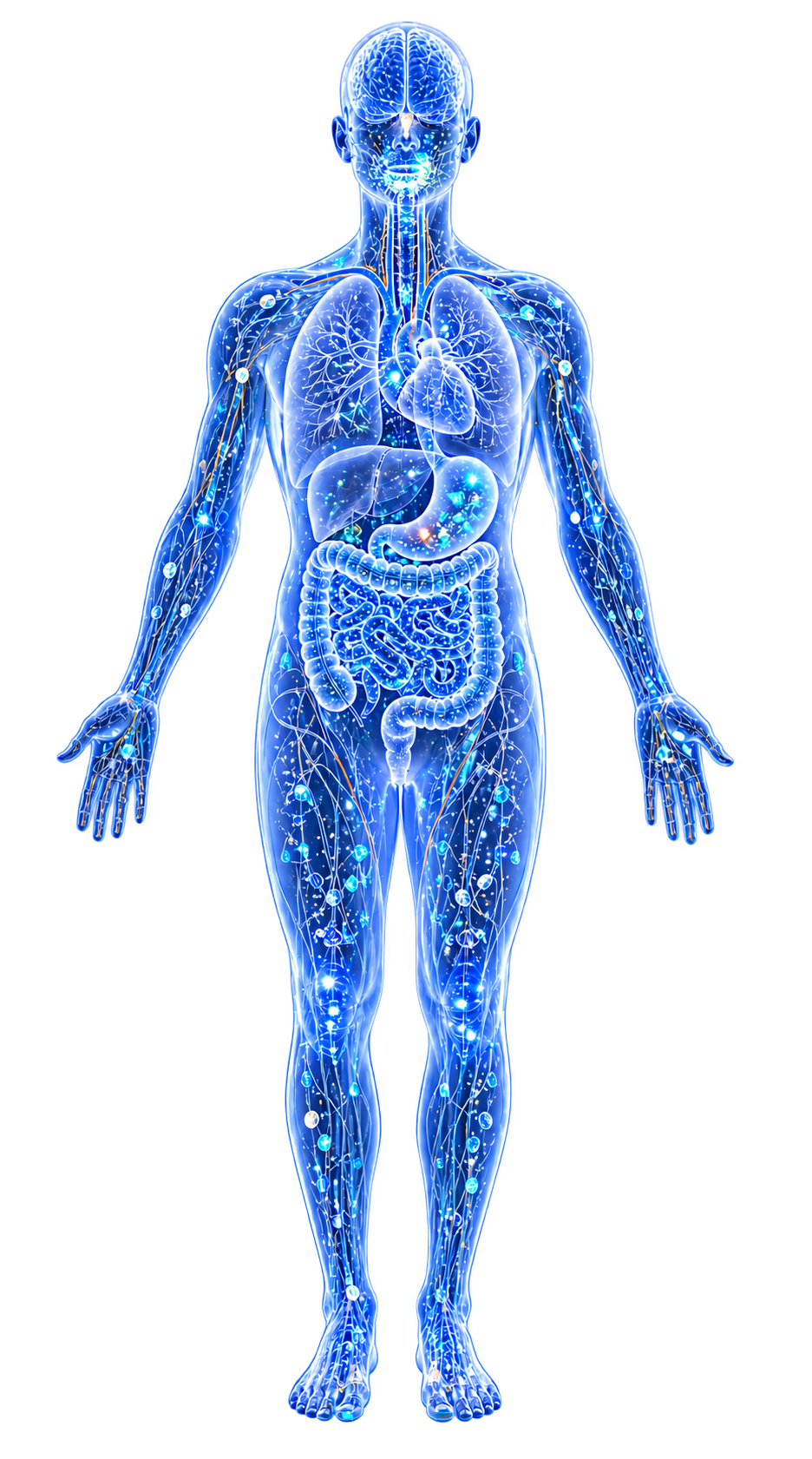
The exposome is the totality of environmental exposures an individual experiences from conception to death. Coined by Christopher Wild in 2005, it complements the genome by capturing the environmental side of the gene-environment equation.
Metals are among the most quantifiable, mechanistically understood, and—crucially—modifiable components of the exposome. This wiki exists, in large part, because the metal exposome is where scientific precision meets actionable public health.
Contents
1. Structure of the Exposome2. Why Metals Are the Ideal Exposome Component3. The Mixture Problem4. Temporal Dimensions5. Relevance to This Wiki6. See AlsoStructure of the Exposome#
General External Environment#
Air quality—industrial emissions, vehicular exhaust (lead historically, now cadmium, arsenic, nickel particulates), wildfire smoke. Water—arsenic in groundwater (Bangladesh, West Bengal, parts of the US), lead from aging infrastructure (Flint, Michigan), cadmium from mining runoff.
Soil—legacy contamination from smelting, mining, agricultural chemicals (arsenic-based pesticides, cadmium in phosphate fertilizers). Food—rice (arsenic accumulator), cocoa/chocolate (cadmium), seafood (mercury), leafy greens and legumes (nickel). See Dietary Nickel Exposure, Environmental Metal Exposure.
Specific External Environment#
Occupation—welders (nickel, chromium, manganese), miners (multiple metals), battery workers (lead, cadmium), dental workers (mercury). Consumer products—cosmetics (lead in lipstick, mercury in skin-lightening creams), cookware (aluminum), jewelry (nickel), cigarettes (cadmium, lead). Medical exposures—implants (cobalt, chromium, nickel from joint prostheses), dental amalgam (mercury), contrast agents (gadolinium).
Lifestyle—smoking (cadmium, lead), alcohol (alters metal absorption), recreational drug use.
Internal Environment#
Microbiome—the Gut-Metal-Microbiome Interactions as a metabolic filter that transforms the external exposome into internal exposures. Microbial metal biotransformation (methylation of mercury and arsenic by gut bacteria) means the internal metal exposome differs from the external one.
Metabolome—downstream metabolic consequences of metal exposure. Epigenome—metal-induced epigenetic modifications that persist beyond the original exposure. See Developmental Metal Vulnerability: Critical Windows of Susceptibility.
Inflammasome—the chronic inflammatory state resulting from cumulative exposures.
Why Metals Are the Ideal Exposome Component#
Metals offer unique advantages for exposome research:
- Measurable—blood, urine, hair, and nail metal levels can be quantified with high precision (ICP-MS)
- Persistent—many metals have long biological half-lives (cadmium: 10-30 years; lead in bone: decades), providing integrated exposure measures
- Mechanistically understood—unlike many environmental chemicals, metals have well-characterized molecular targets (Oxidative Stress, NF-kB Signaling Pathway, DNA Damage in Metal Carcinogenesis, Mis-Metallation)
- Dose-response relationships—even at "low" levels, metals show continuous dose-response curves for many outcomes
- Modifiable—dietary changes, water filtration, occupational protections, and Metal Chelation Therapy can reduce exposure
The Mixture Problem#
Real-world exposure is never to a single metal. Humans carry detectable levels of dozens of metals simultaneously. The exposome framework forces confrontation with.
Additive effects—do cadmium (Cd) + lead (Pb) + As simply sum their toxicities? Synergistic effects—evidence that cadmium + lead together produce more than additive kidney damage. Antagonistic effects—selenium (Se) protects against mercury (Hg) toxicity; zinc (Zn) partially protects against cadmium.
Essential-toxic interactions—iron deficiency increases lead and cadmium absorption; zinc deficiency increases cadmium retention.
Temporal Dimensions#
The exposome is not static. Critical windows include. Preconception—parental metal exposure affects gamete epigenetics.
In utero—the developmental window where metals cross the placenta and program lifelong disease risk. Early childhood—developing blood-brain barrier, immature detoxification, hand-to-mouth behavior.
Occupational years—peak exposure period for many metals. Aging—bone remodeling releases stored lead; declining renal function reduces metal excretion.
Relevance to This Wiki#
Every disease entity in this wiki sits at the intersection of metal exposome components.
The Gut-Metal-Microbiome Interactions framework is fundamentally an exposome framework—it recognizes that metals enter through environmental routes, are transformed by the microbiome, and produce disease through mechanistic pathways that depend on the totality of co-exposures.
Understanding the exposome is understanding why the same metal produces different diseases in different people.
See Also#
- Environmental Metal Exposure—the primary exposure routes
- Developmental Metal Vulnerability: Critical Windows of Susceptibility—the critical windows
- Gut-Metal-Microbiome Interactions—the microbiome as exposome filter
- Biomarkers—measuring the exposome
- Metal Chelation Therapy—intervening on the exposome
References 5
Numbered by first appearance in the article, then reconciled with its declared source list.
- 1
Jessica Briffa, Emmanuel Sinagra, Renald Blundell (2020). Heavy Metal Pollution in the Environment and Their Toxicological Effects on Humans. Heliyon.
- 2
M. Firoze Khan, Hui Wang (2020). Environmental Exposures and Autoimmune Diseases: Contribution of Gut Microbiome. Frontiers in Immunology.
- 3
★Chin-Chan M, Navarro-Yepes J, Quintanilla-Vega B (2015). Environmental pollutants as risk factors for neurodegenerative disorders: Alzheimer and Parkinson diseases. Frontiers in Cellular Neuroscience.
- 4
★Monisha Jaishankar, Tenzin Tseten, Naresh Anbalagan et al. (2014). Toxicity, Mechanism and Health Effects of Some Heavy Metals. Interdisciplinary Toxicology.
- 5
★Balali-Mood M, Naseri K, Tahergorabi Z et al. (2021). Toxic Mechanisms of Five Heavy Metals: Mercury, Lead, Chromium, Cadmium, and Arsenic. Frontiers in Pharmacology.
Article network
Mentioned here 10
Pages linking here 7
Connect the evidence
Publicly readable discussion by ORCID-authenticated researchers. Questions, interpretation, methods, corrections, and new evidence stay attached to this record.
No discussion yet. Start with a precise question or a source-backed observation.
Activity and accepted changes
Accepted researcher context, editorial status, public discussion, and upstream Git revisions are shown together. Pending, declined, and withdrawn proposals remain private.
- published revision
massive wiki expansion: 149 stubs fixed, 100+ new pages, Rule 15 scan, keystone papers
WikiBiome Deploy Bot · +26 −26
Inspect exact Git diff ↗ - published revision
nightly maintenance: 94 stub demotions, 181 source_count fixes, 22 auto-discovered stubs, 5 adversarial audits, 3 boundary fixes, 3 evidence-level corrections
WikiBiome Deploy Bot · +1 −0
Inspect exact Git diff ↗ - published revision
pre-overnight checkpoint 2026-04-18
WikiBiome Deploy Bot · +4 −2
Inspect exact Git diff ↗ - published revision
WikiBiome update — 2026-04-11 22:49
WikiBiome Deploy Bot · +75 −0
Inspect exact Git diff ↗