
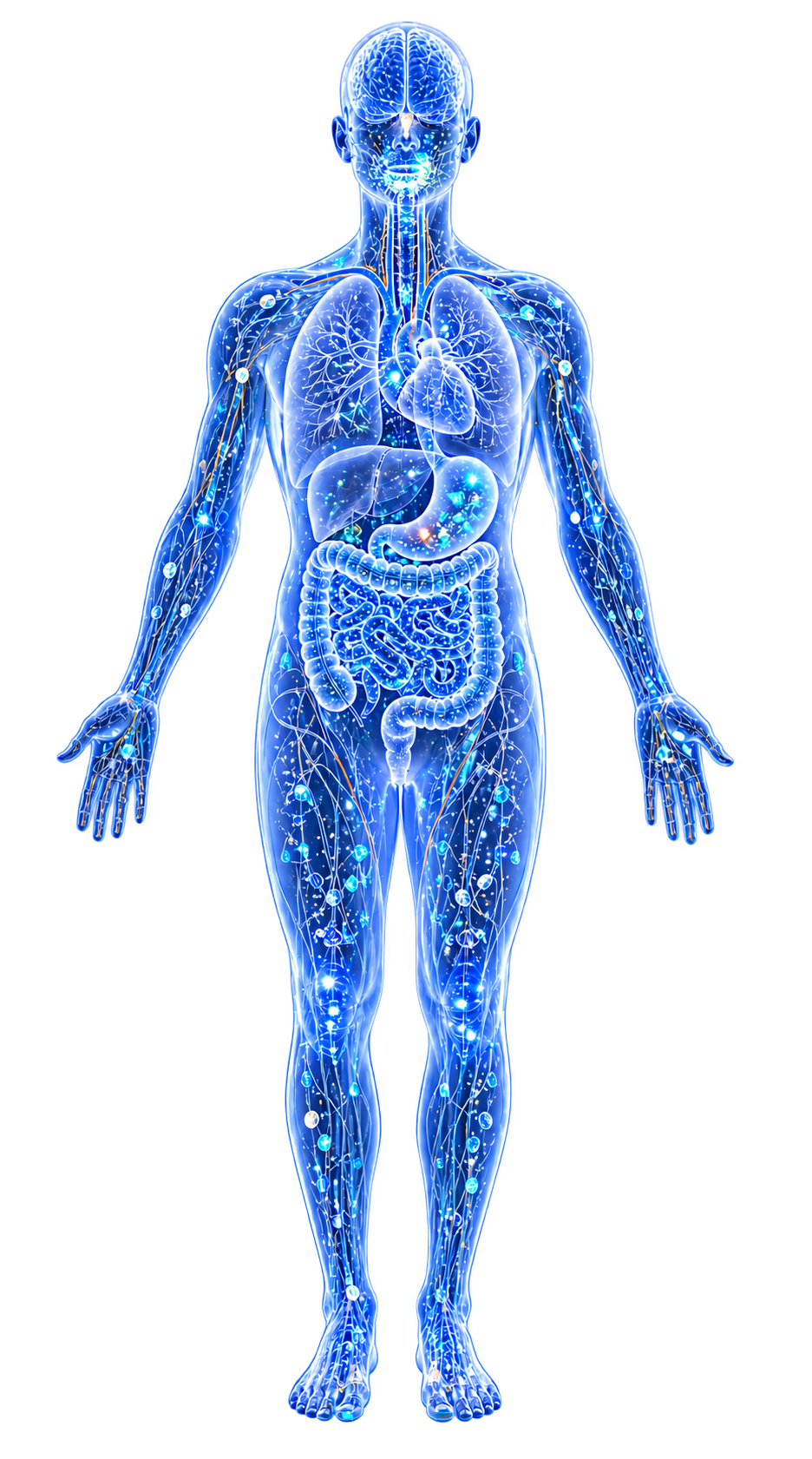
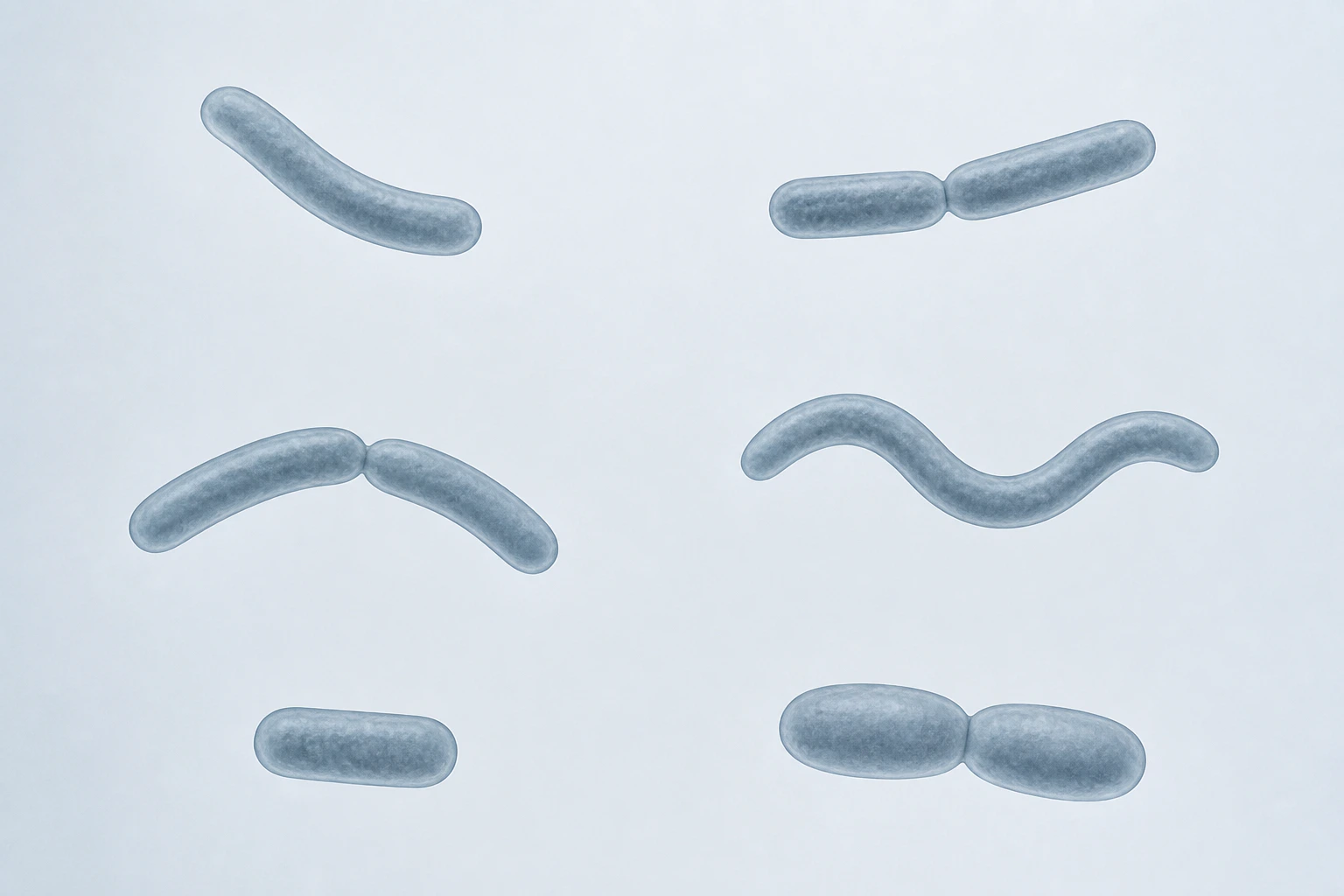
Selected Desulfovibrionales descendant diversity, shown as nine curved, sigmoid, near-straight, or short rounded rod bodies in six groupings. This is a representative morphology diversity reconstruction for the order, not a universal order-level form, and is non-diagnostic and not a micrograph.
Scientific media record1 verified identifier
- Subject
- Desulfovibrionalestaxon · order
- Identifiers
- NCBITaxon:213115
- Review
- Editorial review completeIdentifiers authority-verified · Accessibility validated · · desulfovibrionales|desulfovibrionales-microbial-community-v1.webp
- Digital source
- Trained-algorithmic mediaCreated with a trained generative algorithm and reviewed by WikiBiome for subject identity, scientific framing, identifiers, provenance, and accessibility.
- Scientific basis
- Desulfovibrionales — NCBI TaxonomyDesulfovibrionales — LPSNMicroscopic identification of sulfate-reducing bacteriaDesulfovibrionales morphology review
- License
- CC BY-SA 4.0Created
An order of Gram-negative, strictly anaerobic sulfate-reducing bacteria (SRB) within the class Deltaproteobacteria. The defining metabolic feature of Desulfovibrionales is dissimilatory sulfate reduction—using sulfate as a terminal electron acceptor and producing hydrogen sulfide (H2S) as a metabolic end product.
This seemingly obscure biochemistry has major clinical implications: H2S is a potent cytotoxin, and Mendelian randomization has established Desulfovibrionales as the only Bonferroni-significant causal risk taxon for chronic kidney disease.
Evidence map2 cited passagesInspect provenance +
The landmark Mendelian randomization finding: Desulfovibrionales is the only taxon reaching Bonferroni-corrected significance for causal CKD risk (IVW OR = 1.15, 95% CI 1.05-1.26, p = 0.0026, statistical power = 0.93). Confirmed by MR-PRESSO (OR = 1.15, p = 0.001).
(Mendelian randomization, n=480,698)—Established Desulfovibrionales as the only Bonferroni-significant causal risk taxon for CKD; the strongest genetic evidence linking a gut taxon to kidney disease.
Contents
1. Taxonomy2. Metal Dependencies3. Key Enzymes and Virulence Factors4. Ecological Role5. Conditions Associated6. Interkingdom Relationships7. Key Studies8. Open Questions9. Cross-ReferencesTaxonomy#
Order Desulfovibrionales, class Deltaproteobacteria, phylum Proteobacteria. Key families: Desulfovibrionaceae, Desulfomicrobiaceae, Desulfohalobiaceae. The gut-relevant genus Desulfovibrio belongs to family Desulfovibrionaceae within this order.
Reclassification note: recent phylogenomic analyses have proposed moving Deltaproteobacteria to a separate phylum (Desulfobacterota), though classical taxonomy still places them within Proteobacteria.
Metal Dependencies#
Iron. Dissimilatory sulfite reductase (DsrAB), the terminal enzyme in sulfate reduction, contains a siroheme-[4Fe-4S] coupled cofactor—one of the most iron-intensive catalytic centers in biology.
Multiple ferredoxins and cytochromes in the sulfate reduction pathway require iron-sulfur clusters. Iron availability in the gut directly influences the metabolic capacity of SRB and thus H2S production rates.
Molybdenum. Sulfate adenylyltransferase (Sat) and adenylylsulfate reductase (AprAB) contain molybdopterin cofactors essential for the initial activation of sulfate. Molybdenum bioavailability may be a rate-limiting factor for sulfate-reducing metabolism in low-molybdenum (Mo) environments.
Nickel. [NiFe] hydrogenases are widespread in Desulfovibrionales, enabling H2 oxidation as an energy source—a critical function in interspecies hydrogen transfer within the gut.
Nickel-dependent hydrogenase activity links Desulfovibrionales to the broader H2 economy of the Gut Microbiome.
Key Enzymes and Virulence Factors#
Dissimilatory sulfite reductase (DsrAB): The signature enzyme of sulfate reduction. Converts sulfite to sulfide (H2S) in the terminal step of dissimilatory sulfate reduction. The iron-intensive cofactor structure makes this enzyme a direct link between iron ecology and H2S toxicity.
[NiFe] Hydrogenase: Oxidizes H2 produced by fermentative gut bacteria, coupling hydrogen consumption to sulfate reduction. This interspecies hydrogen transfer is a key ecological interaction in the anaerobic gut.
Sulfate adenylyltransferase: Activates sulfate for reduction; molybdenum-dependent.
Ecological Role#
In the Healthy Gut#
Desulfovibrionales are normal members of the colonic microbiota at low abundance (~1-2% of total community). At homeostatic levels, they participate in the sulfur cycle and contribute to interspecies hydrogen transfer, consuming H2 that would otherwise accumulate and inhibit fermentative metabolism.
In Dysbiosis#
When Desulfovibrionales expand beyond homeostatic levels, H2S production overwhelms the capacity of colonocytes to detoxify sulfide (via sulfide:quinone oxidoreductase). Excess H2S.
Inhibits Butyrate oxidation in colonocytes, compromising the primary energy source of the colonic epithelium. Increases intestinal permeability by disrupting tight junction proteins. Induces systemic Metal-Driven Inflammation via endothelial damage and NF-kB activation.
Increases cholesterol absorption through mechanisms not yet fully characterized.
Conditions Associated#
Chronic Kidney Disease#
The landmark Mendelian randomization finding: Desulfovibrionales is the only taxon reaching Bonferroni-corrected significance for causal CKD risk (IVW OR = 1.15, 95% CI 1.05-1.26, p = 0.0026, statistical power = 0.93). Confirmed by MR-PRESSO (OR = 1.15, p = 0.001).[1]Luo 2023 — Causal Effects of Gut Microbiota on the Risk of Chronic Kidney Disease: A Mendelian Randomization StudyMingli Luo, Jiahao Cai, Shulu Luo et al. · 2023Open reference 1 ↓
The proposed mechanism: Desulfovibrionales-mediated H2S production induces systemic inflammation, increases cholesterol absorption, and causes endothelial damage contributing to renal decline. This positions H2S as a direct nephrotoxin operating through the gut-kidney axis.
Interkingdom Relationships#
Desulfovibrionales compete with methanogens (e.g., Methanobrevibacter) for H2 in the gut. The balance between sulfate reduction and methanogenesis determines whether the dominant gaseous end product is H2S or CH4, with direct implications for colonic health.
In biofilm communities, SRB can create localized microenvironments with elevated H2S that inhibit competing butyrate producers, further destabilizing the colonic ecosystem.
Key Studies#
- [1]Luo 2023 — Causal Effects of Gut Microbiota on the Risk of Chronic Kidney Disease: A Mendelian Randomization StudyMingli Luo, Jiahao Cai, Shulu Luo et al. · 2023Open reference 1 ↓ (Mendelian randomization, n=480,698)—Established Desulfovibrionales as the only Bonferroni-significant causal risk taxon for CKD; the strongest genetic evidence linking a gut taxon to kidney disease.
Open Questions#
Unresolved questions identified by the current evidence record.
01Does reducing Desulfovibrionales slow CKD progression?+
The causal MR evidence is strong (power = 0.93), but no dietary or probiotic RCT targeting this taxon in CKD patients has been conducted.
02Which dietary factors modulate Desulfovibrionales abundance?+
Sulfur amino acids (methionine, cysteine) and dietary sulfate are substrates; protein-heavy Western diets may expand SRB populations.
03What is the relationship between iron supplementation and SRB expansion?+
Given the iron-intensive enzymology of sulfate reduction, oral iron supplements could feed Desulfovibrionales growth in CKD patients already receiving iron therapy.
Cross-References#
- Desulfovibrio—the key gut-relevant genus within this order
- Chronic Kidney Disease—the disease with the strongest causal evidence for Desulfovibrionales involvement
- Iron—essential cofactor for DsrAB and multiple electron carriers in the sulfate reduction pathway
- Nickel—cofactor for NiFe hydrogenases in interspecies hydrogen transfer
- butyrate—H2S inhibits butyrate oxidation in colonocytes, compromising epithelial energy metabolism
- hydrogen-sulfide—the cytotoxic end product of Desulfovibrionales metabolism
References 5
Numbered by first appearance in the article, then reconciled with its declared source list.
- 1
Mingli Luo, Jiahao Cai, Shulu Luo et al. (2023). Luo 2023 — Causal Effects of Gut Microbiota on the Risk of Chronic Kidney Disease: A Mendelian Randomization Study. Frontiers in Cellular and Infection Microbiology.
- 2
Zhoushan Feng, Yuliang Zhang, Yiyu Lai et al. (2024). Feng 2024 — Causal Relationship between Gut Microbiota and Kidney Diseases: Mendelian Randomization. Frontiers in Immunology.
- 3
Feihong Ren, Qiubai Jin, Qi Jin et al. (2023). Ren 2023 — Genetic Evidence Supporting the Causal Role of Gut Microbiota in CKD and Chronic Systemic Inflammation. Frontiers in Immunology.
- 4
Mingli Luo, Jiahao Cai, Shulu Luo et al. (2023). Luo 2023 — Causal Effects of Gut Microbiota on CKD Risk: Mendelian Randomization. Frontiers in Cellular and Infection Microbiology.
- 5
María V. Miranda, Fernanda C. González, Osvaldo S. Paredes-Godoy et al. (2022). Miranda 2022 — Characterization of Metal(loid)s and Antibiotic Resistance in Bacteria of Human Gut Microbiota from CKD Subjects. Biological Research.
Article network
Connect the evidence
Publicly readable discussion by ORCID-authenticated researchers. Questions, interpretation, methods, corrections, and new evidence stay attached to this record.
No discussion yet. Start with a precise question or a source-backed observation.
Published page changes
This record shows only material changes published on this page, including changes to its content, evidence, conclusions, or author context. Internal processes and discussion activity are excluded. Pending, declined, and withdrawn proposals remain private.
- published revision
Added references: feng-2024-gut-microbiota-kidney-diseases-mr; ren-2023-genetic-evidence-gut-microbiota-ckd-inflammation; luo-2023-causal-gut-microbiota-ckd-mendelian-randomization; miranda-2022-metalloids-antibiotic-resistance-ckd-gut.
Added references: feng-2024-gut-microbiota-kidney-diseases-mr; ren-2023-genetic-evidence-gut-microbiota-ckd-inflammation; luo-2023-causal-gut-microbiota-ckd-mendelian-randomization; miranda-2022-metalloids-antibiotic-resistance-ckd-gut. Removed references: liu-2026-oral-microbiome-ckd-mendelian-randomization. · WikiBiome Deploy Bot · +24 −21
Inspect exact Git diff ↗ - published revision
Created “Desulfovibrionales”: An order of Gram-negative, strictly anaerobic sulfate-reducing bacteria (SRB) within the class Deltaproteobacteria. The defining metabolic feature of Desulfovibrionales is dissimilatory sulfate…
Created “Desulfovibrionales”: An order of Gram-negative, strictly anaerobic sulfate-reducing bacteria (SRB) within the class Deltaproteobacteria. The defining metabolic feature of Desulfovibrionales is dissimilatory sulfate… Published sections: Desulfovibrionales; Taxonomy; Metal Dependencies; Key Enzymes and Virulence Factors; In the Healthy Gut; In Dysbiosis; Chronic Kidney Disease; Interkingdom Relationships; Key Studies; Open Questions; Cross-References. · WikiBiome Deploy Bot · +98 −0
Inspect exact Git diff ↗