
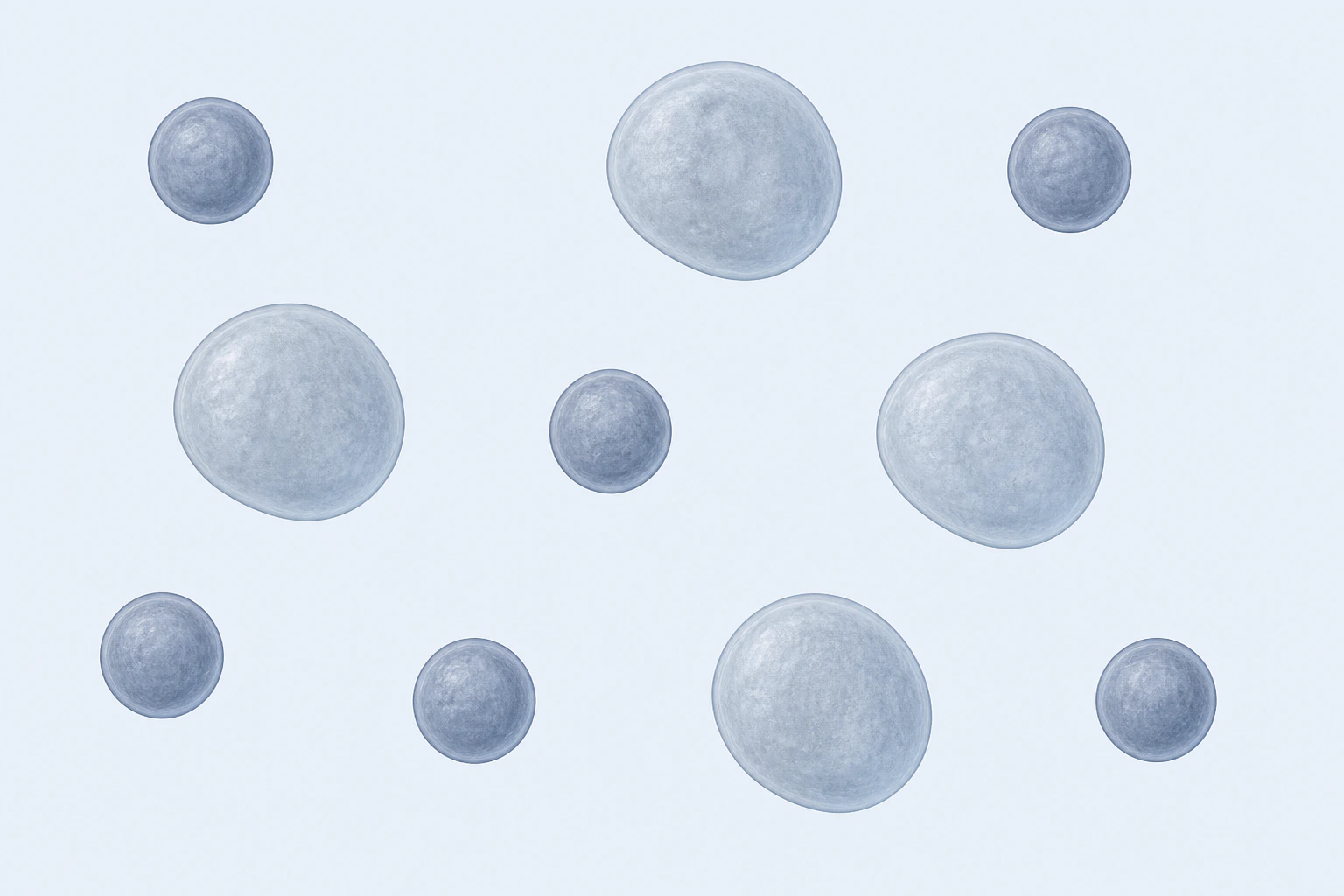
Selected Chlamydia body-form size classes, shown as ten isolated bodies. This genus-level reconstruction has no metrological scale, is non-exhaustive and non-diagnostic, and is not a micrograph or lifecycle diagram.
Scientific media record1 verified identifier
- Subject
- Chlamydiataxon · genus
- Identifiers
- NCBITaxon:810
- Review
- Editorial review completeIdentifiers authority-verified · Accessibility validated · · chlamydia|chlamydia-morphology-v1.webp
- Digital source
- Trained-algorithmic mediaCreated with a trained generative algorithm and reviewed by WikiBiome for subject identity, scientific framing, identifiers, provenance, and accessibility.
- Scientific basis
- Chlamydia — NCBI TaxonomyChlamydia — LPSNChlamydial developmental-form ultrastructureComparative chlamydial body morphology
- License
- CC BY-SA 4.0Created
Chlamydia is a genus of obligate intracellular, Gram-negative bacteria with a unique biphasic developmental cycle. The genus includes three species pathogenic to humans: Chlamydia trachomatis (STI and trachoma), C. pneumoniae (respiratory infections, atherosclerosis associations), and C. psittaci (zoonotic pneumonia).
All Chlamydia species share absolute iron dependency for intracellular replication, making the genus a central example of nutritional immunity as antimicrobial defense (Karen's Brain Primitive 4).
For species-specific biology, see Chlamydia trachomatis.
Evidence map5 cited passagesInspect provenance +
Iron dependency: The reticulate body requires host-derived iron; IFN-gamma-induced iron restriction is the primary host defense.
Pelvic inflammatory disease and tubal infertility: C. trachomatis ascending infection.
Prostatitis: C. trachomatis detected in prostatic secretions.
Endometriosis context: Chlamydia detected in vaginal/cervical microbiome of endometriosis patients.
Ovarian cancer: Part of the reproductive tract microbiome discussion in ovarian cancer oncobiosis.
Disease Associations#
Pelvic inflammatory disease and tubal infertility: C. trachomatis ascending infection.[2]Jin 2025 — Dietary Fiber Intake and Pelvic Inflammatory Disease (NHANES 2015–2018)Hongyu Jin, Zhaoyuan Niu, Xinyue Zhao · 2025Open reference 2 ↓ Prostatitis: C. trachomatis detected in prostatic secretions.[3]Magri 2018 — Multidisciplinary Approach to ProstatitisVittorio Magri, Matteo Boltri, Tommaso Cai et al. · 2018Open reference 3 ↓ Endometriosis context: Chlamydia detected in vaginal/cervical microbiome of endometriosis patients.[4]Shen 2022 — Vaginal Microecological Characteristics of Women in Different Physiological and Pathological PeriodsLiping Shen, Wei Zhang, Yi Yuan et al. · 2022Open reference 4 ↓
Ovarian cancer: Part of the reproductive tract microbiome discussion in ovarian cancer oncobiosis.[5]The role of the microbiome in ovarian cancer: mechanistic insights into oncobiosis and to bacterial metabolite signalingSipos A, Ujlaki G, Miko E et al. · 2021Open reference 5 ↓
Cross-References#
- Chlamydia trachomatis—species page with full iron dependency and vaginal microbiome context
- Iron—absolute requirement for intracellular replication
- Nutritional Immunity (Metal Sequestration)—IFN-gamma-induced iron restriction as primary defense
- Pelvic Inflammatory Disease—ascending Chlamydia infection
References 6
Numbered by first appearance in the article, then reconciled with its declared source list.
- 1
Chen H, Wang L, Zhao L et al. (2021). Chen 2021 — Alterations of vaginal microbiota in women with infertility and Chlamydia trachomatis infection. Frontiers in Cellular and Infection Microbiology.
- 2
Hongyu Jin, Zhaoyuan Niu, Xinyue Zhao (2025). Jin 2025 — Dietary Fiber Intake and Pelvic Inflammatory Disease (NHANES 2015–2018). BMC Women's Health.
- 3
Vittorio Magri, Matteo Boltri, Tommaso Cai et al. (2018). Magri 2018 — Multidisciplinary Approach to Prostatitis. Archivio Italiano di Urologia e Andrologia.
- 4
Liping Shen, Wei Zhang, Yi Yuan et al. (2022). Shen 2022 — Vaginal Microecological Characteristics of Women in Different Physiological and Pathological Periods. Frontiers in Cellular and Infection Microbiology.
- 5
Sipos A, Ujlaki G, Miko E et al. (2021). The role of the microbiome in ovarian cancer: mechanistic insights into oncobiosis and to bacterial metabolite signaling. Molecular Medicine.
- 6
Qian Yang, Yaping Wang, Xinyi Wei et al. (2020). Yang 2020 — Vaginal Microbiome Alterations in HPV16 Infection by Shotgun Metagenomics. Frontiers in Cellular and Infection Microbiology.
Article network
Connect the evidence
Publicly readable discussion by ORCID-authenticated researchers. Questions, interpretation, methods, corrections, and new evidence stay attached to this record.
No discussion yet. Start with a precise question or a source-backed observation.
Activity and accepted changes
Accepted researcher context, editorial status, public discussion, and upstream Git revisions are shown together. Pending, declined, and withdrawn proposals remain private.
- published revision
massive wiki expansion: 149 stubs fixed, 100+ new pages, Rule 15 scan, keystone papers
WikiBiome Deploy Bot · +55 −0
Inspect exact Git diff ↗