
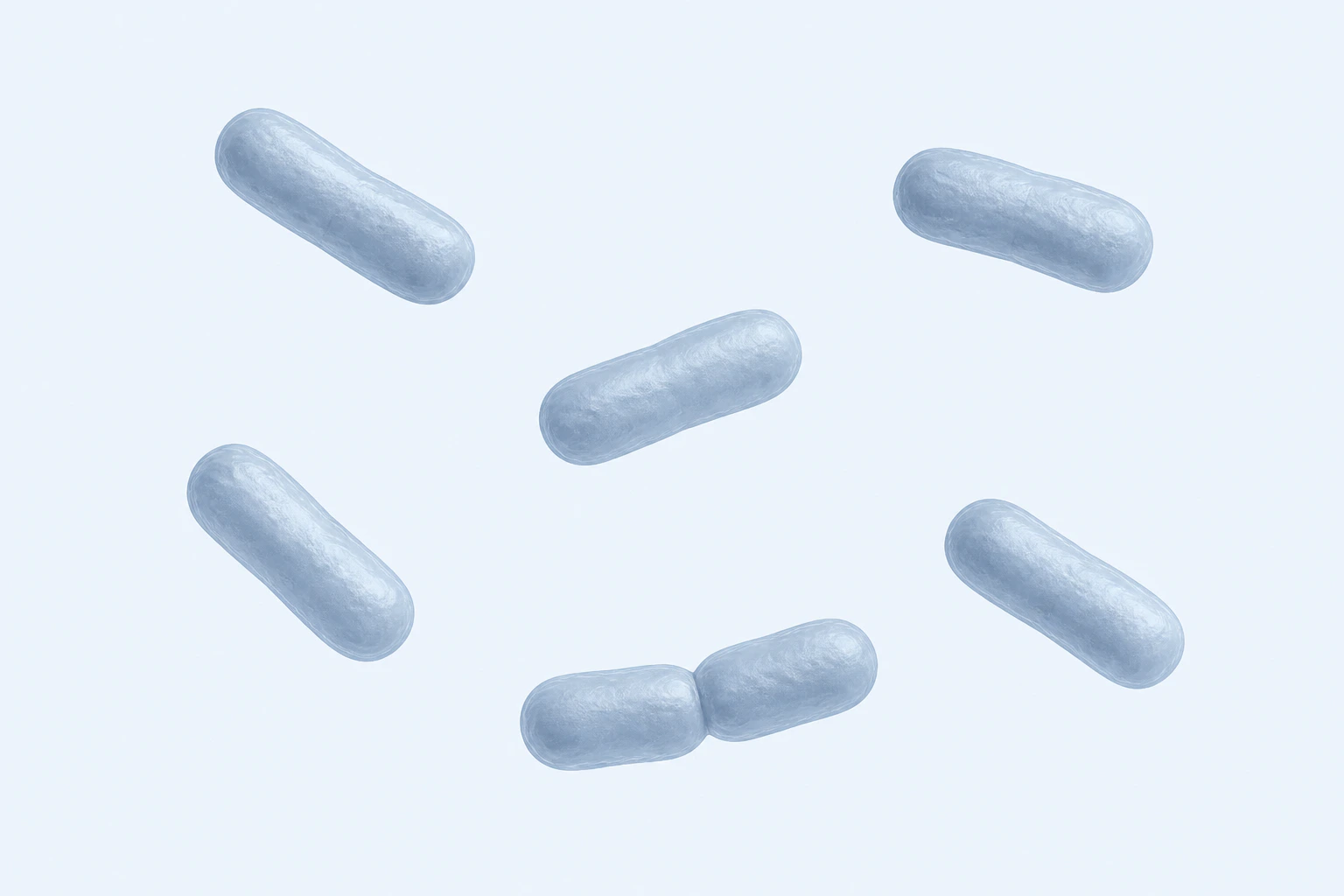
Representative unstressed Bifidobacterium breve rod morphology, shown as seven cells in six groupings. This reconstruction is not diagnostic and is not a micrograph.
Scientific media record1 verified identifier
- Subject
- Bifidobacterium brevetaxon · species
- Identifiers
- NCBITaxon:1685
- Review
- Editorial review completeIdentifiers authority-verified · Accessibility validated · · bifidobacterium-breve|bifidobacterium-breve-morphology-v1.webp
- Digital source
- Trained-algorithmic mediaCreated with a trained generative algorithm and reviewed by WikiBiome for subject identity, scientific framing, identifiers, provenance, and accessibility.
- Scientific basis
- Bifidobacterium breve — NCBI TaxonomyBifidobacterium breve type strainBifid Shape Is Intrinsic to Bifidobacterium adolescentis
- License
- CC BY-SA 4.0Created
Bifidobacterium breve is a Gram-positive, obligate anaerobic species within the phylum Actinobacteria, predominantly found in the infant gut and breast milk. It is among the earliest colonizers of the neonatal intestine and plays a key role in human milk oligosaccharide metabolism.
As a widely studied probiotic species, B. breve has attracted attention for its immunomodulatory properties, particularly in neuropsychiatric contexts.
In a systematic review of probiotic interventions for schizophrenia, B. breve-containing formulations contributed to significant reductions in TNF-alpha levels, suggesting anti-inflammatory effects relevant to the gut-brain axis (,[1]A Systematic Review of the Effect of Probiotic Supplementation on Schizophrenia SymptomsNg QX, Soh AYS, Venkatanarayanan N et al. · 2019Open reference 1 ↓ systematic review).
The species has also been evaluated in autism spectrum disorder, where probiotic supplementation including B. breve showed potential for modulating gut-brain signaling and improving behavioral outcomes (,[2]Feng 2023 — Probiotics in Treatment of ASD: Gut-Brain Axis PerspectivesPengya Feng, Shuai Zhao, Yangyang Zhang et al. · 2023Open reference 2 ↓ review).
Evidence map1 cited passagesInspect provenance +
In a systematic review of probiotic interventions for schizophrenia, B. breve-containing formulations contributed to significant reductions in TNF-alpha levels, suggesting anti-inflammatory effects relevant to the gut-brain axis (, systematic review). The species has also been evaluated in autism spectrum disorder, where probiotic supplementation including B
Contents
1. Cross-ReferencesCross-References#
- Actinobacteria (Actinomycetota)—parent phylum
- Autism Spectrum Disorder—associated condition
- Schizophrenia—associated condition
- Gut-Brain Axis—primary mechanism of action
References 7
Numbered by first appearance in the article, then reconciled with its declared source list.
- 1
Ng QX, Soh AYS, Venkatanarayanan N et al. (2019). A Systematic Review of the Effect of Probiotic Supplementation on Schizophrenia Symptoms. Neuropsychobiology.
- 2
Pengya Feng, Shuai Zhao, Yangyang Zhang et al. (2023). Feng 2023 — Probiotics in Treatment of ASD: Gut-Brain Axis Perspectives. Frontiers in Microbiology.
- 3
Khatoon S, Kalam N, Rashid S et al. (2023). Effects of gut microbiota on neurodegenerative diseases. Frontiers in Aging Neuroscience.
- 4
Hooi-Leng Ser, Siu-Jung Au Yong, Mohamad Nasir Shafiee et al. (2023). Ser 2023 — Current Updates on the Role of Microbiome in Endometriosis: A Narrative Review. Microorganisms.
- 5
Ye N, Song X, Yu J et al. (2025). Effects of Gut Microbiota Interventions on Patients with Schizophrenia: A Systematic Review and Meta-Analysis. Frontiers in Microbiology.
- 6
Yasufumi Saito, Takao Hinoi, Tomohiro Adachi et al. (2019). Synbiotics suppress colitis-induced tumorigenesis in a colon-specific cancer mouse model. PLoS ONE.
- 7
Chen H, Wang L, Zhao L et al. (2021). Chen 2021 — Alterations of vaginal microbiota in women with infertility and Chlamydia trachomatis infection. Frontiers in Cellular and Infection Microbiology.
Article network
Connect the evidence
Publicly readable discussion by ORCID-authenticated researchers. Questions, interpretation, methods, corrections, and new evidence stay attached to this record.
No discussion yet. Start with a precise question or a source-backed observation.
Published page changes
This record shows only material changes published on this page, including changes to its content, evidence, conclusions, or author context. Internal processes and discussion activity are excluded. Pending, declined, and withdrawn proposals remain private.
- published revision
Created “Bifidobacterium breve”: Bifidobacterium breve is a Gram-positive, obligate anaerobic species within the phylum Actinobacteria, predominantly found in the infant gut and breast milk. It is among the earliest colonizers of the…
Created “Bifidobacterium breve”: Bifidobacterium breve is a Gram-positive, obligate anaerobic species within the phylum Actinobacteria, predominantly found in the infant gut and breast milk. It is among the earliest colonizers of the… Published sections: Bifidobacterium breve; Cross-References. · WikiBiome Deploy Bot · +39 −0
Inspect exact Git diff ↗