
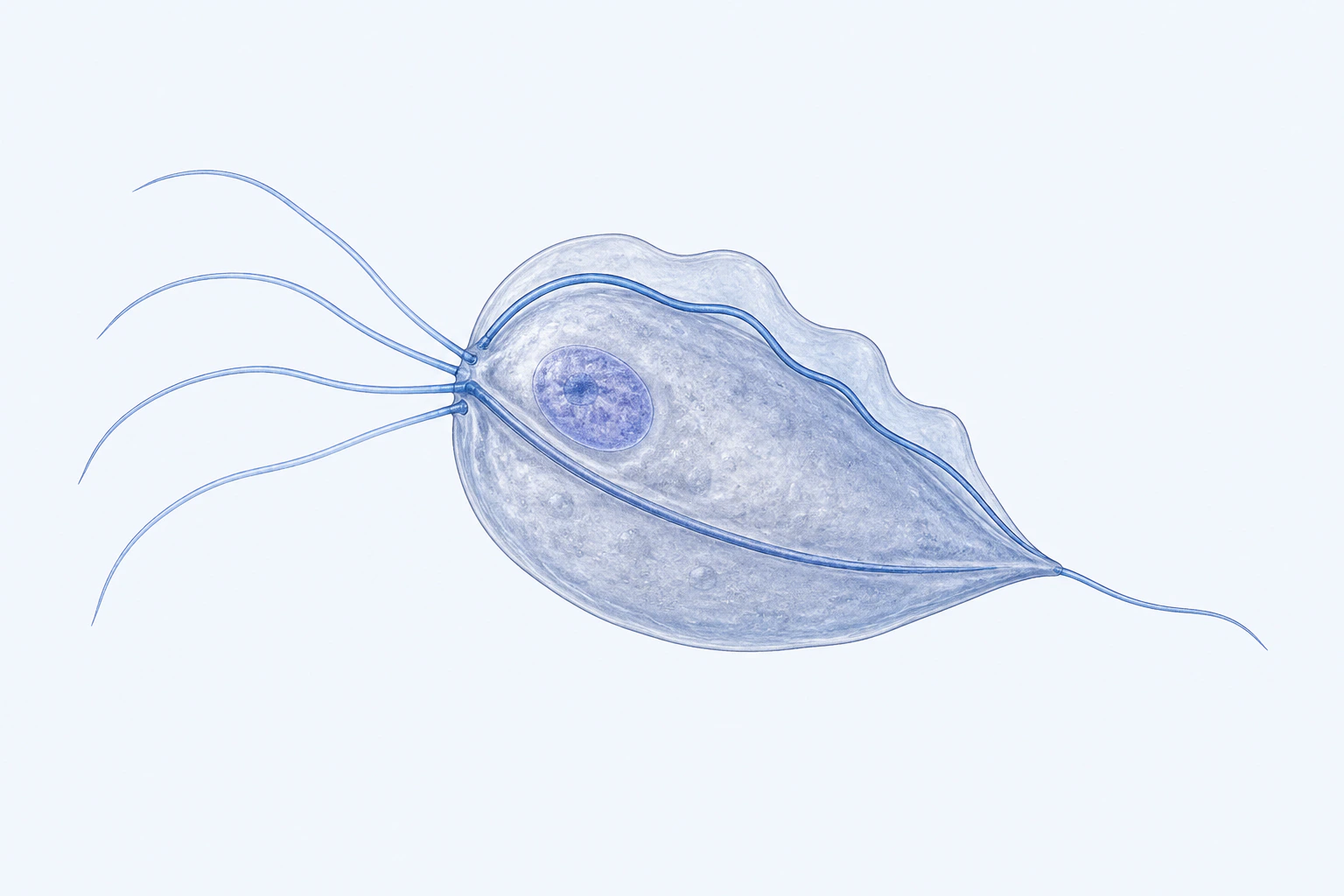
Trichomonas vaginalis trophozoite reconstruction showing the CDC-described flagellar arrangement. Representative, non-diagnostic, and not a micrograph.
Scientific media record1 verified identifier
- Subject
- Trichomonas vaginalistaxon · species
- Identifiers
- NCBITaxon:5722
- Review
- Editorial review completeIdentifiers authority-verified · Accessibility validated · · trichomonas-vaginalis|trichomonas-vaginalis-morphology-v1.webp
- Digital source
- Trained-algorithmic mediaCreated with a trained generative algorithm and reviewed by WikiBiome for subject identity, scientific framing, identifiers, provenance, and accessibility.
- Scientific basis
- Trichomonas vaginalis — NCBI TaxonomyTrichomoniasis — DPDx
- License
- CC BY-SA 4.0Created
Trichomonas vaginalis is a flagellated protozoan parasite and the causative agent of trichomoniasis, the most common non-viral sexually transmitted infection worldwide. Despite being a eukaryotic parasite rather than a bacterium, it is classified here under the microbe subtype for vault consistency.
Evidence map2 cited passagesInspect provenance +
Lactoferrin, the host's primary iron-sequestration protein at mucosal surfaces, directly antagonizes T. vaginalis by restricting free iron availability (). Trichomoniasis disrupts the vaginal Lactobacillus-dominated ecosystem, displacing protective commensals and facilitating secondary bacterial vaginosis—an ecological cascade that illustrates metal-driven
T. vaginalis can also ascend to the male reproductive tract, contributing to chronic prostatitis syndromes ().
Iron Dependency as Achilles' Heel#
T. vaginalis is profoundly iron-dependent. Iron acquisition is essential for its adhesion to vaginal epithelium, cytotoxicity, and immune evasion. The organism upregulates iron-binding adhesins in iron-rich environments and downregulates them under iron restriction.
This iron dependency makes T. vaginalis a textbook example of Karen's Brain Primitive 4—microbial metal dependency as therapeutic target.
Lactoferrin, the host's primary iron-sequestration protein at mucosal surfaces, directly antagonizes T. vaginalis by restricting free iron availability ([1]Roberts 2019 — Mucosal Lactoferrin Response to Genital Tract Infections Is Associated with Iron and Nutritional BiomarkersS. A. Roberts, L. Brabin, S. Diallo et al. · 2019Open reference 1 ↓). Trichomoniasis disrupts the vaginal Lactobacillus-dominated ecosystem, displacing protective commensals and facilitating secondary bacterial vaginosis—an ecological cascade that illustrates metal-driven community restructuring.
T. vaginalis can also ascend to the male reproductive tract, contributing to chronic prostatitis syndromes ([2]Magri 2018 — Multidisciplinary Approach to ProstatitisVittorio Magri, Matteo Boltri, Tommaso Cai et al. · 2018Open reference 2 ↓).
Cross-References#
- Iron—primary metal dependency
- Lactoferrin—host defense against iron-dependent pathogens
- Lactobacillus—displaced protective commensal
- Bacterial Vaginosis—secondary Dysbiosis following trichomoniasis
- prostatitis—male reproductive tract involvement
References 3
Numbered by first appearance in the article, then reconciled with its declared source list.
- 1
S. A. Roberts, L. Brabin, S. Diallo et al. (2019). Roberts 2019 — Mucosal Lactoferrin Response to Genital Tract Infections Is Associated with Iron and Nutritional Biomarkers. European Journal of Clinical Nutrition.
- 2
Vittorio Magri, Matteo Boltri, Tommaso Cai et al. (2018). Magri 2018 — Multidisciplinary Approach to Prostatitis. Archivio Italiano di Urologia e Andrologia.
- 3
Roberts SA, Brabin L, Diallo S et al. (2019). Mucosal lactoferrin response to genital tract infections is associated with iron and nutritional biomarkers in young Burkinabe women. European Journal of Clinical Nutrition.
Article network
Mentioned here 5
Connect the evidence
Publicly readable discussion by ORCID-authenticated researchers. Questions, interpretation, methods, corrections, and new evidence stay attached to this record.
No discussion yet. Start with a precise question or a source-backed observation.
Published page changes
This record shows only material changes published on this page, including changes to its content, evidence, conclusions, or author context. Internal processes and discussion activity are excluded. Pending, declined, and withdrawn proposals remain private.
- published revision
Created “Trichomonas vaginalis”: Trichomonas vaginalis is a flagellated protozoan parasite and the causative agent of trichomoniasis, the most common non-viral sexually transmitted infection worldwide. Despite being a eukaryotic…
Created “Trichomonas vaginalis”: Trichomonas vaginalis is a flagellated protozoan parasite and the causative agent of trichomoniasis, the most common non-viral sexually transmitted infection worldwide. Despite being a eukaryotic… Published sections: Overview; Iron Dependency as Achilles' Heel; Cross-References. · WikiBiome Deploy Bot · +44 −0
Inspect exact Git diff ↗