

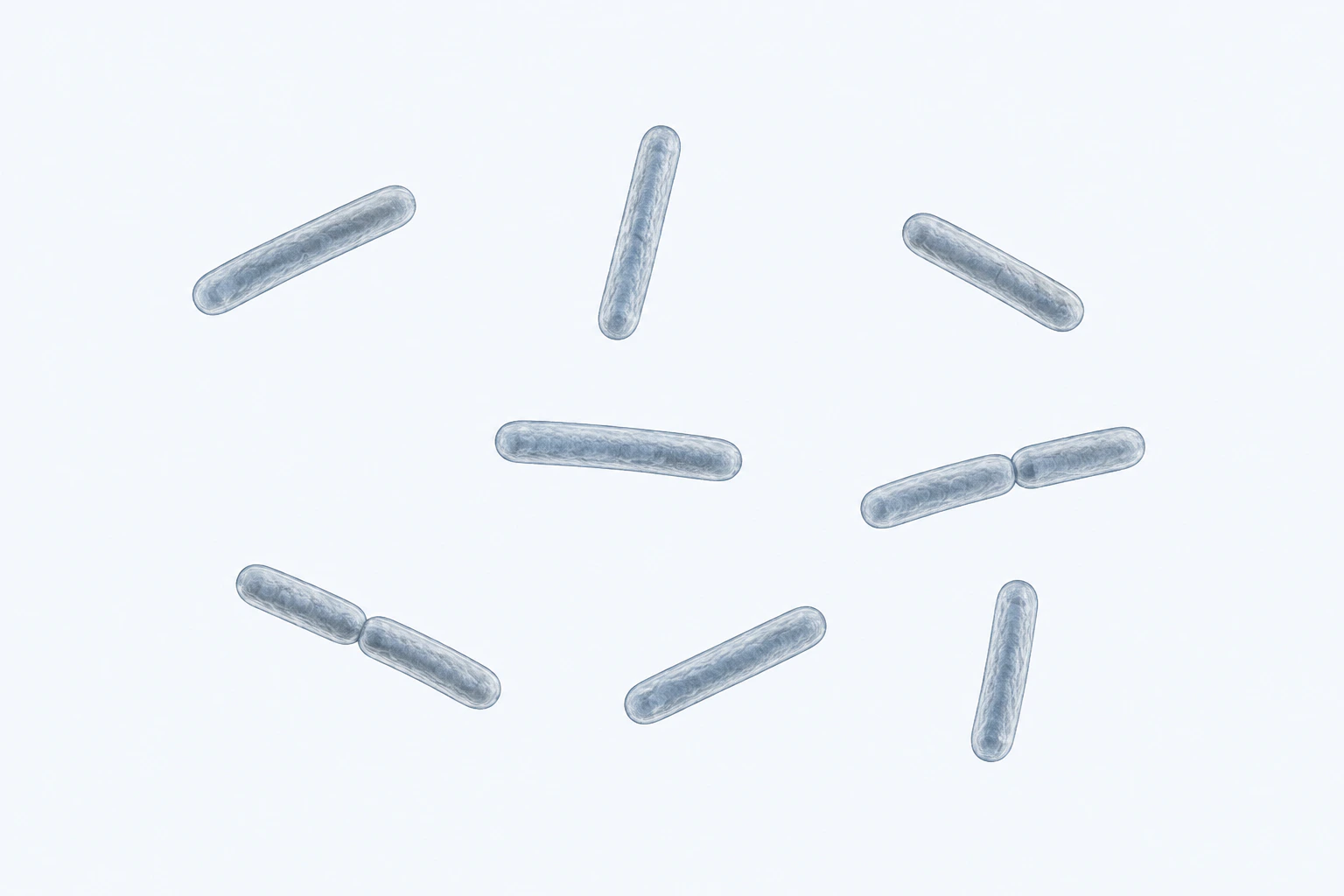
Type-species-anchored Sphingobium reconstruction with ten slender rods. Representative, non-universal, non-diagnostic, and not a micrograph; omitted appendages make no genus-wide motility claim.
Scientific media record1 verified identifier
- Subject
- Sphingobiumtaxon · genus
- Identifiers
- NCBITaxon:165695
- Review
- Editorial review completeIdentifiers authority-verified · Accessibility validated · · sphingobium|sphingobium-morphology-v1.webp
- Digital source
- Trained-algorithmic mediaCreated with a trained generative algorithm and reviewed by WikiBiome for subject identity, scientific framing, identifiers, provenance, and accessibility.
- Scientific basis
- Sphingobium — NCBI TaxonomySphingobium — LPSNSphingobium yanoikuyae type strain — BacDive
- License
- CC BY-SA 4.0Created
Sphingobium is a genus of Gram-negative, aerobic bacteria within the family Sphingomonadaceae. Primarily known as environmental organisms capable of degrading aromatic compounds, Sphingobium species have been unexpectedly identified in human microbiome studies of the reproductive tract and gut.
Evidence map2 cited passagesInspect provenance +
In endometriosis, Sphingobium is enriched in peritoneal fluid, representing one of the non-classical microbiome niches where bacterial communities contribute to local inflammatory environments (). Its presence in this typically sterile compartment raises questions about bacterial translocation and the breakdown of mucosal barriers in endometriotic disease.
Sphingobium has also been detected in metagenomic profiling of gut microbiota associated with colorectal adenoma () and in studies of the gut microbiota's influence on male reproductive function ().
Disease Associations#
In endometriosis, Sphingobium is enriched in peritoneal fluid, representing one of the non-classical microbiome niches where bacterial communities contribute to local inflammatory environments ([1]Microbiota composition and distribution along the female reproductive tract of women with endometriosisWei W, Zhang X, Tang H et al. · 2020Open reference 1 ↓).
Its presence in this typically sterile compartment raises questions about bacterial translocation and the breakdown of mucosal barriers in endometriotic disease.
Sphingobium has also been detected in metagenomic profiling of gut microbiota associated with colorectal adenoma ([2]Metagenomic Analyses of the Gut Microbiota Associated with Colorectal AdenomaSaito K, Koido S, Odamaki T et al. · 2019Open reference 2 ↓) and in studies of the gut microbiota's influence on male reproductive function ([3]Cai 2022 — Gut Microbiota Supports Male Reproduction via Nutrition, Immunity, and SignalingHui Cai, Xuanhong Cao, Dezhe Qin et al. · 2022Open reference 3 ↓).
Cross-References#
- Endometriosis—peritoneal fluid enrichment
- Colorectal Cancer—adenoma-associated gut microbiota
- Gut-Testis Axis—gut microbiota and male reproduction
- bacterial translocation—barrier breakdown enabling non-gut organisms in sterile sites
References 3
Numbered by first appearance in the article, then reconciled with its declared source list.
- 1
Wei W, Zhang X, Tang H et al. (2020). Microbiota composition and distribution along the female reproductive tract of women with endometriosis. Annals of Clinical Microbiology and Antimicrobials.
- 2
Saito K, Koido S, Odamaki T et al. (2019). Metagenomic Analyses of the Gut Microbiota Associated with Colorectal Adenoma. PLOS ONE.
- 3
Hui Cai, Xuanhong Cao, Dezhe Qin et al. (2022). Cai 2022 — Gut Microbiota Supports Male Reproduction via Nutrition, Immunity, and Signaling. Frontiers in Microbiology.
Article network
Mentioned here 3
Pages linking here 1
Connect the evidence
Publicly readable discussion by ORCID-authenticated researchers. Questions, interpretation, methods, corrections, and new evidence stay attached to this record.
No discussion yet. Start with a precise question or a source-backed observation.
Activity and accepted changes
Accepted researcher context, editorial status, public discussion, and upstream Git revisions are shown together. Pending, declined, and withdrawn proposals remain private.
- published revision
massive wiki expansion: 149 stubs fixed, 100+ new pages, Rule 15 scan, keystone papers
WikiBiome Deploy Bot · +41 −0
Inspect exact Git diff ↗