
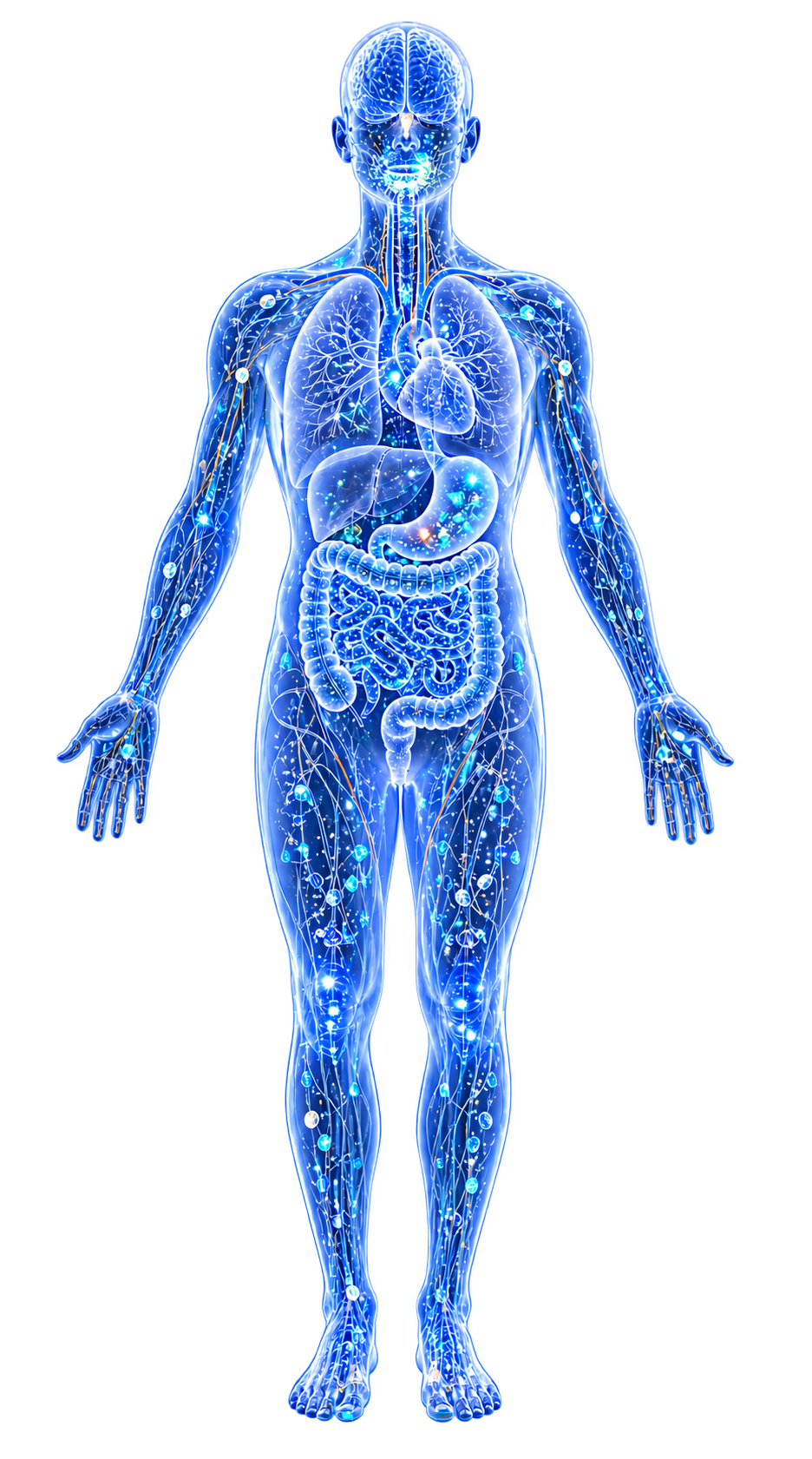
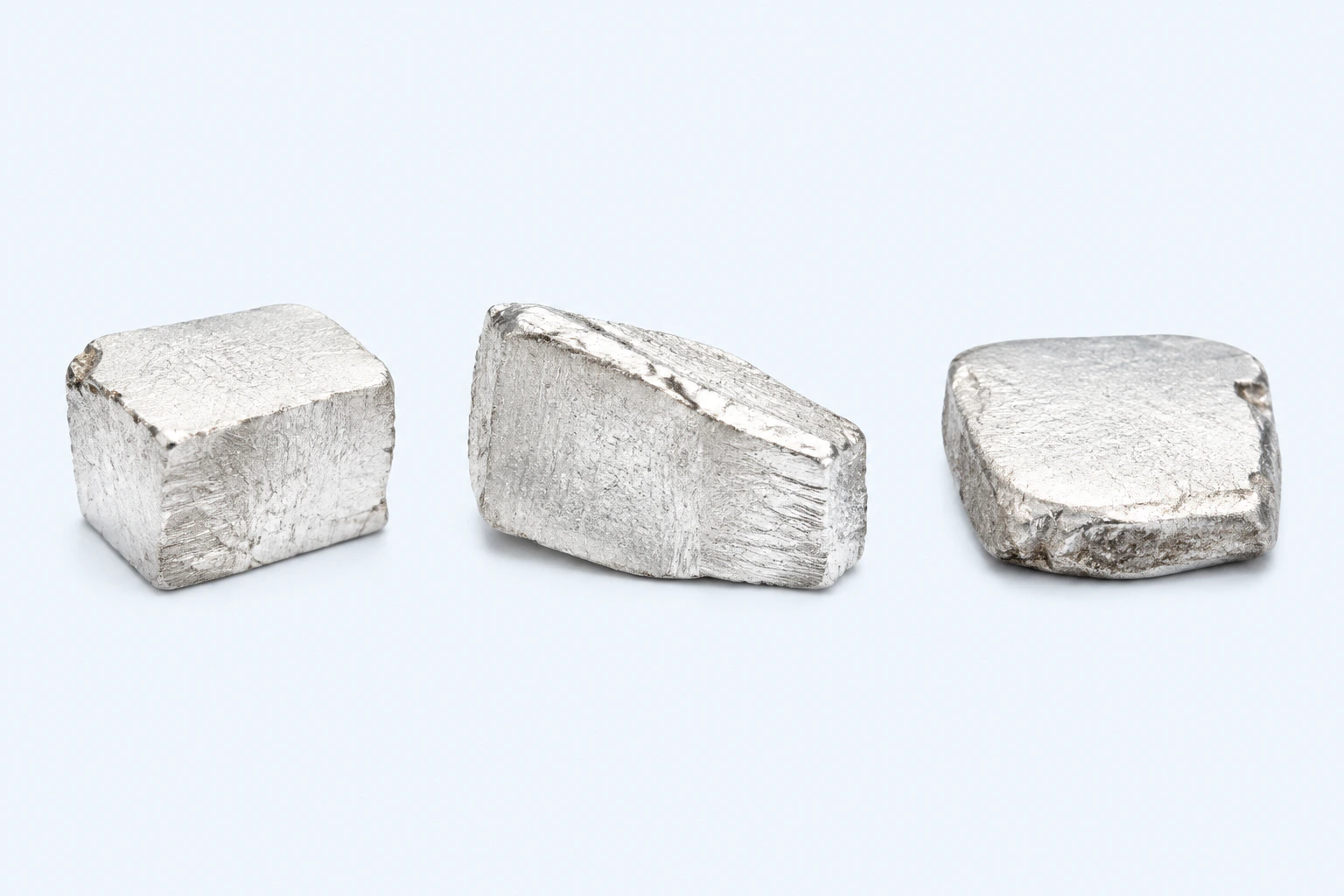
Elemental silver (Ag), shown as three representative bright silver-white solid specimens. Form and surface vary with purity, processing, and tarnish; this is not jewelry, a coin, analytical reference material, or a photograph.
Scientific media record2 verified identifiers
- Subject
- Silverelement
- Identifiers
- Atomic number 47PubChem CID:23954
- Review
- Editorial review completeIdentifiers authority-verified · Accessibility validated · · silver|silver-technical-specimen-v1.webp
- Digital source
- Trained-algorithmic mediaCreated with a trained generative algorithm and reviewed by WikiBiome for subject identity, scientific framing, identifiers, provenance, and accessibility.
- Scientific basis
- Silver — PubChem ElementSilver, PubChem CID 23954
- License
- CC BY-SA 4.0Created
A non-essential metal with a 5,000-year history of antimicrobial use, silver has re-emerged as a critical tool in the post-antibiotic era. What makes silver particularly interesting from a metallomics perspective is not that it kills bacteria—many metals do—but how it kills them.
Silver is the paradigmatic example of Mis-Metallation as an antimicrobial mechanism: it destroys bacteria not primarily through reactive oxygen species, as long assumed, but by displacing iron from iron-sulfur clusters and zinc from zinc-finger proteins, causing proteome-wide metalloprotein dysfunction.[1]Barras 2018 — Silver and Antibiotic, New Facts to an Old StoryFrederic Barras, Laurent Aussel, Benjamin Ezraty · 2018Open reference 1 ↓
Evidence map5 cited passagesInspect provenance +
A non-essential metal with a 5,000-year history of antimicrobial use, silver has re-emerged as a critical tool in the post-antibiotic era. What makes silver particularly interesting from a metallomics perspective is not that it kills bacteria—many metals do—but how it kills them. Silver is the paradigmatic example of mis metallation as an antimicrobial
The most significant mechanistic insight of recent silver research: Fe-S cluster-containing dehydratases (e.g., fumarase A) are silver's primary protein targets, not respiratory chain complexes as previously believed.
Whether silver directly generates ROS is contested:
Silver potentiates aminoglycoside antibiotics by bypassing the proton motive force (PMF) requirement for drug entry:
Silver nanoparticles (AgNPs) combine silver's antimicrobial activity with tunable size-dependent properties,:
Contents
1. Mechanism of Antimicrobial Action2. Silver-Antibiotic Synergy3. Silver Nanoparticles4. Relevance to the Gut Microbiome5. Cross-ReferencesMechanism of Antimicrobial Action#
Fe-S Cluster Disruption (Primary Target)#
The most significant mechanistic insight of recent silver research: iron (Fe)-S cluster-containing dehydratases (e.g., fumarase A) are silver's primary protein targets, not respiratory chain complexes as previously believed.[1]Barras 2018 — Silver and Antibiotic, New Facts to an Old StoryFrederic Barras, Laurent Aussel, Benjamin Ezraty · 2018Open reference 1 ↓
silver (Ag)+ targets the exposed, solvent-accessible catalytic iron atom of [4Fe-4S] clusters in dehydratases, degrading them to [3Fe-4S]. The damaged clusters can be reactivated by exogenous iron(II) under reducing conditions, confirming specific iron displacement rather than protein destruction.
NADH dehydrogenase I (a major respiratory chain iron-S enzyme) is not affected, demonstrating target specificity based on cluster accessibility. Released free iron then participates in Fenton Chemistry, generating secondary oxidative damage.
Zinc-Finger Protein Disruption#
Silver substitutes for zinc in zinc-finger proteins due to its high thiophilicity, causing:
- Transcription factor dysfunction (zinc fingers control thousands of genes)
- Formation of cytosolic dense granules interpreted as misfolded protein aggregates
- Broad transcriptional dysregulation
Membrane Perturbation#
TEM shows enlarged periplasmic space, inner membrane shrinkage, and thickened cell wall in Gram-positive bacteria. Alters membrane dipole potential and permeability. At high concentrations, causes DNA condensation through preferential base binding (guanine, then adenine).
The ROS Debate#
Whether silver directly generates ROS is contested.[1]Barras 2018 — Silver and Antibiotic, New Facts to an Old StoryFrederic Barras, Laurent Aussel, Benjamin Ezraty · 2018Open reference 1 ↓ Silver is not a redox-active metal—it cannot catalyze Fenton chemistry directly.
However, silver indirectly promotes ROS by: (1) releasing free iron from disrupted iron (Fe)-S clusters, (2) depleting Glutathione (GSH) and cysteine (thiol-based antioxidants), and (3) disrupting OxyR sensing.
The soxS promoter is induced by silver, but OxyR activation is blocked (silver prevents the disulfide bond formation OxyR requires). This resolves the paradox: silver causes oxidative damage without being a Fenton catalyst.
Silver-Antibiotic Synergy#
Silver potentiates aminoglycoside antibiotics by bypassing the proton motive force (PMF) requirement for drug entry:[1]Barras 2018 — Silver and Antibiotic, New Facts to an Old StoryFrederic Barras, Laurent Aussel, Benjamin Ezraty · 2018Open reference 1 ↓
| Antibiotic Class | Synergy Level | Mechanism |
|---|---|---|
| Aminoglycosides (gentamicin, kanamycin, tobramycin, streptomycin) | Strong (>10-fold MIC reduction) | Silver bypasses PMF-dependent entry step (EDP-I); aminoglycoside retains translation-dependent membrane damage (EDP-II) |
| Quinolones | Moderate | Membrane permeabilization enhances entry |
| Beta-lactams | Weak | Limited synergy |
This synergy was confirmed in mutants lacking respiratory complex I/II and iron (Fe)-S cluster biosynthesis, definitively demonstrating PMF bypass rather than enhanced respiration.
Silver Nanoparticles#
Silver nanoparticles (AgNPs) combine silver's antimicrobial activity with tunable size-dependent properties:[2]Godoy-Gallardo 2021 — Antibacterial Approaches in Tissue Engineering Using Metal Ions and Nanoparticles: From Mechanisms to ApplicationsMaria Godoy-Gallardo, Ulrich Eckhard, Luis M Delgado et al. · 2021Open reference 2 ↓[3]Metal Nanoparticles to Combat Candida albicans Infections: An UpdatePaulo Henrique Fonseca do Carmo, Maira Terra Garcia, Livia Mara Alves Figueiredo-Godoi et al. · 2023Open reference 3 ↓
- Active against bacteria, fungi (including Candida albicans), and biofilms
- Mechanisms include sustained silver (Ag)+ ion release, direct membrane contact, and intracellular accumulation
- Used in wound dressings, catheters, and tissue engineering scaffolds
- Antifungal activity against Candida species makes AgNPs relevant to mycobiome management
Relevance to the Gut Microbiome#
Silver's powerful antimicrobial activity raises important questions about microbiome effects. Dietary silver exposure from colloidal silver supplements and silver-containing food contact materials may affect commensal gut bacteria. Silver's preferential targeting of iron (Fe)-S cluster enzymes would disproportionately affect anaerobic bacteria, which depend heavily on iron-S cluster-containing enzymes for energy metabolism.
The selective toxicity profile (dehydratases over respiratory complexes) may create predictable shifts in microbial community composition.
Cross-References#
- Antimicrobial Metals—silver as one of the principal antimicrobial metals
- Mis-Metallation—silver as paradigmatic mis-metallation agent
- Iron-Sulfur Clusters—primary target of silver toxicity
- Co-Selection—silver resistance genes co-located with antibiotic resistance determinants
- Candida albicans—silver nanoparticle antifungal activity
- Fenton Chemistry—secondary oxidative damage from iron released by silver
References 8
Numbered by first appearance in the article, then reconciled with its declared source list.
- 1
Frederic Barras, Laurent Aussel, Benjamin Ezraty (2018). Barras 2018 — Silver and Antibiotic, New Facts to an Old Story. Antibiotics.
- 2
Maria Godoy-Gallardo, Ulrich Eckhard, Luis M Delgado et al. (2021). Godoy-Gallardo 2021 — Antibacterial Approaches in Tissue Engineering Using Metal Ions and Nanoparticles: From Mechanisms to Applications. Bioactive Materials.
- 3
Paulo Henrique Fonseca do Carmo, Maira Terra Garcia, Livia Mara Alves Figueiredo-Godoi et al. (2023). Metal Nanoparticles to Combat Candida albicans Infections: An Update. Microorganisms.
- 4
Ikhazuagbe, I., et al. (2025). Ikhazuagbe et al. 2025 — Gallium Nanoparticles as Antimicrobial Agents. RSC Advances.
- 5
Wales, A.D., Davies et al. (2015). Wales & Davies 2015 — Co-selection of Resistance in Foodborne Pathogens. Antibiotics.
- 6
Van Syoc E, Weaver E, Rogers CJ et al. (2022). Metformin modulates the gut microbiome in broiler breeder hens. Frontiers in Physiology.
- 7
★Brylinski L, Kostelecka K, Wolinski F et al. (2025). Effects of Trace Elements on Endocrine Function and Pathogenesis of Thyroid Diseases — A Literature Review. Nutrients.
- 8
Jessica Briffa, Emmanuel Sinagra, Renald Blundell (2020). Heavy Metal Pollution in the Environment and Their Toxicological Effects on Humans. Heliyon.
Article network
Mentioned here 7
Pages linking here 1
Connect the evidence
Publicly readable discussion by ORCID-authenticated researchers. Questions, interpretation, methods, corrections, and new evidence stay attached to this record.
No discussion yet. Start with a precise question or a source-backed observation.
Published page changes
This record shows only material changes published on this page, including changes to its content, evidence, conclusions, or author context. Internal processes and discussion activity are excluded. Pending, declined, and withdrawn proposals remain private.
- published revision
Added references: ikhazuagbe-2025-gallium-nanoparticles-antimicrobial; wales-2015-co-selection-resistance-foodborne-pathogens; van-syoc-2022-metformin-gut-microbiome-broiler-hens; brylinski-2025-trace-elements-thyroid-diseases;…
Added references: ikhazuagbe-2025-gallium-nanoparticles-antimicrobial; wales-2015-co-selection-resistance-foodborne-pathogens; van-syoc-2022-metformin-gut-microbiome-broiler-hens; brylinski-2025-trace-elements-thyroid-diseases; briffa-2020-heavy-metal-pollution-environment-toxicology. · WikiBiome Deploy Bot · +24 −18
Inspect exact Git diff ↗ - published revision
Created “Silver”: A non-essential metal with a 5,000-year history of antimicrobial use, silver has re-emerged as a critical tool in the post-antibiotic era. What makes silver particularly interesting from a metallomics…
Created “Silver”: A non-essential metal with a 5,000-year history of antimicrobial use, silver has re-emerged as a critical tool in the post-antibiotic era. What makes silver particularly interesting from a metallomics… Published sections: Silver (Ag); Fe-S Cluster Disruption (Primary Target); Zinc-Finger Protein Disruption; Membrane Perturbation; The ROS Debate; Silver-Antibiotic Synergy; Silver Nanoparticles; Relevance to the Gut Microbiome; Cross-References. · WikiBiome Deploy Bot · +92 −0
Inspect exact Git diff ↗