
 metals · microbes · host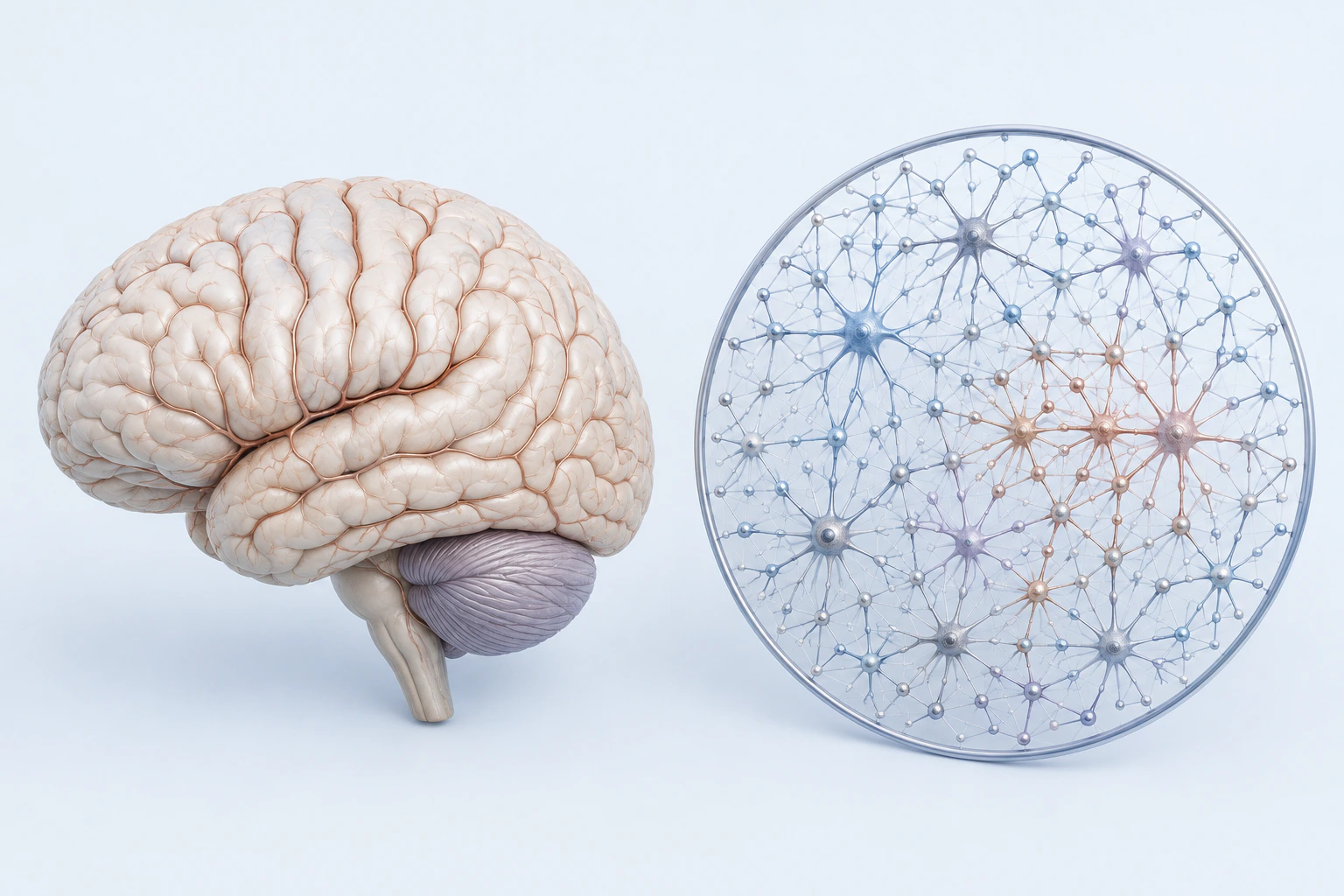
Neutral brain and network orientation for epilepsy. The colored grouping is an editorial representation of coordinated activity, not a universal seizure focus, lesion, EEG finding, subtype, mechanism, severity, treatment response, or diagnosis.
Scientific media record1 verified identifier
- Subject
- Epilepsycondition
- Identifiers
- MeSH:D004827
- Review
- Editorial review completeIdentifiers authority-verified · Accessibility validated · · epilepsy|epilepsy-pathology-v1.webp
- Digital source
- Trained-algorithmic mediaCreated with a trained generative algorithm and reviewed by WikiBiome for subject identity, scientific framing, identifiers, provenance, and accessibility.
- Scientific basis
- Epilepsy — MeSHEpilepsy and Seizures
- License
- CC BY-SA 4.0Created
Epilepsy is a chronic neurological disorder characterized by recurrent unprovoked seizures, affecting ~50 million people worldwide. Approximately 30% of patients have drug-resistant epilepsy—a population where microbiome-targeted interventions (particularly the ketogenic diet) have shown the most clinical impact.
The Gut Microbiome's role in epilepsy operates through the Gut-Brain Axis: microbially-derived neuroactive metabolites (Kynurenine pathway products, GABA, Serotonin, SCFAs) directly modulate neuronal excitability and seizure thresholds.
Evidence map21 cited passagesInspect provenance +
Children with cerebral palsy plus epilepsy (CP+E) have distinct gut microbiota compared to CP without epilepsy, suggesting epilepsy is not merely a neurological overlay but involves gut-brain axis restructuring,.
MR supports a causal link between specific gut microbiota and epilepsy risk, though the specific taxa remain under investigation.
The microbiome changes may be causally required for the anti-seizure effect: antibiotic ablation of the microbiome eliminated ketogenic diet efficacy in mice.
Epilepsy affects ~50 million people worldwide, with ~30% experiencing drug-resistant seizures. The gut-brain axis provides a mechanistic framework for understanding how intestinal dysbiosis modulates seizure thresholds through neuroactive metabolites, immune signaling, and SCFA-mediated neural communication. The strongest clinical evidence for microbiome inv
This signature draws substantially from cerebral palsy-epilepsy (CPE) comorbidity data, as most microbiome profiling in epilepsy has been conducted in this population. Mendelian randomization provides additional causal evidence for taxa-epilepsy relationships independent of CP.
Iron (depleted): Iron deficiency is common in epilepsy patients, particularly those with CP comorbidity (13-48% prevalence). Whether this represents true deficiency or hepcidin-mediated sequestration (nutritional immunity) remains unresolved. Anticonvulsant medications may compound iron malabsorption.
Arsenic (elevated): Most influential metal on infant gut microbial alpha diversity; environmental arsenic exposure during neurodevelopment may contribute to seizure susceptibility.
Anticonvulsant medications represent the dominant environmental factor shaping the epilepsy gut microbiome. GABA-ergic antiepileptic drugs are associated with increased constipation and elevated cytokine levels, creating an iatrogenic loop: medications prescribed for seizures alter gut ecology in ways that may perpetuate neuroinflammation. Environmental meta
Elevated IL-1beta, IL-6, TNF-alpha: Systemic inflammatory markers are elevated in epilepsy, particularly in the CPE population. Salivary IL-1beta correlates strongly with systemic levels (R=0.720).
Depleted butyrate: The comprehensive loss of butyrate-producing taxa (Faecalibacterium, Roseburia, Blautia, Anaerostipes) creates a profound SCFA deficit. Butyrate normally crosses the BBB and promotes myelination via HDAC inhibition.
akkermansia muciniphila is an MR-validated risk factor for epilepsy, with particularly strong association for focal epilepsy (OR=1.739). Akkermansia degrades mucin, increasing mucosal permeability and exposing the immune system to bacterial antigens. The KEGG functional analysis attributes elevated immune system disease risk to Akkermansia overgrowth.
streptococcus (4.70% in CPE) drives neurodegenerative disease risk via KEGG pathway analysis, primarily through IL-6 and TNF-alpha elevation. Strong co-occurrence with Actinomyces (r=0.833) suggests an oral-origin consortium.
Betaproteobacteria (class) and Burkholderiales (order) are MR risk factors (OR=1.357 and 1.336 respectively). Burkholderiales includes metal-tolerant species that thrive in heavy-metal contaminated environments.
The SCFA-producing community is comprehensively depleted in epilepsy: bacteroides (from dominant to 10.94%), faecalibacterium prausnitzii (0.78%), blautia (1.44%), Ruminococcus (0.01%), roseburia (0.00%), and Anaerostipes (0.04%)—all P<0.001.
bacteroides fragilis and Dialister invisus are depleted specifically in CP+epilepsy (not CP alone), and both are linked to kynurenine pathway modulation. Their loss may shift tryptophan metabolism toward excitotoxic quinolinic acid.
Eubacterium xylanophilum group is MR-validated as protective (OR=0.816).
Acetate accumulation: With Anaerostipes and Faecalibacterium depleted, their normal co-production of butyrate from acetate is lost, causing acetate to accumulate. Excess acetate activates the parasympathetic nervous system and may directly trigger seizures.
Kynurenine pathway shunting—The balance between neuroprotective kynurenic acid (KA, NMDA antagonist) and neurotoxic quinolinic acid (QUIN, NMDA agonist) shifts toward QUIN under inflammatory conditions. B. fragilis depletion exacerbates this shift.
Oral-gut translocation—Streptococcus and Prevotella enrichment in the gut reflects oral pathobiont colonization of intestinal niches, particularly relevant in CPE where 96.3% have periodontitis.
Paradoxical diversity increase—CPE gut has higher Shannon diversity (2.33 vs 1.49) than healthy controls, but this reflects pathobiont expansion into vacated commensal niches, not ecological health.
The highest overlap in the knowledge base. CP and epilepsy share iron/zinc depletion, comprehensive SCFA-producer loss, Streptococcus/Akkermansia enrichment, oral-gut translocation, and neuroinflammatory mechanisms. CP+epilepsy (CPE) has a distinct microbiome from CP without epilepsy, suggesting epilepsy adds a specific ecological perturbation.
One disease. Five evidence layers.
A generated systems view of the metals, organisms, host sequestration signals, ecological conditions, and microbial functions indexed for Epilepsy.
Evidence layer
Taxonomic signature
Organisms reported as enriched or depleted, with their indexed functional context kept beside the name.MR-validated risk factor (OR=1.184 general, OR=1.739 focal epilepsy); mucin degradation increases mucosal permeability and immune exposure
Enriched in CPE; drives IL-6/TNF-alpha neuroinflammation via KEGG neurodegenerative disease pathways
Enriched in CPE; opportunistic colonizer of anticonvulsant-exposed gut
Enriched in CPE cohorts; may reflect oral-gut translocation
Lactate fermenter enriched in CPE; produces propionate
Primary polysaccharide fermenter and immune educator; loss reduces colonization resistance (P<0.001)
Major butyrate producer; depletion impairs anti-inflammatory signaling via gut-brain axis (0.78% in CPE vs normal)
Acetate/propionate producer; loss reduces colonocyte nutrition and anti-inflammatory metabolites
Butyrate producer; near-complete depletion in CPE (0.00%)
Immunomodulatory commensal; depleted specifically in CP+epilepsy; linked to kynurenine pathway modulation
Evidence layer
Nutritional immunity
Host metal-withholding, inflammatory, antioxidant, and microbial-metabolite signals indexed in the signature.Elevated host signals
4Depleted protective signals
2Evidence layer
Ecological state
The environmental conditions that connect the organism-level observations into a system.Evidence layer
Virulence functions
Microbial structures, enzymes, and acquisition systems implicated by the linked evidence.The disease record, in full.
The original WikiBiome disease narrative remains intact beneath the generated signature atlas.
Microbiome Associations#
Cerebral Palsy-Epilepsy Comorbidity#
Children with Cerebral Palsy plus epilepsy (CP+E) have distinct gut microbiota compared to CP without epilepsy, suggesting epilepsy is not merely a neurological overlay but involves gut-brain axis restructuring.[1]Huang 2019 — Distinct Gut Microbiota Composition and Functional Category in Children With Cerebral Palsy and EpilepsyCongfu Huang, Yinhu Li, Xin Feng et al. · 2019Open reference 1 ↓[2]Peng 2023 — Gut Microbiome and Brain Metabolic Remodeling in CP with EpilepsyPeng A, et al. · 2023Open reference 2 ↓
Causal Evidence (Mendelian Randomization)#
MR supports a causal link between specific gut microbiota and epilepsy risk, though the specific taxa remain under investigation.[3]Roles of gut microbiome in epilepsy risk: a Mendelian randomization studyYoujie Zeng, Si Cao, Heng Yang · 2023Open reference 3 ↓
Kynurenine Pathway#
The Kynurenine pathway produces metabolites with opposing neurological effects. Kynurenic acid (KA): Neuroprotective NMDA antagonist; may raise seizure threshold. Quinolinic acid (QUIN): Neurotoxic NMDA agonist; may lower seizure threshold.
The KA/QUIN balance, modulated by gut microbiome composition and Metal-Driven Inflammation, may influence seizure susceptibility.
Ketogenic Diet and the Microbiome#
The ketogenic diet is the most evidence-based microbiome-modulating intervention for drug-resistant epilepsy. Dramatically reshapes gut microbiome composition within days. Increases Akkermansia muciniphila and decreases Enterobacteriaceae in animal models.
Produces ketone bodies (BHB) that have anti-inflammatory and neuroprotective effects, including TLR4 inhibition.
The microbiome changes may be causally required for the anti-seizure effect: antibiotic ablation of the microbiome eliminated ketogenic diet efficacy in mice.[4]Gudan 2022 — The Potential Impact of the Ketogenic Diet on Gut Microbiota in the Context of Neurological DisordersAnna Gudan, Ewa Stachowska · 2022Open reference 4 ↓
Cross-References#
- Cerebral Palsy—Primary comorbidity; shared gut-brain axis disruption
- Gut-Brain Axis—Mechanism connecting gut microbiome to seizure susceptibility
- Kynurenine—Neuroactive metabolites modulating excitability
- Ketogenic Diet—Microbiome-mediated anti-seizure intervention
- Akkermansia muciniphila—Enriched by ketogenic diet
- Autism Spectrum Disorder—Epilepsy comorbidity in ASD (~30%)
- Depression—Bidirectional epilepsy-depression relationship
References 9
Numbered by first appearance in the article, then reconciled with its declared source list.
- 1
Congfu Huang, Yinhu Li, Xin Feng et al. (2019). Huang 2019 — Distinct Gut Microbiota Composition and Functional Category in Children With Cerebral Palsy and Epilepsy. Frontiers in Pediatrics.
- 2
Peng A, et al. (2023). Peng 2023 — Gut Microbiome and Brain Metabolic Remodeling in CP with Epilepsy. Frontiers in Neurology.
- 3
Youjie Zeng, Si Cao, Heng Yang (2023). Roles of gut microbiome in epilepsy risk: a Mendelian randomization study. Frontiers in Microbiology.
- 4
Anna Gudan, Ewa Stachowska (2022). Gudan 2022 — The Potential Impact of the Ketogenic Diet on Gut Microbiota in the Context of Neurological Disorders. Advances in Hygiene and Experimental Medicine.
- 5
Allen J, et al. (2021). Allen 2021 — Multi-Organ Dysfunction in Cerebral Palsy. Frontiers in Pediatrics.
- 6
Xing Yan, Jun Qiu, Ruiwen Huang et al. (2025). Yan 2025 — Association Between Infants' Serum Levels of 26 Metals and Gut Microbiota: A Hospital-Based Cross-Sectional Study in China. Frontiers in Microbiology.
- 7
Ferreira ACRG, et al. (2021). Ferreira 2021 — Oral-Gut Inflammation Axis in Cerebral Palsy. Frontiers in Immunology.
- 8
Wang J, et al. (2023). Wang 2023 — Microbial Gut-Brain Axis and White Matter Injury in Preterm Infants. Frontiers in Integrative Neuroscience.
- 9
Congfu Huang, Chunuo Chu, Yuanping Peng et al. (2022). Huang 2022 — Correlations Between Gastrointestinal and Oral Microbiota in Children With Cerebral Palsy and Epilepsy. Frontiers in Pediatrics.
Article network
Connect the evidence
Publicly readable discussion by ORCID-authenticated researchers. Questions, interpretation, methods, corrections, and new evidence stay attached to this record.
No discussion yet. Start with a precise question or a source-backed observation.
Activity and accepted changes
Accepted researcher context, editorial status, public discussion, and upstream Git revisions are shown together. Pending, declined, and withdrawn proposals remain private.
- published revision
Backfill gut microbiome concept links
Karen Pendergrass · +1 −1
Inspect exact Git diff ↗ - published revision
Backfill inflammation concept links
Karen Pendergrass · +1 −1
Inspect exact Git diff ↗ - published revision
massive wiki expansion: 149 stubs fixed, 100+ new pages, Rule 15 scan, keystone papers
WikiBiome Deploy Bot · +5 −5
Inspect exact Git diff ↗ - published revision
cycle 1: health check + lint fixes + 8 ingests + 2 stubs + gestational-diabetes signature
WikiBiome Deploy Bot · +1 −0
Inspect exact Git diff ↗ - published revision
pre-overnight checkpoint 2026-04-18
WikiBiome Deploy Bot · +59 −0
Inspect exact Git diff ↗